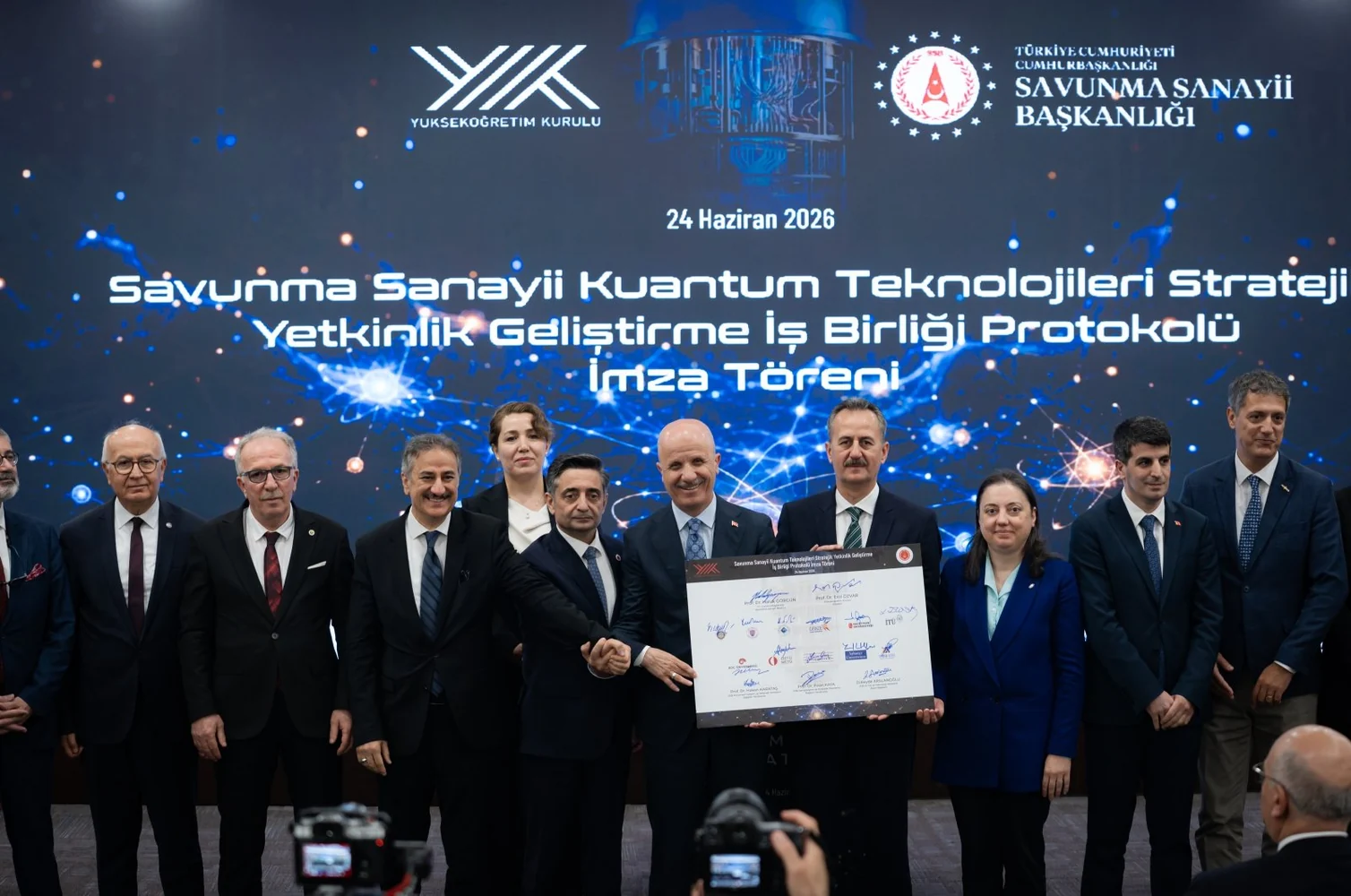
Strategic cooperation protocol
TRT Haber photo from the strategic quantum technologies cooperation protocol signing context.
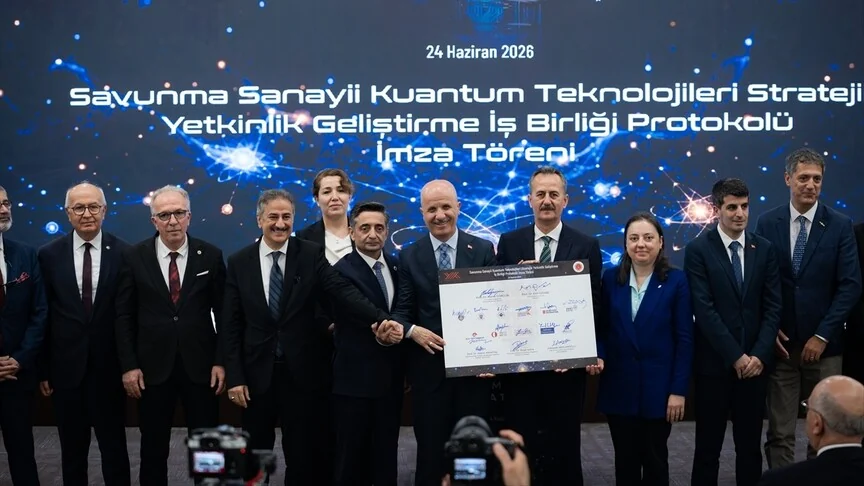
Protocol signing group photo
Anadolu Agency event photograph from the Turkish coverage of the SSB quantum programme launch.
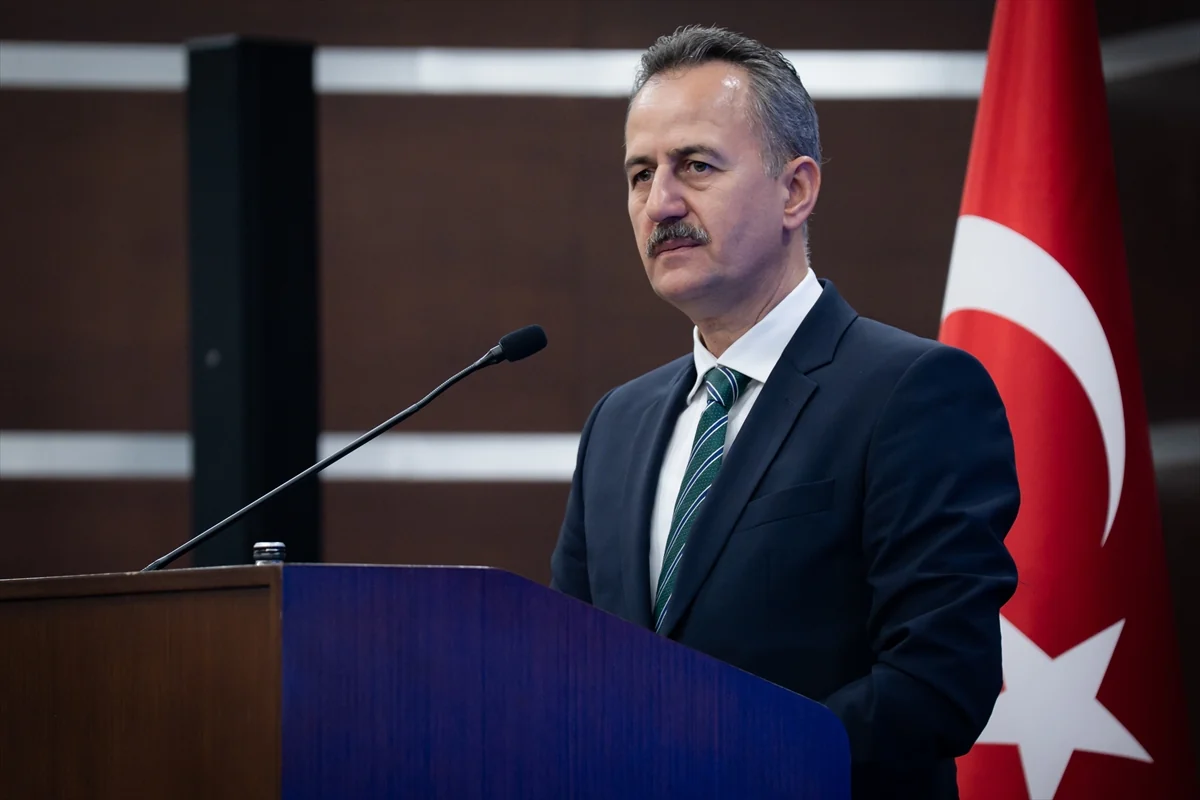
Programme address
News photo from the public SSB Quantum Program launch coverage.
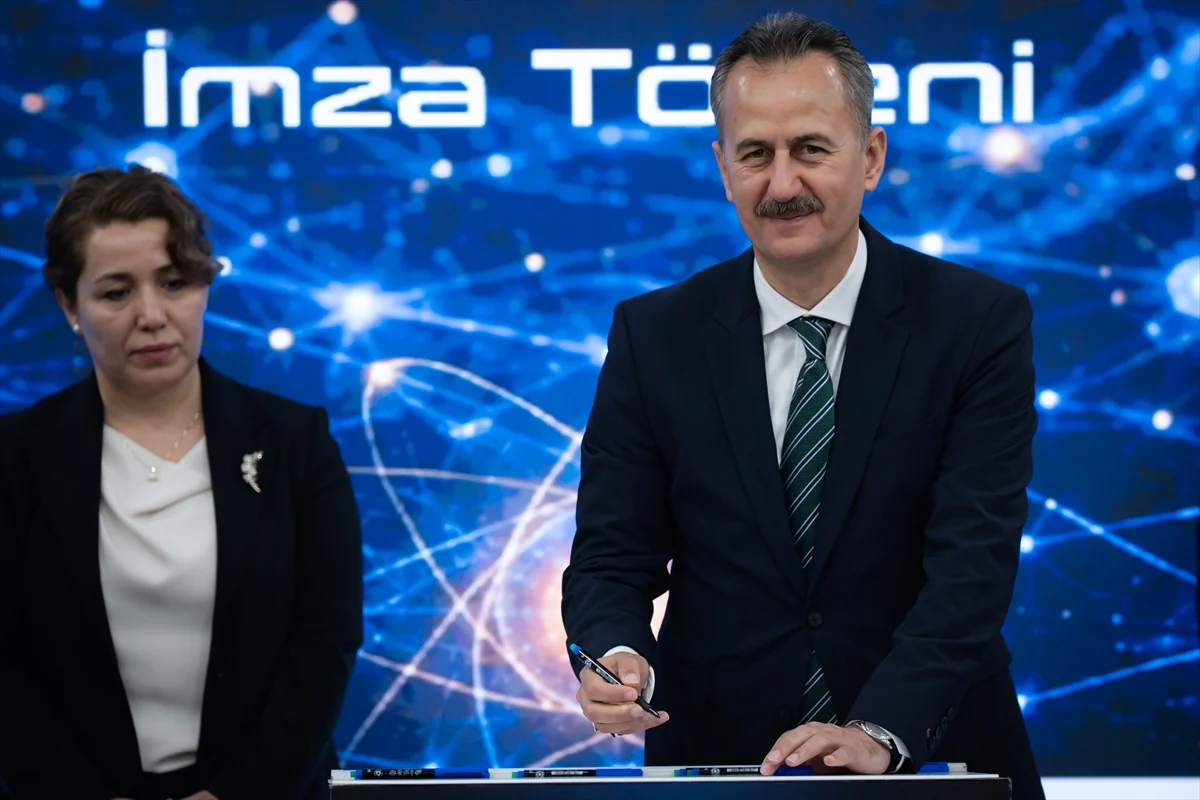
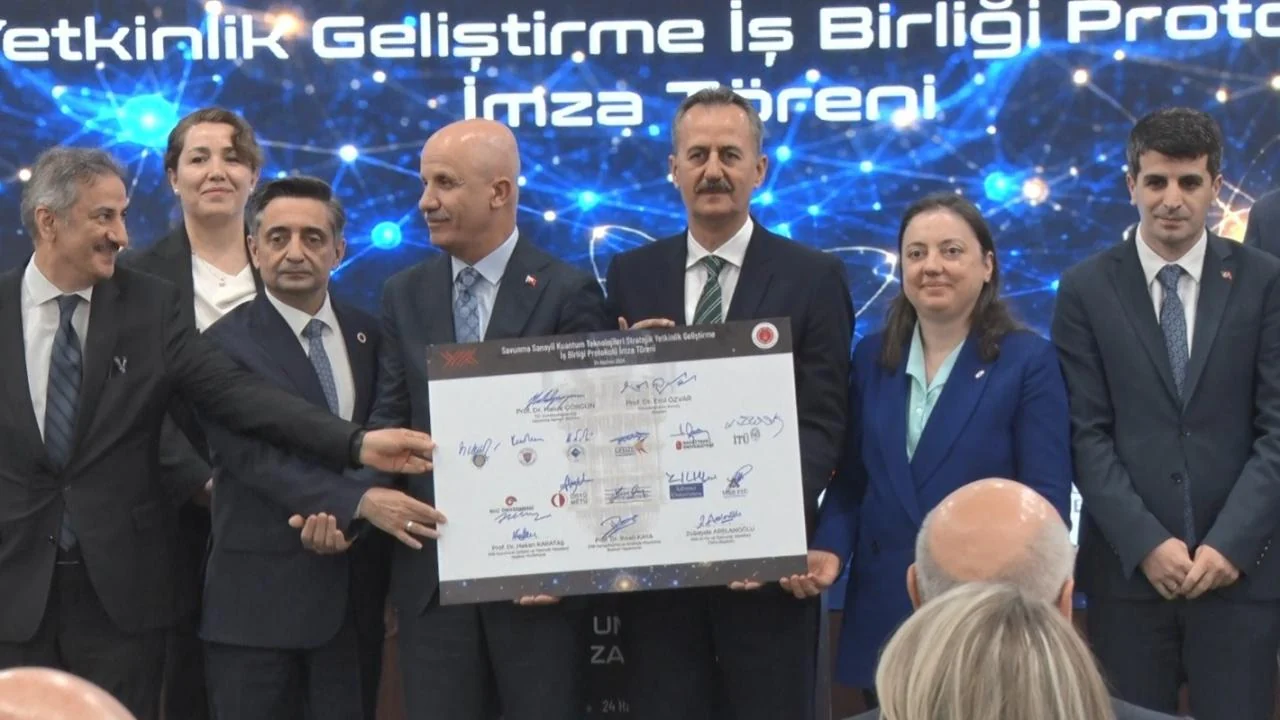
Signing moment
A closer event photograph from the strategic quantum technologies cooperation protocol ceremony.
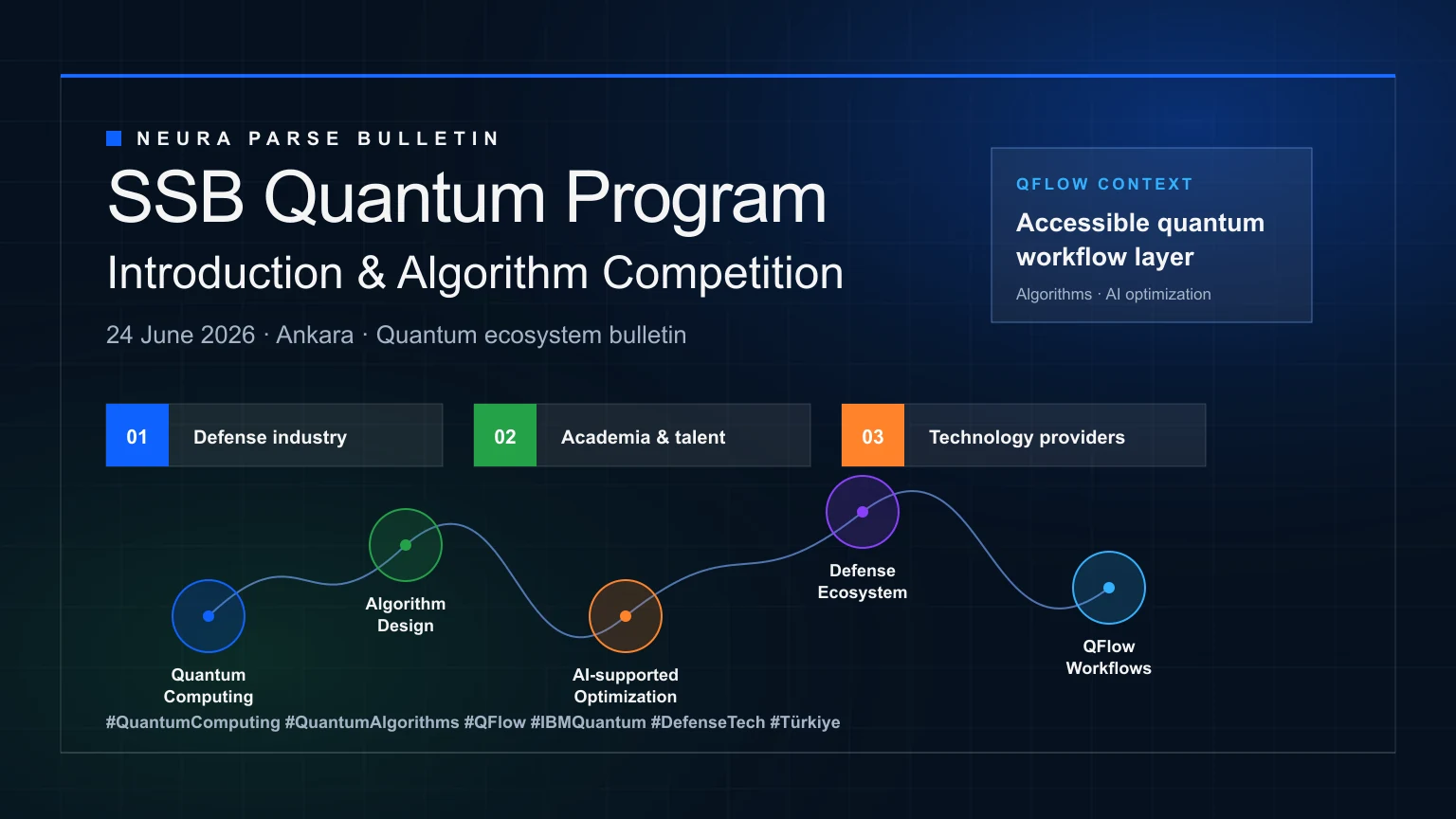
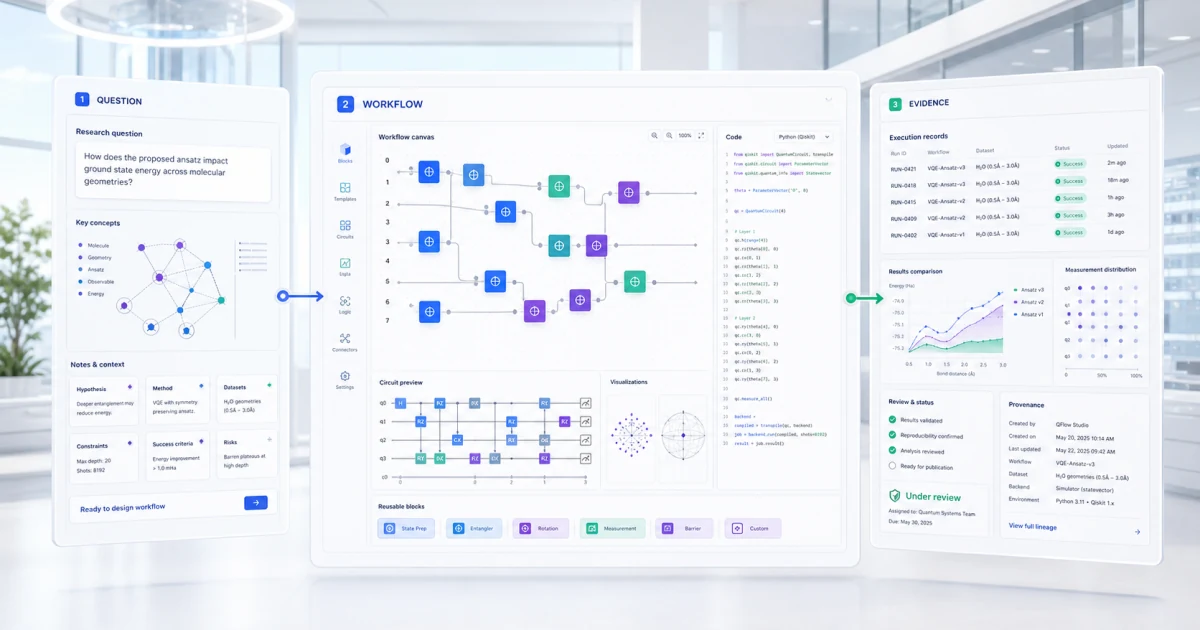
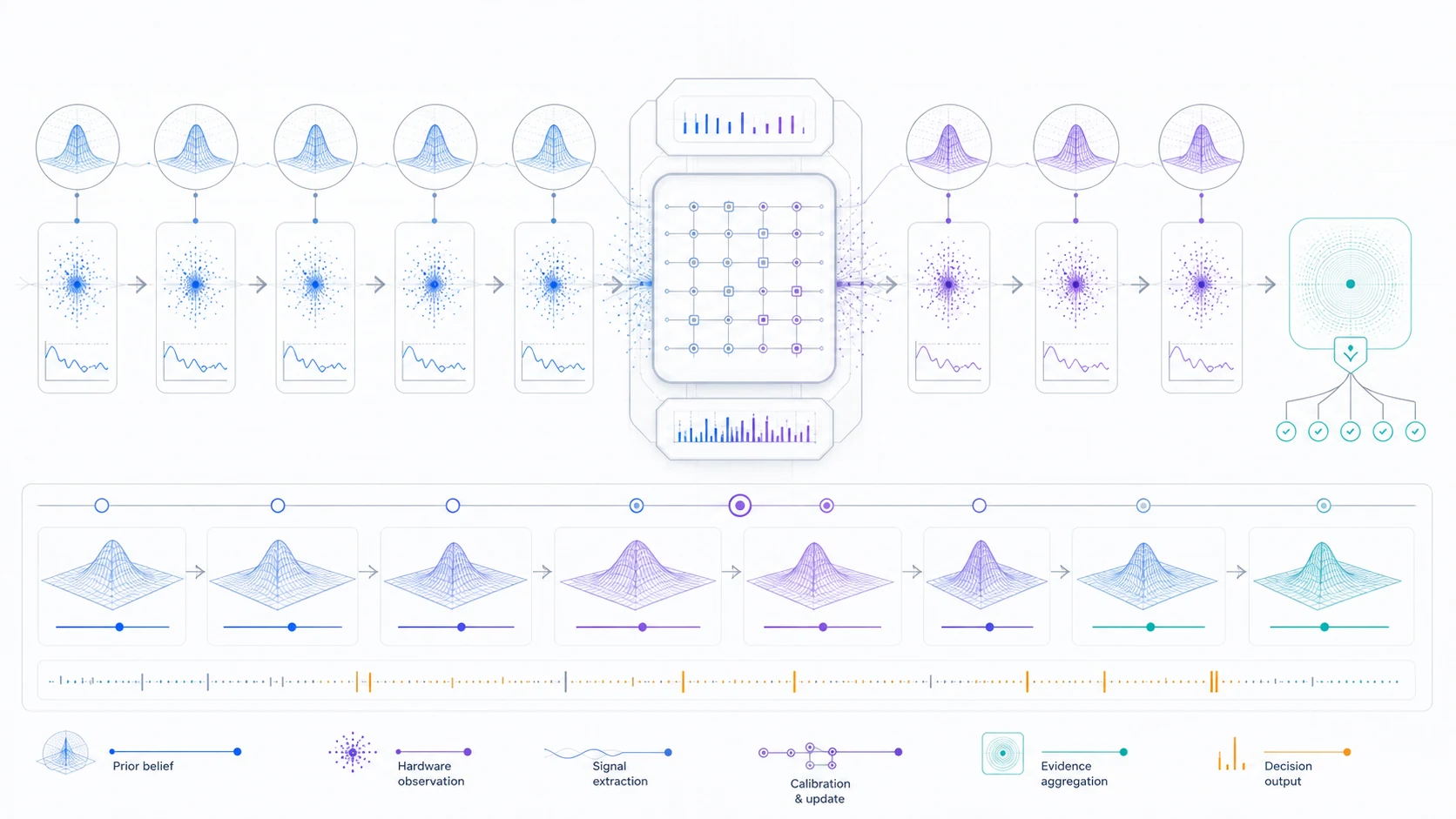
Neura Parse recap graphic
Internal recap graphic for explaining the QFlow workflow angle next to the public event photos.
A useful step for Türkiye's quantum ecosystem
The SSB Quantum Program Introduction and Quantum Algorithm Competition marked a valuable step in bringing together Türkiye's quantum technologies ecosystem across the defense industry, academia, private sector, and technology providers.
Public reports from Anadolu Agency, TRT Haber, and Daily Sabah describe the 24 June 2026 event as a strategic roadmap moment for quantum technologies under the Presidency of Defence Industries. The reported themes include quantum computing, sensing, communications, cryptology, optimization, simulation, and signal-independent navigation.
Program, platform, competition, and strategic projects
The event centered on more than a single announcement. It connected a national quantum roadmap, the Türkiye Quantum Platform, a talent-building competition, and strategic project signings into one ecosystem signal.
- SSB Quantum Program presentation by the Department of R&D and Technology Management.
- Briefing around the newly launched Türkiye Quantum Platform.
- SSB Quantum Algorithm Competition as a call for talent and solution building.
- Strategic project ceremonies including superconducting QPU development, KERTERIZ quantum magnetometer work, and a quantum technologies competence cooperation protocol.
Why QFlow belongs in this conversation
At Neura Parse, we closely follow this process through our work in quantum computing, quantum algorithms, AI-supported optimization, and autonomous systems.
With QFlow, the quantum workflow product we are developing, our goal is to make quantum workflows more accessible, applicable, and easier to integrate into real-world industry problems. That means problem framing, circuit and algorithm authoring, provider context, baseline comparison, evidence packaging, and a clear route from experiment to decision support.
From awareness to algorithmic solutions
The Quantum Algorithm Competition is a strong signal because it turns ecosystem attention into concrete work: define a problem, design an algorithm, evaluate the result, and communicate what can be used in practice.
Event material presented the competition as a challenge for talent and solution development, with the public application surface listed on kuantum.ssb.gov.tr and a 24 July 2026 deadline. For teams like ours, that creates a clear place to evaluate where QFlow can help participants move from idea to repeatable quantum workflow.
Organizers, mentors, panelists, and technology teams
We would like to thank the Presidency of Defence Industries of the Republic of Türkiye, the Department of R&D and Technology Management, all organizing partners, panelists, mentor institutions, and the IBM and IBM Quantum teams for their contributions to the ecosystem.
As we evaluate our participation in the competition with our team, we are ready to share how QFlow can contribute to Türkiye's growing quantum ecosystem and support future collaborations in this field.
Failure modes to design against in an early quantum program
Ecosystem launches create attention faster than they create repeatable work. The predictable first failure mode is a demonstration that runs once, on one backend, with no record of assumptions or data. When a result cannot be reproduced or compared, it cannot inform a procurement or research decision. The competition format guards against this because it forces a defined problem and an evaluated result.
The second failure mode is a missing classical baseline. A quantum result presented without a baseline comparison answers no industrial question, because the decision maker cannot tell whether the quantum route earned its cost. This is the core argument of the bulletin: the opportunity is not only to run quantum circuits but to make the full workflow understandable.
The third failure mode is provider amnesia. Backend metadata, provider context, and resource estimates change between runs, and results recorded without them lose meaning within one hardware generation. This is the specific gap QFlow Studio is built to close: editable quantum workflows with preserved provider context, stored assumptions and baselines, and packaged, reviewable evidence.
- One-off notebooks with no recorded assumptions, data, or backend metadata.
- Quantum results presented without a classical baseline.
- Evidence that a non-author cannot review, which blocks decision support.
- Talent output that ends at the competition instead of entering a repeatable workflow.
What to instrument before the first submission
The callout in this bulletin lists the workflow surface that needs instrumentation: assumptions, algorithms, data, baselines, backend metadata, outputs, and industrial decision context. Instrument these before writing circuits, not after. Retroactive documentation is where reproducibility dies.
Start with problem framing and assumptions, since those decide whether any evaluation means anything. Then fix a classical baseline and the data that both routes will consume. Only after that should circuit and algorithm authoring begin, with provider context recorded for every run.
The final instrument is the evidence package itself: a record a reviewer can follow from problem statement to output without asking the author. That is the route from experiment to decision support this bulletin describes, and it is what turns a competition entry into a durable asset for the team that built it.
What the next phase of the ecosystem will test
The near-term test is the competition cycle. Applications close on 24 July 2026, and the quality of what comes back will show whether the ecosystem signal converts into algorithmic work: defined problems, designed algorithms, evaluated results, and communicated practical value.
The medium-term test is whether the strategic projects announced at the event, superconducting QPU development, KERTERIZ quantum magnetometer work, and the competence cooperation protocol, produce visible milestones through the Türkiye Quantum Platform. Public reporting framed the launch as a roadmap moment, and roadmaps are judged by what is delivered against them.
For technology providers, the test is integration. The reported themes, from optimization and simulation to cryptology and signal-independent navigation, are industry problems before they are quantum problems. Tools that connect quantum workflows to those problems, which is the stated goal of QFlow, will matter more than raw circuit execution.
Program checklist: converting the SSB Quantum Program signal into work
Actions for a program lead who wants to turn the 24 June 2026 ecosystem event into concrete, reviewable quantum work.
- 01
Read the public roadmap coverage from Anadolu Agency, TRT Haber, and Daily Sabah before positioning your program.
- 02
Register the 24 July 2026 application deadline on kuantum.ssb.gov.tr and plan the submission timeline backward from it.
- 03
Map the reported roadmap themes, quantum computing, sensing, communications, cryptology, optimization, simulation, and signal-independent navigation, to your program's actual problems.
- 04
Frame one concrete industry problem before authoring any circuit: assumptions, data, and a classical baseline.
- 05
Record provider context and backend metadata for every run so results stay comparable across experiments.
- 06
Package each experiment as reviewable evidence, including negative results, not only headline outputs.
- 07
Track the Türkiye Quantum Platform as the official surface for competition announcements and timelines.
- 08
Check whether the strategic project areas, superconducting QPU development, KERTERIZ magnetometer work, and the competence cooperation protocol, touch your supply chain or partner map.
- 09
Assign a named owner for the route from experiment to decision support inside your organization.
Terms used in this bulletin.
- Superconducting QPU
- A quantum processing unit built from superconducting circuits, the hardware family named in one of the strategic project signings at the event. It is the physical processor on which quantum circuits execute.
- Quantum magnetometer
- A sensor that uses quantum effects to measure magnetic fields with high sensitivity. KERTERIZ, one of the strategic projects signed at the event, is quantum magnetometer work.
- Quantum algorithm
- A step-by-step procedure designed to run on quantum hardware or simulators, typically expressed as quantum circuits. The SSB competition asks teams to design, evaluate, and communicate such algorithms against practical problems.
- Classical baseline
- The best available conventional solution to the same problem, evaluated under the same conditions. Without it, a quantum result cannot show whether the quantum route added value.
- Backend metadata
- The recorded details of the quantum provider and device a workload ran on, including configuration at run time. Preserving it keeps results comparable across runs and hardware generations.
- Signal-independent navigation
- Navigation that does not rely on external signals such as satellite positioning, listed among the technology themes in the reported SSB roadmap. Quantum sensing is one route toward it.
- Quantum workflow
- The full sequence from problem framing through algorithm authoring, execution, baseline comparison, and evidence packaging. QFlow Studio treats this workflow, not the individual circuit, as the unit of work.
Questions program teams ask.
Q01What was announced at the SSB Quantum Program Introduction on 24 June 2026?
The event in Ankara combined an SSB Quantum Program presentation by the Department of R&D and Technology Management, a briefing on the newly launched Türkiye Quantum Platform, the SSB Quantum Algorithm Competition, and strategic project ceremonies. The signings reported by Anadolu Agency and TRT Haber include superconducting QPU development, KERTERIZ quantum magnetometer work, and a quantum technologies competence cooperation protocol.
Q02What technology areas does the SSB Quantum Program cover?
Public reports from Anadolu Agency, TRT Haber, and Daily Sabah describe a roadmap spanning quantum computing, sensing, communications, cryptology, optimization, simulation, and signal-independent navigation. The program connects the defense industry, academia, the private sector, and technology providers into one ecosystem under the Presidency of Defence Industries.
Q03How do teams apply to the SSB Quantum Algorithm Competition, and what is the deadline?
Event material listed the public application surface on kuantum.ssb.gov.tr with a 24 July 2026 deadline, and the official announcement page publishes the application timeline. The competition is framed as a challenge for talent and solution development: define a problem, design an algorithm, evaluate the result, and communicate what can be used in practice.
Q04Where does QFlow Studio fit in a program like this?
QFlow Studio is Neura Parse's quantum workflow and evidence studio for designing editable quantum workflows, preserving provider context, storing assumptions and baselines, tracking resource estimates, and packaging reviewable evidence. For competition participants and program teams, that covers the path from problem framing and algorithm authoring to baseline comparison and a defensible record of what was run and why.
Q05Is Neura Parse participating in the SSB Quantum Algorithm Competition?
The team is evaluating its participation and follows the program through its work in quantum computing, quantum algorithms, AI-supported optimization, and autonomous systems. Neura Parse has stated it is ready to share how QFlow can contribute to Türkiye's growing quantum ecosystem and to support future collaborations in the field.
Q06What is the Türkiye Quantum Platform?
It is the public quantum ecosystem surface launched alongside the SSB Quantum Program, hosted at kuantum.ssb.gov.tr. It carries the official event pages and the competition announcements, including the published application timeline for the Quantum Algorithm Competition.