Skip to content
AEROSPACE + UNCREWED OPERATIONS

Connect the aircraft, operator, airspace, and safety evidence in one mission loop.

Neura Parse supports flight-program architecture, BVLOS workflow design, onboard AI, fleet operations, ground-system integration, test evidence, and degraded-navigation research. Performance and regulatory posture are established for the actual aircraft, operational design domain, and authority.

UAS programsFlight-test teamsFleet operatorsAerospace integrators
BVLOS drone operations room showing routes, fleet state, airspace context, operator controls, and safety evidenceConcept visualization

Scope anchor

Inference option

Operational authority

Flight evidence

001Operating problem

Moving from a prototype flight to repeatable operations requires aircraft configuration, airspace context, link behavior, payload data, operator handoffs, maintenance, release control, and an evidence trail.

01

Airspace, weather, terrain, vehicle class, payload, communications, contingency routes, people, and ground infrastructure define what the system is allowed to do.

Acceptance questionIs the intended operation bounded by an explicit ODD and testable assumptions?

02

Perception, planning, navigation, command, and exception handling must be assigned to the aircraft, ground station, operator, and supporting services deliberately.

Acceptance questionWhen a link degrades, which functions continue, transfer, pause, or terminate?

03

Airframes, payloads, firmware, models, maps, and ground systems change at different rates. One mismatched component can invalidate a safety argument.

Acceptance questionCan every flight be tied to the exact aircraft and software configuration?

04

Remote ID, detect-and-avoid, command links, contingency behavior, maintenance, pilot roles, and local authority requirements depend on jurisdiction and operation.

Acceptance questionDoes the evidence set match the authority, category, and requested operation?

Flight-program perspective

An aerospace AI program is shaped by the complete flight lifecycle. Pre-flight work establishes the operational design domain, aircraft and payload configuration, route, airspace, weather, communication assumptions, contingency actions, and named authorities. In flight, the same record must connect aircraft health, payload state, operator commands, onboard inference, link quality, diversions, and overrides. Post-flight review then turns that history into maintenance, safety, model, and operational actions.

Responsibility should be deliberately partitioned across flight-critical control, onboard mission compute, the ground station, the remote operator, and supporting cloud or enterprise services. A low-latency perception task may remain onboard, while fleet planning and longitudinal analysis may sit on the ground. The important design question is not where AI is fashionable, but which component can safely own a function under the expected power, timing, thermal, bandwidth, and failure conditions.

Safety and regulatory evidence follows the actual aircraft, operation, jurisdiction, and requested authority. Simulation, bench tests, flight logs, configuration manifests, anomaly reviews, and corrective actions can support that case, but none of them alone implies certification or operational approval. The engineering objective is a traceable body of evidence that lets the relevant sponsor and authority judge whether each expansion of the operating envelope is justified.

002Operating workflow

The same mission object carries aircraft configuration, route, constraints, approvals, runtime events, exceptions, and post-flight findings.

  1. 01

    Define ODD, route, alternates, payload, airspace, weather, link profile, aircraft state, and mission goals.

    Mission package · risk assumptions · configuration manifest

  2. 02

    Check aircraft readiness, operator roles, approvals, airspace constraints, software release, and contingency procedures.

    Readiness checklist · authority record · release identity

  3. 03

    Monitor aircraft, payload, link, geofence, onboard models, operator actions, diversions, and return-to-base conditions.

    Telemetry · alerts · commands · exceptions · overrides

  4. 04

    Reconstruct the flight, inspect anomalies, compare planned and actual behavior, and assign engineering or operational actions.

    Flight replay · issue record · maintenance and release actions

003Capability architecture

Reference components are starting points. Airworthiness, latency, range, power, and regulatory claims require aircraft-specific integration and test evidence.

C01Engineering

Plan routes, constraints, controller handoffs, contingency actions, aircraft readiness, and evidence collection as an approval-gated workflow.

Inputs
ODD · airspace · weather · aircraft · operator · mission goal
Outputs
Mission package · approval · contingency plan · debrief
Boundary
Regulatory approval remains with the relevant authority and operator.
C02Engineering

Connect flight controller, MAVLink interfaces, payloads, ground station, telemetry, maps, and mission applications through versioned contracts.

Inputs
Autopilot · payload · messages · vehicle profile · ground system
Outputs
Interface map · test harness · configuration manifest · logs
Boundary
Compatibility and safety are validated on the target aircraft and software versions.
C03Product-backed

Package camera or sensor models for local inference with device benchmarks, signed releases, observability, and offline behavior.

Inputs
Model · sensor · compute module · thermal and power envelope
Outputs
Device image · benchmark · health signals · rollback
Boundary
Accuracy and latency are scenario-, model-, sensor-, and hardware-specific.
C04Engineering

Connect dispatch, aircraft state, battery or energy, payload readiness, maintenance, software campaigns, exceptions, and post-flight actions.

Inputs
Fleet inventory · missions · maintenance · telemetry · releases
Outputs
Readiness view · work orders · campaign state · audit trail
Boundary
Fleet scale and service levels are established after integration discovery.
C05Research

Compare visual-inertial, map-based, signal-of-opportunity, and quantum-enabled concepts against GNSS-aided baselines under defined disturbances.

Inputs
Navigation concept · sensors · motion profile · environment · baseline
Outputs
Protocol · error budget · experiment record · readiness decision
Boundary
Research does not imply certified or operational GNSS-independent navigation.
Maturity is capability-specific. Product-backed does not mean accredited for every environment; engineering, prototype, and research scopes require target-system validation.
004Reference architecture

The architecture separates safety-critical flight control from mission applications and supporting workflows while preserving a common configuration and evidence record.

  1. 01

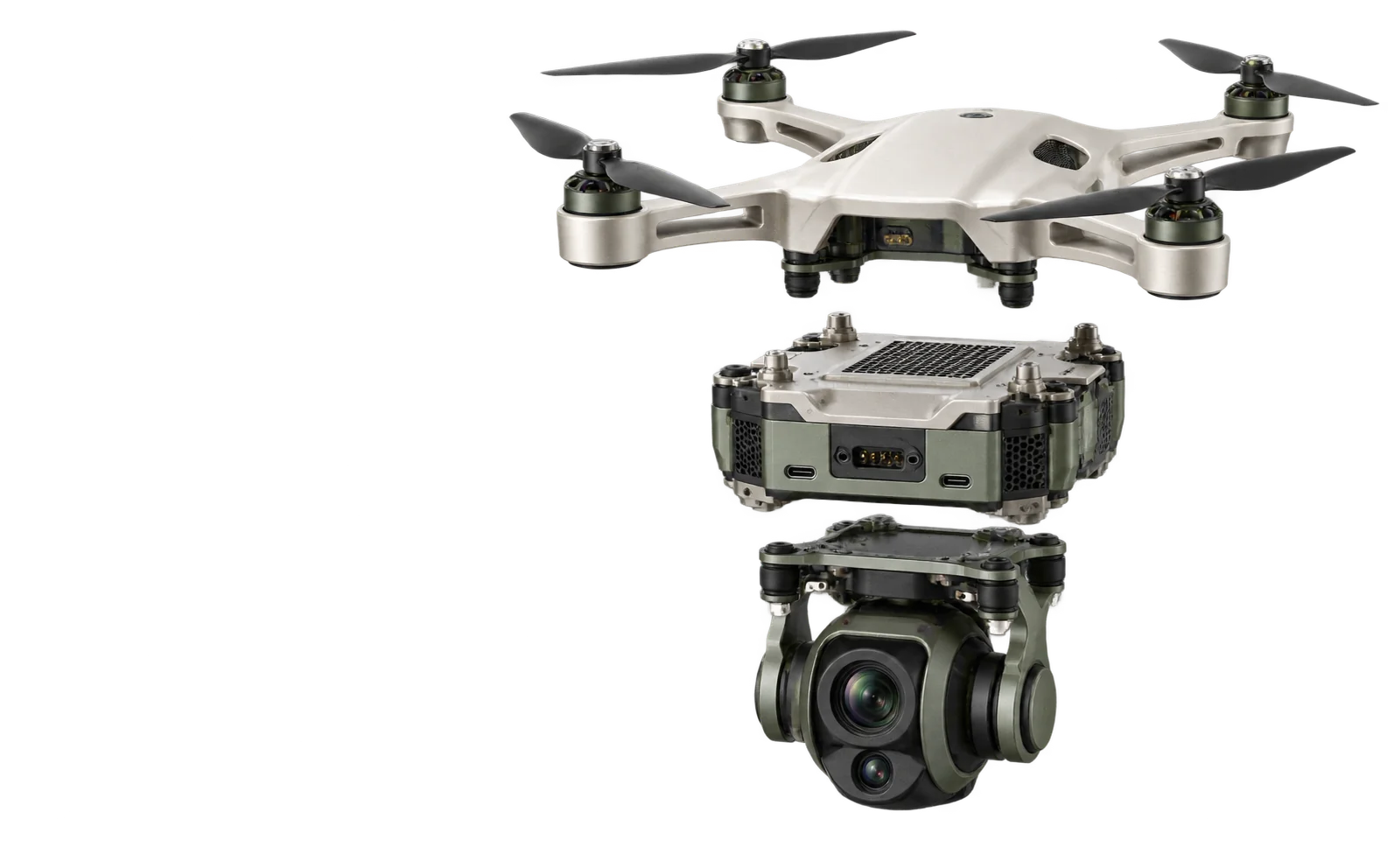
    Flight controller, navigation sensors, cameras or mission payloads, onboard compute, power, and vehicle health.

    PX4-compatible interfaces · MAVLink · sensor drivers · payload SDKs

  2. 02

    Local perception, mission logic, policy, buffering, health checks, and bounded degraded-link behavior.

    NeuralOS · model runtime · device policy · signed image

  3. 03

    Ground station, command link, telemetry, remote identification where required, and alternate communication paths.

    Ground control · link monitoring · identity · geofence · PACE profile

  4. 04

    Planning, approvals, dispatch, airspace and weather context, exception routing, maintenance, and customer systems.

    NowFlow · UTM/USS integration · maintenance · GIS · APIs

  5. 05

    Configuration, test results, flight replay, anomalies, maintenance, releases, and corrective actions.

    Manifest · safety case inputs · log archive · issue and change record

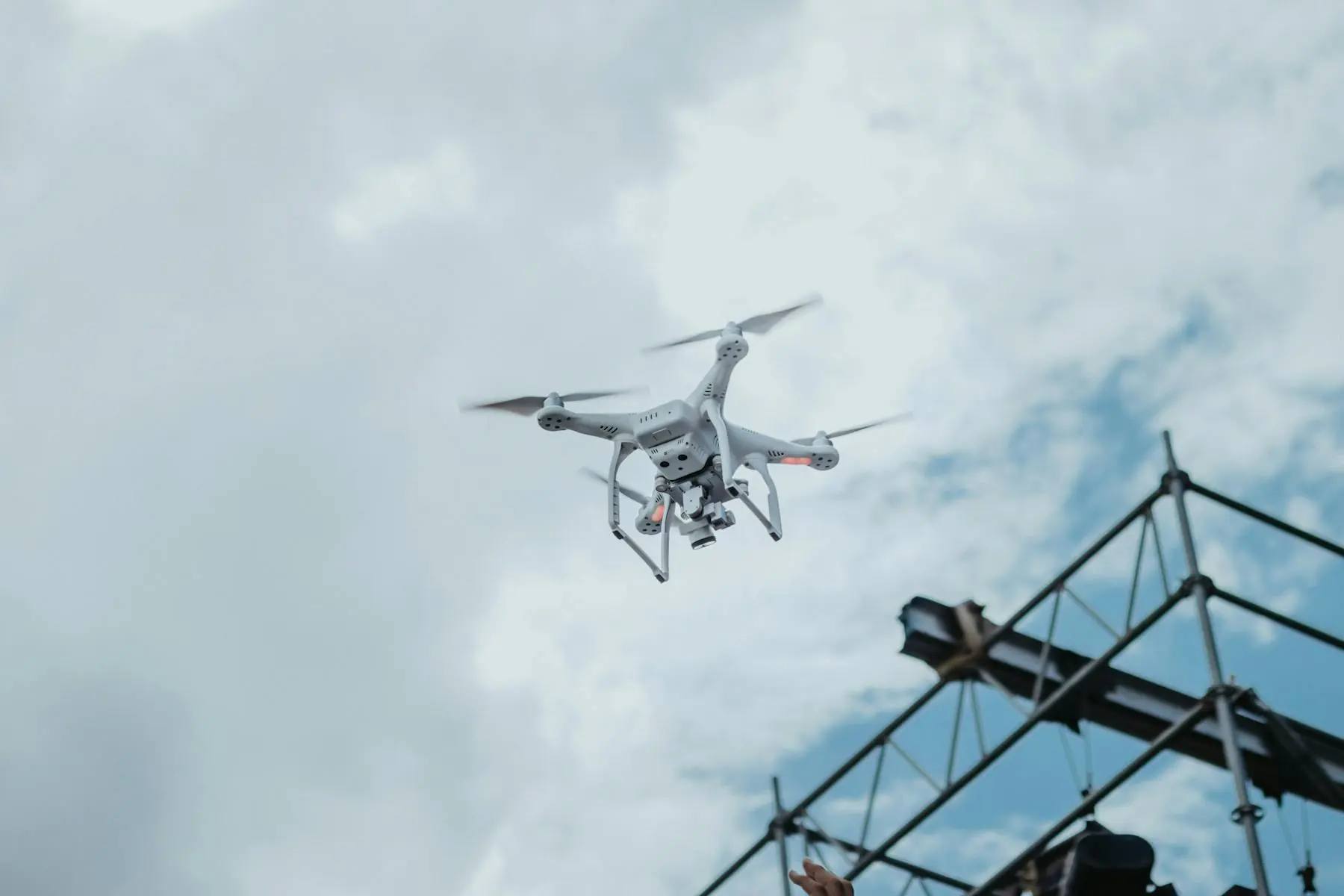
Professional uncrewed aircraft in flight during an aerospace operations programme
FIG 02 · PLATFORM CONTEXT — Airframe, payload, compute, flight controller, communication link, and operational design domain determine the real engineering target.
005Use-case profiles

Range, payload, latency, and regulatory category are intentionally not generalized; they are determined for the aircraft and operation.

U01
Engineering

Coordinate route, asset registry, payload capture, onboard screening, anomaly review, and work-order handoff for linear or distributed infrastructure.

User
Flight operator · inspection engineer
Decision
Which observations require engineering review or a repeat mission?
Evidence
Flight configuration · georeferenced capture · model result · reviewer disposition
U02
Prototype

Exercise the full mission, link, operator, contingency, and evidence chain in a bounded test area before broader operational approval is pursued.

User
Flight-test director · safety lead · remote pilot
Decision
Which ODD assumptions and failure responses are supported by the test?
Evidence
Test cards · telemetry · safety events · debrief and corrective actions
U03
Engineering

Normalize readiness, mission, maintenance, payload, and release state across different aircraft without pretending they share one capability envelope.

User
Fleet manager · maintenance controller
Decision
Which aircraft is ready and appropriately configured for this mission?
Evidence
Fleet manifest · compatibility check · dispatch record · maintenance trail
U04
Research

Evaluate navigation aids against a classical baseline under defined GNSS degradation, motion, lighting, terrain, and sensor conditions.

User
Navigation researcher · platform integrator
Decision
What technique, sensor, or field test is justified next?
Evidence
Dataset · error budget · baseline comparison · limitations
Technical termsExpand the abbreviations used on this page.7 definitions
BVLOS
Beyond visual line of sight. An uncrewed-aircraft operation conducted beyond the remote pilot's unaided visual range, subject to the applicable authority and operating approval.
GNSS
Global navigation satellite system. Satellite constellations and services used for positioning, navigation, and timing.
ODD
Operational design domain. The explicit conditions—such as environment, route, weather, speed, or system state—within which an automated function is intended to operate.
PACE
Primary, alternate, contingency, and emergency. A planning method that assigns fallback communication or operating paths before the primary path fails.
TEV&V
Test, evaluation, verification, and validation. Connected activities used to check requirements, measure performance, expose limitations, and determine fitness for the intended use.
UAS
Uncrewed aircraft system. The aircraft, control station, communications, people, and supporting elements required for an uncrewed operation.
UTM
UAS traffic management. Services and procedures that support coordinated uncrewed-aircraft operations in applicable airspace.
006Assurance and standards context

Aviation rules vary by jurisdiction, aircraft, operation, and approval path. Standards and protocols below are design and integration references, not a blanket compliance statement.

Program-specific

Bound airspace, vehicle, environment, people, communications, contingencies, and evidence to the intended operation.

Integration reference

Use documented messages, signing options, version compatibility, and test harnesses for command and telemetry integration.

Jurisdiction-specific

Map the applicable authority, category, operator, equipment, identification, detect-and-avoid, and command-link obligations.

Assurance reference

Define model envelope, data quality, operator role, failure response, logging, and change control for AI-enabled functions.

Aerospace programme review

We can map the mission workflow, integration boundaries, target-device benchmark, safety evidence, and a bounded next test without inventing platform performance.