
Quantum finance should start with use-case inventory, classical baselines, data constraints, model-risk controls, PQC exposure, and executive decision records, not with generic portfolio-optimization hype.
Gap map
Quantum finance readiness map
Finance programmes need one evidence trail across use-case selection, baselines, risk controls, and cryptographic exposure.
Opportunity
- Portfolio optimization
- Monte Carlo
- Scenario analysis
- Fraud and risk signals
Controls
- Model risk
- Data lineage
- Classical baseline
- Stress testing
Security
- PQC inventory
- Vendor readiness
- Long-lived data
- Board reporting
June 2026 signal
Central banks are treating quantum as a preparation problem.
The June 2026 G7 central-bank reference report is important because it frames quantum technologies as both an opportunity and a risk for financial-sector participants. Bundesbank and Banca d'Italia point to the same preparation surface: quantum computing, quantum communication, quantum sensing, and quantum-safe security will affect financial institutions before every application is production-ready.
The World Economic Forum financial-services initiative reinforces the market pattern: the useful work is collaborative readiness, use-case evaluation, talent, security, and implementation discipline.
Use-case discipline
Do not start with a portfolio demo; start with model-risk evidence.
Finance teams already have strong classical tooling, strict governance, and model-risk obligations. A quantum experiment has to survive comparison against those baselines. It also has to show how data loading, error, sampling, cost, and explainability affect the decision.
A serious quantum finance pilot should produce a record that model-risk, security, and leadership teams can review together.
- Define the financial decision before choosing the quantum method.
- Compare against strong classical optimization, Monte Carlo, and risk engines.
- Keep data lineage, model version, seed, backend, and assumption metadata attached.
- Separate future quantum advantage tracking from immediate PQC migration work.
Neura Parse fit
QFlow and NowFlow can connect experiments to controls.
QFlow can store quantum finance experiments as reviewable records: objective, baseline, backend, resource estimate, result, limitation, and next decision. NowFlow can coordinate approvals, vendor follow-up, model-risk review, and board reporting. QANTIS can express uncertainty when scenario evidence affects an allocation, hedge, or operational risk decision.
This is a stronger service than generic quantum advisory. It connects research, financial controls, and quantum-safe security in one operating model.
Practical takeaways
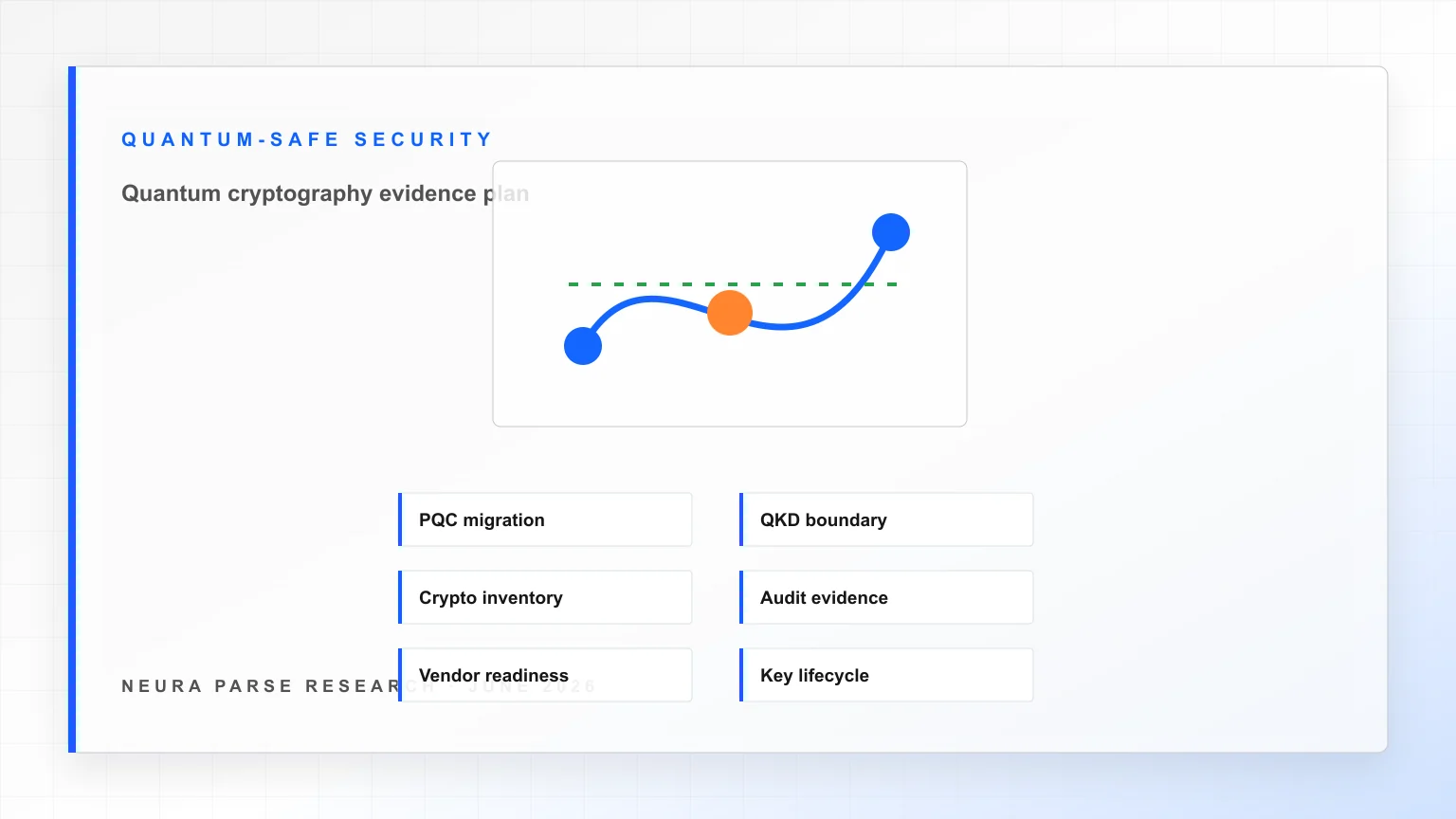
Quantum finance readiness should start with model-risk evidence and security exposure.
Use-case selection must include classical baselines and data constraints.
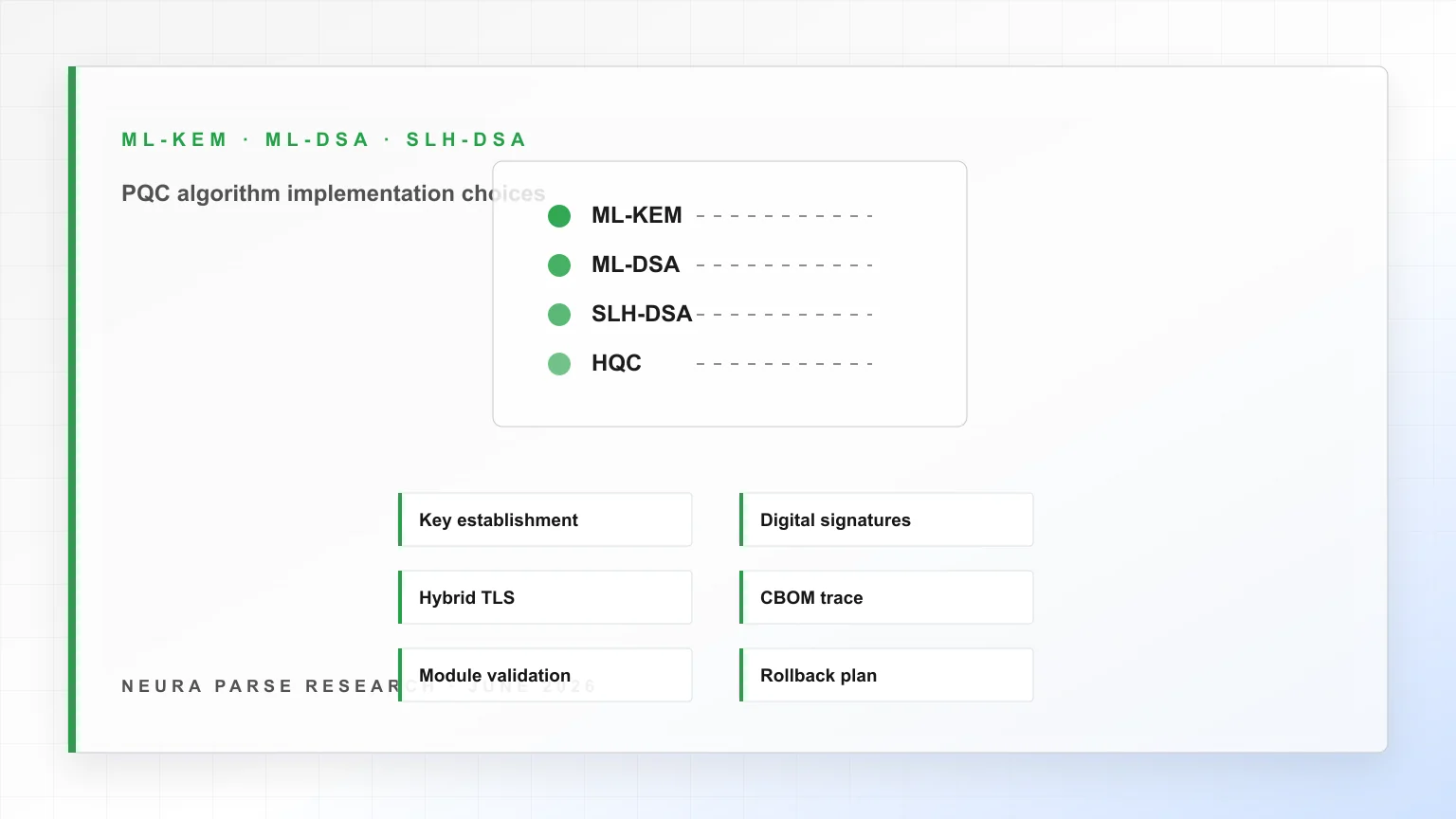
PQC migration is part of finance quantum readiness, not a separate future project.
QFlow, NowFlow, and QANTIS map cleanly to experiments, workflow, and risk evidence.
Sources reviewed
Source 01
G7 central banks quantum technologies report, June 2026
G7 central banks reference report on quantum technology opportunities, risks, and preparation for the financial sector.
Source 02
Bundesbank: quantum technologies and the financial sector
Financial-sector preparation guidance covering quantum computing, quantum communication, quantum sensing, and quantum security.
Source 03
Banca d'Italia: G7 central banks publish first report on quantum technologies
Central-bank announcement of the G7 quantum technologies report for financial-sector participants.
Source 04
World Economic Forum Quantum in Financial Services initiative
Industry initiative focused on quantum computing applications, readiness, and collaboration in financial services.
Source 05
OMB M-26-15: Execution of the Migration to Post-Quantum Cryptography
June 2026 federal execution memo for post-quantum cryptography migration planning and reporting.