
Abstract
The defensible approach avoids sensitive technical detail and shows how quantum sensing, secure communication, optimization, and autonomy-support experiments can be governed with reviewable evidence and human authority.
Gap map
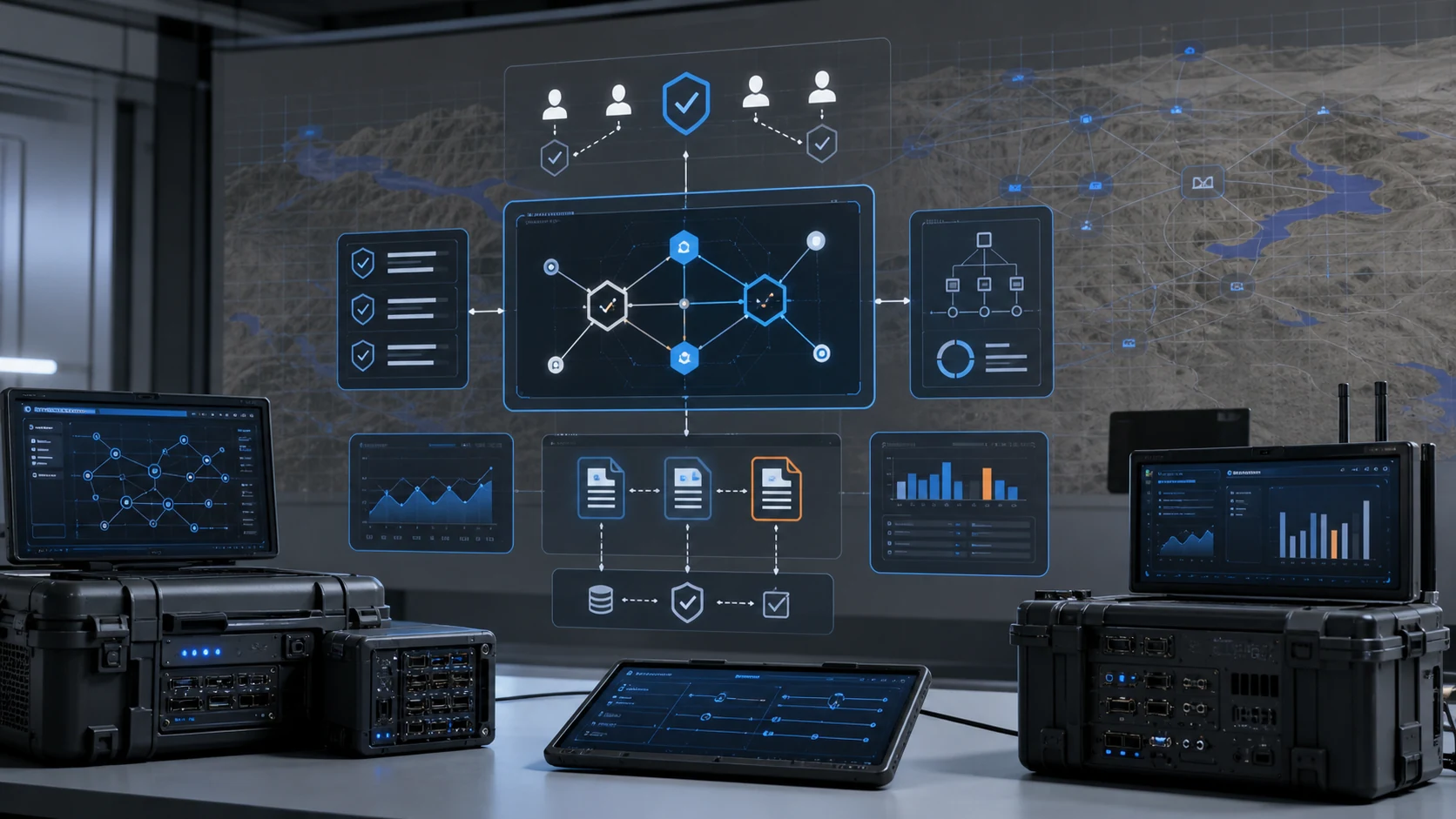
Quantum defense assurance map
Public-safe quantum defense work should keep experiments, authority, security, and evidence in one reviewable surface.
Quantum capability
- Sensing
- Secure links
- Optimization
- Simulation
Operational controls
- Human review
- Policy gates
- Runtime boundaries
- Fail-safe paths
Evidence
- Experiment record
- Source context
- Risk note
- Exportable review pack
Quantum defense ecosystems are moving, but public evidence needs discipline.
U.S. quantum innovation policy keeps commercialization, industrial capacity, and national capability in focus. DARPA experimentation and DoD responsible AI guidance add the operational requirement: advanced capability work needs explicit controls, bounded evaluation, and evidence that reviewers can inspect.
Public analysis can cover quantum workflow governance, secure-communications readiness, quantum-safe security, sensing evidence, and autonomy assurance without exposing confidential architectures or implying formal endorsement.
TD · Technical depth5 supporting chapters and the working checklist.Read deeper
The useful assurance layer is reviewable mission evidence.
Quantum defense use cases can touch sensing, communications, routing, simulation, materials, and decision support. Each area needs a different evidence standard. A sensing experiment needs calibration and error context. A secure-link assessment needs infrastructure and threat-model context. An autonomy-support workflow needs human authority and fail-safe behavior.
A single operating model can still connect them: define the problem, attach public source context, run bounded experiments, preserve metadata, document limits, and route decisions through human review.
- Keep public descriptions high-level and exclude sensitive proposal detail.
- Separate quantum-safe cryptography from quantum communication claims.
- Preserve human authority for safety-impacting or mission-impacting decisions.
- Use signed runtime and telemetry evidence when edge autonomy is part of the system.
Connect experiment records, edge assurance, and human review.
QFlow can record experiments, provider context, assumptions, baselines, and review notes. NeuraOS can support signed edge runtime, telemetry, and rollback for deployed AI systems. NowFlow can manage approval paths and evidence routes. QANTIS can expose uncertainty when a quantum or AI-supported output changes a decision.
This allows readiness and governance to be assessed without exposing sensitive system internals.
How to evaluate quantum defense claims from suppliers.
Apply the same evidence standards to inbound claims that the program applies to its own work. A sensing claim without calibration and error context is a demonstration, not evidence. A secure-link claim without infrastructure and threat-model context cannot be assessed against the program's actual environment.
Check whether a claim confuses categories. Quantum-safe cryptography is a security layer that can be evaluated today; quantum communication is a separate capability with different infrastructure dependencies. A supplier that merges the two in one claim should be asked to separate them before any assessment proceeds.
Require reviewable form. Claims should arrive as records the program can inspect: assumptions, baselines, documented limits, and a risk note, packaged so an internal reviewer can audit them. Public assurance material such as the DoD CDAO Responsible AI resources cited in this article sets the expectation that governance evidence exists across the lifecycle, not only at delivery.
- Sensing claims: calibration and error context attached.
- Secure-link claims: infrastructure and threat-model context stated.
- Cryptography claims: quantum-safe cryptography separated from quantum communication.
- Autonomy claims: human authority and fail-safe behavior described.
- All claims: assumptions, baselines, and limits in reviewable, exportable form.
Operational checklist
Program checklist: governed quantum defense experiments
Derived from the article's assurance map and takeaways. Work the items in order when standing up a quantum defense experiment track.
- 01
Classify each candidate use case into a capability lane: sensing, secure links, optimization, or simulation.
- 02
Define the evidence standard for each lane before any experiment runs: calibration and error context for sensing, infrastructure and threat-model context for secure links, human authority and fail-safe behavior for autonomy support.
- 03
Separate quantum-safe cryptography claims from quantum communication claims in every internal and public document.
- 04
Attach public source context to every experiment record and keep experiments bounded.
- 05
Route every safety-impacting or mission-impacting decision through a named human reviewer with an approval trail.
- 06
Require signed runtime and telemetry evidence for any edge autonomy component, with a tested rollback path.
- 07
Preserve metadata, assumptions, baselines, and documented limits in a single reviewable record per experiment.
- 08
Strip technical proposal detail from public content and avoid implying endorsement from ecosystem events.
- 09
Package each experiment as an exportable review pack with a risk note before it informs a decision.
Practical takeaways
01
Public quantum-defense analysis needs clear sensitivity boundaries and reviewable evidence.
02
Sensing, secure communication, optimization, and autonomy each need different proof.
03
QFlow can make experiments reviewable; NowFlow can manage authority paths.
04
NeuraOS and QANTIS fit edge assurance and uncertainty-aware decision support.
RA · Reference annexDefinitions, recurring questions, editorial method, and primary sources.Inspect
The analysis above carries the main reading flow. This reference layer keeps terminology, recurring questions, editorial method, and primary sources available without interrupting the argument.
Terminology
Terms behind Quantum technologies for defense: sensing, secure communications, and assurance..
- Quantum sensing
- Measurement techniques that use quantum effects to detect physical quantities with high precision. In a defense program, a sensing result needs calibration and error context before it can inform a decision.
- Quantum-safe cryptography (PQC)
- Cryptographic algorithms designed to stay secure against future quantum computers. It is a security layer applied to existing systems and is distinct from quantum communication.
- Quantum communication
- Secure links whose properties depend on quantum infrastructure. Assessing one requires infrastructure and threat-model context, and its claims should not be merged with quantum-safe cryptography.
- Assurance record
- A reviewable package that ties an experiment to its source context, assumptions, baselines, documented limits, and a risk note, so a reviewer can audit the work later.
- Human authority path
- The defined route by which a safety-impacting or mission-impacting decision reaches a human reviewer for approval before it takes effect.
- Fail-safe path
- A predefined behavior an autonomous system falls back to when it exits its runtime boundaries or loses required approvals.
- Signed runtime
- An edge software environment whose components are cryptographically signed, so the program can verify what code is actually running on a deployed system.
- Uncertainty exposure
- Making the confidence behind a quantum or AI-supported output visible to the reviewer whenever that output changes a decision.
Field questions
Program questions behind Quantum technologies for defense: sensing, secure communications, and assurance..
Q01What is the difference between quantum-safe cryptography and quantum communication in a defense program?
Quantum-safe cryptography is a security layer: algorithms designed to protect existing systems against future quantum attacks, and it can be planned and evaluated today. Quantum communication covers secure links whose properties depend on quantum infrastructure, and assessing it requires infrastructure and threat-model context. The two should be kept as separate claims with separate evidence.
Q02What evidence should a quantum sensing experiment produce before its results inform a mission decision?
At minimum, calibration and error context, preserved metadata, stated assumptions and baselines, and documented limits. The result should sit in an experiment record with public source context and a risk note, packaged as an exportable review pack. Only then should it enter a decision path, and that path should end at a human reviewer.
Q03How can an organization discuss quantum defense work publicly without exposing sensitive detail?
Keep public content high-level and focused on governance: how experiments are bounded, how evidence is preserved, and how human authority is maintained. Avoid technical proposal detail and confidential architectures, and do not imply formal endorsement from ecosystem events or policy signals. The defensible public lane is readiness and method, not system internals.
Q04Where does human authority sit when quantum or AI outputs support autonomy?
Safety-impacting and mission-impacting decisions stay with humans, reached through explicit approval paths rather than informal habit. Policy gates, runtime boundaries, and fail-safe paths make the boundary enforceable at runtime, and signed runtime plus telemetry evidence makes edge behavior auditable. QANTIS can expose the uncertainty behind an output when it changes a decision, so the reviewer approves with the confidence level visible.
Q05Which Neura Parse products map to which part of the quantum defense assurance stack?
QFlow Studio records experiments, provider context, assumptions, baselines, and review notes. NowFlow, an agentic workflow platform, manages approval paths and evidence routes. NeuraOS supports signed edge runtime, telemetry, and rollback for deployed AI systems, and QANTIS exposes uncertainty where a quantum or AI-supported output changes a decision.
Q06What do the June 2026 quantum defense signals mean for program planning?
U.S. quantum innovation policy keeps commercialization, industrial capacity, and national capability in focus, while DARPA experimentation and DoD responsible AI guidance reinforce the need for controlled evaluation and assurance. The practical implication is to stand up governed, evidence-rich experiment tracks now rather than wait for capability maturity. A policy or research signal is context, not an endorsement or a procurement selection.
Editorial record
How Quantum technologies for defense: sensing, secure communications, and assurance. was checked.
- Editorial owner
- Neura Parse Research
- Last verified
- July 12, 2026
- Method
- Synthesis of the dated primary and official records listed below, checked against the operating question in this note.
- Scope limit
- Planning analysis—not certification, customer performance evidence, procurement advice, or a claim of production readiness.
SRSources reviewed
3 records