Abstract
The rarest tested row closely tracks the analytic accepted-event probability, but transpilation keeps the circuit shallow. The result maps a logical sample-complexity envelope rather than validating deep circuits or wall-clock speedup.
Gap map
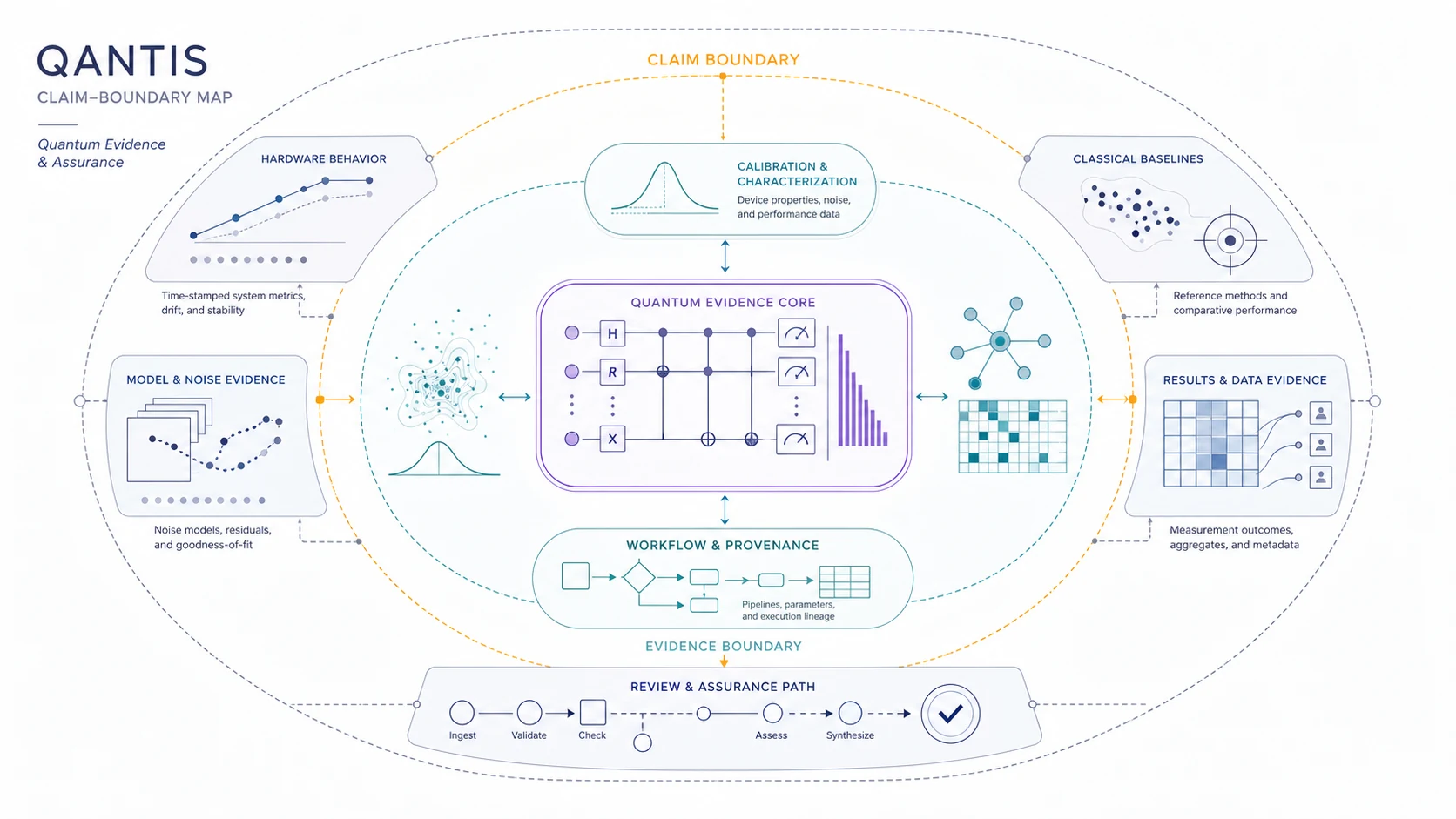
From rare evidence to an auditable operating envelope
The sweep asks whether accepted-event probability follows the bounded logical schedule on hardware, while keeping physical depth and runtime outside the claim.
Rare observation
- Evidence probability as low as 1e-6
- Direct accepted-event sampling becomes demanding
- A lower-bound schedule sets a bounded iterate count
Hardware probe
- One-qubit Grover-Brassard oracle
- Primarily IBM Kingston Heron R2
- One Heron R3 crossover check
Reported rarest row
- 0.9718 measured acceptance
- 0.9714 analytic prediction
- 971,832x logical amplification
What remains unclaimed
- Deep rare-event circuit fidelity
- Queue-inclusive or execution-time speedup
- End-to-end autonomous-system advantage
Rare observations make evidence estimation the expensive part of belief updating.
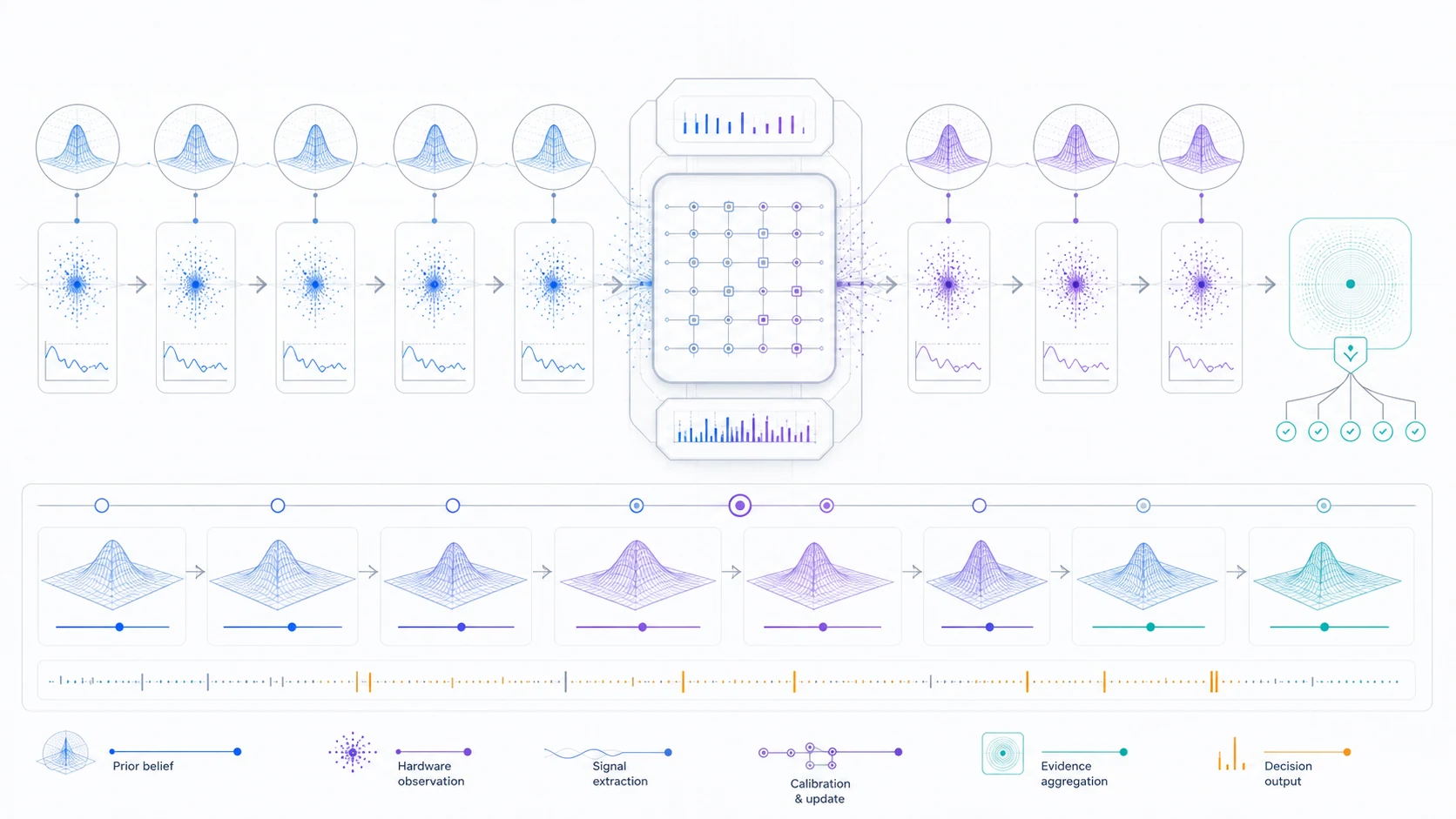
A Bayes update divides by the probability of the observed evidence. When that event is very rare, direct accepted-event sampling needs many trials before the estimator has enough useful observations. QANTIS targets this inference-side bottleneck rather than moving the entire planner onto a quantum processor.
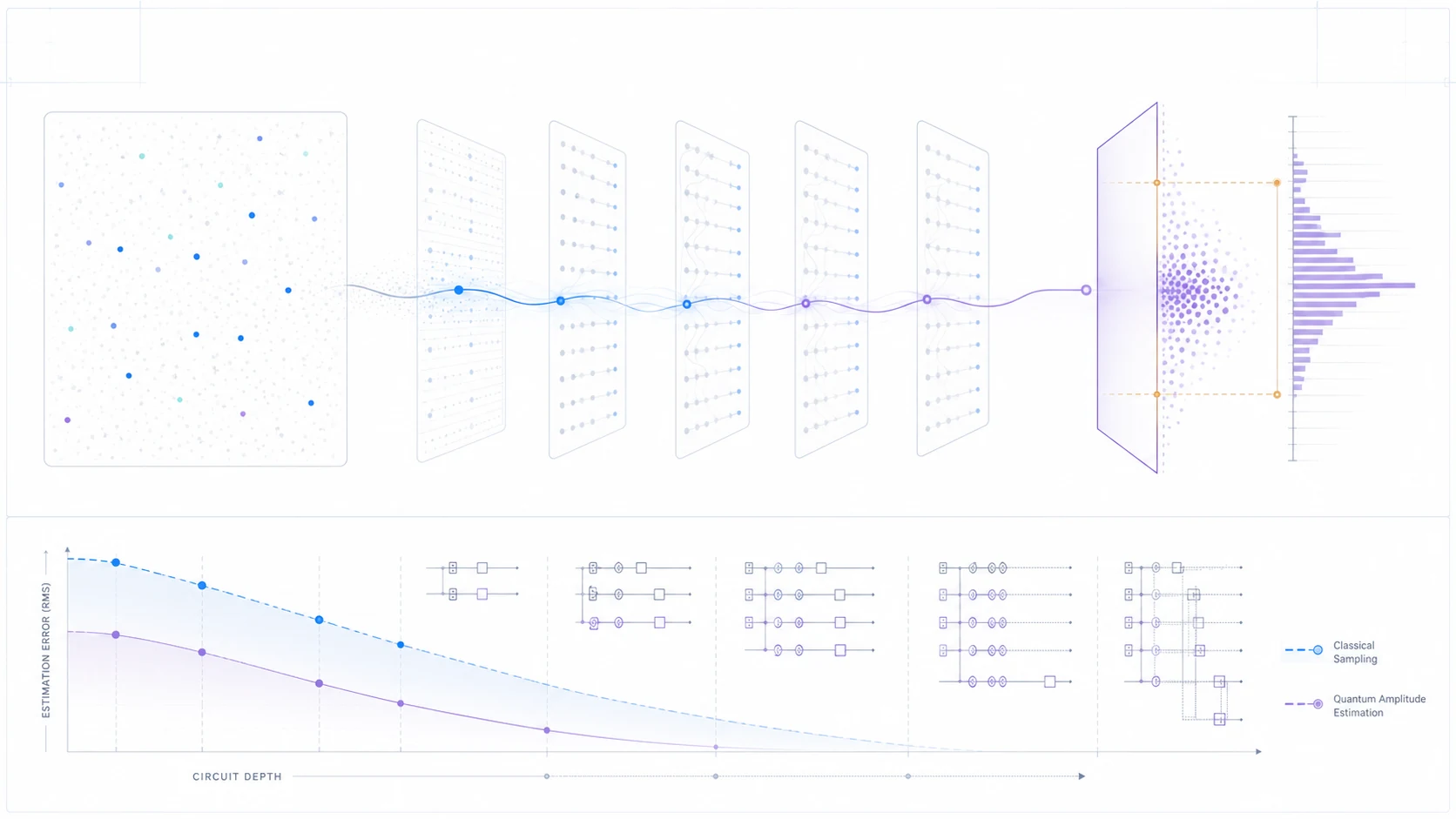
Amplitude amplification changes the logical sampling relationship toward inverse-square-root evidence scaling. The paper tests whether a bounded schedule can raise the accepted-event probability close to its analytic target on present Heron hardware across a sweep that reaches one-in-a-million evidence.
TD · Technical depth7 supporting chapters and the working checklist.Read deeper
At 1e-6 evidence, measured acceptance closely follows the analytic target.
For the rarest tested evidence probability, one in one million, the Kingston Heron R2 run reports accepted-event probability 0.9718 against an analytic prediction of 0.9714. The paper labels the corresponding ratio 971,832x logical amplification.
The word logical carries the claim boundary. It describes the ratio between the original evidence probability and the measured accepted-event probability under the tested logical schedule. It does not include compilation overhead, queue time, execution latency, repeated calibration, classical orchestration, or the complete cost of a belief update.
logical amplification = measured accepted-event probability / original evidence probabilityThe most dramatic row is also deliberately shallow.
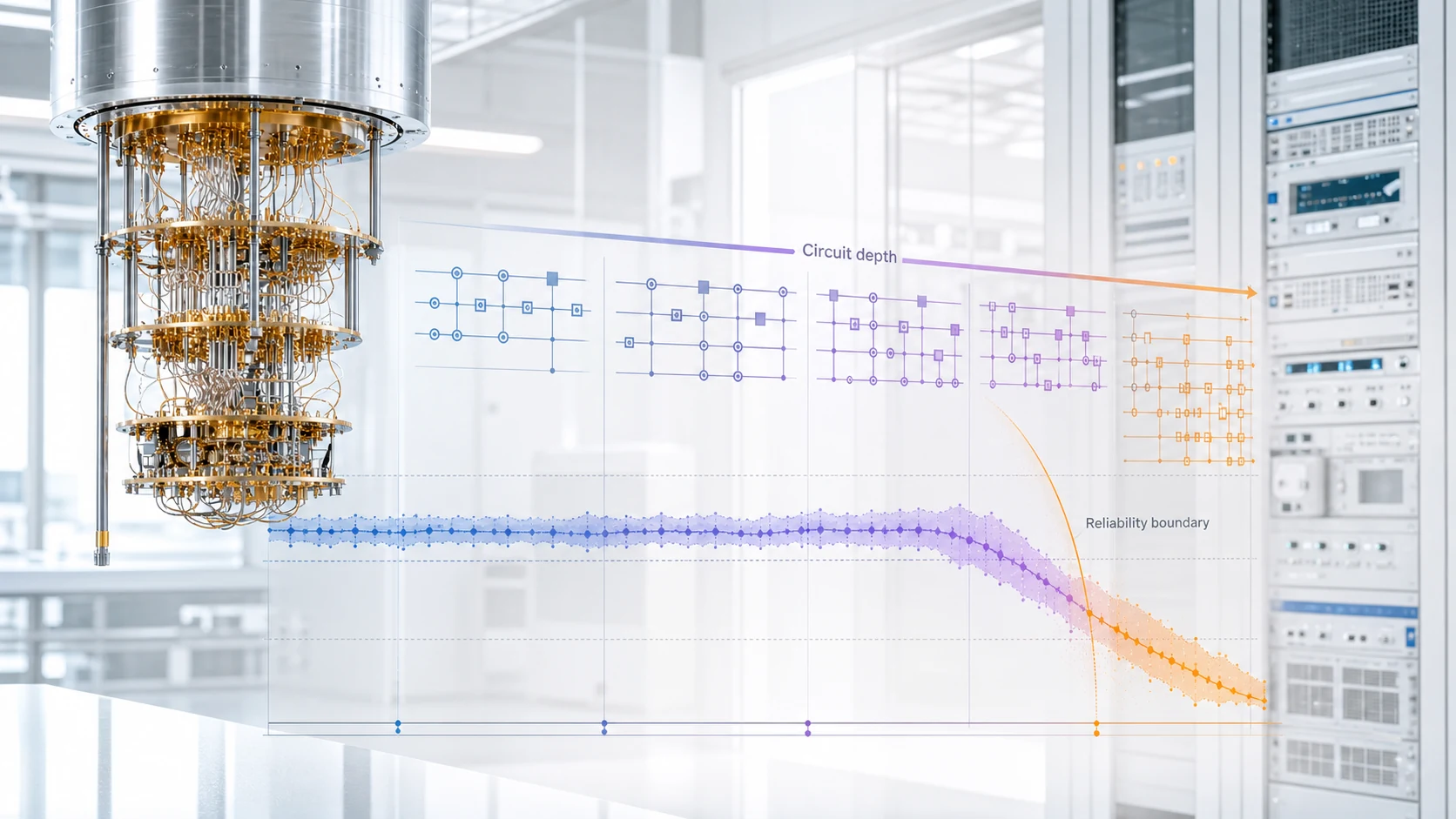
After transpilation at the reported default optimization level, the rare-event source circuit collapses to at most six single-qubit basis gates. That makes the row useful for validating the logical sample-complexity envelope, but it does not validate long or deep rare-event circuits.
The paper includes a barrier-fenced depth sweep to expose this boundary. Merged circuits track the logical prediction; deliberately unmerged deeper circuits become physical-depth frontier markers. The result therefore supports a shallow operating map and identifies depth as the next hardware constraint.
Rare-event amplification supports the service; it does not replace the primary result.
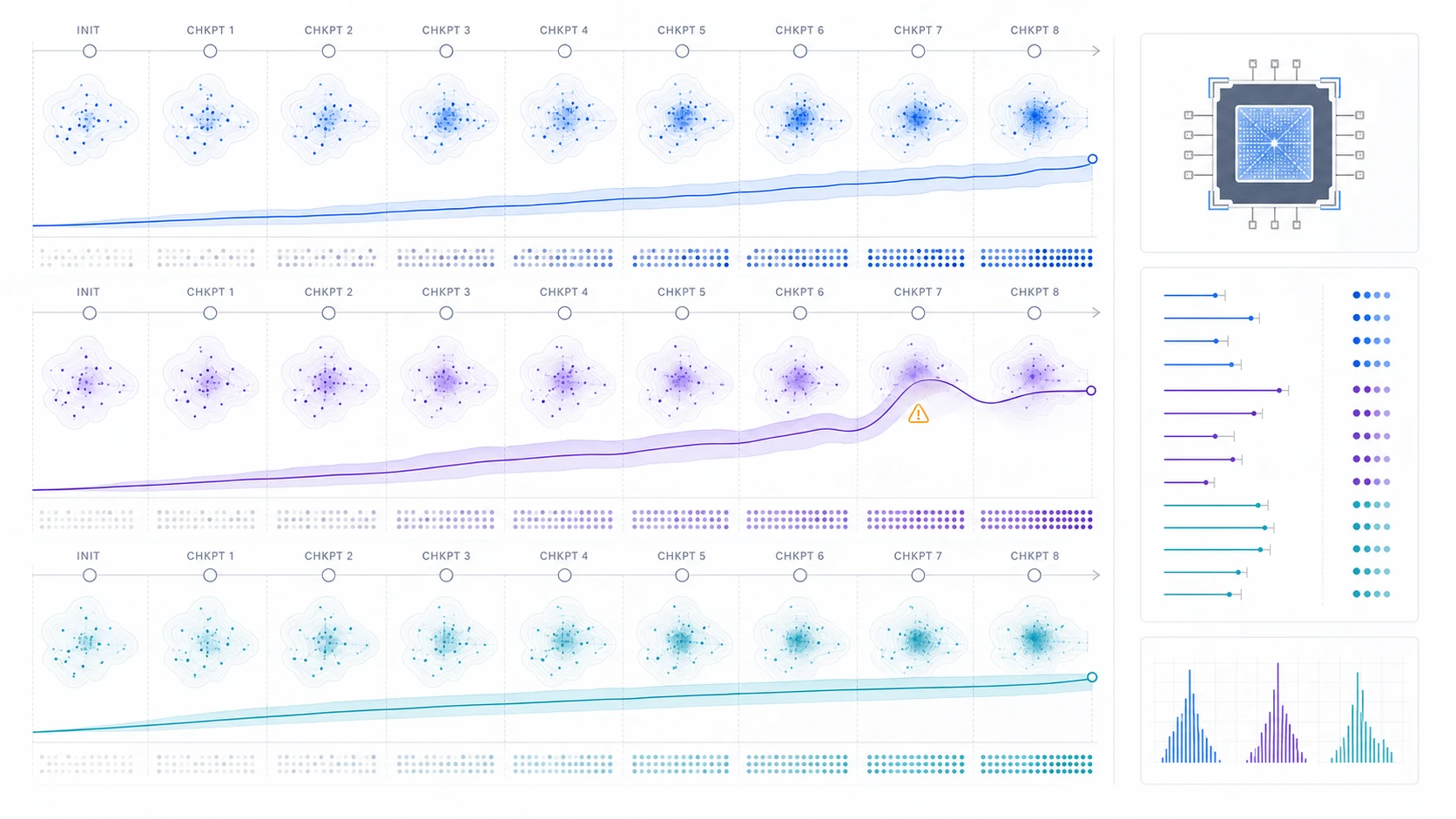
The primary claim remains sequential Tiger POMDP belief updating in the reported 8-step and 12-step runs. The rare-event sweep is supporting evidence that maps the logical sampling regime the service wants to exploit. Heron R3 transfer and longer horizons provide other supporting controls.
Four-state and UCGate/QSD pilots are exploratory. Hardware advantage, wall-clock speedup, full policy optimization, downstream MTDA advantage, and end-to-end autonomy are out of scope.
- Primary: sequential planner-facing Tiger posteriors.
- Supporting: rare-event logical envelope and hardware transfer checks.
- Exploratory: scale-up encodings and deeper synthesis pilots.
- Out of scope: physical-runtime and complete-system advantage claims.
Use the curve as a routing boundary for future experiments.
An operating envelope is useful when it changes what a system does. A research workflow can route an evidence update to hardware only when the estimated event probability, scheduled iterate count, compiled depth, calibration state, and fallback path remain inside the tested corridor.
Outside that corridor, the correct action is to use classical sampling, redesign the oracle, reduce depth, or gather more evidence. The map becomes an engineering control only when its caveats travel with every decision.
Logical amplification answers a sampling question, not a stopwatch question.
Rare observations are difficult because direct sampling may wait a long time for enough accepted events. Amplitude amplification changes the probability of measuring that accepted event, so the useful first question is whether the measured acceptance follows the analytic target as the original evidence becomes very small.
At evidence probability 0.000001, the reported hardware row measures 0.9718 acceptance against 0.9714 analytically. The resulting 971,832x ratio is striking, but its unit matters: it is logical amplification of event probability. It says nothing by itself about compilation, queueing, control overhead, or total elapsed time.
The envelope is therefore a map for engineering. It identifies a rare-evidence regime worth investigating and, alongside separate depth sweeps, shows where physical circuit depth begins to break the logical picture. A future speed claim would need complete timing records and an end-to-end baseline that this preprint does not provide.
Keep the circuit family and the caveat beside the number.
The rare-event values come from arXiv:2607.06760, submitted 7 July 2026. The source calls the figure an operating map and a logical sample-complexity envelope. It also explains that the one-qubit bounded-length Grover-Brassard circuits are distinct from the phase-shifted FPAA circuits used in the sequential Tiger loop.
For that reason this guide never converts 971,832x into a latency, throughput, cost, or end-to-end autonomy claim. The paper reports none of those outcomes.
Operational checklist
Claim checklist: report a rare-event envelope honestly
Use the envelope to decide what to test next, not to manufacture a speedup headline.
- 01
State the original evidence probability and the analytic amplified target.
- 02
Report measured acceptance with backend and circuit-family context.
- 03
Label the ratio as logical amplification, never as wall-clock acceleration.
- 04
Keep the rare-event circuit distinct from the sequential FPAA belief-update loop.
- 05
Archive raw counts, iteration depth, transpilation output, and backend manifest for each row.
- 06
Use deliberately unmerged depth probes to locate the physical noise frontier.
- 07
Record submission, queue, execution, and runtime timestamps before making any future latency claim.
- 08
Describe one-in-a-million evidence as an operating-envelope test, not a production advantage demonstration.
Practical takeaways
01
Interpret 0.9718 versus 0.9714 as close agreement for the reported shallow one-qubit row.
02
Label 971,832x as logical amplification every time it appears.
03
Do not translate the rare-event envelope into wall-clock speedup or end-to-end advantage.
04
Keep the bounded Grover-Brassard sweep distinct from the sequential all-step FPAA loop.
05
Use compiled depth and calibration context as gates around any future hardware invocation.
RA · Reference annexDefinitions, recurring questions, editorial method, and primary sources.Inspect
The analysis above carries the main reading flow. This reference layer keeps terminology, recurring questions, editorial method, and primary sources available without interrupting the argument.
Terminology
Terms behind QANTIS rare-event evidence: an envelope, not an advantage claim..
- Rare-event evidence
- An observation whose probability under the current belief model is extremely small, making direct accepted-event sampling expensive.
- Logical amplification
- The ratio between measured accepted-event probability after amplification and the original evidence probability. It is not a wall-clock speedup.
- Acceptance probability
- The probability that measurement lands in the marked event subspace used by the belief-update oracle.
- Sample-complexity envelope
- A map of how the measurement burden is expected to scale across rare-event probabilities, separated from queueing, compilation, and runtime overhead.
- Grover-Brassard amplification
- The standard-reflection amplification family used for the one-qubit rare-event sweep; it is not the all-step FPAA circuit used in the Tiger sequence.
Field questions
Program questions behind QANTIS rare-event evidence: an envelope, not an advantage claim..
Q01What does 971,832x logical amplification mean in the QANTIS paper?
At an evidence probability of one in a million, the measured accepted-event probability was 0.9718, close to the analytic prediction of 0.9714. Comparing the measured acceptance with the original evidence probability gives 971,832x logical amplification. It describes the event-probability transformation in that circuit, not a 971,832x wall-clock speedup.
Q02Does the rare-event sweep prove quantum advantage?
No. The sweep maps a logical sample-complexity operating envelope for rare evidence. Queue-inclusive and queue-exclusive timings were not captured consistently enough for a runtime comparison, and the deepest physical circuits remain constrained by hardware noise. The preprint explicitly avoids a standalone hardware-advantage claim.
Q03Is the rare-event circuit the same as the sequential FPAA loop?
No. They are related but distinct probes. The Tiger loop uses all-step FPAA to preserve sequential posteriors, while the one-qubit rare-event envelope uses bounded-length Grover-Brassard amplification to test accepted-event probability across very small evidence values. Combining their headline numbers as if they came from one circuit would be misleading.
Editorial record
How QANTIS rare-event evidence: an envelope, not an advantage claim. was checked.
- Editorial owner
- Neura Parse Research
- Last verified
- July 20, 2026
- Method
- Synthesis of the dated primary and official records listed below, checked against the operating question in this note.
- Scope limit
- Planning analysis—not certification, customer performance evidence, procurement advice, or a claim of production readiness.
SRSources reviewed
3 records