Abstract
The headline FPAA run achieved a maximum Hellinger distance of 0.009 at 32,768 shots per step. At 10,000 matched shots, the maximum was about 0.033, so the evidence supports stability rather than equal-budget superiority.
Gap map
Read the FPAA comparison in two layers
The high-shot run demonstrates the best reported fidelity; the matched-shot control tests what remains when the shot budget is reduced.
Primary stability question
- Apply FPAA at every listen step
- Feed each returned posterior into the next update
- Measure distance from exact Bayes across the trajectory
High-shot headline
- 32,768 shots per step
- Maximum Hellinger distance 0.009
- Best posterior fidelity in the reported comparison
Matched-shot control
- 10,000 shots per step
- Maximum Hellinger distance about 0.033
- No equal-budget superiority conclusion
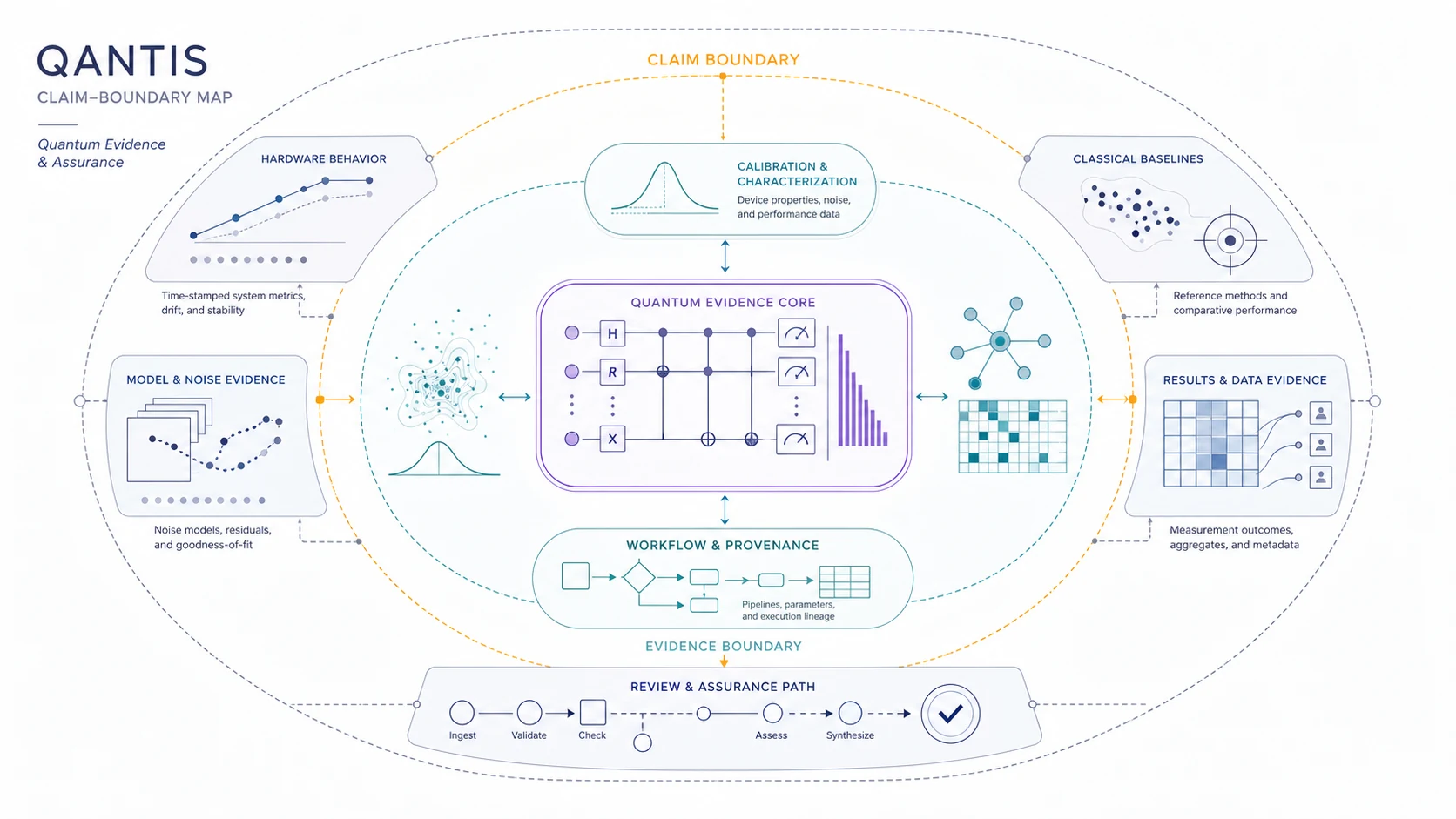
Evidence boundary
- Stability is the supported interpretation
- A constant-shot Grover rerun remains future work
- No wall-clock or hardware-advantage claim
Sequential inference makes overshoot an operational problem.
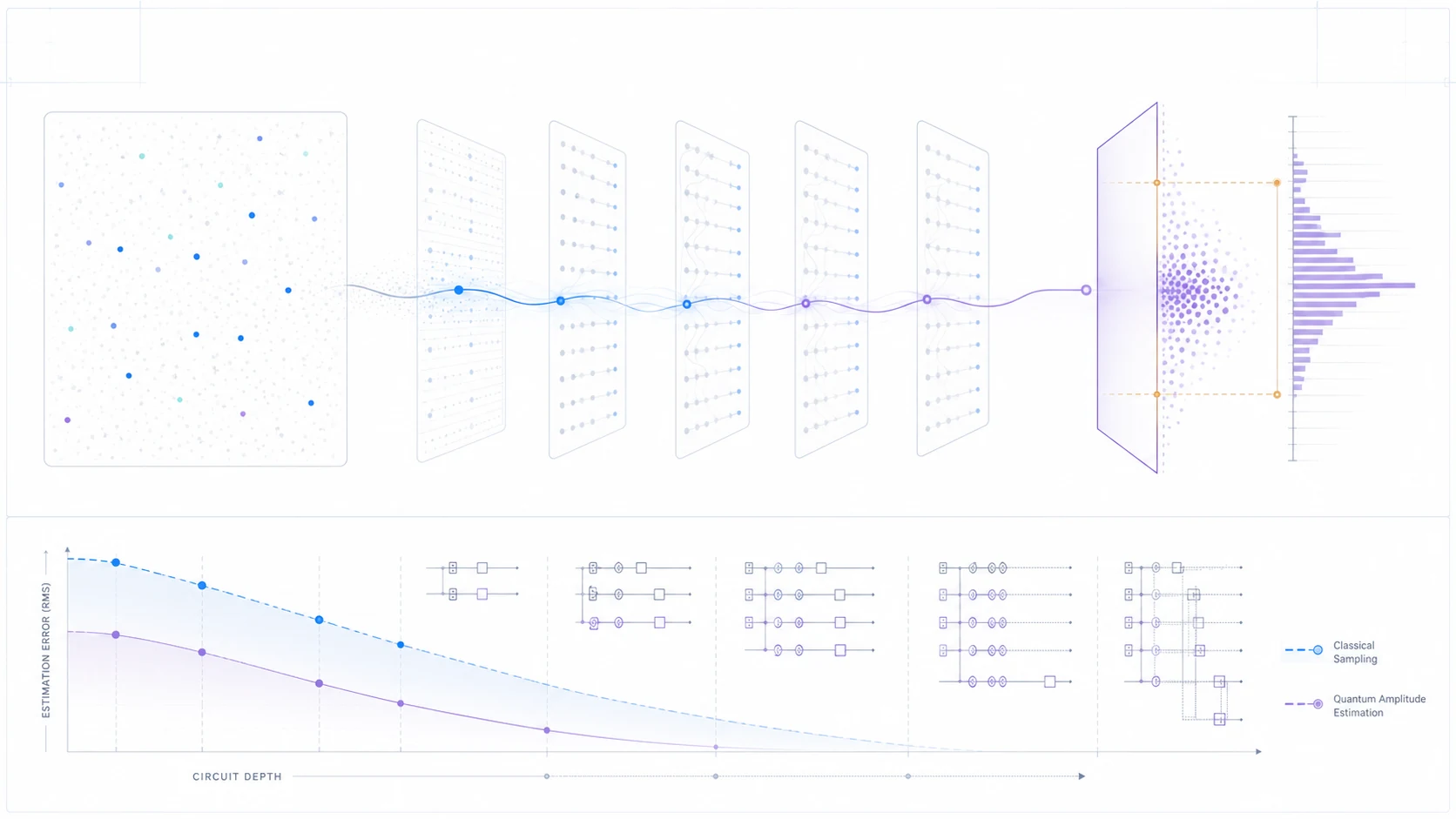
Standard Grover-style reflections can help when accepted evidence is rare, but they can overshoot when the belief becomes concentrated. A one-off experiment can avoid that regime with a guard. A reusable service faces it repeatedly because every observation changes the next prior.
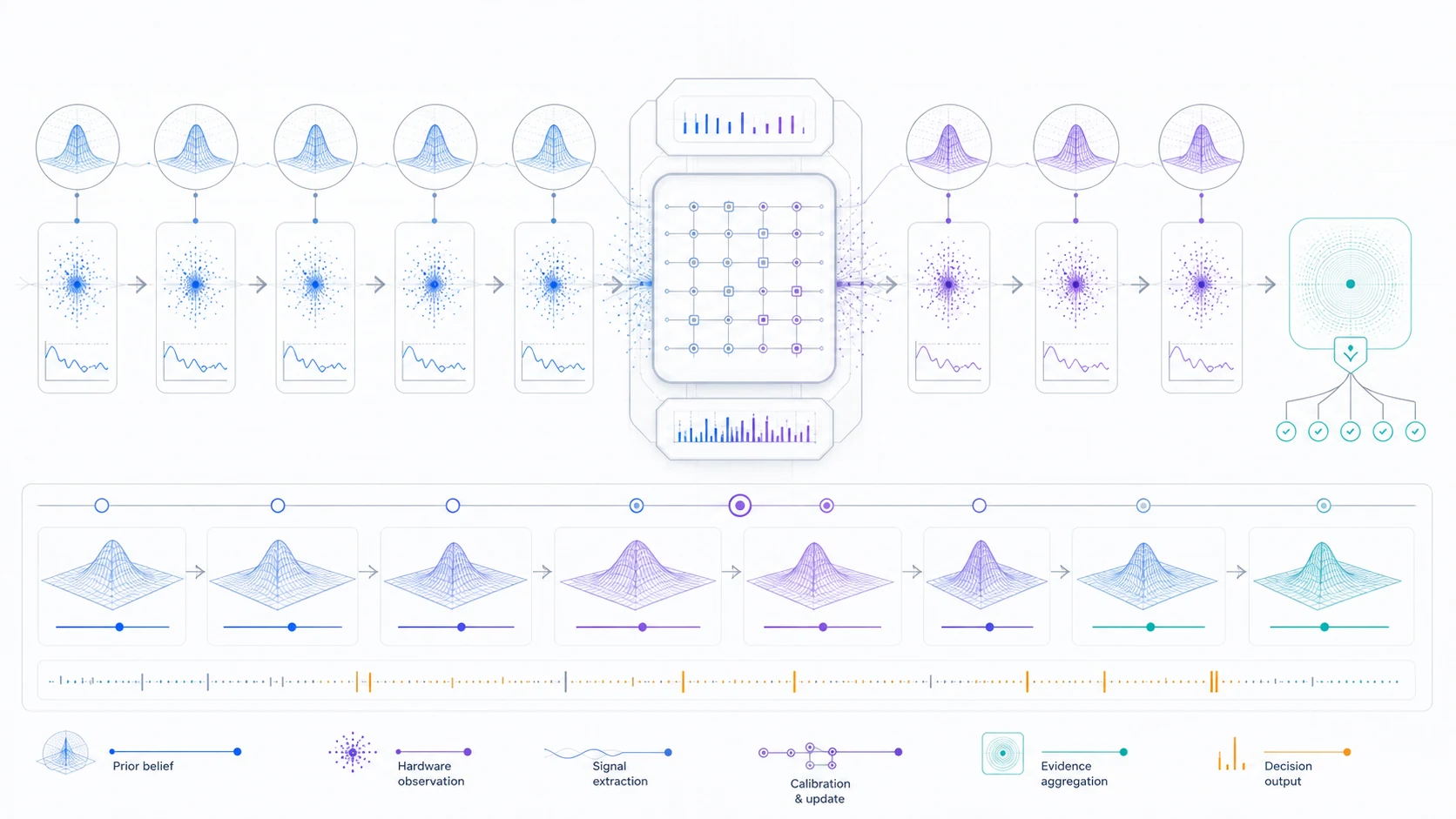
The paper tests fixed-point amplitude amplification with softer phase rotations at every listen step. The point is not simply a larger accepted-event amplitude. It is whether the full posterior remains readable by the planner after the quantum step is reused across a trajectory.
TD · Technical depth7 supporting chapters and the working checklist.Read deeper
The 8-step and 12-step runs establish the reported stability band.
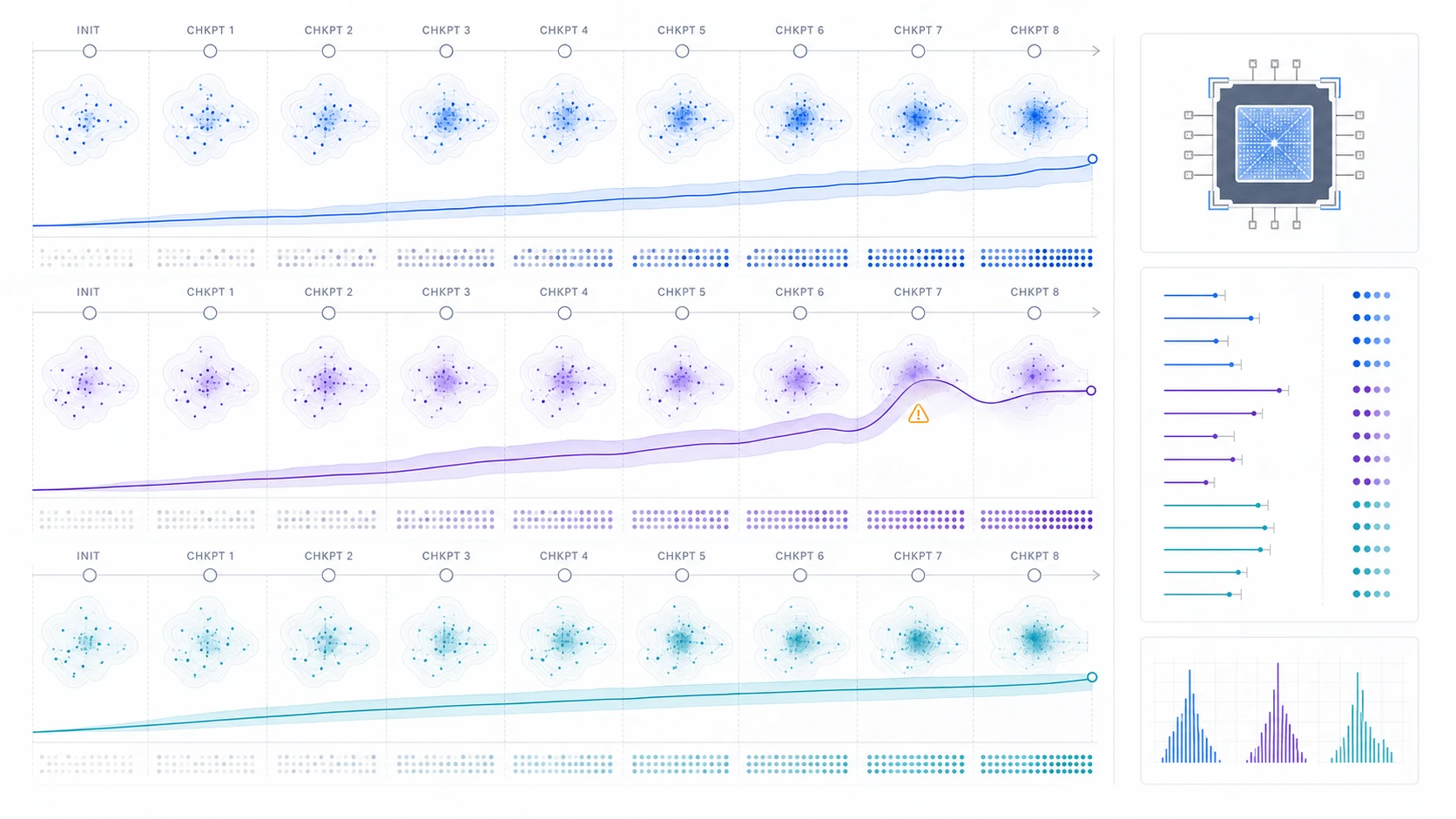
The reported 8-step high-shot trajectory reaches a maximum Hellinger distance of 0.009, while the 12-step primary run reaches 0.021. These are posterior-distance results after sequential feedback, not isolated amplitude benchmarks.
The 20-step and 32-step rows remain supporting controls. They extend the observed operating envelope and show that the loop does not immediately diverge, but the paper deliberately keeps the primary claim anchored to the 8-step and 12-step Tiger runs.
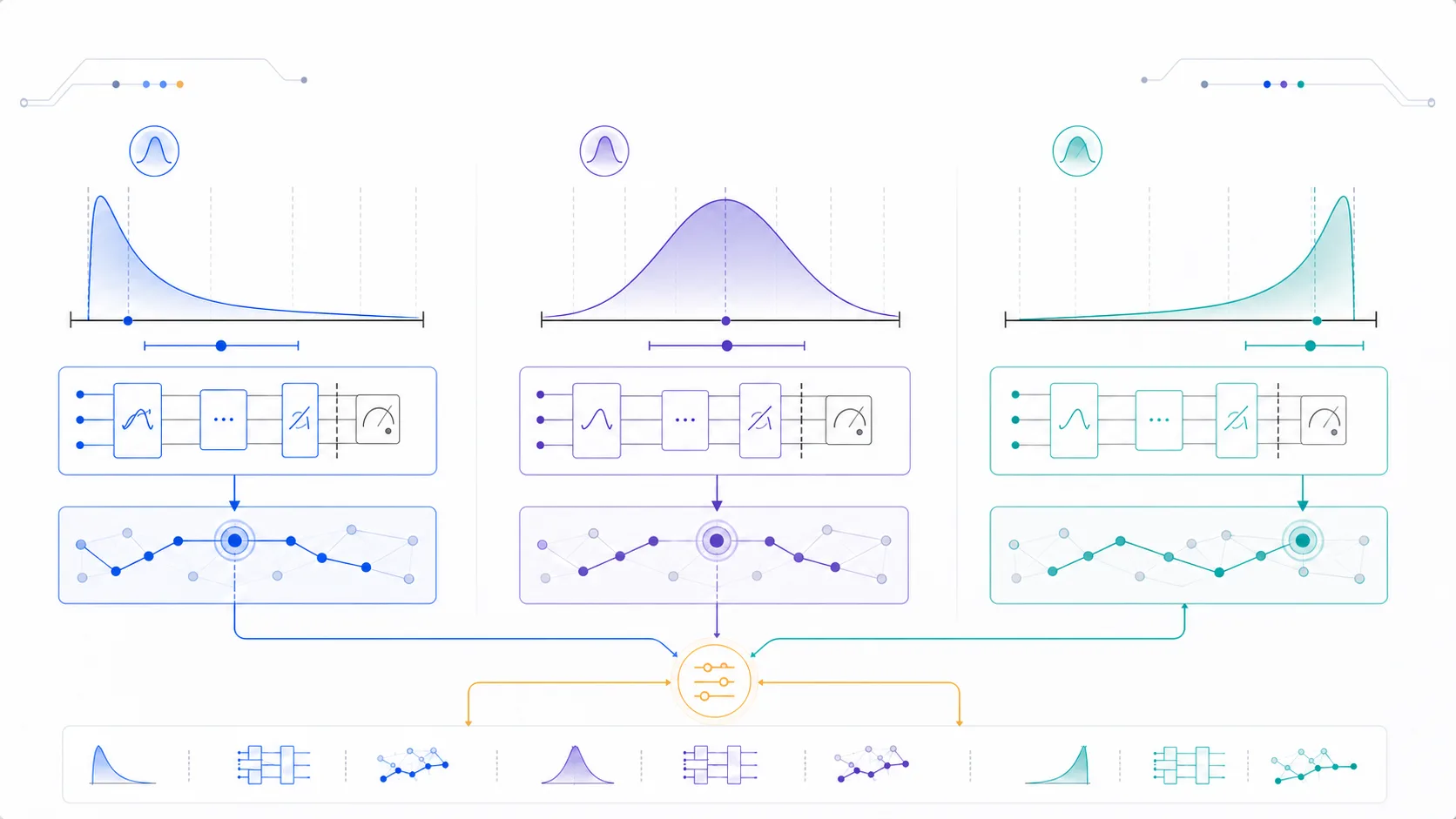
The 0.009 and 0.033 numbers cannot be compared as if they used the same budget.
The 0.009 headline uses 32,768 shots per step. The matched-shot FPAA control uses 10,000 shots per step and reports a maximum Hellinger distance of about 0.033. The reduction in fidelity under the lower budget is central to the interpretation, not a detail to hide.
The guarded Grover row used an adaptive allocation between 8,000 and 16,000 shots per step, averaging about 10,000. That makes it budget-aligned rather than strictly constant-shot. Without a constant-shot Grover rerun, the table does not establish equal-budget FPAA superiority.
Fidelity is checked against the action boundary.
The paper does not stop at Hellinger distance. It applies the same Tiger immediate-reward rule to the hardware-derived and exact Bayes posteriors. Across the reported matched-shot and longer-horizon checks, the selected immediate action is the same.
Action agreement does not erase posterior error. It says the error stayed on the same side of the tested decision threshold. A different reward model or a posterior closer to a threshold could produce a different operational result.
FPAA is primary only inside the sequential Tiger case study.
Primary evidence covers the sequential Tiger posterior on Heron, including fidelity, matched-shot context, and decision checks. Fez repeats, longer horizons, mitigation A/B, Heron R3 transfer, and rare-event sweeps support the operating envelope.
The four-state corridor and UCGate/QSD pilots are exploratory. They identify where larger encodings and deeper circuits become difficult; they do not validate realistic autonomous-system scale.
- Primary: 8-step and 12-step sequential posterior stability.
- Supporting: repeats, longer horizons, mitigation, transfer, and calibration checks.
- Exploratory: larger encodings and synthesis pilots.
- Out of scope: wall-clock speedup, quantum advantage, and end-to-end autonomy.
Pair every fidelity number with its resource context.
A responsible evidence record stores shots per step, backend, trajectory, amplification policy, circuit counts, mitigation state, and the exact reference beside the posterior metric. A single best number without that context invites the wrong conclusion.
For QANTIS, the honest summary is useful: high-shot all-step FPAA produced the best reported fidelity; the matched-shot run remained action-consistent but did not prove equal-budget superiority. That wording preserves both the result and the remaining work.
A low error number and a fair comparison are different questions.
The high-shot FPAA trajectory answers a fidelity question: can fixed-point amplification be applied at every listen step while keeping the returned posterior close to exact Bayes? On the reported 8-step run, the maximum Hellinger distance is 0.009; the 12-step primary result reports 0.021. Those are useful hardware-stability observations.
The matched-budget question is stricter. At roughly 10,000 shots per step, the FPAA control reaches maximum Hellinger about 0.033. That result does not support an equal-budget accuracy win. Keeping it beside the 32,768-shot headline protects readers from attributing a budget effect entirely to the algorithm.
For a sequential service, the broader lesson is methodological: compare algorithms on the same path, expose the resource allocation, and judge whether error propagates into a different decision. Stability is valuable on its own; it does not need an unsupported superiority claim.
Two FPAA rows answer two different questions.
arXiv:2607.06760, submitted 7 July 2026, reports the high-shot FPAA result and a matched-shot hardware control explicitly so readers can separate best observed fidelity from budget-relevant behavior. The paper itself says the comparison is not a fully budget-matched proof because the guarded Grover run uses an adaptive allocation rather than a strictly constant shot count.
Accordingly, this article uses 'sequential stability' for the supported result. It does not describe FPAA as universally better, faster, or proven to hold an advantage at equal cost.
Operational checklist
Experiment checklist: compare FPAA without hiding the budget
A stability comparison is only useful when trajectory, budget, and claim level remain visible together.
- 01
Run no-amplification, guarded Grover amplification, and all-step FPAA on the same observation trajectory.
- 02
Report shots per step beside every posterior-fidelity number.
- 03
Label high-shot headline runs separately from matched-shot controls.
- 04
Track both maximum and mean posterior distance across the sequence.
- 05
Feed the measured posterior forward so cumulative behavior is part of the test.
- 06
Check the planner's immediate action at every step, not only the final belief.
- 07
Use longer horizons as operating-band controls unless the underlying task and state space also scale.
- 08
Reserve equal-budget superiority language for a fully controlled rerun that actually demonstrates it.
Practical takeaways
01
Read FPAA as a sequential-stability result before reading it as an amplification result.
02
Keep the 32,768-shot 0.009 headline separate from the 10,000-shot result near 0.033.
03
Do not claim equal-budget superiority without a strictly constant-shot comparison.
04
Report posterior fidelity together with action agreement and resource accounting.
05
Keep longer horizons and larger encodings in their stated supporting or exploratory evidence tiers.
RA · Reference annexDefinitions, recurring questions, editorial method, and primary sources.Inspect
The analysis above carries the main reading flow. This reference layer keeps terminology, recurring questions, editorial method, and primary sources available without interrupting the argument.
Terminology
Terms behind QANTIS FPAA and sequential belief stability..
- FPAA
- Fixed-point amplitude amplification: a phase-scheduled amplification method designed to reduce overshoot as the target probability becomes concentrated.
- Guarded Grover amplification
- A policy that applies a Grover-style amplification step only when a guard predicts it will help, skipping updates where overshoot is a risk.
- Matched-shot control
- A comparison run that holds the measurement budget approximately constant so an algorithmic effect is less likely to be confused with extra samples.
- Hellinger distance
- A bounded, symmetric measure of difference between probability distributions; here it compares the hardware-derived posterior with exact Bayes. Lower is closer.
- Sequential stability
- The ability of a repeated update process to keep its posterior within a measured error band when each output becomes the next step's prior.
Field questions
Program questions behind QANTIS FPAA and sequential belief stability..
Q01Why use fixed-point amplitude amplification at every listen step?
Standard Grover-style amplification can overshoot when a belief is already concentrated, which forces a controller to decide when to amplify and when to skip. FPAA uses softer phase rotations so the sequential service can amplify every listen update while reducing that overshoot risk. The paper evaluates this as a belief-stability mechanism, not as a general runtime advantage.
Q02Does FPAA outperform the alternatives at the same shot budget?
The reported evidence does not establish that. The high-shot FPAA headline reaches maximum Hellinger distance 0.009 on the 8-step run, but it uses 32,768 shots per step. The approximately matched 10,000-shot FPAA control has maximum Hellinger about 0.033, so the correct reading is high-shot fidelity plus sequential stability, not equal-budget superiority over every baseline.
Q03What do the 12-step, 20-step, and 32-step runs add?
The 12-step primary run reports maximum Hellinger 0.021, while the 20-step and 32-step controls show that repeated posterior feedback does not immediately leave the same operating band. The longer runs are stress controls rather than evidence of a production-scale POMDP or end-to-end autonomous system.
Editorial record
How QANTIS FPAA and sequential belief stability. was checked.
- Editorial owner
- Neura Parse Research
- Last verified
- July 20, 2026
- Method
- Synthesis of the dated primary and official records listed below, checked against the operating question in this note.
- Scope limit
- Planning analysis—not certification, customer performance evidence, procurement advice, or a claim of production readiness.
SRSources reviewed
3 records