Abstract
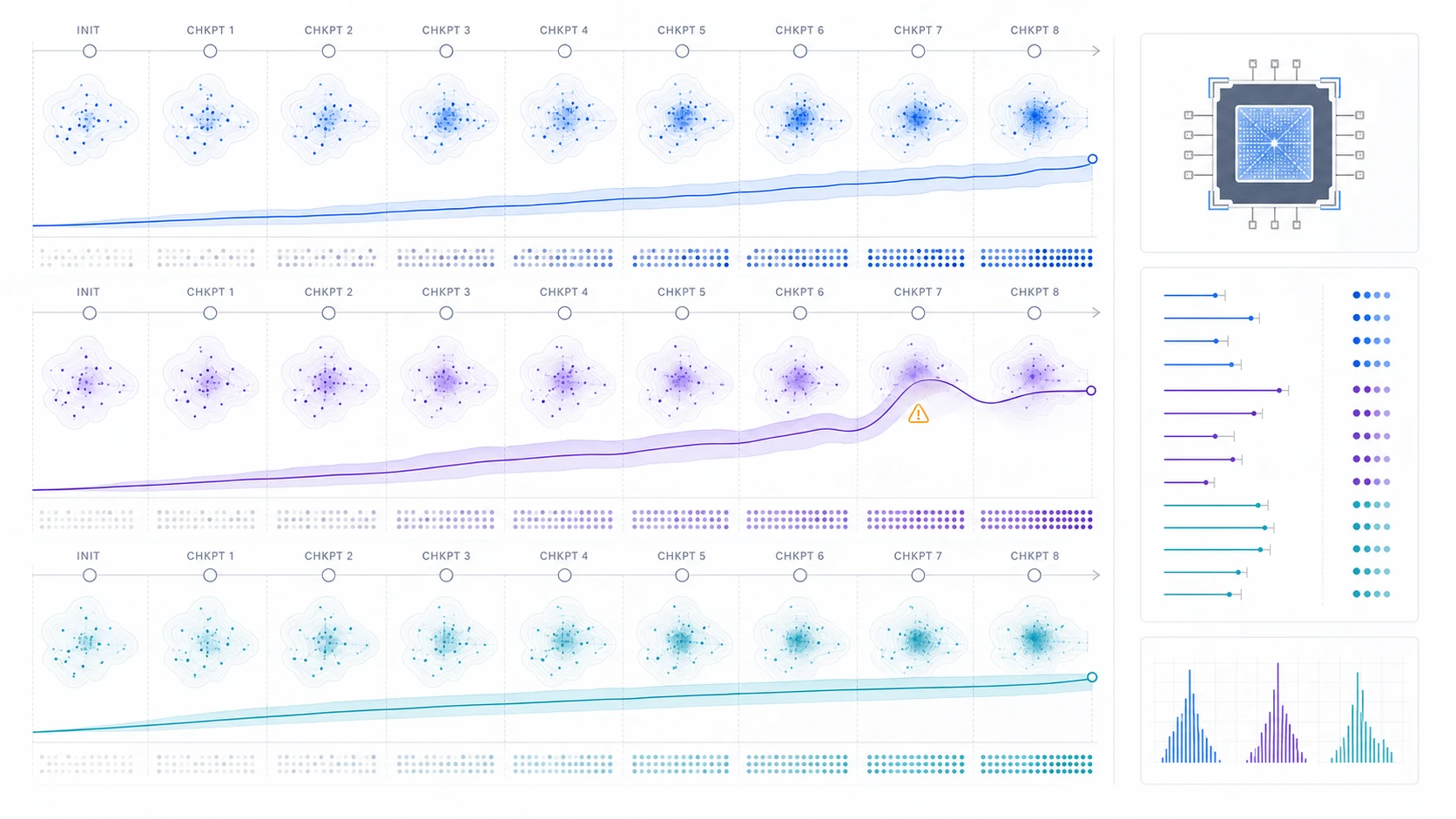
On the reported Pittsburgh backend calibration, boundary error fell from 0.6317 to 0.00224 at amplitude 0.01 and from 0.4890 to 0.00773 at amplitude 0.95.
Gap map
Boundary-aware estimation before the Bayes update
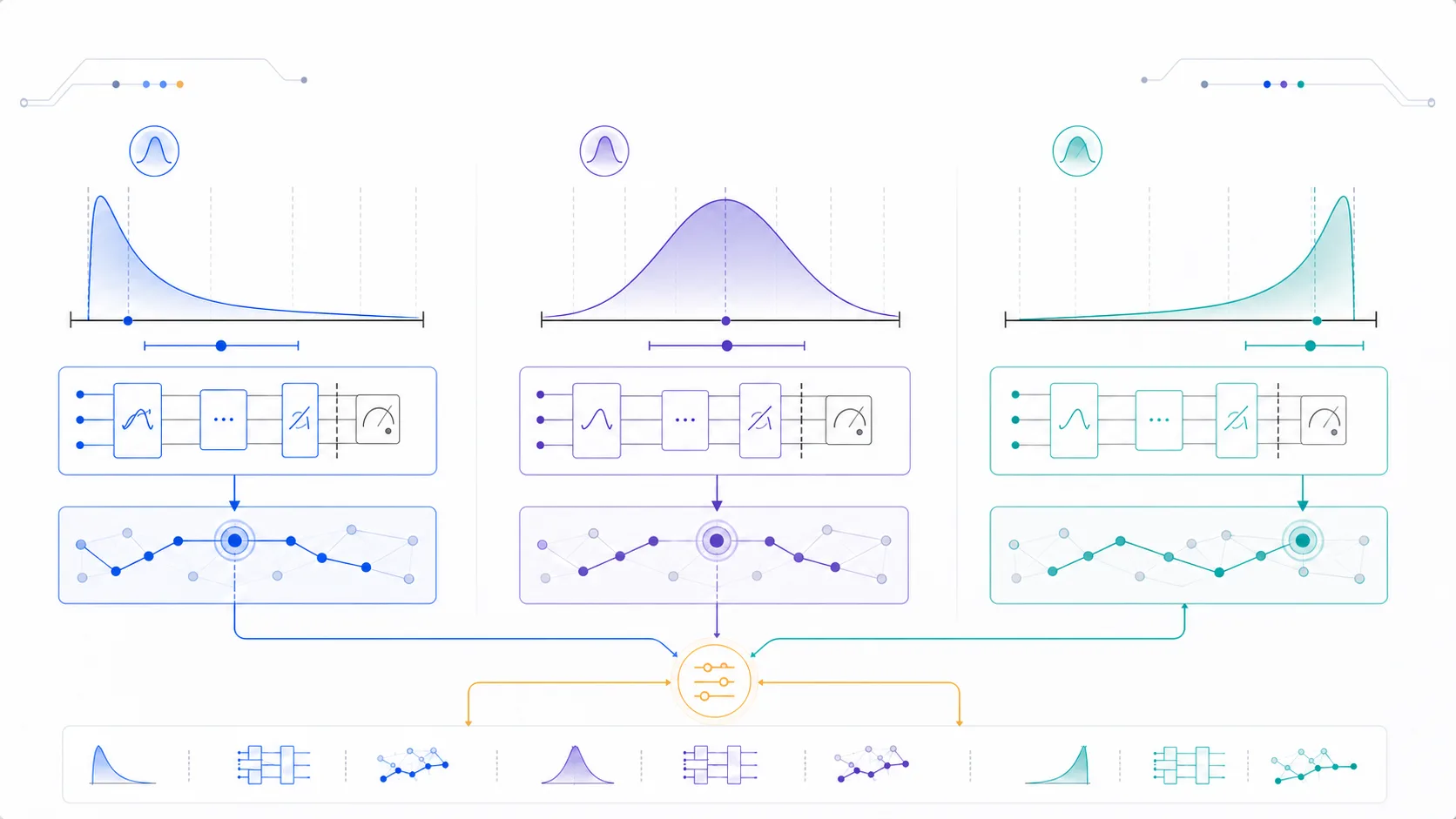
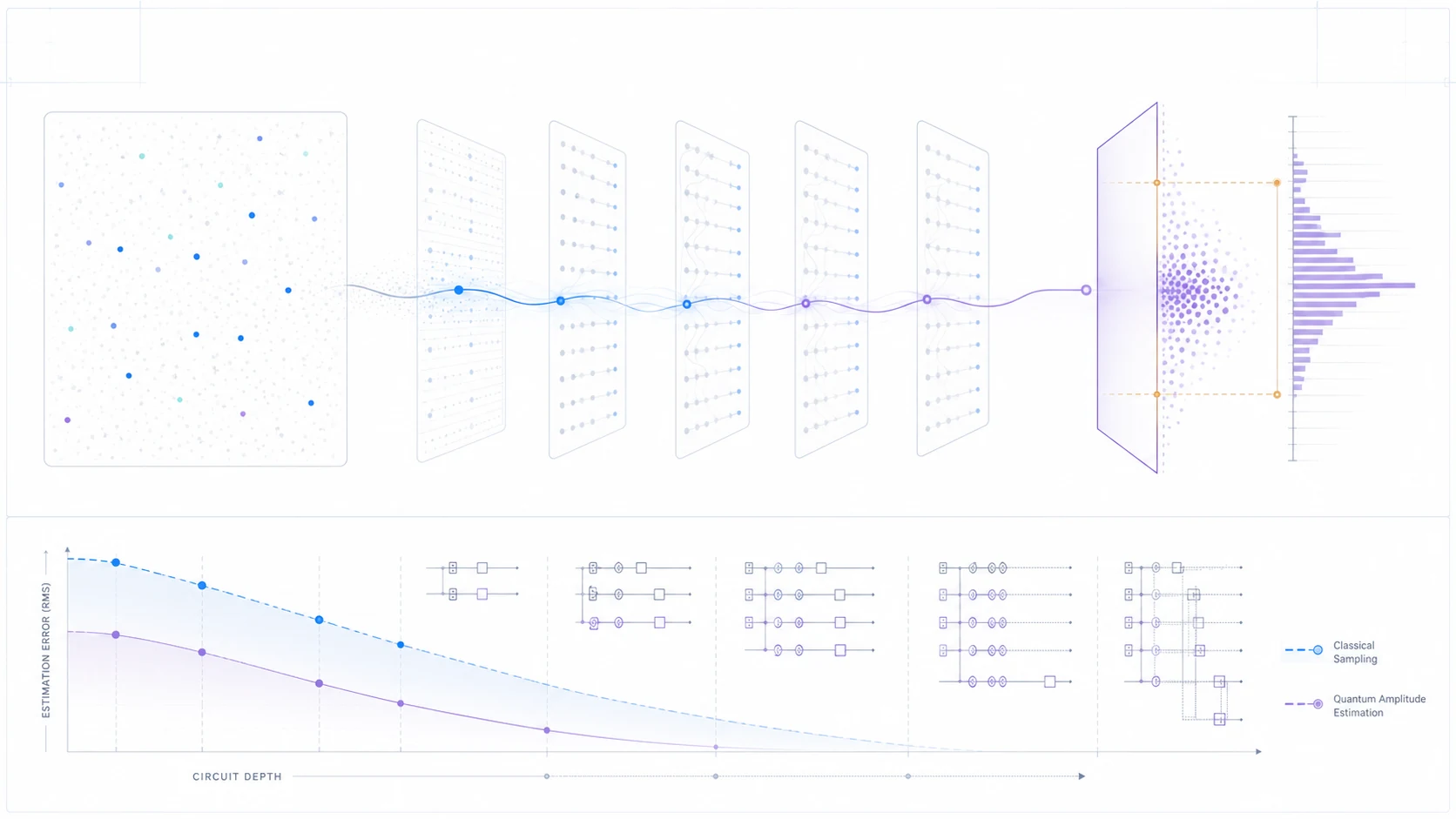
A shallow coarse scan routes BIQAE to a near-zero, interior, or near-one prior before the estimate becomes planner-facing evidence.
Why boundaries matter
- Rare observations push accepted amplitude toward zero
- Concentrated beliefs can push it toward one
- Sequential updates revisit both regimes
Boundary-aware protocol
- Run a shallow 200-shot coarse scan
- Select a near-zero, interior, or near-one prior
- Run BIQAE with that prior and recorded visibility
Reported checks
- 0.01: error 0.6317 to 0.00224
- 0.95: error 0.4890 to 0.00773
- Each paired case finishes after one fine iteration
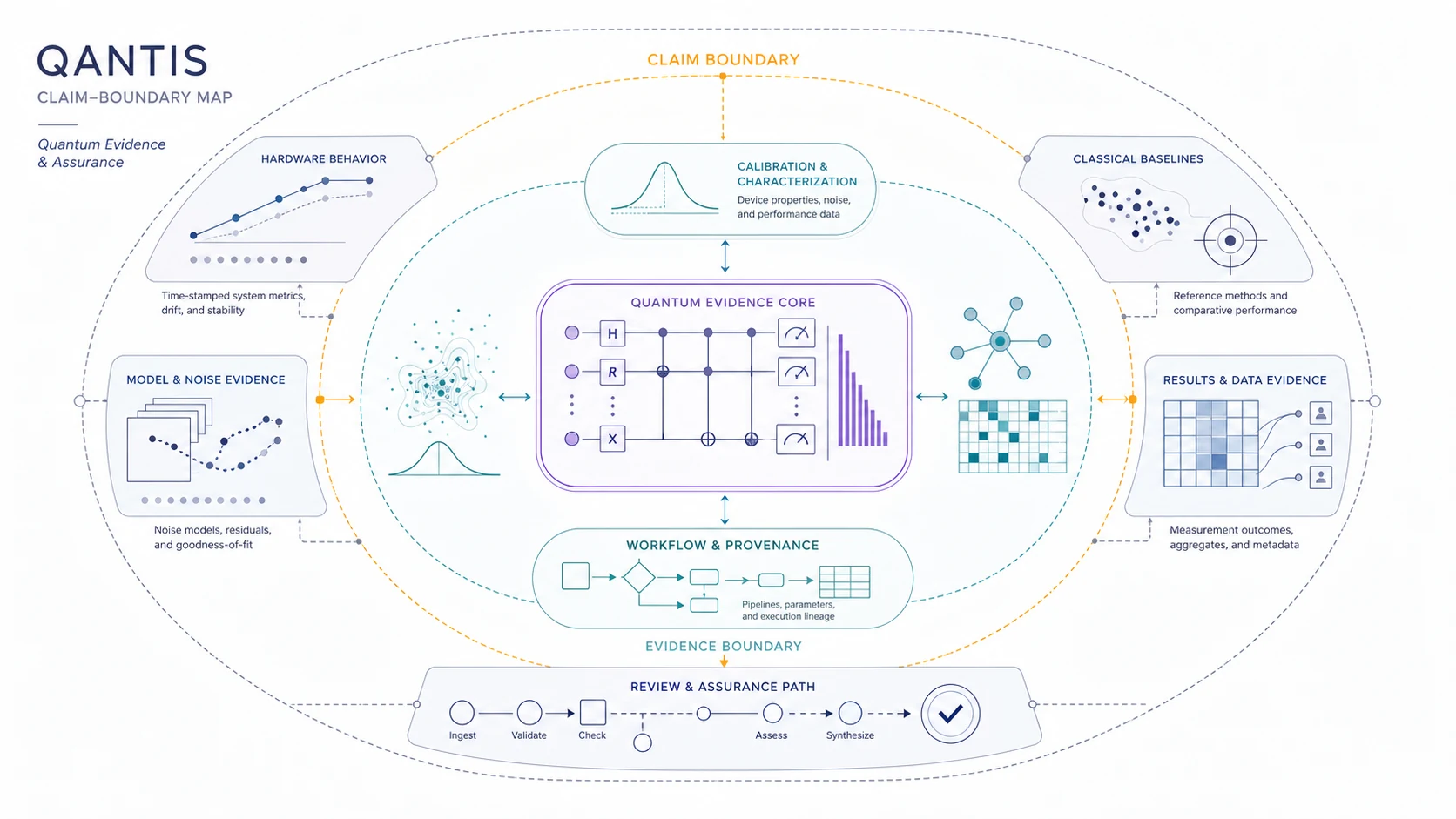
Claim boundary
- Supporting calibration evidence
- Not a universal device-independent correction
- Not a hardware-advantage result
Amplification is not useful if the estimator fails at the boundary.
QANTIS uses BIQAE to estimate the accepted-event amplitude after the amplification step. BIQAE maintains a Bayesian posterior over the amplitude angle, selects a Grover depth, observes success or failure, and updates the distribution. The sequential service then converts that amplitude estimate into evidence for an ordinary Bayes update.
The hardware problem appears near zero and one, exactly where rare observations and concentrated beliefs can place the service. An estimator that is accurate in the middle but biased at the boundaries can corrupt the posterior even when the amplifier behaves as designed.
TD · Technical depth7 supporting chapters and the working checklist.Read deeper
The paper measures the protocol on the same Heron backend.
On the reported IBM Pittsburgh paired run, the baseline boundary error at target amplitude 0.01 is 0.6317 and the boundary-aware protocol returns 0.00224. At target amplitude 0.95, the corresponding errors are 0.4890 and 0.00773.
The protocol does not fit a generic correction curve. A coarse scan selects an informative prior for the appropriate boundary regime, then BIQAE proceeds with that prior and the recorded hardware context. The result should not be generalized across devices, calibration windows, circuit families, or untested amplitude schedules.
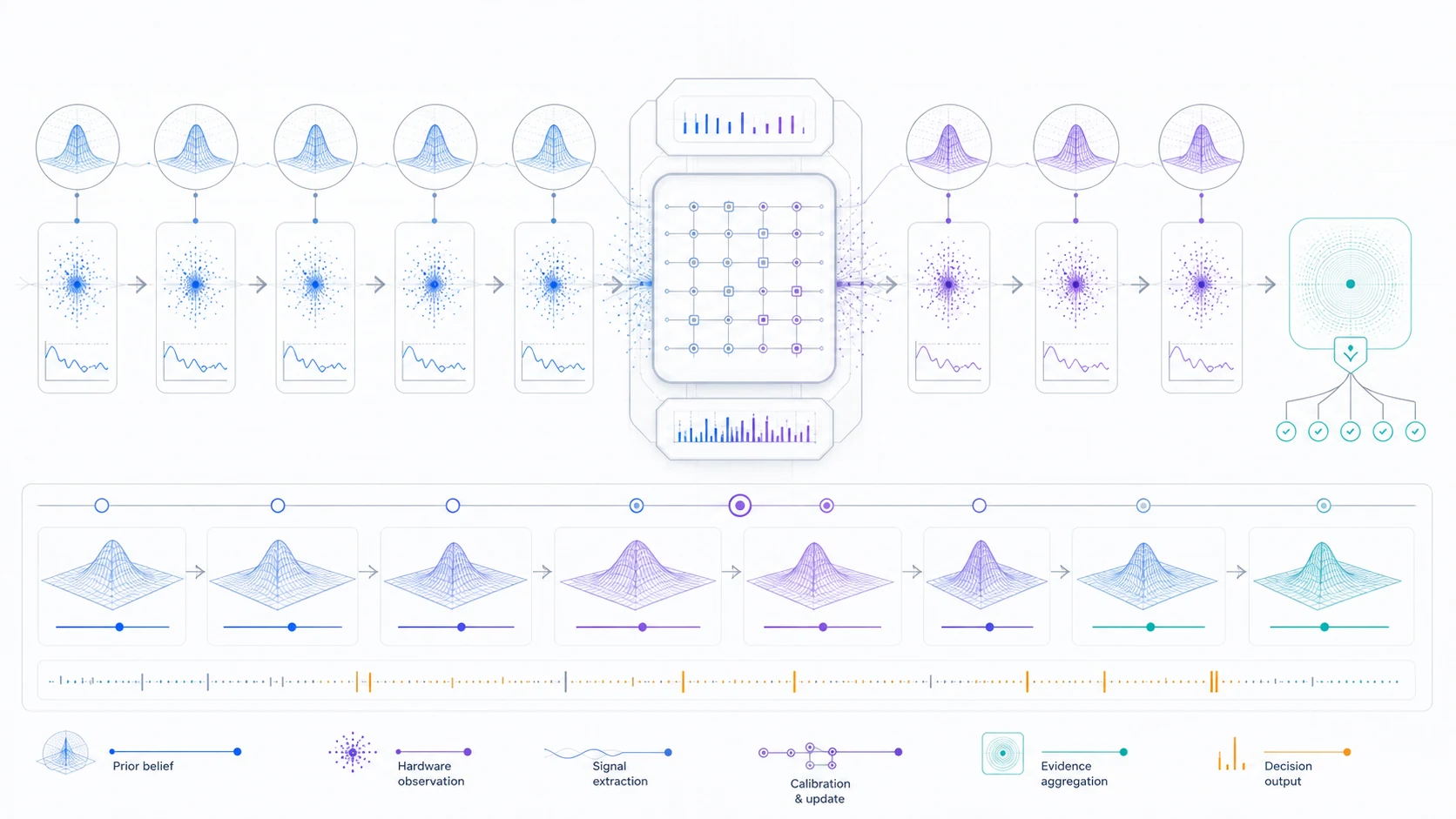
coarse scan -> boundary-aware prior -> BIQAE estimate -> Bayes normalization -> planner-facing posteriorA small boundary bias can become the next step's prior error.
The service is sequential: the posterior returned at one listen step becomes the prior at the next. This makes systematic estimator bias more dangerous than a one-off noisy measurement because it can propagate through the trajectory.
Boundary-aware calibration is therefore connected to the primary claim even though it sits in the supporting evidence tier. It helps explain how all-step amplification can remain usable when the Tiger belief becomes highly concentrated instead of relying on a guard that skips difficult steps.
The 24-row Kingston sweep tests the adaptive guard, not BIQAE calibration.
The paper separately reports a 24-row Kingston boundary sweep in which 21 rows remain below Hellinger distance 0.02. That sweep validates the adaptive guard around standard Grover amplification; it is not the dataset used to produce the paired Pittsburgh BIQAE results.
Both controls help map the service boundary, but they answer different questions and should retain separate records. The Kingston sweep tests when to amplify or skip, while boundary-aware BIQAE tests how the estimator behaves near zero and one.
Calibration supports the sequential result; it is not the primary claim by itself.
The primary evidence remains the 8-step and 12-step sequential Tiger posterior on Heron. Boundary-aware BIQAE is a supporting control that explains estimator stability near zero and one. The separate adaptive-guard sweep, rare-event envelope, and longer trajectories add operating context without becoming one calibration dataset.
Larger-state corridor and synthesis pilots remain exploratory. Wall-clock speedup, quantum advantage, full policy optimization, end-to-end autonomy, and downstream MTDA performance remain outside the paper's claim boundary.
- Primary: planner-facing posterior fidelity and action checks in sequential Tiger runs.
- Supporting: same-backend BIQAE boundary pairs and the separate adaptive-guard sweep.
- Exploratory: larger encodings and deeper synthesis paths.
- Out of scope: device-independent calibration and system-level advantage claims.
Store calibration provenance beside every estimator result.
A production research record should bind the coarse result, selected prior, visibility model, backend, job window, circuit family, amplitude schedule, mitigation state, shot budget, and software version together. The posterior should retain that provenance so a reviewer can reconstruct why the estimate was accepted.
When a boundary gate fails, the safe response is not to stretch the claim. The service should return to a classical estimator, request more evidence, or mark the update for review. The boundary-aware protocol is valuable because it makes that decision explicit.
Calibration is a routing decision before it is a numerical correction.
The boundary failure is structural. A diffuse prior is reasonable in the interior but wasteful when the true amplitude lies near zero or one. If the estimator begins in the wrong regime, it can chase the boundary with deeper circuits just as hardware noise becomes more damaging.
The two-phase protocol uses a shallow first look to choose the prior family, then runs the ordinary BIQAE update. That small architectural change turns calibration into a service guardrail: it routes the hard boundary case before expensive estimation rather than trying to repair a drifting posterior afterward.
The paired Pittsburgh measurements make the effect concrete. At amplitude 0.01, absolute error moves from 0.6317 to 0.00224; at 0.95, it moves from 0.4890 to 0.00773. The responsible systems interpretation is that endpoint-aware initialization stabilized those tested cases, not that amplitude estimation is now solved universally.
The calibration result is paired hardware evidence, not a universal guarantee.
The figures come from the boundary-aware BIQAE section of arXiv:2607.06760, submitted 7 July 2026. The preprint distinguishes same-backend boundary pairs from moderate-boundary supporting context and reports both baseline and calibrated errors for auditability.
The study frames the protocol as a lightweight calibration layer for a repeated belief-update service. It does not claim quantum advantage, wall-clock speedup, or validated performance across arbitrary probability models.
Operational checklist
Calibration checklist: protect the posterior at amplitude boundaries
Apply boundary routing before a sequential estimator spends its budget on deeper circuits.
- 01
Include near-zero, interior, and near-one amplitudes in the calibration plan.
- 02
Run a shallow coarse scan before the main BIQAE loop.
- 03
Route near-zero and near-one cases to endpoint-aware priors and keep an interior prior for the middle regime.
- 04
Pair baseline and calibrated runs on the same backend and scheduling window where possible.
- 05
Report the true amplitude, estimate, absolute error, credible-interval width, and shot accounting together.
- 06
Verify that the coarse scan selects the intended regime before interpreting the fine estimate.
- 07
Feed calibrated estimates through the actual Bayes update and inspect downstream posterior error.
- 08
Keep boundary calibration claims limited to the amplitudes and hardware conditions actually tested.
Practical takeaways
01
Calibrate the estimator where rare observations and concentrated beliefs actually place it: near zero and near one.
02
Keep the reported 0.01 and 0.95 corrections tied to their same-backend Heron context.
03
Keep the 24-row adaptive-guard sweep separate from the BIQAE boundary-pair dataset.
04
Bind coarse-scan, prior-selection, and visibility provenance to every returned posterior.
05
Keep BIQAE calibration in the supporting evidence tier around the primary sequential Tiger result.
RA · Reference annexDefinitions, recurring questions, editorial method, and primary sources.Inspect
The analysis above carries the main reading flow. This reference layer keeps terminology, recurring questions, editorial method, and primary sources available without interrupting the argument.
Terminology
Terms behind QANTIS boundary-aware BIQAE where amplitudes become fragile..
- BIQAE
- Bayesian Iterative Quantum Amplitude Estimation: an estimator that updates a probability distribution over an unknown amplitude using measurements from selected amplification depths.
- Boundary amplitude
- A target amplitude close to zero or one, where a generic estimator prior can place too little probability mass near the true value.
- Coarse scan
- A shallow preliminary measurement used to classify the amplitude as near zero, interior, or near one before the main estimation loop.
- Informative prior
- A starting probability distribution that places more weight in the regime indicated by the coarse scan instead of treating every amplitude as equally likely.
- Credible interval
- A Bayesian interval that contains a stated share of posterior probability for the estimated amplitude; the paper reports 95% credible intervals.
Field questions
Program questions behind QANTIS boundary-aware BIQAE where amplitudes become fragile..
Q01Why does amplitude estimation become fragile near zero and one?
A generic prior spreads probability mass across the full interval, while a boundary case needs most of that mass near one endpoint. On noisy hardware the estimator may then drift toward the interior and request deeper amplification levels to recover. In a sequential belief tracker, that error is especially costly because the estimate feeds the next prior.
Q02What does boundary-aware BIQAE change?
It adds a shallow coarse scan that routes the run into a near-zero, interior, or near-one prior before the ordinary BIQAE update. It is a calibration and routing layer rather than a new end-to-end estimator. The main estimation loop still returns a posterior estimate and credible interval for the belief update.
Q03How large was the measured boundary-error reduction?
In the same-backend IBM Pittsburgh pairs, absolute error at amplitude 0.01 fell from 0.6317 to 0.00224, and error at amplitude 0.95 fell from 0.4890 to 0.00773. These numbers demonstrate the tested boundary calibration cases; they are not a claim that every amplitude, backend, or future calibration will produce the same reduction.
Editorial record
How QANTIS boundary-aware BIQAE where amplitudes become fragile. was checked.
- Editorial owner
- Neura Parse Research
- Last verified
- July 20, 2026
- Method
- Synthesis of the dated primary and official records listed below, checked against the operating question in this note.
- Scope limit
- Planning analysis—not certification, customer performance evidence, procurement advice, or a claim of production readiness.
SRSources reviewed
3 records