Fault-tolerant quantum roadmaps, U.S. industrial policy, and quantum-safe migration are converging. The open product gap is a workflow layer that helps teams track experiments, resource estimates, vendor context, and security migration evidence.
Gap map
Quantum execution stack
Hardware roadmaps, national policy, and security migration need a reviewable workflow layer.
Industry signal
- IBM investment
- Fault-tolerant roadmap
- Qiskit ecosystem
- Quantum-classical tooling
Policy signal
- U.S. quantum innovation EO
- Quantum-safe crypto EO
- Industrial capacity
- Commercialization pressure
Neura Parse angle
- QFlow experiment records
- Resource-estimate evidence
- PQC readiness workflow
- Executive decision pack
Industry signal
Quantum roadmaps are becoming operating plans.
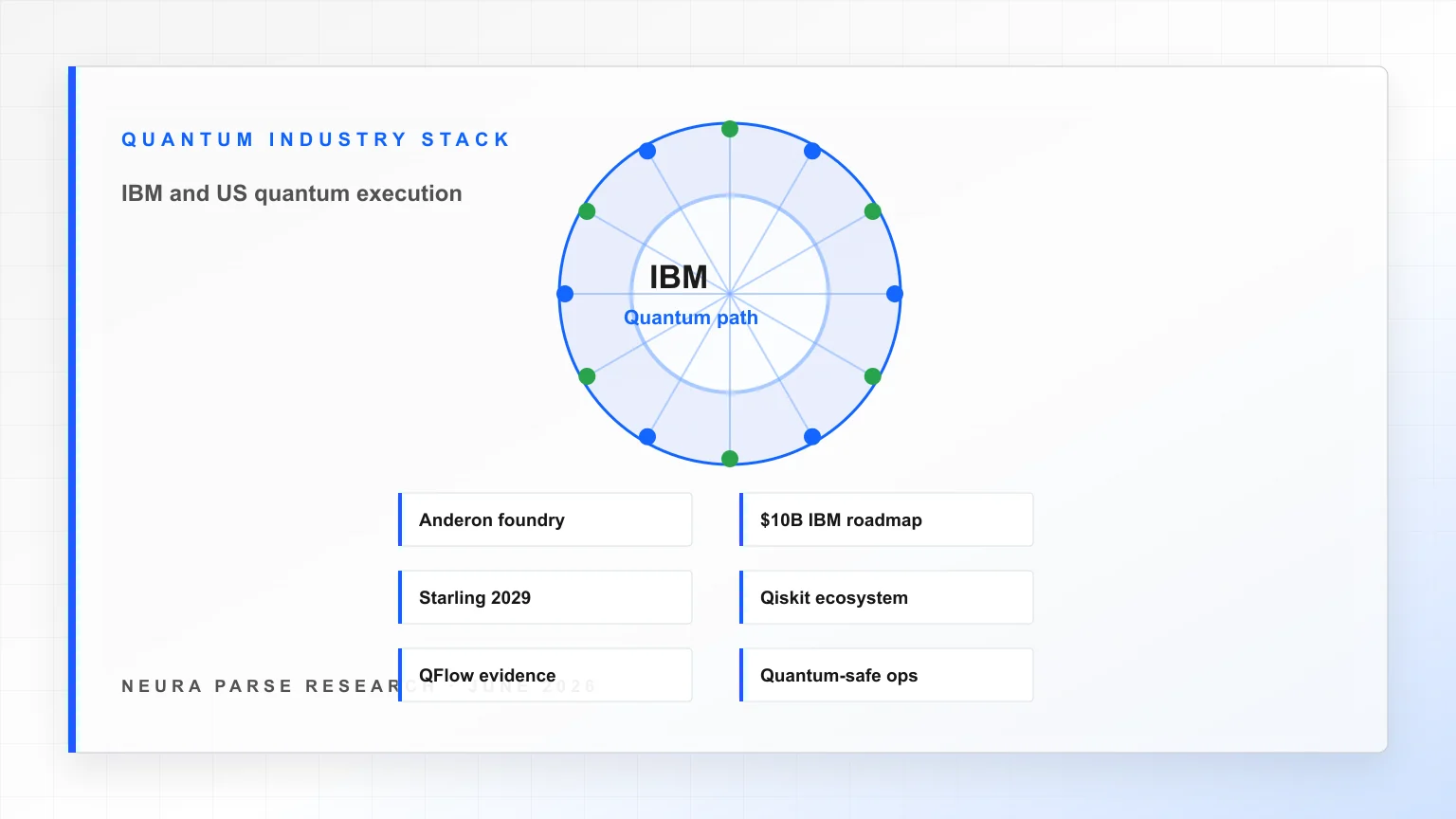
IBM's June 2026 commitment of more than $10 billion to quantum computing reinforces a clear direction: fault-tolerant quantum is moving from research aspiration into a staged industrial roadmap. The roadmap language matters because it creates milestones that enterprise teams can plan around, even before fault-tolerant systems are broadly useful.
The White House quantum innovation order adds a public-sector signal around U.S. leadership, commercialization, supply chain, and industrial capacity. Combined with the separate quantum-safe cryptography order, the message is that quantum is both a future computing platform and a present security migration problem.
Product gap
QFlow should be the evidence layer between roadmap and execution.
Enterprise buyers do not need another vague quantum strategy deck. They need a controlled surface for experiments, providers, algorithms, resource estimates, costs, constraints, assumptions, and decision outcomes.
QFlow can occupy that layer: a studio where quantum workflows are represented as reviewable records rather than disconnected notebooks, vendor demos, and meeting notes.
- Attach provider, backend, circuit, runtime, cost, and result metadata to each workflow.
- Keep classical baselines and negative results visible so the team does not overclaim advantage.
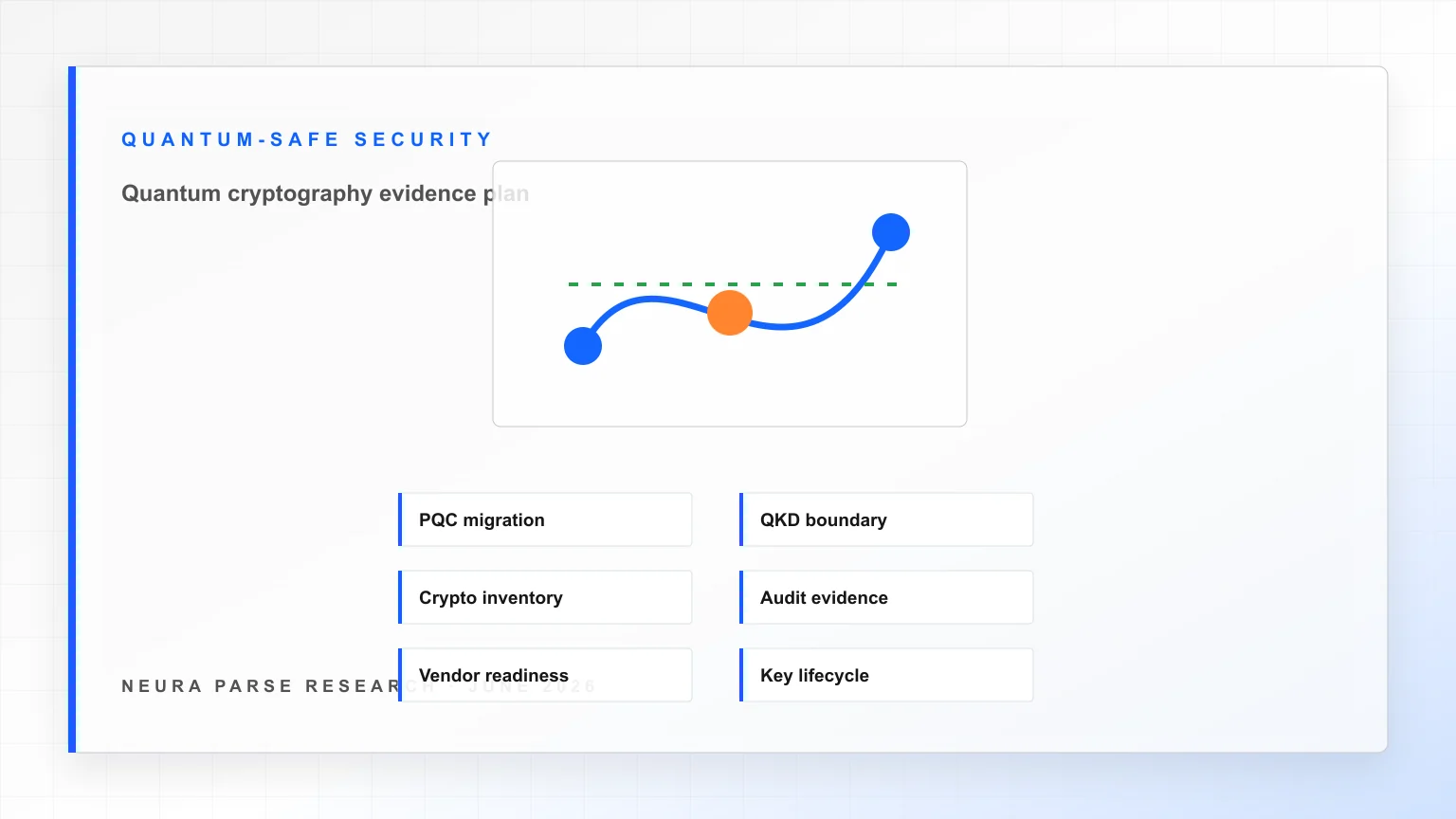
- Connect quantum-safe migration records to the same evidence model used for experiments.
- Export an executive pack that separates proven capability, research hypothesis, and future dependency.
Service angle
Pair quantum workflow advisory with quantum-safe operations.
The near-term service opportunity is not to promise that every customer will get quantum advantage immediately. It is to help them create a disciplined readiness program: which problems are worth tracking, which experiments are defensible, which providers matter, and which security systems must migrate now.
This is where IBM and U.S. policy signals become useful for Neura Parse messaging. QFlow can speak to the workflow side of quantum adoption, while the quantum-safe service speaks to the cryptographic migration that security teams cannot postpone.
Positioning rule
Do not turn partnership signals into endorsement claims.
Neura Parse can reference IBM Quantum, Qiskit, and U.S. quantum policy as public ecosystem context. It should not imply endorsement, selection, or formal partnership unless there is a signed public record.
That clean boundary is important for enterprise trust. The content can still be strong: the ecosystem is moving, and Neura Parse builds the workflow and evidence layer needed to participate responsibly.
Practical takeaways
IBM's June 2026 quantum investment strengthens the case for disciplined readiness workflows.
U.S. policy separates quantum innovation from quantum-safe cryptographic urgency; both matter.
QFlow should store experiments, assumptions, resources, and decisions as evidence objects.
Quantum services should avoid advantage hype and focus on defensible workflow adoption.
Public ecosystem references must avoid implied endorsement unless formalized.
Sources reviewed
Source 01
IBM and U.S. Department of Commerce announce Anderon quantum foundry
May 2026 IBM and U.S. Department of Commerce Letter of Intent for America's first purpose-built quantum foundry, supported by a proposed CHIPS award.
Source 02
IBM quantum computing investment, June 2026
Five-year investment across R&D, manufacturing, M&A, and ecosystem expansion for fault-tolerant quantum systems.
Source 03
IBM Quantum Roadmap 2026
Profiling, verification, debugging, and quantum-classical workload tooling for 2026 and beyond.
Source 04
IBM Quantum hardware and roadmap
Roadmap toward near-term advantage and large-scale fault-tolerant quantum computing.
Source 05
White House EO 14413: Ushering in the Next Frontier of Quantum Innovation
June 2026 U.S. executive order on quantum technology leadership, commercialization, and industrial capacity.
Source 06
White House EO 14412: Securing the Nation Against Advanced Cryptographic Attacks
June 2026 U.S. executive order accelerating federal migration to quantum-resistant cryptography.