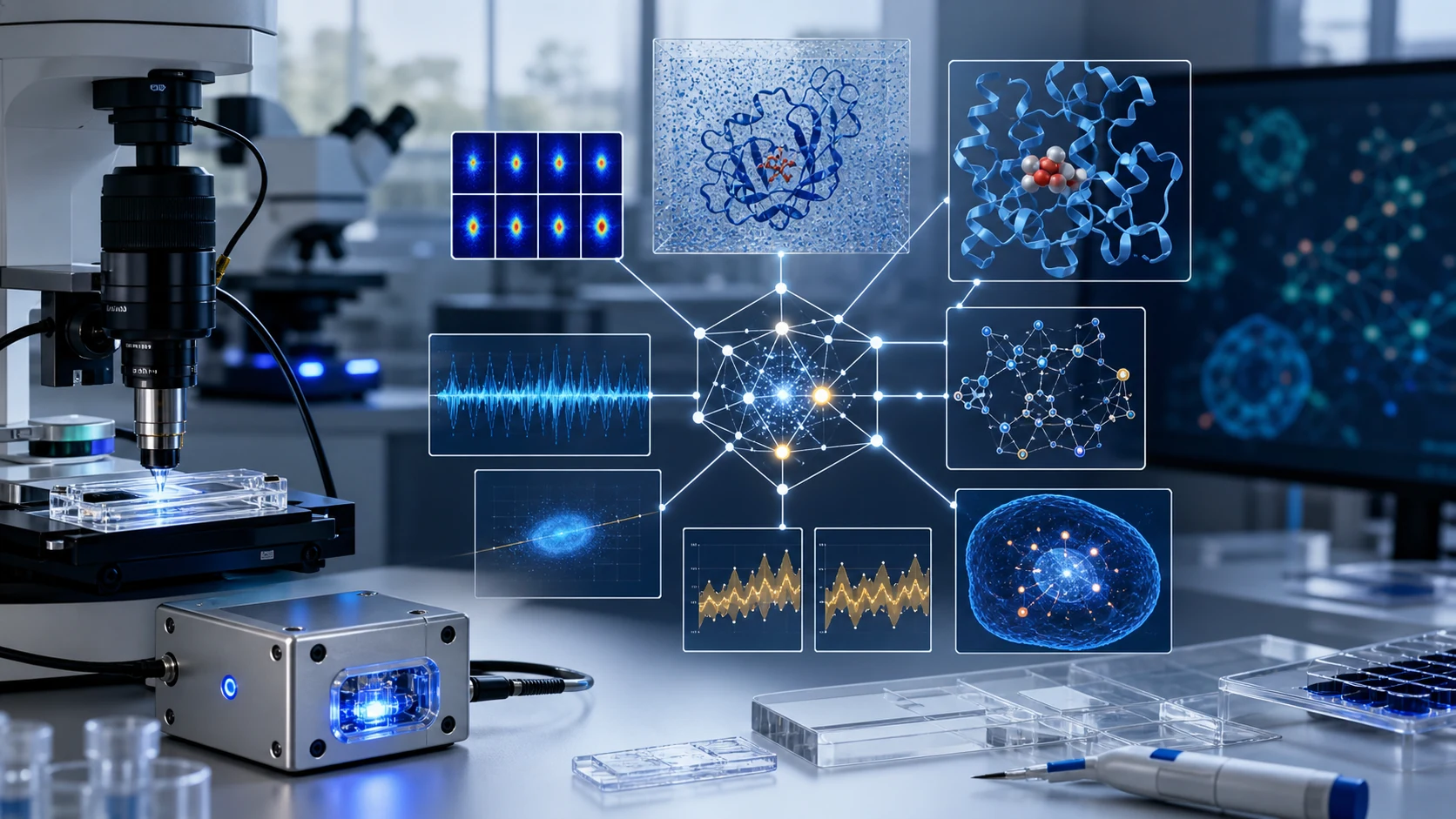

The defensible lane is not publishing sensitive technical detail. It is showing how quantum sensing, secure communication, optimization, and autonomy-support experiments can be governed with reviewable evidence and human authority.
Gap map
Quantum defense assurance map
Public-safe quantum defense work should keep experiments, authority, security, and evidence in one reviewable surface.
Quantum capability
- Sensing
- Secure links
- Optimization
- Simulation
Operational controls
- Human review
- Policy gates
- Runtime boundaries
- Fail-safe paths
Evidence
- Experiment record
- Source context
- Risk note
- Exportable review pack
June 2026 signal
Quantum defense ecosystems are moving, but public messaging needs discipline.
The SSB Quantum Program Introduction and Quantum Algorithm Competition make the ecosystem signal visible: defense industry, academia, private sector, and technology providers are organizing around quantum technologies. U.S. quantum innovation policy also keeps commercialization, industrial capacity, and national capability in focus.
For Neura Parse, the public message should stay precise. We can discuss quantum workflow governance, secure communications readiness, quantum-safe security, sensing evidence, and autonomy assurance without exposing confidential architectures or implying formal endorsement.
Assurance layer
The useful product layer is reviewable mission evidence.
Quantum defense use cases can touch sensing, communications, routing, simulation, materials, and decision support. Each area needs a different evidence standard. A sensing experiment needs calibration and error context. A secure-link assessment needs infrastructure and threat-model context. An autonomy-support workflow needs human authority and fail-safe behavior.
A single operating model can still connect them: define the problem, attach public source context, run bounded experiments, preserve metadata, document limits, and route decisions through human review.
- Keep public content high-level and avoid technical proposal detail.
- Separate quantum-safe cryptography from quantum communication claims.
- Preserve human authority for safety-impacting or mission-impacting decisions.
- Use signed runtime and telemetry evidence when edge autonomy is part of the system.
Neura Parse fit
QFlow, NeuralOS, NowFlow, and QANTIS form the assurance stack.
QFlow can record experiments, provider context, assumptions, baselines, and review notes. NeuralOS can support signed edge runtime, telemetry, and rollback for deployed AI systems. NowFlow can manage approval paths and evidence routes. QANTIS can expose uncertainty when a quantum or AI-supported output changes a decision.
That lets the service page talk about readiness and governance rather than sensitive system internals.
Practical takeaways
Quantum defense content should stay public-safe and evidence-focused.
Sensing, secure communication, optimization, and autonomy each need different proof.
QFlow can make experiments reviewable; NowFlow can manage authority paths.
NeuralOS and QANTIS fit edge assurance and uncertainty-aware decision support.
Sources reviewed
Source 01
SSB Quantum Program Introduction and Turkiye Quantum Platform opening
June 2026 SSB event connecting defense industry, academia, private sector, and quantum technology providers.
Source 02
SSB Quantum Algorithm Competition
Public competition surface for quantum algorithms and ecosystem participation.
Source 03
Anadolu Agency: Turkiye unveils quantum roadmap for defense industry
News report on Turkiye's defense-industry quantum roadmap, platform opening, and related programme announcements.
Source 04
White House EO 14413: Ushering in the Next Frontier of Quantum Innovation
June 2026 U.S. executive order on quantum technology leadership, commercialization, and industrial capacity.
Source 05
DARPA DICE: decentralized AI through controlled emergence
Decentralized coordination and local inference control for resilient heterogeneous AI agent collectives.
Source 06
DoD Chief Digital and AI Office Responsible AI resources
CDAO Responsible AI Toolkit page with lifecycle, governance, and assurance materials for AI capability development.