
Abstract
Quantum finance should start with use-case inventory, classical baselines, data constraints, model-risk controls, PQC exposure, and executive decision records, not with generic portfolio-optimization hype.
Gap map
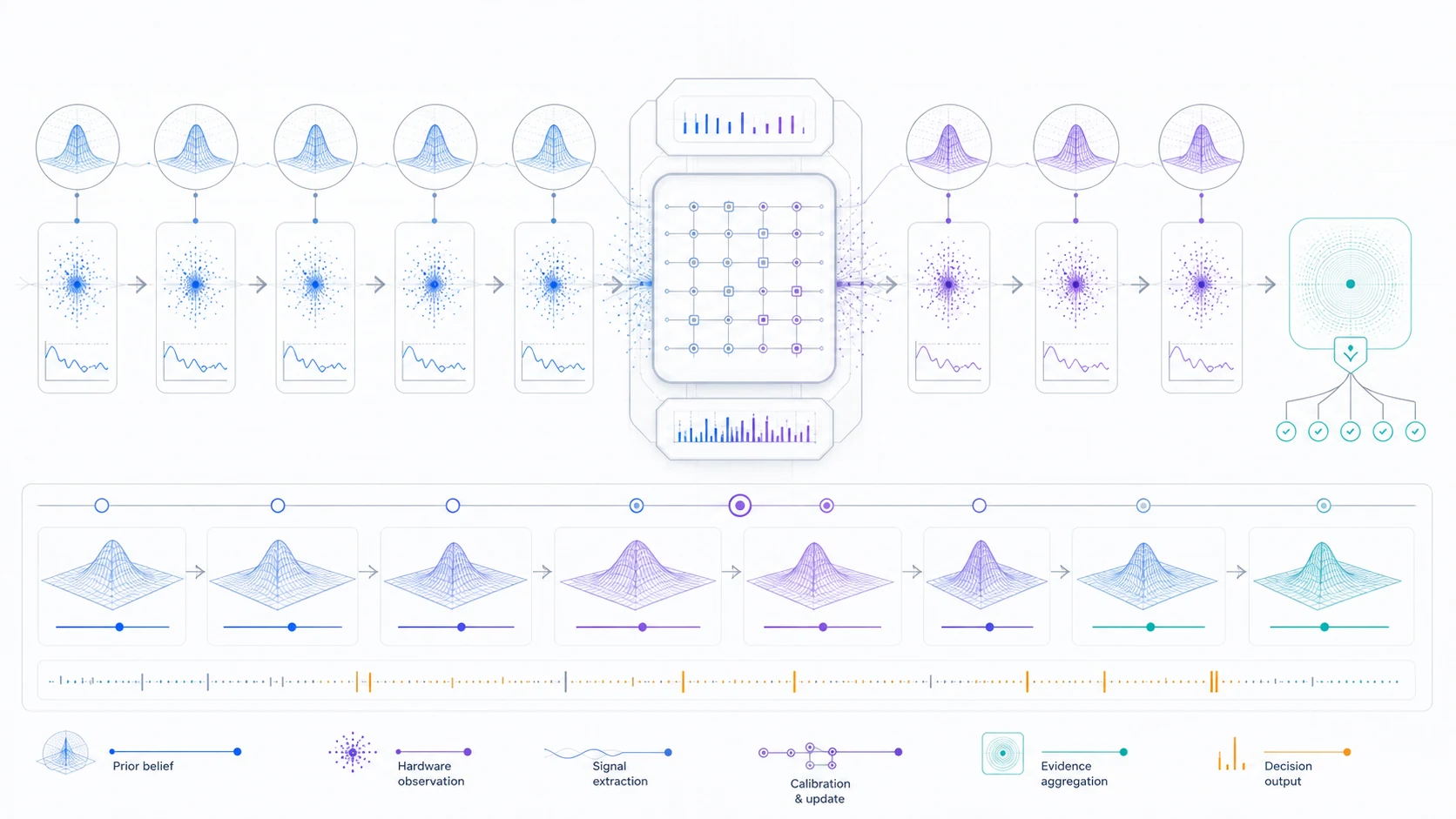
Quantum finance readiness map
Finance programmes need one evidence trail across use-case selection, baselines, risk controls, and cryptographic exposure.
Opportunity
- Portfolio optimization
- Monte Carlo
- Scenario analysis
- Fraud and risk signals
Controls
- Model risk
- Data lineage
- Classical baseline
- Stress testing
Security
- PQC inventory
- Vendor readiness
- Long-lived data
- Board reporting
Central banks are treating quantum as a preparation problem.
The June 2026 G7 central-bank reference report is important because it frames quantum technologies as both an opportunity and a risk for financial-sector participants. Bundesbank and Banca d'Italia point to the same preparation surface: quantum computing, quantum communication, quantum sensing, and quantum-safe security will affect financial institutions before every application is production-ready.
The World Economic Forum financial-services initiative reinforces the market pattern: the useful work is collaborative readiness, use-case evaluation, talent, security, and implementation discipline.
TD · Technical depth5 supporting chapters and the working checklist.Read deeper
Do not start with a portfolio demo; start with model-risk evidence.
Finance teams already have strong classical tooling, strict governance, and model-risk obligations. A quantum experiment has to survive comparison against those baselines. It also has to show how data loading, error, sampling, cost, and explainability affect the decision.
A serious quantum finance pilot should produce a record that model-risk, security, and leadership teams can review together.
- Define the financial decision before choosing the quantum method.
- Compare against strong classical optimization, Monte Carlo, and risk engines.
- Keep data lineage, model version, seed, backend, and assumption metadata attached.
- Separate future quantum advantage tracking from immediate PQC migration work.
Connect experiment evidence to model-risk controls.
QFlow can store quantum finance experiments as reviewable records: objective, baseline, backend, resource estimate, result, limitation, and next decision. NowFlow can coordinate approvals, vendor follow-up, model-risk review, and board reporting. QANTIS can express uncertainty when scenario evidence affects an allocation, hedge, or operational risk decision.
This operating model goes beyond generic quantum advisory by connecting research, financial controls, and quantum-safe security.
Failure modes to design against before the first pilot.
The most common failure is the demo-first pilot. A portfolio-optimization demonstration that never enters model-risk review produces enthusiasm and no decision. The ordering in this article is deliberate: define the financial decision, then the baseline, then the method. A pilot that cannot state its decision has already failed.
The second failure is a weak classical comparison. Finance teams run strong optimization, Monte Carlo, and risk engines today. If a quantum result is compared against a deliberately simplified classical setup, the record does not qualify as evidence. The baseline must be the engine the institution would actually use.
The third failure is metadata loss. A result without data lineage, model version, seed, backend, and assumption metadata cannot be reproduced or reviewed. Once that context is gone, the experiment has to be rerun before any governance body can rely on it.
The fourth failure is track confusion. Treating PQC migration as a future project because quantum advantage is not here yet inverts the risk. Long-lived data is exposed now. The two tracks share one evidence trail but run on different clocks.
- Demo-first pilots that never enter model-risk review.
- Classical baselines weaker than the engines already in production.
- Experiment results detached from lineage, seed, backend, and assumption metadata.
- PQC migration deferred until quantum advantage is proven.
What to instrument first: the record, then the experiment.
Instrument the evidence trail before running anything. The readiness map has three lanes, opportunity, controls, and security, and each lane needs a place where its state is recorded. If the record structure exists first, every pilot lands in reviewable form by default instead of by cleanup.
Start with the experiment record schema: objective, baseline, backend, resource estimate, result, limitation, next decision. QFlow Studio stores quantum workflow records in this shape, but the discipline matters more than the tool. Capture classical baseline runs in the same schema so comparisons stay symmetric.
Instrument the security lane in parallel. A PQC exposure inventory that covers long-lived data and vendor readiness is a counting exercise before it is a migration project, and it feeds board reporting directly. OMB M-26-15 shows the kind of planning and reporting questions that inventory should be able to answer.
Last, instrument the approval path. NowFlow can coordinate model-risk review, vendor follow-up, and board reporting so each experiment record has a named reviewer and a decision date. An unreviewed record is a draft, not evidence.
How to evaluate quantum finance vendors with the same evidence standard.
Apply the internal evidence standard to vendors. Ask each vendor for the classical baseline they compared against, the backend and resource estimates behind their claims, and the limitations they observed. A vendor that cannot produce that record is asking the institution to carry the model-risk burden alone.
Separate the two procurement questions. Quantum opportunity vendors should be scored on baseline quality, honesty about data constraints, and explainability of results. Quantum-safe vendors should be scored on PQC readiness evidence and support for protecting long-lived data. The G7 and Bundesbank framing treats these as one preparation surface, but the vendor conversations are different.
Keep vendor evidence inside the same trail as internal experiments. Vendor follow-up, review, and the resulting decision belong in the same workflow as internal approvals so the board sees one consistent picture. The World Economic Forum financial-services initiative points at the same idea: readiness in this market is collaborative, and evidence discipline is what makes collaboration reviewable.
Operational checklist
Program checklist: quantum finance readiness before advantage claims
Derived from the article's takeaways and the readiness map: one evidence trail across use-case selection, baselines, controls, and cryptographic exposure.
- 01
Inventory candidate finance use cases and define the financial decision before choosing any quantum method.
- 02
Establish strong classical baselines from the optimization, Monte Carlo, and risk engines already in production.
- 03
Record data constraints up front: loading, error, sampling, cost, and explainability for each candidate use case.
- 04
Attach data lineage, model version, seed, backend, and assumption metadata to every experiment run.
- 05
Route each pilot through existing model-risk review rather than a parallel innovation track.
- 06
Build a PQC exposure inventory covering long-lived data and vendor readiness, aligned with OMB M-26-15 style migration guidance.
- 07
Separate quantum advantage tracking from immediate PQC migration work, and report them as distinct tracks with different clocks.
- 08
Produce an executive decision record per pilot: what was tested, against what baseline, with what limitation, and what happens next.
- 09
Track G7 central-bank, Bundesbank, Banca d'Italia, and WEF guidance for changes to the preparation surface.
Practical takeaways
01
Quantum finance readiness should start with model-risk evidence and security exposure.
02
Use-case selection must include classical baselines and data constraints.
03
PQC migration is part of finance quantum readiness, not a separate future project.
04
QFlow, NowFlow, and QANTIS map cleanly to experiments, workflow, and risk evidence.
RA · Reference annexDefinitions, recurring questions, editorial method, and primary sources.Inspect
The analysis above carries the main reading flow. This reference layer keeps terminology, recurring questions, editorial method, and primary sources available without interrupting the argument.
Terminology
Terms behind Quantum optimization in finance: evaluate value without advantage claims..
- Model risk
- The risk that a financial model produces wrong or misleading outputs and that decisions based on it cause loss. Financial institutions carry formal model-risk obligations, so any quantum method must pass the same review as classical models.
- Classical baseline
- The best available conventional method for the same problem, such as the optimization, Monte Carlo, or risk engines already in production. A quantum result only counts as evidence relative to this baseline.
- Monte Carlo simulation
- A method that estimates risk or price distributions by running many randomized scenarios. It is a core classical workhorse in finance and a frequent target of proposed quantum speedups.
- Post-quantum cryptography (PQC)
- Encryption and signature algorithms designed to resist attack by future quantum computers. Migration is an immediate task because confidential data recorded today can outlive the security of the algorithms protecting it.
- Data lineage
- The documented origin and transformation history of the data behind a model run. Reviewers use it to confirm that a result can be traced and reproduced.
- Resource estimate
- A forecast of the qubits, circuit depth, runtime, and cost a quantum workload needs. It shows how far a method is from practical execution at production scale.
- Portfolio optimization
- Choosing asset allocations to balance return against risk under constraints. It is one of the most cited candidate quantum finance use cases and the one most in need of classical baseline discipline.
- Long-lived data
- Data whose confidentiality must hold for years, such as financial records. It drives PQC urgency because material encrypted today may still need protection when quantum attacks mature.
Field questions
Program questions behind Quantum optimization in finance: evaluate value without advantage claims..
Q01Does the June 2026 G7 central-bank report say quantum computers already outperform classical risk engines?
No. The report frames quantum technologies as both an opportunity and a risk for financial-sector participants and treats the current period as a preparation problem. Bundesbank and Banca d'Italia guidance points to the same surface: quantum computing, quantum communication, quantum sensing, and quantum-safe security will affect institutions before every application is production-ready. The practical work is readiness evidence, not advantage claims.
Q02Why should a quantum finance pilot start with model-risk evidence instead of a portfolio-optimization demo?
Finance teams already run strong classical tooling under strict governance and formal model-risk obligations. A quantum experiment has to survive comparison against those baselines and show how data loading, error, sampling, cost, and explainability affect the financial decision. A demo without that record cannot pass model-risk, security, or leadership review, so it produces no decision.
Q03How does post-quantum cryptography migration relate to quantum opportunity work in finance?
They belong in one readiness program but on separate tracks. PQC migration addresses immediate security exposure, including long-lived data, and federal execution guidance such as OMB M-26-15 already sets migration planning and reporting expectations. Quantum advantage tracking is a longer-horizon activity. The discipline is to keep both in one evidence trail without letting either substitute for the other.
Q04What should a reviewable quantum finance experiment record contain?
The minimum set is objective, classical baseline, backend, resource estimate, result, limitation, and next decision, with data lineage, model version, seed, and assumption metadata attached. QFlow Studio stores quantum workflow records in exactly this form. The point is that model-risk, security, and leadership teams can review one record together instead of reconstructing context after the fact.
Q05Where do NowFlow and QANTIS fit in a finance readiness program?
NowFlow is an agentic workflow platform; in this context it coordinates approvals, vendor follow-up, model-risk review, and board reporting. QANTIS is a quantum decision research line whose calibrated-evidence patterns can inform how uncertainty is represented when scenario evidence affects an allocation, hedge, or operational-risk decision. QFlow holds the reviewable experiment records around that work.
Q06Which financial use cases should a readiness program score first?
The opportunity lane covers portfolio optimization, Monte Carlo, scenario analysis, and fraud and risk signals. Each candidate is paired with controls: model risk, data lineage, a strong classical baseline, and stress testing. A parallel security lane covers PQC inventory, vendor readiness, long-lived data, and board reporting, so opportunity scoring never runs ahead of exposure work.
Editorial record
How Quantum optimization in finance: evaluate value without advantage claims. was checked.
- Editorial owner
- Neura Parse Research
- Last verified
- July 12, 2026
- Method
- Synthesis of the dated primary and official records listed below, checked against the operating question in this note.
- Scope limit
- Planning analysis—not certification, customer performance evidence, procurement advice, or a claim of production readiness.
SRSources reviewed
5 records