Abstract
The defensible approach is not to declare biology quantum. It is to build a workflow that tests whether a quantum effect, sensor, or simulation materially improves a biological measurement, model, or intervention decision.
Gap map
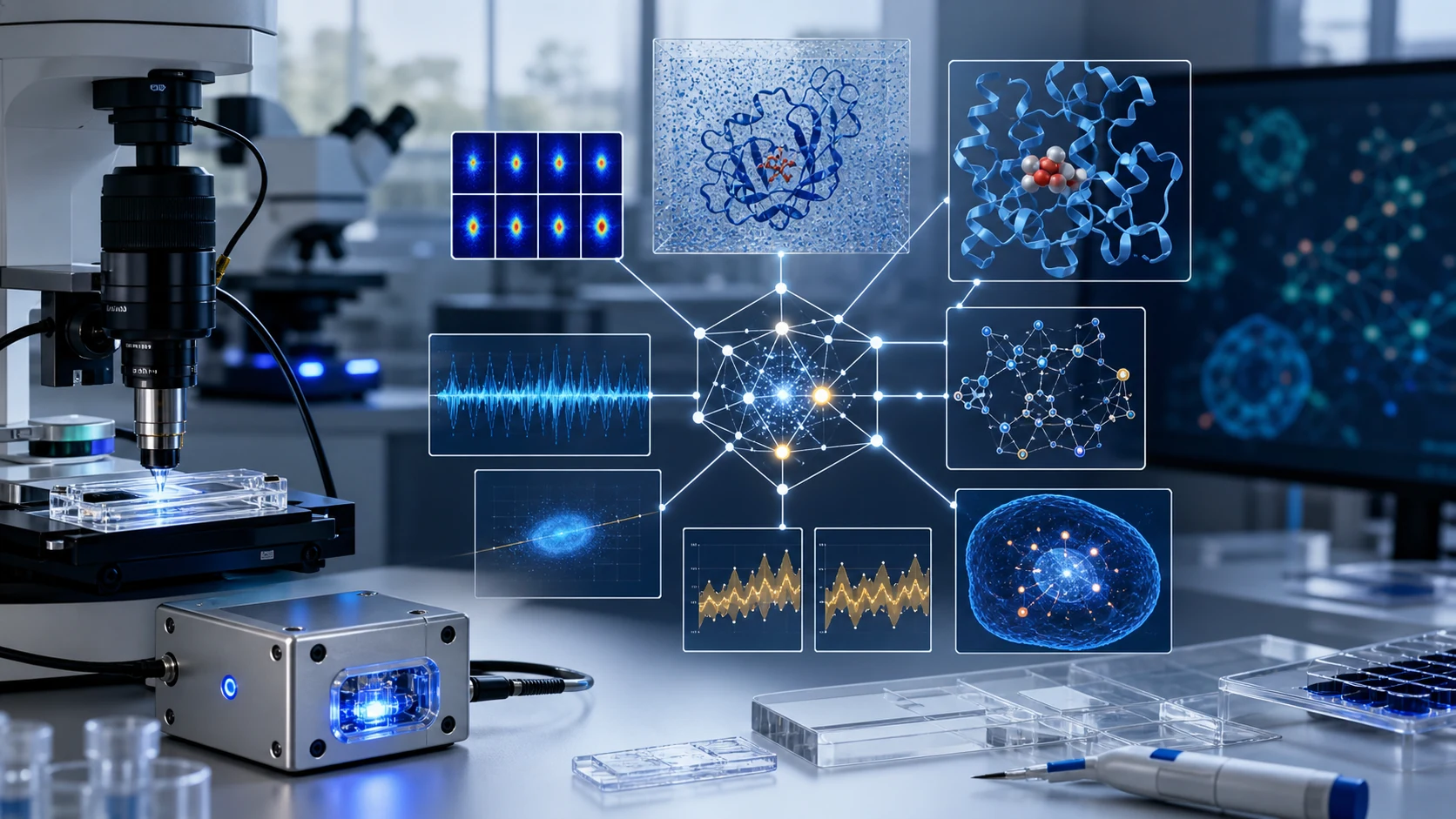
Quantum biology evidence map
A claim is useful only when the quantum mechanism, measurement protocol, and biological endpoint are tested together.
Biology
- Endpoint
- Sample protocol
- Noise sources
- Controls
Quantum layer
- Sensor or simulation
- Coherence limits
- Calibration
- Classical baseline
Decision
- Effect size
- Uncertainty
- Reproducibility
- Clinical or lab action
Quantum biology is becoming a measurement discipline.
Google's REPLIQA programme is a useful 2026 signal because it frames quantum biology as an applied research question at the intersection of quantum computing, life sciences, and measurement. The NIH QIST interest area points to a similar bridge across quantum sensing, computing, communication, and biomedical research.
The PNAS 2026 perspective on quantum biology is also important because it narrows the discussion: a serious claim must link quantum effects to biological function. That is a higher bar than using quantum language around a complex molecule.
TD · Technical depth7 supporting chapters and the working checklist.Read deeper
The field needs evidence templates, not only hypotheses.
Biological systems are noisy, wet, warm, heterogeneous, and hard to reproduce. That does not make quantum biology impossible, but it makes careless claims easy. The work is an evidence template that can separate a true quantum contribution from ordinary chemistry, instrumentation artifacts, model overfitting, and uncontrolled sample variation.
Near-term quantum biology work should be explicit about the endpoint. Does the quantum method improve sensitivity, spatial resolution, temporal resolution, simulation accuracy, causal understanding, or decision quality?
- Define the biological endpoint before selecting the quantum method.
- Run classical instrumentation and simulation baselines with the same samples and controls.
- Track calibration, sample preparation, environmental noise, and analysis code as evidence artifacts.
- Report uncertainty in a form that a biologist, engineer, and decision owner can all inspect.
Quantum sensing is the practical first engineering path.
Quantum computing for biology is strategically important, but many useful near-term opportunities may come from sensing and measurement. Sensors that improve weak-signal detection, local fields, nanoscale imaging, or time-resolved measurements can create value before large fault-tolerant computers arrive.
A responsible program should avoid broad drug-discovery acceleration claims. A more testable starting point is a quantum-enabled measurement workflow: experiment design, calibration evidence, data fusion, and decision support around a defined biological endpoint.
Coordinate protocols, controls, uncertainty, and next experiments.
QFlow Studio can frame the protocol: sample context, measurement setup, sensor calibration, baseline run, quantum run, analysis, and review. QANTIS can frame uncertainty and decision evidence when the result influences a research or operational choice.
In life-sciences contexts, the product must preserve humility. A dashboard should not turn a weak correlation into a claim. It should show controls, confidence, limitations, and what additional measurement is needed.
- Represent experimental protocols as versioned workflows, not ad hoc notebooks.
- Attach calibration and negative controls to every measurement package.
- Use QANTIS to expose uncertainty, decision thresholds, and next-best experiment recommendations.
- Keep healthcare and biomedical language evidence-based; avoid clinical claims without validation.
Treat quantum biology as an evidence-system problem.
Quantum biology attracts broad claims, but the engineering problem is more precise: connect sensing or simulation to a versioned protocol, calibration, controls, classical baselines, uncertainty, and a decision about the next experiment.
Sensing, simulation, protocol reproducibility, and uncertainty-aware decisions should remain separate workstreams under one research program.
The claims most likely to collapse under review.
Quantum biology fails most often at the point of attribution. A measured change can come from ordinary chemistry, an instrumentation artifact, an overfit model, or uncontrolled sample variation long before any quantum effect is involved. Biological systems are noisy, wet, warm, and heterogeneous, which makes each of these confounders easy to reach and hard to rule out. The evidence template exists to force attribution to be earned rather than assumed.
The second failure mode is presentation. A dashboard that promotes a weak correlation into a claim is worse than no dashboard, because it launders uncertainty into apparent fact. The design rule is to show controls, confidence, and limitations alongside the result, and to state what additional measurement is still needed. The PNAS 2026 perspective sets the standard the program must meet: a claim is serious only when a quantum effect is linked to biological function.
- Ordinary chemistry that reproduces the signal without any quantum mechanism.
- Instrumentation artifacts introduced by the sensor or measurement setup.
- Model overfitting that fits noise rather than a real effect.
- Uncontrolled sample variation across preparations and environments.
- Dashboards that convert a weak correlation into a confident claim.
Calibration and baselines are the first assets to build.
Before a quantum run produces anything worth reporting, the program needs a classical baseline on the same samples and the same controls. Without it there is no way to say the quantum method improved sensitivity, resolution, or decision quality rather than simply differing from an unmatched reference. Baselines are cheap insurance against the attribution failures that sink most claims.
Calibration is the second asset. Sensor calibration, sample preparation, environmental noise, and analysis code should be captured as evidence artifacts attached to every measurement package, not reconstructed after the fact. Quantum sensing is the near-term lane precisely because its value shows up in weak-signal detection, local fields, nanoscale imaging, and time-resolved measurement, all of which depend on disciplined calibration. QFlow Studio can hold this as a versioned protocol so the baseline run, quantum run, analysis, and review stay linked.
- Matched classical instrumentation and simulation baselines.
- Sensor calibration records tied to each run.
- Sample preparation and environmental noise logs.
- Negative controls in every measurement package.
- Analysis code versioned alongside the data.
Sensing leads while error-corrected computing matures.
The near-term picture separates cleanly. Quantum sensing can create value now, because weak-signal and time-resolved measurement do not wait on large fault-tolerant hardware. Quantum computing for biology stays strategically important but gated on the milestones in the Google Quantum AI roadmap, which move from error suppression and logical qubits toward useful, error-corrected computation.
The institutional signals point the same way. Google's REPLIQA initiative frames quantum biology as an applied research question across quantum computing, life sciences, and measurement, and the NIH QIST interest area bridges quantum sensing, computing, communication, and biomedical research. The durable position is not to claim biology is quantum. It is to build the evidence systems that can test, for a specific endpoint, whether a quantum sensor or simulation materially improves a biological measurement.
Operational checklist
Program checklist: standing up a quantum biology evidence system
Turn the article's takeaways into an operational sequence for any team weighing a quantum sensor or simulation against a biological measurement.
- 01
Define the biological endpoint before selecting any quantum sensor or simulation method.
- 02
State the target improvement explicitly: sensitivity, spatial resolution, temporal resolution, simulation accuracy, causal understanding, or decision quality.
- 03
Run classical instrumentation and simulation baselines on the same samples and controls as the quantum run.
- 04
Attach calibration and negative controls to every measurement package.
- 05
Track calibration, sample preparation, environmental noise, and analysis code as first-class evidence artifacts.
- 06
Represent every protocol as a versioned QFlow Studio workflow, not an ad hoc notebook.
- 07
Report uncertainty in a form a biologist, engineer, and decision owner can each inspect.
- 08
Use QANTIS to expose decision thresholds and the next-best experiment when a result drives a choice.
- 09
Keep biomedical and healthcare language evidence-based, and make no clinical claims without validation.
- 10
Rule out ordinary chemistry, instrumentation artifacts, model overfitting, and sample variation before publishing a result.
Practical takeaways
01
Quantum-biology programs should start from measurable biological endpoints.
02
Quantum sensing is the clearest near-term product and research path.
03
QFlow can turn experiments into versioned, reviewable protocols.
04
QANTIS can help express uncertainty and next-experiment decisions.
05
Use evidence-system language instead of broad claims about biological impact.
RA · Reference annexDefinitions, recurring questions, editorial method, and primary sources.Inspect
The analysis above carries the main reading flow. This reference layer keeps terminology, recurring questions, editorial method, and primary sources available without interrupting the argument.
Terminology
Terms behind Quantum biology: how to separate measurable signal from narrative..
- Quantum biology
- The field that links quantum effects to biological function. The PNAS 2026 perspective treats this linkage as the bar for a serious claim, higher than using quantum language around a complex molecule.
- Quantum sensing
- A measurement approach that uses quantum systems to detect weak signals, local fields, nanoscale features, or time-resolved changes. The article treats it as the clearest near-term lane because it can create value before large fault-tolerant computers arrive.
- Quantum biology evidence system
- A structured, reviewable workflow that separates a true quantum contribution from ordinary chemistry, instrumentation artifacts, model overfitting, and uncontrolled sample variation. It is the durable content and product lane the article recommends over broad hype language.
- Classical baseline
- A conventional instrumentation or simulation run performed on the same samples and controls as the quantum run. It is what lets a team say the quantum method actually improved the measurement rather than simply differing from an unmatched reference.
- Negative control
- A sample or condition expected to produce no effect, attached to a measurement package. It helps detect instrumentation artifacts and false signals before they become claims.
- Calibration
- Setting and recording a sensor's reference so measurements are traceable and comparable. The article treats calibration as an evidence artifact captured with every run, not reconstructed after the fact.
- Coherence limits
- The boundary within which a quantum effect persists before environmental noise destroys it. It sits in the quantum layer of the article's evidence map alongside calibration and the classical baseline.
- Biological endpoint
- The specific measurement, model, or intervention decision the work is meant to improve, such as sensitivity or decision quality. The article insists it be defined before any quantum sensor or simulation method is selected.
Field questions
Program questions behind Quantum biology: how to separate measurable signal from narrative..
Q01How do we know a measured effect is genuinely quantum and not ordinary chemistry or an instrument artifact?
The evidence template exists to separate a true quantum contribution from ordinary chemistry, instrumentation artifacts, model overfitting, and uncontrolled sample variation. It requires running classical instrumentation and simulation baselines on the same samples and controls, and tracking calibration, sample preparation, and environmental noise as evidence artifacts. The PNAS 2026 perspective sets the bar higher still: a serious claim must link a quantum effect to biological function, not just use quantum language around a complex molecule.
Q02What is the more realistic near-term investment, quantum computing or quantum sensing?
The article positions quantum sensing as the clearest near-term lane. Sensors that improve weak-signal detection, local fields, nanoscale imaging, or time-resolved measurements can create value before large fault-tolerant computers arrive. Quantum computing for biology stays strategically important but is gated on the milestones in the Google Quantum AI roadmap, which move from error suppression and logical qubits toward useful, error-corrected computation.
Q03How should we frame value without overclaiming drug discovery acceleration?
The article recommends avoiding drug discovery acceleration claims and instead framing quantum-enabled measurement workflows: experiment design, calibration evidence, data fusion, and decision support around biological endpoints. Value should be stated as an improvement to a specific endpoint such as sensitivity, spatial resolution, temporal resolution, simulation accuracy, causal understanding, or decision quality. Any biomedical language should stay evidence-based and avoid clinical claims without validation.
Q04What roles do QFlow Studio and QANTIS play in a quantum biology program?
QFlow Studio frames the protocol as a versioned workflow: sample context, measurement setup, sensor calibration, baseline run, quantum run, analysis, and review. QANTIS frames uncertainty and decision evidence when a result influences a research or operational choice, exposing decision thresholds and next-best experiment recommendations. Together they keep experiments reviewable rather than trapped in ad hoc notebooks.
Q05How should uncertainty be reported so different stakeholders can act on it?
The article calls for uncertainty reported in a form a biologist, engineer, and decision owner can all inspect. A dashboard should not turn a weak correlation into a claim; it should show controls, confidence, limitations, and what additional measurement is needed. QANTIS is used to expose that uncertainty along with decision thresholds and the next-best experiment.
Q06What distinguishes a serious quantum biology claim from hype?
Per the PNAS 2026 perspective, a serious claim must link a quantum effect to biological function, which is a higher bar than using quantum language around a complex molecule. The article's evidence map treats a claim as useful only when the quantum mechanism, measurement protocol, and biological endpoint are tested together. Google's REPLIQA initiative and the NIH QIST interest area frame the same applied bridge across quantum sensing, computing, and biomedical research.
Editorial record
How Quantum biology: how to separate measurable signal from narrative. was checked.
- Editorial owner
- Neura Parse Research
- Last verified
- July 12, 2026
- Method
- Synthesis of the dated primary and official records listed below, checked against the operating question in this note.
- Scope limit
- Planning analysis—not certification, customer performance evidence, procurement advice, or a claim of production readiness.
SRSources reviewed
4 records