01
AI is off by default
Admins enable the assistant per workspace. Environment keys are fallback-only; the repo points operators toward Admin -> Agent control and Settings -> AI & Agents.
Workspace toggleAdmin controlFallback env only
TaskNebula AI governance
TaskNebula's strongest AI story is not magic generation. It is opt-in BYOK AI, native fallback, model profiles, audit logs, AGENTOWNERS policy, MCP write governance, and local coding-agent handoff.
Real product screenshot
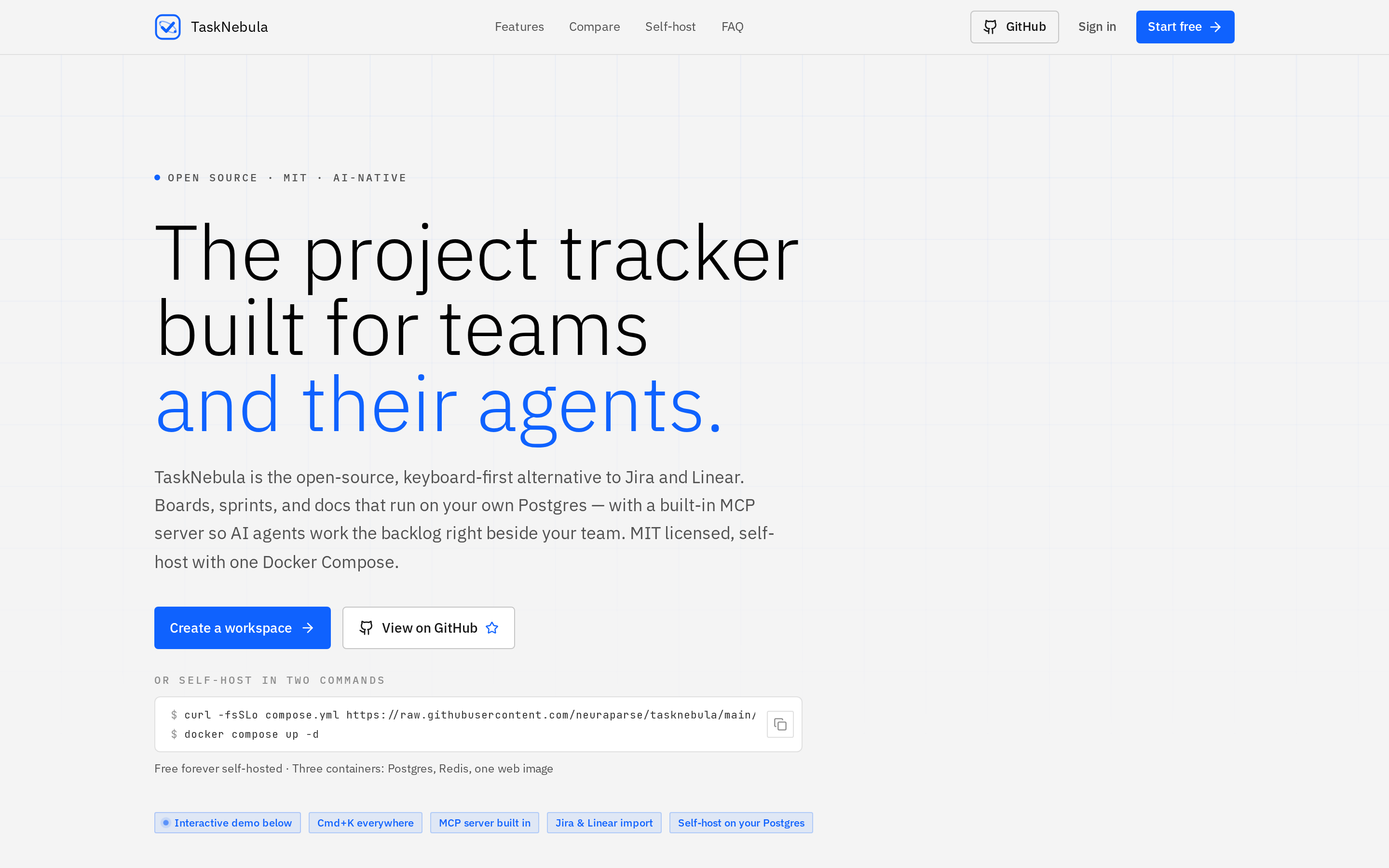
Self-hosted project management, AI drafting, governance, and update awareness in one workspace.
v0.7.9
Latest release
30
Locales
34
GitHub stars
MIT
License
Product evidence
The public page now shows real TaskNebula AI drafting and issue-detail screenshots before describing providers and policy. That is better SEO and better trust.
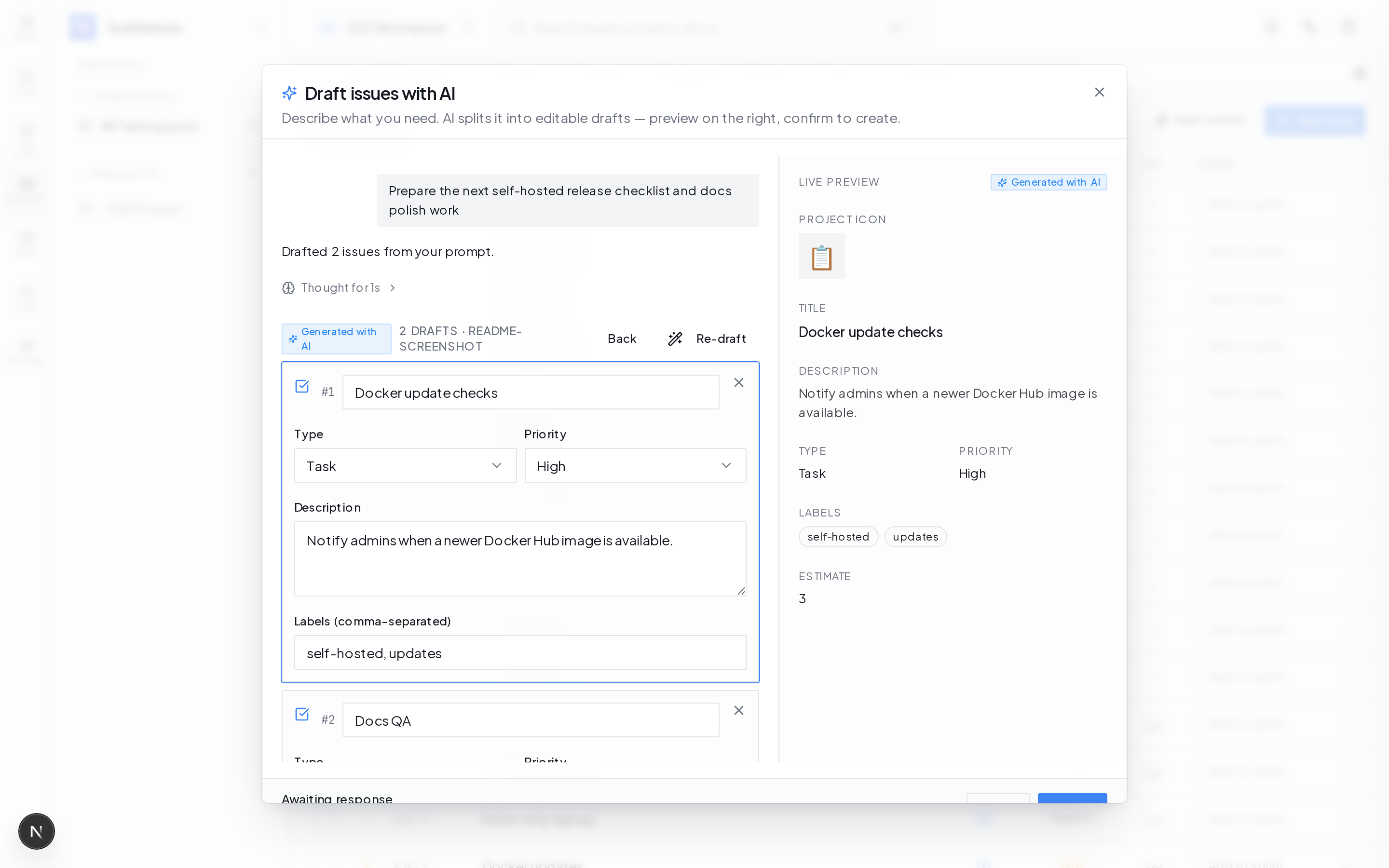
One prompt becomes a single issue or editable checklist before bulk creation.
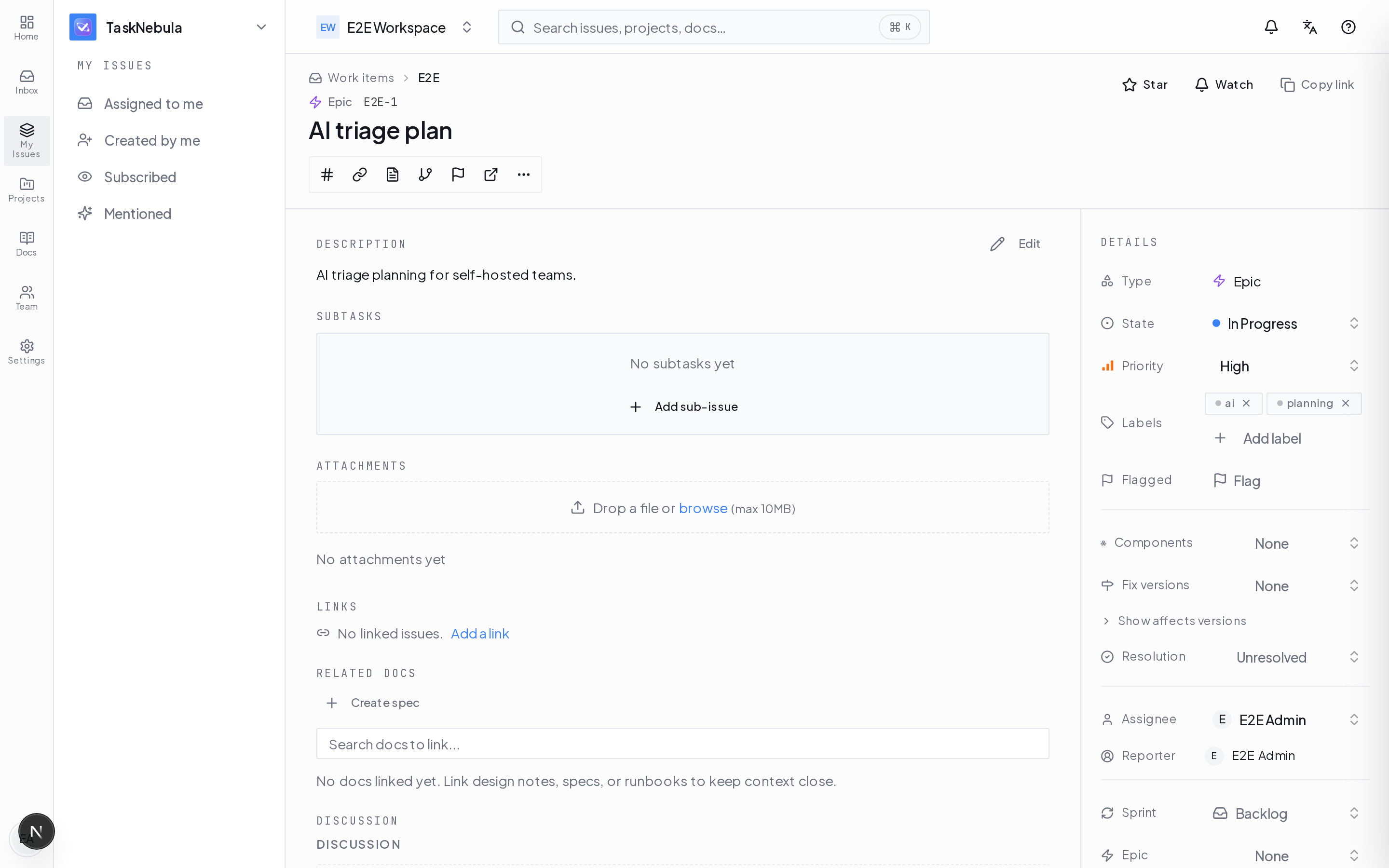
Labels, versions, components, comments, sub-issues, and per-issue assist in one view.
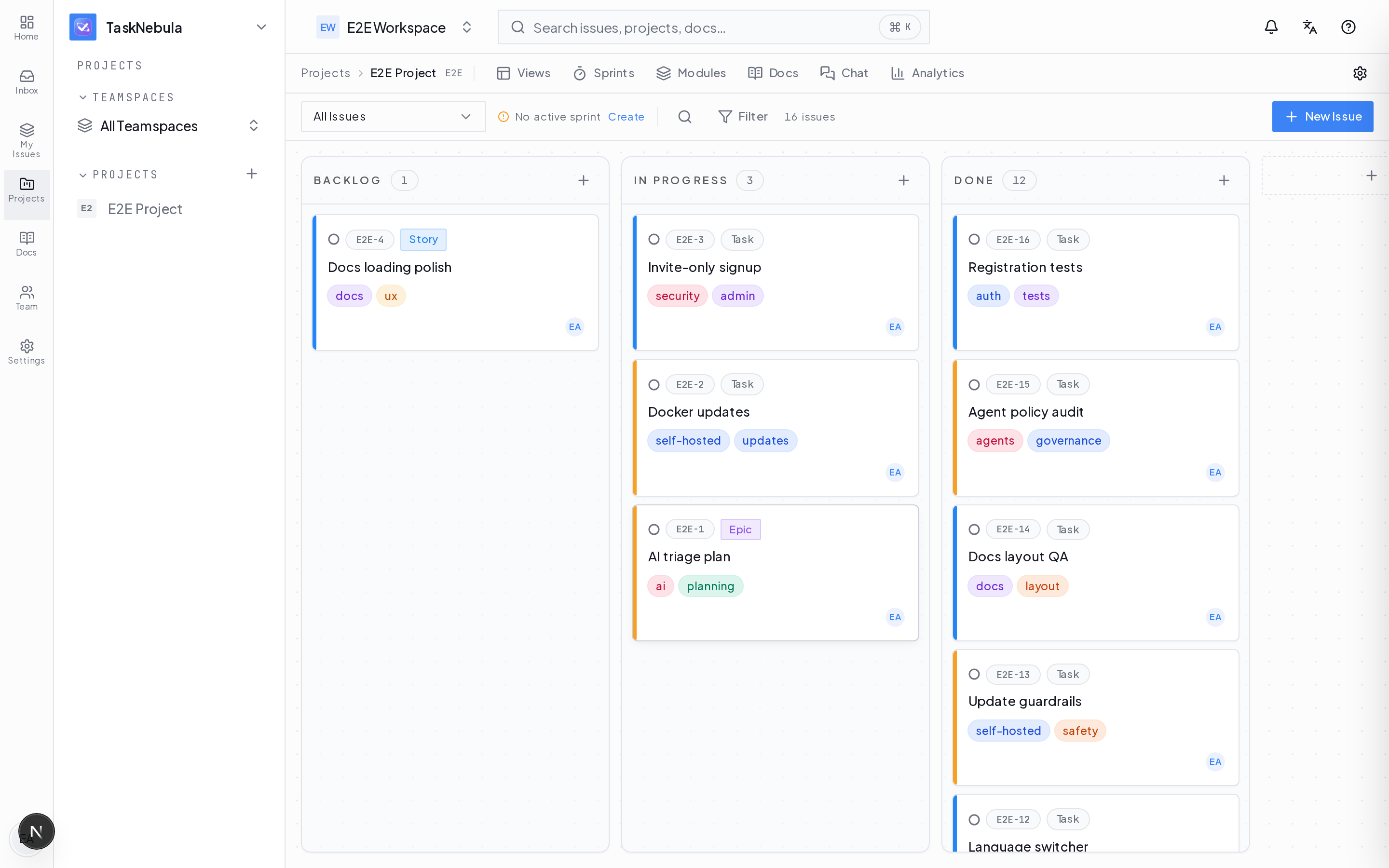
Kanban, sprint work, drag-and-drop planning, presence, and project status loops.
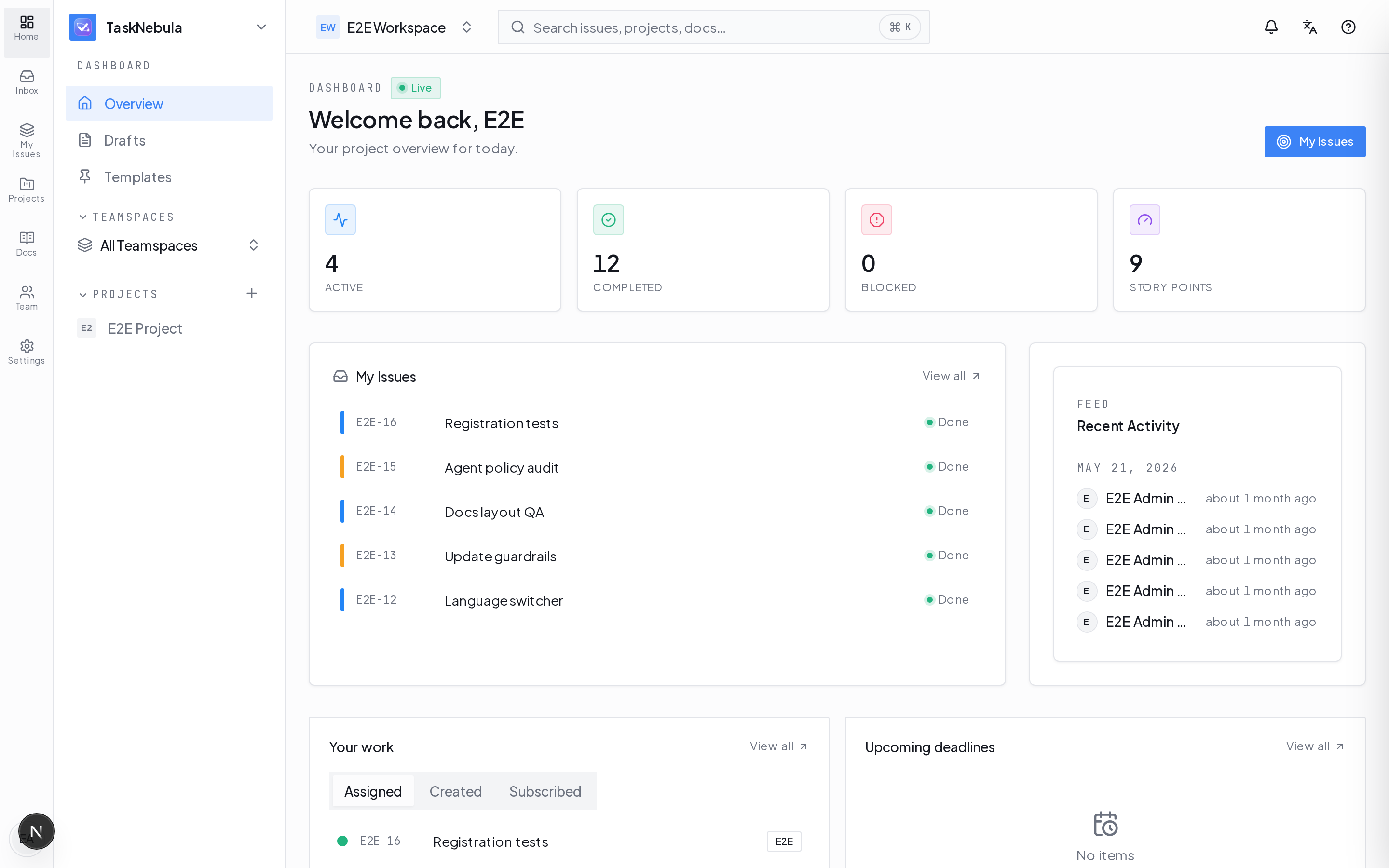
Standup, catch-up, analytics, deadlines, pinned work, and recent activity.
Governance model
The repo frames AI as an opt-in operational layer with provider keys, model profiles, AGENTOWNERS policy, MCP routes, local runner settings, audit logs, and approval gates.
01
Admins enable the assistant per workspace. Environment keys are fallback-only; the repo points operators toward Admin -> Agent control and Settings -> AI & Agents.
02
OpenAI and Anthropic credentials can be configured at platform or workspace scope, encrypted with AES-256-GCM, redacted in previews, and audit-logged on rotation.
03
If no LLM credential is configured, the deterministic heuristic planner keeps AI-adjacent drafting paths usable without external API calls.
04
The roadmap positions TaskNebula as a control plane where coding agents can be assigned work and routed through local policy.
05
MCP write tools attach configured actor markers before issue creation, updates, assignment, status transitions, comments, and subtasks.
06
Optional environment settings can dispatch issues to Codex or Claude Code installed in the runtime or custom image, with sandbox, cwd, model, and timeout controls.
Human-in-the-loop
That sequence is the right public story. The assistant should accelerate backlog and issue work while leaving admin policy, approval, and audit controls legible.
01
Backlog prompts become editable single-ticket or checklist drafts. Users choose what to create before bulk insert.
02
Issue detail AI assist can summarize with comments, rewrite descriptions, suggest next steps, or propose labels with one-click apply.
03
Provider, model, temperature, max tokens, and reasoning effort are saved as reusable profiles with revision history.
04
Bad key, rate limit, or unavailable model becomes an in-app notification with an action hint and deep link to settings.
Agent action lifecycle
Operating flowUser or agent proposes work
prompt or MCP tool
TaskNebula resolves actor
TASKNEBULA_AGENT_ACTOR
AGENTOWNERS policy evaluates
local policy
Approval gate or dry-run
human review
Issue/comment/status write is audited
audit log
What this means
This page now targets the long-tail phrases people actually search when evaluating agentic project-management software: BYOK, MCP, coding agents, approval queue, audit log, and self-hosted AI.
Run AI drafting without handing the whole work graph to a hosted vendor.
Separate platform defaults from workspace overrides and keep key rotation visible.
Route tool writes through identity, policy, approval, and audit instead of raw API access.
Run it yourself
TaskNebula is positioned as the self-hostable project-management control plane for teams that want inspectable operations, not another black-box SaaS.