01
AI is off by default
Admins enable the assistant per workspace. Environment keys are fallback-only; the repo points operators toward Admin -> Agent control and Settings -> AI & Agents.
Workspace toggleAdmin controlFallback env only
TaskNebula AI governance
TaskNebula keeps AI concrete: opt-in BYOK access, native fallback, model profiles, audit logs, AGENTOWNERS policy, MCP write governance, and local coding-agent handoff.
AI off by defaultOpt-in per workspaceAudit-logged writes
01Product evidence
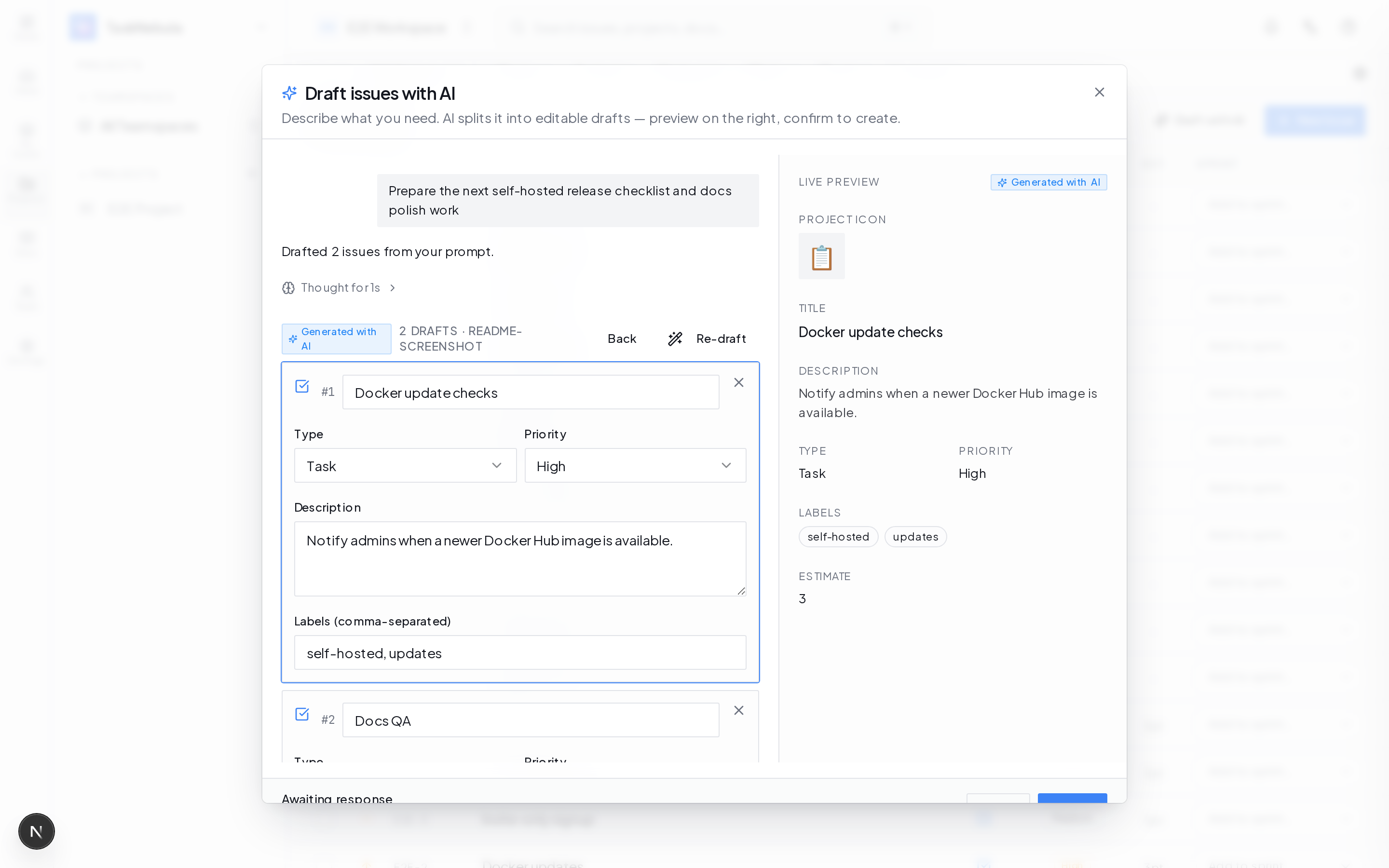
Product screenshots show AI-assisted drafting and issue work before the provider, policy, approval, and audit controls are examined.
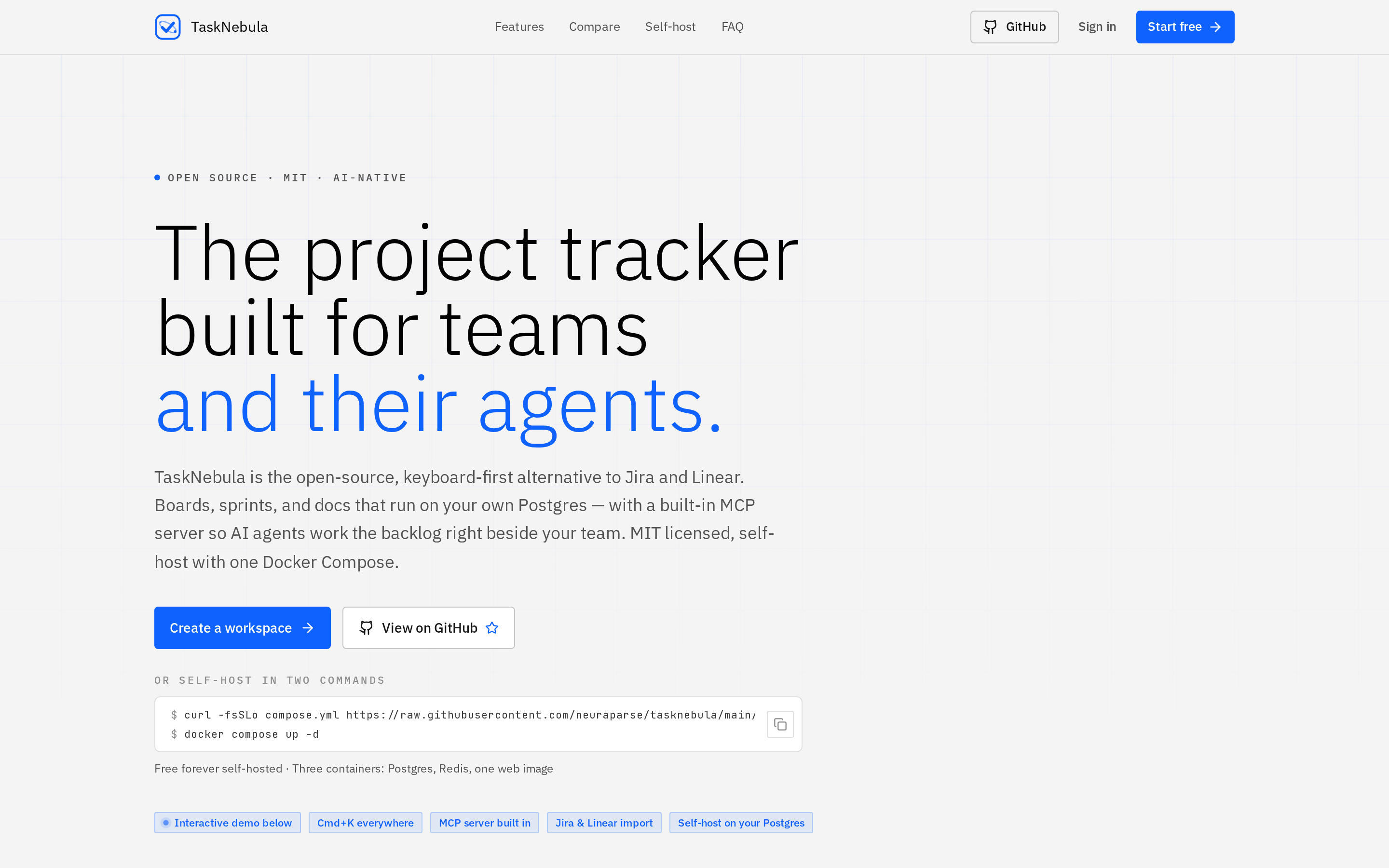
FIG 02 · Workspace home
A dense work hub for projects, activity, personal work, analytics, and update awareness.
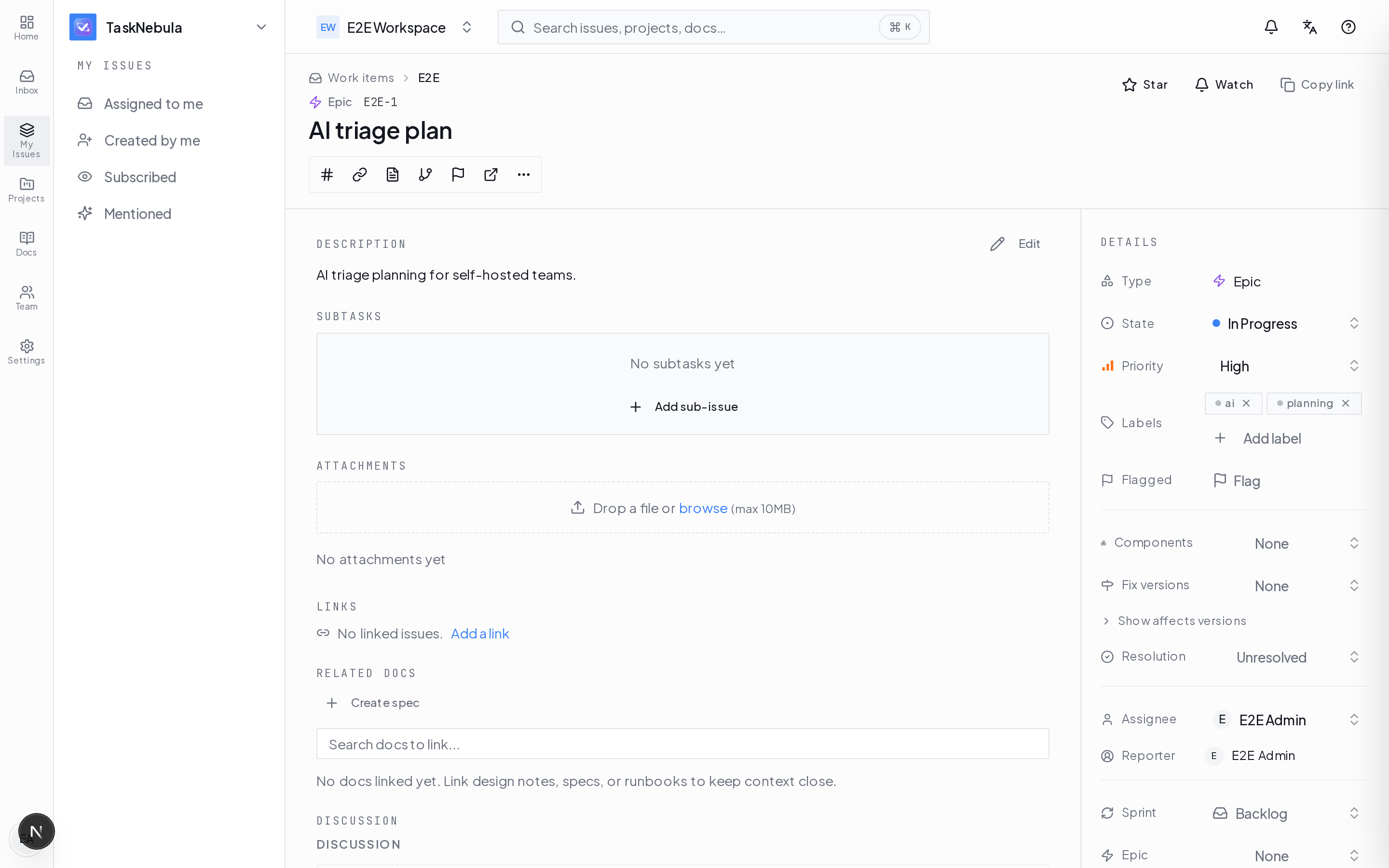
FIG 03 · Issue detail
Labels, versions, components, comments, sub-issues, and per-issue assist in one view.
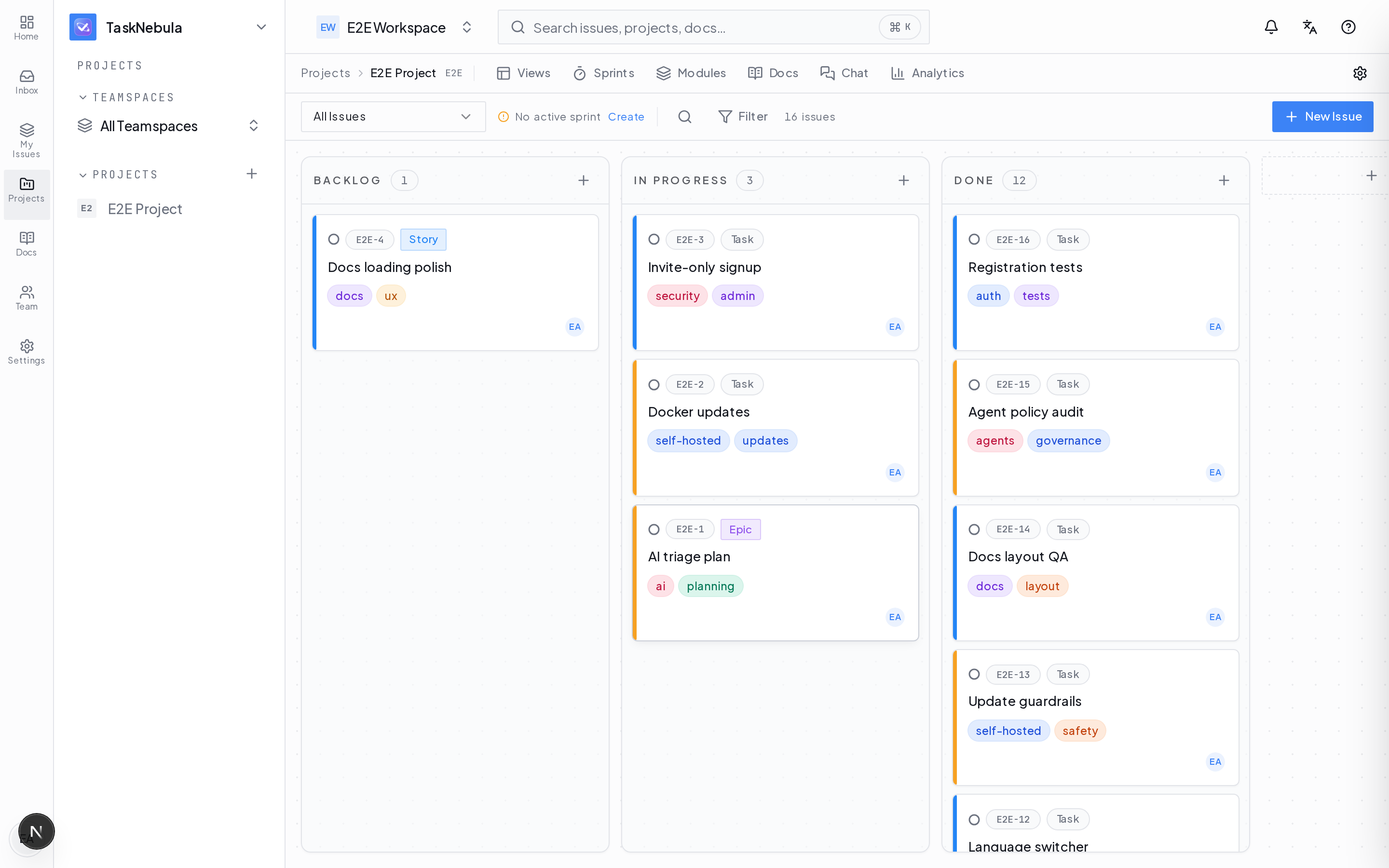
FIG 04 · Realtime board
Kanban, sprint work, drag-and-drop planning, presence, and project status loops.
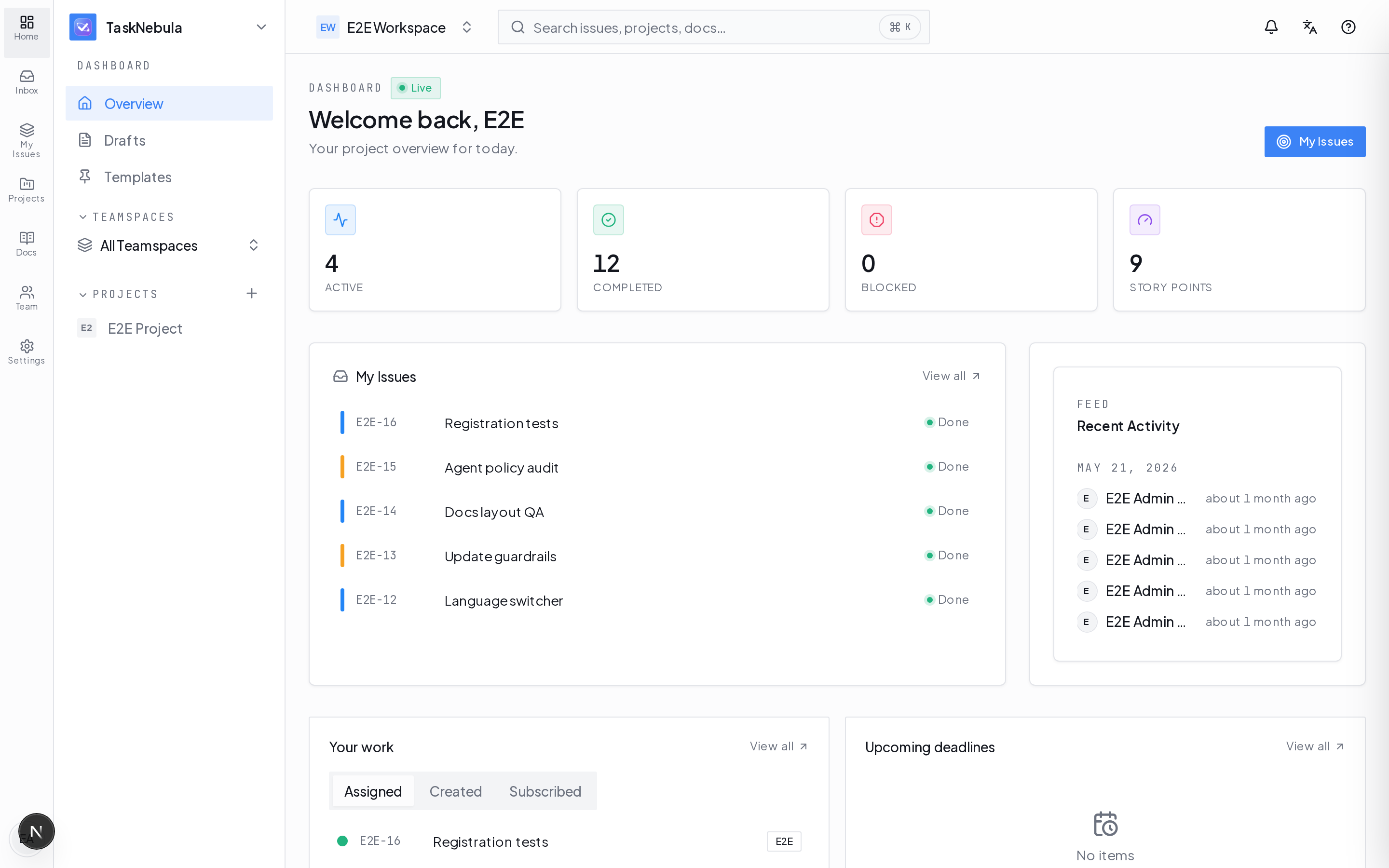
FIG 05 · Dashboard
Standup, catch-up, analytics, deadlines, pinned work, and recent activity.
02Governance model
AI remains an opt-in operational layer with provider keys, model profiles, AGENTOWNERS policy, MCP routes, local runner settings, audit logs, and approval gates.
01
Admins enable the assistant per workspace. Environment keys are fallback-only; the repo points operators toward Admin -> Agent control and Settings -> AI & Agents.
02
OpenAI and Anthropic credentials can be configured at platform or workspace scope, encrypted with AES-256-GCM, redacted in previews, and audit-logged on rotation.
03
If no LLM credential is configured, the deterministic heuristic planner keeps AI-adjacent drafting paths usable without external API calls.
04
The roadmap positions TaskNebula as a control plane where coding agents can be assigned work and routed through local policy.
05
MCP write tools attach configured actor markers before issue creation, updates, assignment, status transitions, comments, and subtasks.
06
Optional environment settings can dispatch issues to Codex or Claude Code installed in the runtime or custom image, with sandbox, cwd, model, and timeout controls.
04What this means
Platform owners can inspect BYOK and self-hosting, governance teams can follow approvals and audit logs, and engineering teams can evaluate MCP and local coding-agent handoff.
Run AI drafting without handing the whole work graph to a hosted vendor.
Separate platform defaults from workspace overrides and keep key rotation visible.
Route tool writes through identity, policy, approval, and audit instead of raw API access.
Run it yourself
TaskNebula is a self-hostable project-management control plane for teams that want inspectable operations instead of another black-box SaaS.