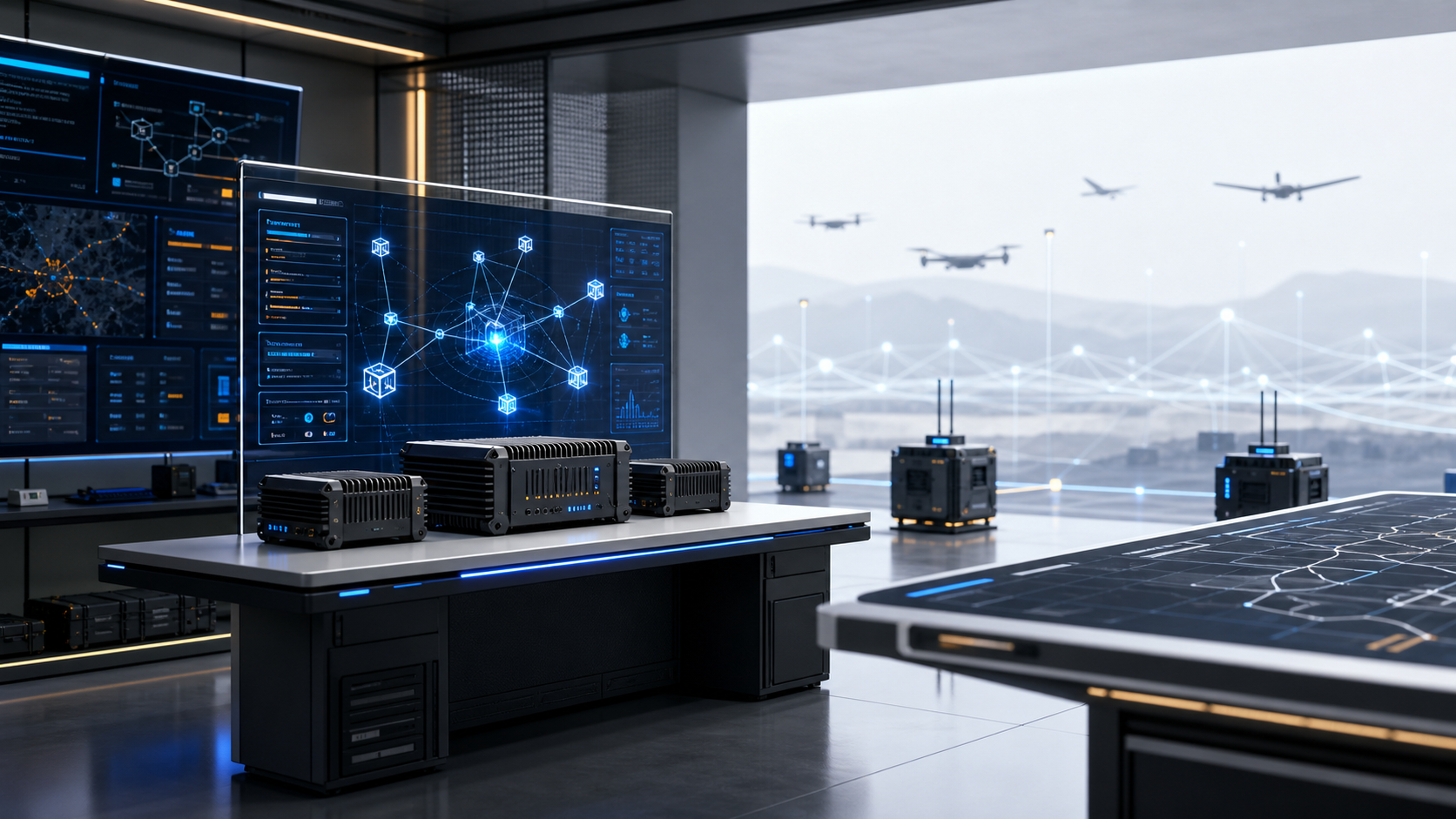
The cloud-to-edge loop is now the product: train, simulate, evaluate, package, deploy, monitor, and roll back across real devices.
Robotics products need a cloud-to-edge loop.
NVIDIA's physical AI, Jetson, Isaac, Cosmos, and GR00T direction points to a larger architectural shift: robotics products need a development loop that spans training, simulation, packaging, deployment, monitoring, and improvement.
NeuralOS sits in the critical operational layer. It needs to manage inference backends, real-time control, hardware acceleration, secure communication, telemetry, OTA updates, and rollback behavior.
Maintenance belongs in the first architecture pass.
Versioned builds, device identity, signed packages, resource budgets, and observability should appear before the first pilot. A model that cannot be safely shipped is still a research artifact.
Practical takeaways
Put model packaging, OTA, rollback, and device identity into the first architecture pass.
Design for offline operation when cloud latency or connectivity cannot be trusted.
Use simulation and synthetic data where it improves safety, but keep hardware validation in the loop.
Separate real-time control paths from exploratory agent behavior.