Abstract
Hybrid intelligence lets local models handle fast private context while cloud models handle broader reasoning, retrieval, and orchestration.
Local models change product expectations.
Apple's Foundation Models framework gives developers a direct route to on-device intelligence. The important product idea is not only privacy; it is the ability to create responsive local experiences when a network call is undesirable.
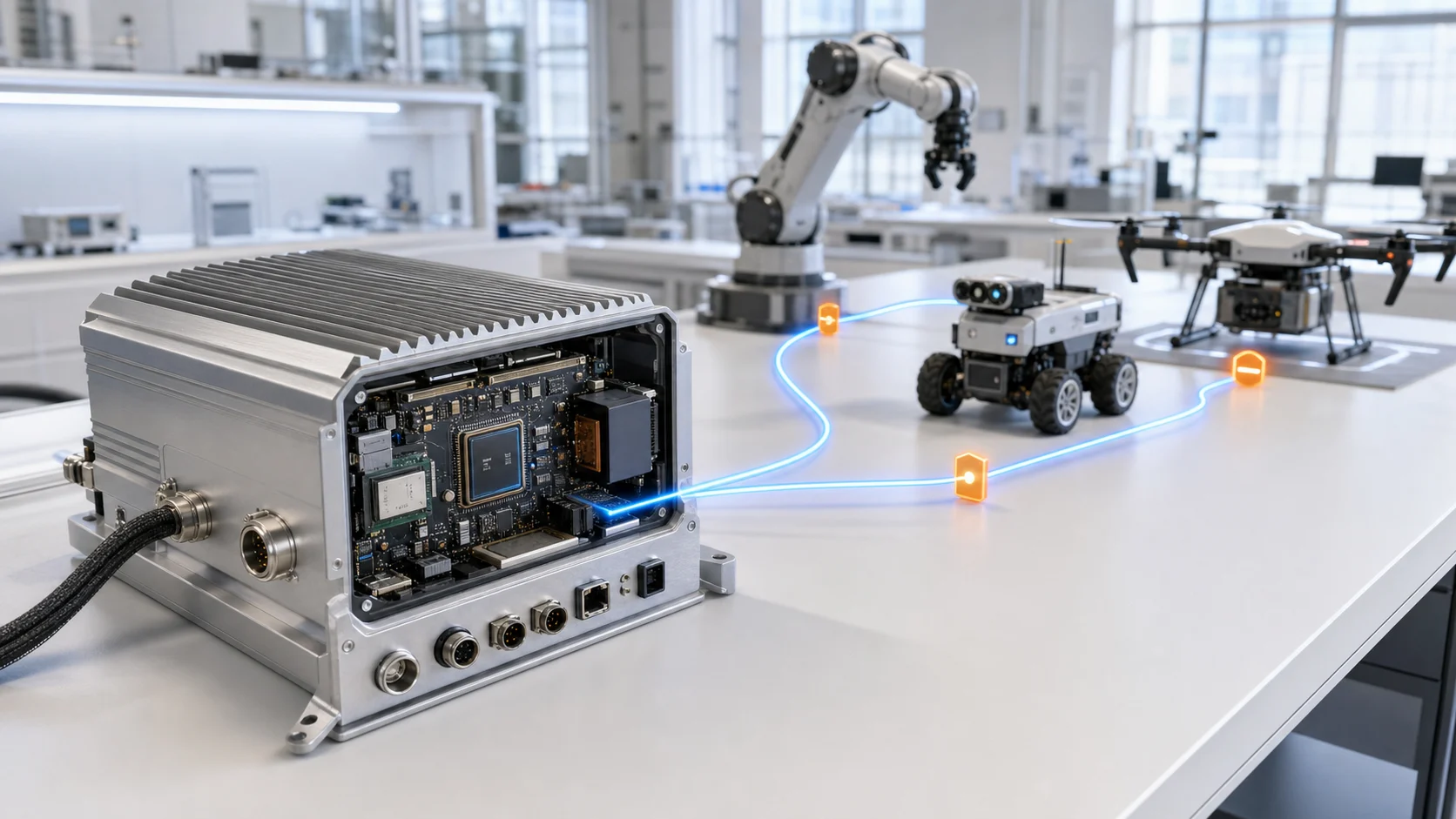
The pattern applies to both NeuraBar and NeuraOS. A macOS workspace tool should feel immediate when summarizing local context, while an embedded device should keep critical inference near hardware when latency, bandwidth, or privacy makes cloud dependency risky.
TD · Technical depth5 supporting chapters and the working checklist.Read deeper
The pattern is hybrid intelligence.
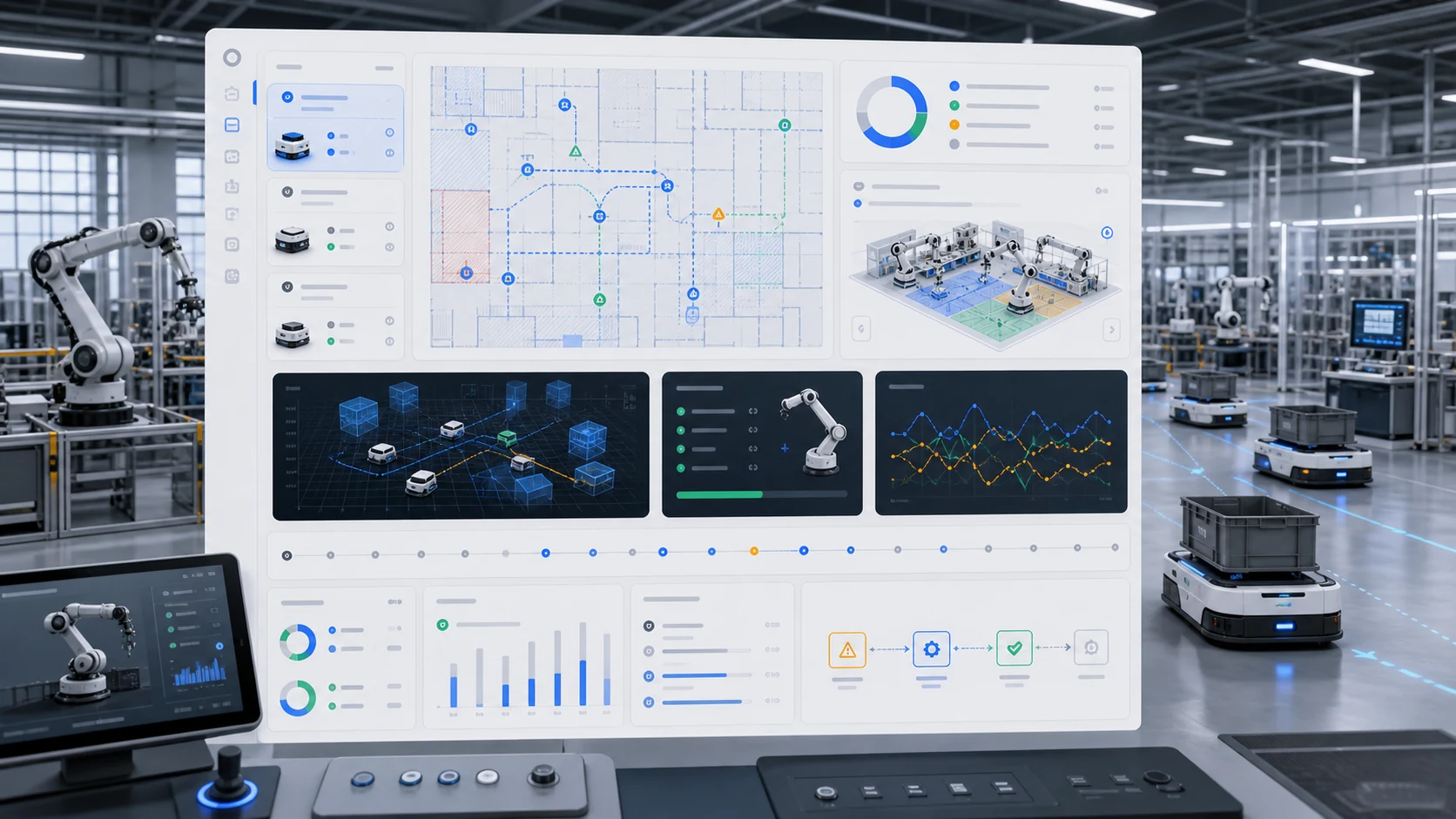
Local models handle fast, private, contextual tasks. Cloud models handle heavy reasoning, broad retrieval, and cross-system orchestration. A serious product needs a routing layer based on sensitivity, latency, cost, and required capability.
That routing policy should be understandable at the moment of use. The interface can disclose whether processing stays on the device, which context may leave it, what capability is unavailable offline, and how a task falls back when a model or network cannot be reached. Hybrid intelligence becomes trustworthy when users can predict those transitions instead of discovering them through inconsistent behavior.
The routing layer is where the contract gets enforced.
A serious product needs a routing layer based on sensitivity, latency, cost, and required capability. That sentence carries more program weight than it appears to. The router is the single point where the privacy and latency contract stops being an intention and becomes an enforced behavior. Every inference request should arrive with enough metadata for the router to decide its path without guessing.
Classify sensitivity before dispatch, not after. If the router cannot determine whether a payload contains private local context, the safe default is the local path. Latency budgets work the same way: a task with a hard interactive deadline should never wait on a network round trip it did not need.
Treat the routing policy as a reviewed artifact. It is a product decision with security consequences, so it should be written down, versioned, and re-evaluated whenever the platform framework or a cloud dependency changes. Apple's own framework updates are a reminder that the local model surface is a moving target.
- Sensitivity: whether the input contains private local context.
- Latency: the deadline the task must meet.
- Cost: what the cloud call costs at product scale.
- Capability: whether the local model can actually do the task.
Misrouting, silent fallback, and path drift break hybrid AI.
Hybrid systems fail at the seams. The dangerous failures are not model errors; they are routing and availability failures that surface as silent behavior changes. Each one should have a declared response before the product ships.
The takeaway on graceful degradation implies a concrete deliverable: for every task in the inventory, a written degraded behavior for loss of network access, loss of model access, and loss of tool access. A product that blocks on a missing cloud model has not degraded gracefully. A product that silently swaps a cloud answer for a weaker local one without signaling the change has not either.
Quality drift between paths deserves its own line item. A local model and a cloud model will not answer the same prompt identically, and platform updates can change local behavior without any action from the product team. If users cannot tell which path served them, inconsistency reads as unreliability.
- Network loss mid-task on a cloud route with no declared local fallback.
- Platform framework updates that change local model behavior between releases.
- Routing misclassification that moves private local context off the device.
- Divergent answers between local and cloud paths for the same task.
- Tool or model access changes that break orchestration without a visible signal.
Measure routing decisions, path latency, and degradation events.
The article frames three measures: a local fast path, a cloud reasoning path, and hybrid routing. That frame is also the measurement plan. A hybrid partition that is not instrumented per path cannot be managed, because a single blended latency number hides exactly the distinction the architecture exists to create. Measure the local path and the cloud path as separate populations from day one.
Log every routing decision with the inputs that drove it. This is the audit trail that proves sensitive context stayed local, and it is the debugging surface when a task lands on the wrong path. It also turns the routing policy from a document into an observable system.
Count degradation events explicitly. How often fallbacks trigger, which access change caused them, and what the user experienced are the numbers that tell a program whether graceful degradation is working or merely specified.
- Per-path latency, local and cloud measured separately.
- Routing decision logs with sensitivity, latency, cost, and capability inputs.
- Fallback and degradation event counts by cause.
- Local context reads: which data each model actually touched.
Where the pattern lands for embedded and mission systems.
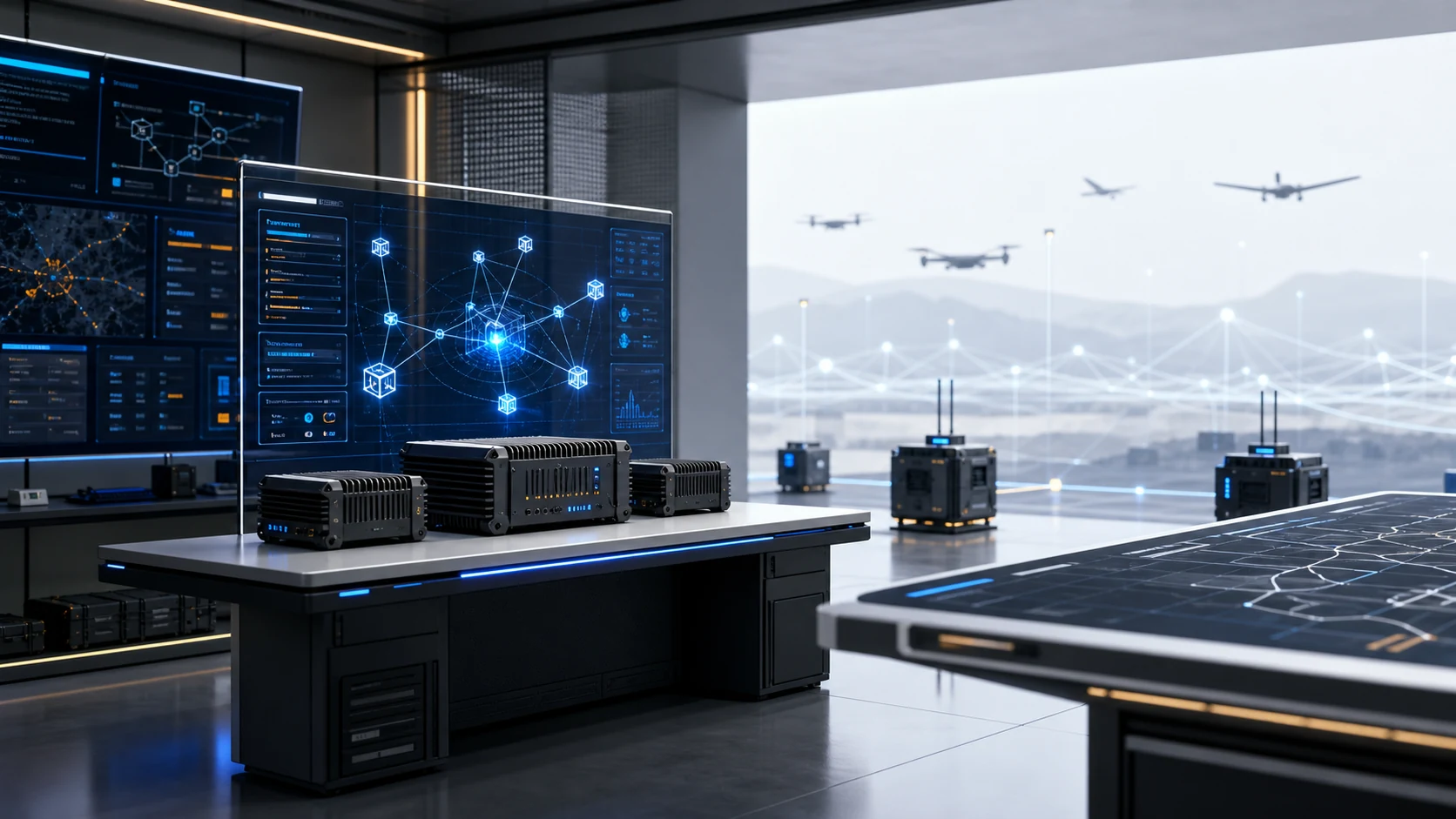
For a desktop tool the hybrid pattern buys responsiveness and privacy. For an embedded system it buys survivability. A drone or field device cannot assume the network exists, so critical inference has to sit near the hardware and treat cloud reach as an opportunistic upgrade rather than a dependency.
This is the design position behind NeuraOS. The current product record describes governed edge intelligence for robotics and defence systems on Linux 6.18 LTS + PREEMPT_RT and ROS 2 Lyrical, with approved local inference, bounded autonomy, independent deterministic safety, signed release evidence, and human authority. The runtime exists so the local half of the hybrid contract has a controlled, reviewable home near the device.
NeuraBar demonstrates the desktop end of the same contract: an open-source macOS menu-bar workspace that is local-first, stores plain JSON on the machine, and runs with no telemetry and no cloud account. Two different form factors, one rule: the fast private path stays local, and everything that leaves the device is a routed, deliberate decision.
Operational checklist
Program checklist: partitioning intelligence between device and cloud
Derived from the article's takeaways. Work the list before committing to a local, cloud, or hybrid architecture.
- 01
Inventory every inference task and classify each as local-first, cloud-reasoning, or hybrid.
- 02
Write privacy and latency into the requirements baseline as testable product requirements, not afterthoughts.
- 03
Define the routing policy per task: sensitivity classification, latency budget, cost ceiling, and required capability.
- 04
Set the default route to local when sensitivity cannot be determined before dispatch.
- 05
Declare a degraded mode for every task and test behavior under loss of network access, model access, and tool access.
- 06
Instrument the local fast path and the cloud reasoning path separately, and log every routing decision.
- 07
Scope the local context each model can read to the task at hand and audit those reads.
- 08
Re-evaluate the partition whenever the platform framework or a cloud model dependency changes.
Practical takeaways
01
Define local-first tasks separately from cloud-reasoning tasks.
02
Make privacy and latency visible product requirements, not afterthoughts.
03
Use local context carefully so developer and operator workflows stay fast.
04
Design graceful degradation when network access, model access, or tool access changes.
RA · Reference annexDefinitions, recurring questions, editorial method, and primary sources.Inspect
The analysis above carries the main reading flow. This reference layer keeps terminology, recurring questions, editorial method, and primary sources available without interrupting the argument.
Terminology
Terms behind On-device AI: architecture choices for privacy, latency, and resilience..
- On-device intelligence
- Model inference that runs on the user's device or embedded hardware instead of a remote server, removing the network call from the fast path.
- Foundation Models framework
- Apple's developer framework that gives applications a direct route to on-device models on Apple platforms.
- Hybrid intelligence
- An architecture in which local models handle fast, private, contextual tasks while cloud models handle heavy reasoning, broad retrieval, and cross-system orchestration.
- Routing layer
- The component that decides, per request, whether a task runs on a local model or a cloud model, using sensitivity, latency, cost, and required capability as inputs.
- Graceful degradation
- Designed fallback behavior that keeps a product working in a reduced but predictable mode when network access, model access, or tool access changes.
- Local-first
- A design stance that keeps data and processing on the device by default, with any cloud use as an explicit, deliberate exception.
- Latency budget
- The maximum acceptable response time for a task, used as a routing input to decide whether a network round trip is affordable.
- Inference
- Running a trained model to produce an output for a given input; the unit of work that hybrid routing assigns to a local or cloud path.
Field questions
Program questions behind On-device AI: architecture choices for privacy, latency, and resilience..
Q01When should an inference task run on the device instead of in the cloud?
Route by four properties: sensitivity, latency, cost, and required capability. Local models fit fast, private, contextual tasks where a network call is undesirable. Cloud models fit heavy reasoning, broad retrieval, and cross-system orchestration. A task that mixes both needs a hybrid route with a declared handoff.
Q02What is hybrid intelligence and why does it need a routing layer?
Hybrid intelligence is the pattern where local models handle the fast private path and cloud models handle the reasoning path. The routing layer is the component that decides, per request, which path serves the task. Without it, the privacy and latency contract is an intention rather than an enforced behavior.
Q03What does graceful degradation mean for a hybrid AI product?
It means every task has a declared behavior when network access, model access, or tool access changes. The product keeps working in a reduced but predictable mode instead of failing silently or blocking. This has to be designed and tested before shipment, not discovered in the field.
Q04Why is Apple's Foundation Models framework relevant to programs that do not ship on Apple platforms?
The framework gives developers a direct route to on-device intelligence, and that resets user expectations for responsiveness and privacy across the industry. The product lesson is platform independent: decide which intelligence belongs on the device, which belongs in the cloud, and which needs both. Apple's ongoing framework updates also show that the local model surface changes over time, so the partition needs periodic review.
Q05How does Neura Parse apply the on-device pattern in its own stack?
NeuraBar is an open-source, local-first macOS menu-bar workspace with plain JSON storage, no telemetry, and no cloud account, which is the desktop end of the contract. NeuraOS is the robotics and defence edge end: approved local inference, policy, workload identity, signed releases, independent safety, recovery, and evidence remain close to hardware. Both follow the same rule: keep the fast private path local and treat cloud dependency as a routed decision.
Editorial record
How On-device AI: architecture choices for privacy, latency, and resilience. was checked.
- Editorial owner
- Neura Parse Research
- Last verified
- July 12, 2026
- Method
- Synthesis of the dated primary and official records listed below, checked against the operating question in this note.
- Scope limit
- Planning analysis—not certification, customer performance evidence, procurement advice, or a claim of production readiness.
SRSources reviewed
3 records