
Abstract
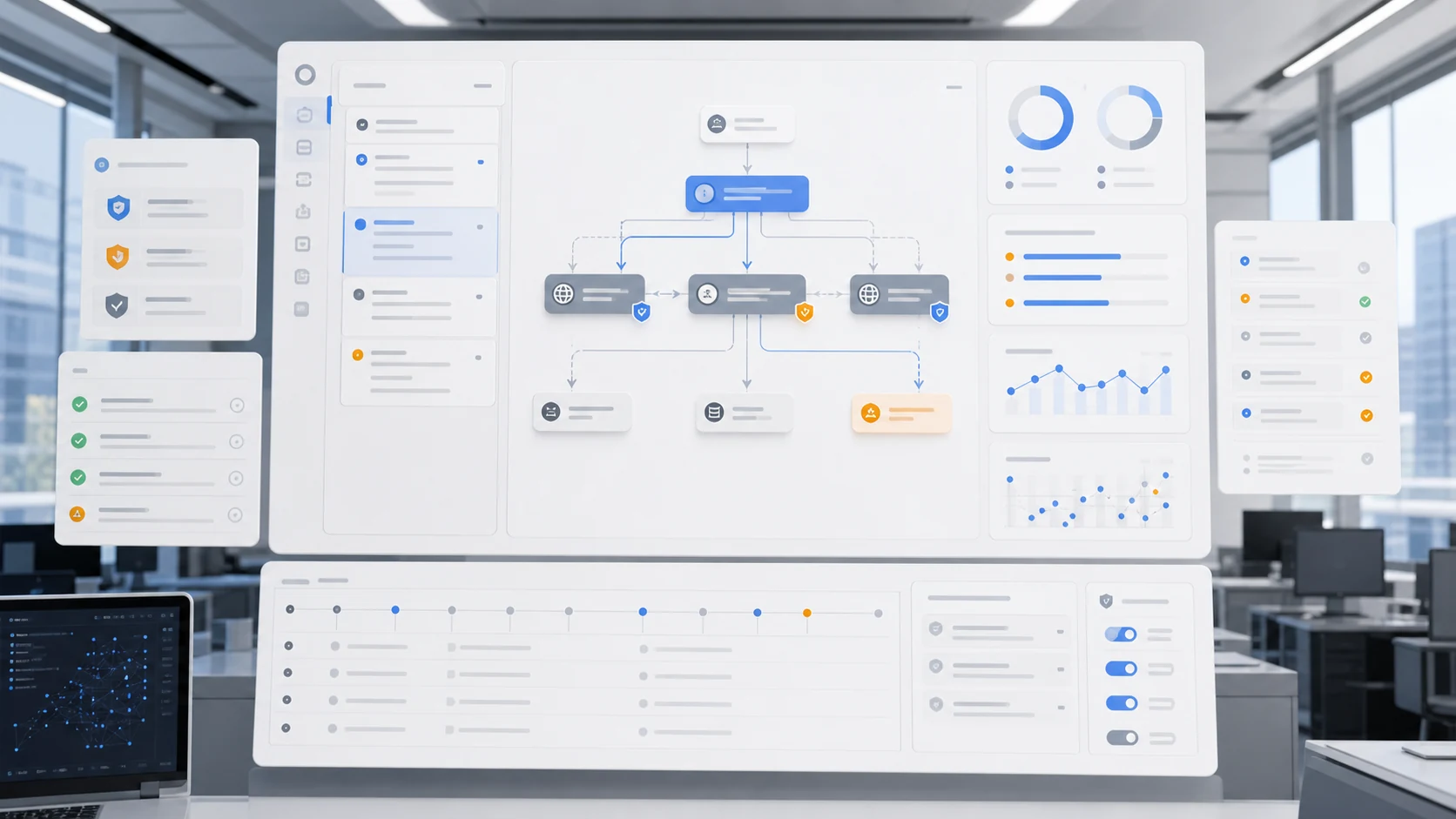
The important product opportunity is not a generic AI dashboard for operators. It is a controlled workflow layer that can connect RAN intelligence, cloud-native network functions, policy gates, telemetry, and rollback into one inspectable operating surface.
The telecom AI layer is moving from feature work to operating model.
3GPP Release 20 keeps 5G-Advanced work moving while starting the formal 6G study path. Its scope includes further AI/ML evolution in the NG-RAN, network energy saving, non-terrestrial networks, ambient IoT, and architecture checkpoints that land in 2026.
O-RAN Release 5 adds a stronger automation surface around AI/ML workflow services, RIC coordination, O-Cloud lifecycle management, TLS 1.3, Zero Trust, and security controls for AI/ML artifacts. AI-RAN Alliance work pushes the same direction from the validation side: AI-native RAN designs must be measured, not only described.
The practical reading is simple. Telecom AI is no longer only about where a model runs. It is about how models, policies, network functions, evidence, and operators move through a governed lifecycle.
TD · Technical depth6 supporting chapters and the working checklist.Read deeper
RAN intelligence needs a workflow control plane.
A production network cannot treat every AI model as a one-off script. It needs inventory, approvals, tests, staged deployment, rollback, ownership, and live observability. Those are workflow problems before they are model problems.
NowFlow maps to this layer because the same workflow can coordinate human approval, API calls, telemetry checks, and incident response. NeuraOS maps to the edge side when inference or policy enforcement must stay close to radio, device, or robotics hardware.
- Model registration should include owner, training context, expected network domain, policy class, and rollback conditions.
- Optimization actions should carry an approval route when they affect service quality, spectrum usage, or security posture.
- Telemetry should trigger workflows that can compare AI recommendations against baselines before acting.
- Edge deployments should keep a local fallback path when connectivity or central orchestration is degraded.
The useful topic is AI-native network operations.
6G, AI-RAN, O-RAN, and RAN automation describe different layers. The useful operating topic is how AI recommendations connect technical orchestration to business policy, staged change, assurance, and rollback.
Workflow orchestration, edge runtime, evidence capture, and governed deployment can support telecom operations without pretending to replace base-station hardware or vendor RAN stacks.
Where governed RAN automation breaks first.
The first failure mode is the unregistered model. A script that tunes parameters in one cluster becomes load-bearing, nobody records its owner or rollback conditions, and the network inherits an actuator with no inventory entry. Every control in this article assumes the model is known before it is trusted.
The second failure mode is action without baseline comparison. An AI recommendation that executes directly against the network skips the check that telemetry-triggered workflows exist to perform. When the recommendation is wrong, the operator learns about it from service degradation instead of a blocked workflow step.
The third failure mode is edge dependence on central orchestration. A site that cannot act safely when connectivity degrades will either freeze or improvise, and both outcomes are worse than a designed local fallback. This is the operational case for keeping inference and policy enforcement close to radio, device, or robotics hardware.
- Unregistered models: no owner, no policy class, no rollback conditions.
- Unchecked actions: recommendations that execute without baseline comparison.
- Orchestration dependence: edge sites with no local fallback path.
- Opaque panels: model state, network state, and approvals collapsed into one view.
How to evaluate vendors for AI-native network operations.
The standards direction gives buyers a concrete question set. O-RAN Release 5 names AI/ML workflow services, O-Cloud lifecycle management, and security controls for AI/ML artifacts, so a vendor claiming AI-native operations should show how its models are registered, approved, deployed in stages, and rolled back.
The AI-RAN Alliance framing sharpens the test: AI-native RAN designs must be measured, not only described. Ask for the validation evidence behind any optimization claim, and ask what happens when the model is wrong. A vendor that cannot show the failure path has not built the authority loop.
Finally, test the separation of concerns. Model monitoring, network monitoring, and business approvals should be inspectable as distinct surfaces with their own owners and records. A single opaque panel that blends all three is the anti-pattern this article argues against, whoever ships it.
- How are models inventoried, and what does a registration record contain?
- Which actions require approval, and how is the approval routed and recorded?
- How are recommendations compared against baselines before execution?
- What is the staged rollout and rollback procedure for a bad model?
- What happens at an edge site when central orchestration is unreachable?
Operational checklist
Program checklist: standing up a governed AI lifecycle for RAN automation
Derived from the June 2026 standards signals and the workflow control plane pattern described above. Work the list in order; the early items gate the later ones.
- 01
Inventory every AI model that can touch the network, and register owner, training context, expected network domain, policy class, and rollback conditions.
- 02
Classify optimization actions by risk, and route anything affecting service quality, spectrum usage, or security posture through an approval gate.
- 03
Separate the AI loop from the authority loop so recommendation logic never carries its own execution authority.
- 04
Build telemetry-triggered workflows that compare AI recommendations against baselines before any action runs.
- 05
Define staged deployment and rollback paths for every network-impacting model or parameter change.
- 06
Keep a local fallback path at edge sites for degraded connectivity or loss of central orchestration.
- 07
Align security work with the O-RAN Release 5 direction: TLS 1.3, Zero Trust, and security controls for AI/ML artifacts.
- 08
Track the 3GPP Release 20 architecture checkpoints landing in 2026 and map each to a lifecycle control you already operate.
- 09
Keep model monitoring, network monitoring, and business approvals as separate, inspectable surfaces, not one opaque panel.
- 10
Retain the audit trail for every automated action: who approved it, which constraints applied, and what evidence was kept.
Practical takeaways
01
AI-native telecom is an operations problem as much as a model problem.
02
NowFlow can frame telecom AI around approvals, rollback, telemetry, and operator surfaces.
03
NeuraOS can support local inference and fallback patterns at edge sites or connected devices.
04
O-RAN and 3GPP trends make policy-aware AI lifecycle management a concrete operating priority.
05
Frame AI-native network operations around policy, staged change, evidence, and rollback.
RA · Reference annexDefinitions, recurring questions, editorial method, and primary sources.Inspect
The analysis above carries the main reading flow. This reference layer keeps terminology, recurring questions, editorial method, and primary sources available without interrupting the argument.
Terminology
Terms behind AI-native telecom is becoming a workflow problem, not only a RAN problem..
- NG-RAN
- The next-generation radio access network defined by 3GPP for 5G and its successors. It is the part of the network that connects devices over radio, and the current target for standardized AI/ML-driven optimization.
- RIC
- RAN Intelligent Controller, an O-RAN defined control point that hosts optimization and automation logic for the radio network. O-RAN Release 5 includes work on coordination between these controllers.
- O-Cloud
- The O-RAN cloud infrastructure layer that hosts virtualized RAN functions. Release 5 addresses its lifecycle management: how that infrastructure is deployed, updated, and retired.
- Non-terrestrial network
- Satellite or airborne links integrated into the standard mobile network rather than operated as a separate system. Part of the 3GPP Release 20 scope.
- Ambient IoT
- A 3GPP Release 20 study area covering ultra-low-power connected devices, extending the network to device classes that conventional cellular design does not reach.
- Authority loop
- The control layer that decides whether an AI-proposed action can run, who approved it, which constraints applied, and which audit trail is retained. Distinct from the AI loop, which generates forecasts, anomalies, and candidate actions.
- Zero Trust
- A security model that grants no implicit trust to any user, device, or workload and verifies every access. Named in O-RAN Release 5 alongside TLS 1.3 and security controls for AI/ML artifacts.
- Staged deployment
- Rolling a change out to a limited slice of the network first, observing behavior, and expanding only when checks pass. Paired with rollback conditions so any stage can return to a known-good state.
Field questions
Program questions behind AI-native telecom is becoming a workflow problem, not only a RAN problem..
Q01What changed in 2026 that makes AI-native telecom a workflow problem rather than only a model problem?
3GPP Release 20 keeps 5G-Advanced work moving while starting the formal 6G study path, including further AI/ML evolution in the NG-RAN, with architecture checkpoints landing in 2026. O-RAN Release 5 adds AI/ML workflow services, RIC coordination, O-Cloud lifecycle management, TLS 1.3, Zero Trust, and security controls for AI/ML artifacts. Combined with the AI-RAN Alliance push toward measurable validation, the standards now describe a governed lifecycle for models, policies, and evidence, not just where inference runs.
Q02What is the difference between the AI loop and the authority loop in RAN automation?
The AI loop forecasts load, suggests parameter changes, detects anomalies, and selects candidate actions. The authority loop decides whether an action can run, who approved it, which constraints applied, and which audit trail is retained. Separating the two lets a low-risk report run fully automated while a network-impacting change travels through policy, simulation, staged rollout, and rollback controls.
Q03Where does NowFlow fit in an AI-native telecom program?
NowFlow is an agentic workflow platform and application layer, and it maps to the workflow control plane that RAN intelligence needs. A single workflow can coordinate human approval, API calls, telemetry checks, and incident response, and it carries workflow state, approvals, policy gates, and multi-surface operator experiences. It does not replace 3GPP, O-RAN, or vendor RAN stacks; it wraps them in a controlled, inspectable operating surface.
Q04When should telecom AI inference run at the edge, and what role does NeuraOS play?
Inference belongs at the edge when latency, local control, resilience, or policy enforcement must stay close to radio, device, or robotics hardware. NeuraOS is a governed edge operating platform built on Linux 6.18 LTS + PREEMPT_RT and a current pinned robotics and inference stack. It keeps approved workloads, identity, health, signed release evidence, recovery, and an independent deterministic safety envelope close to hardware when connectivity or central orchestration is degraded.
Q05What should a model registration record contain before an AI model touches a production network?
At minimum: owner, training context, expected network domain, policy class, and rollback conditions. Registration turns a one-off script into an inventoried asset that can pass approvals, tests, staged deployment, and live observability. Without it, model monitoring, network monitoring, and business approvals tend to collapse into a single opaque panel.
Q06Do the quantum research layers, qmesh and QANTIS, belong in a telecom AI program?
Only where quantum research or decision-system evidence is part of the customer problem. qmesh is the quantum research substrate in the Neura Parse stack, and QANTIS is a quantum decision research line whose public repository is the Community Edition. For most AI-native network operations work, the relevant layers are NowFlow for workflow control and NeuraOS for the edge runtime.
Editorial record
How AI-native telecom is becoming a workflow problem, not only a RAN problem. was checked.
- Editorial owner
- Neura Parse Research
- Last verified
- July 12, 2026
- Method
- Synthesis of the dated primary and official records listed below, checked against the operating question in this note.
- Scope limit
- Planning analysis—not certification, customer performance evidence, procurement advice, or a claim of production readiness.
SRSources reviewed
4 records