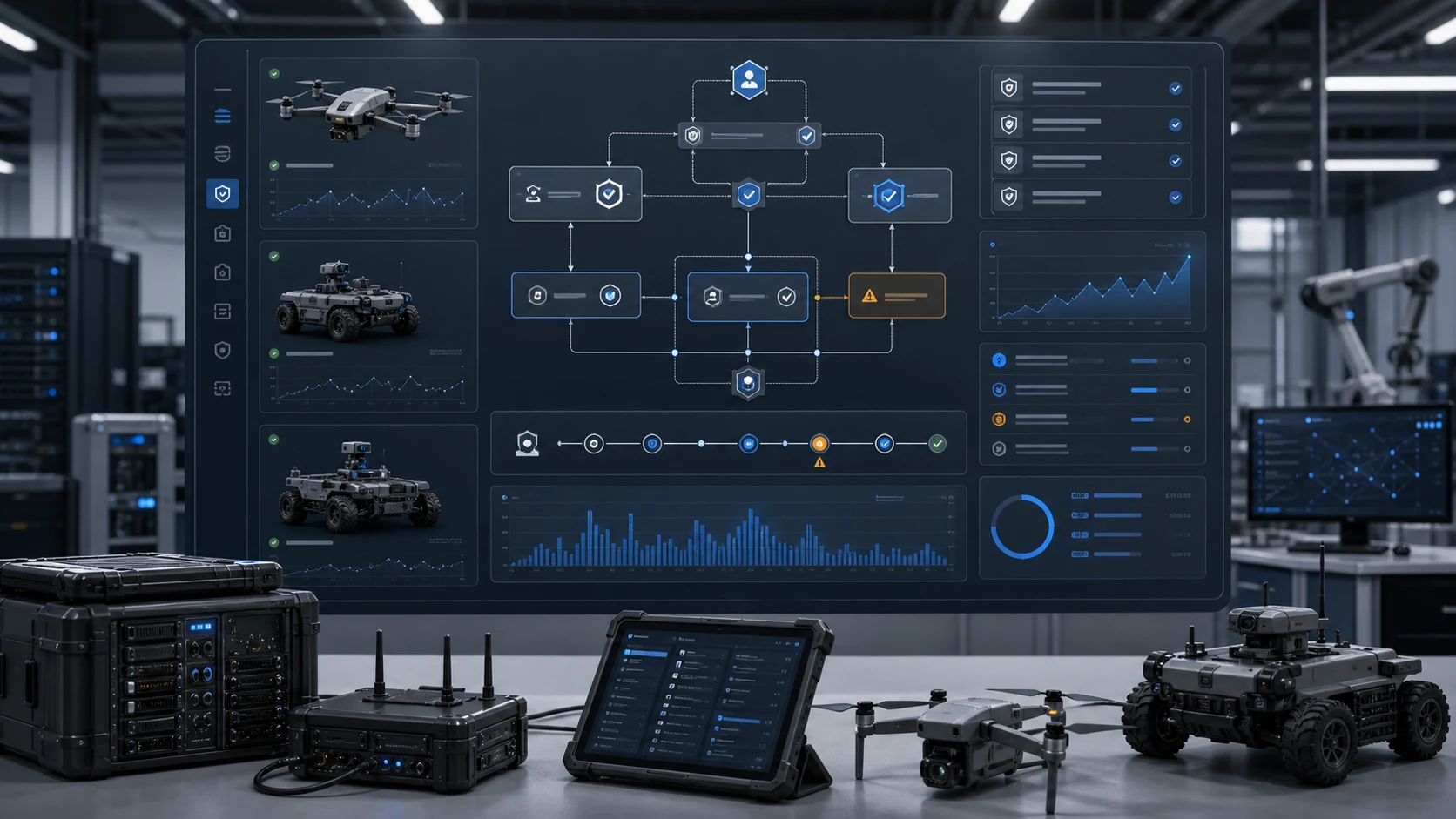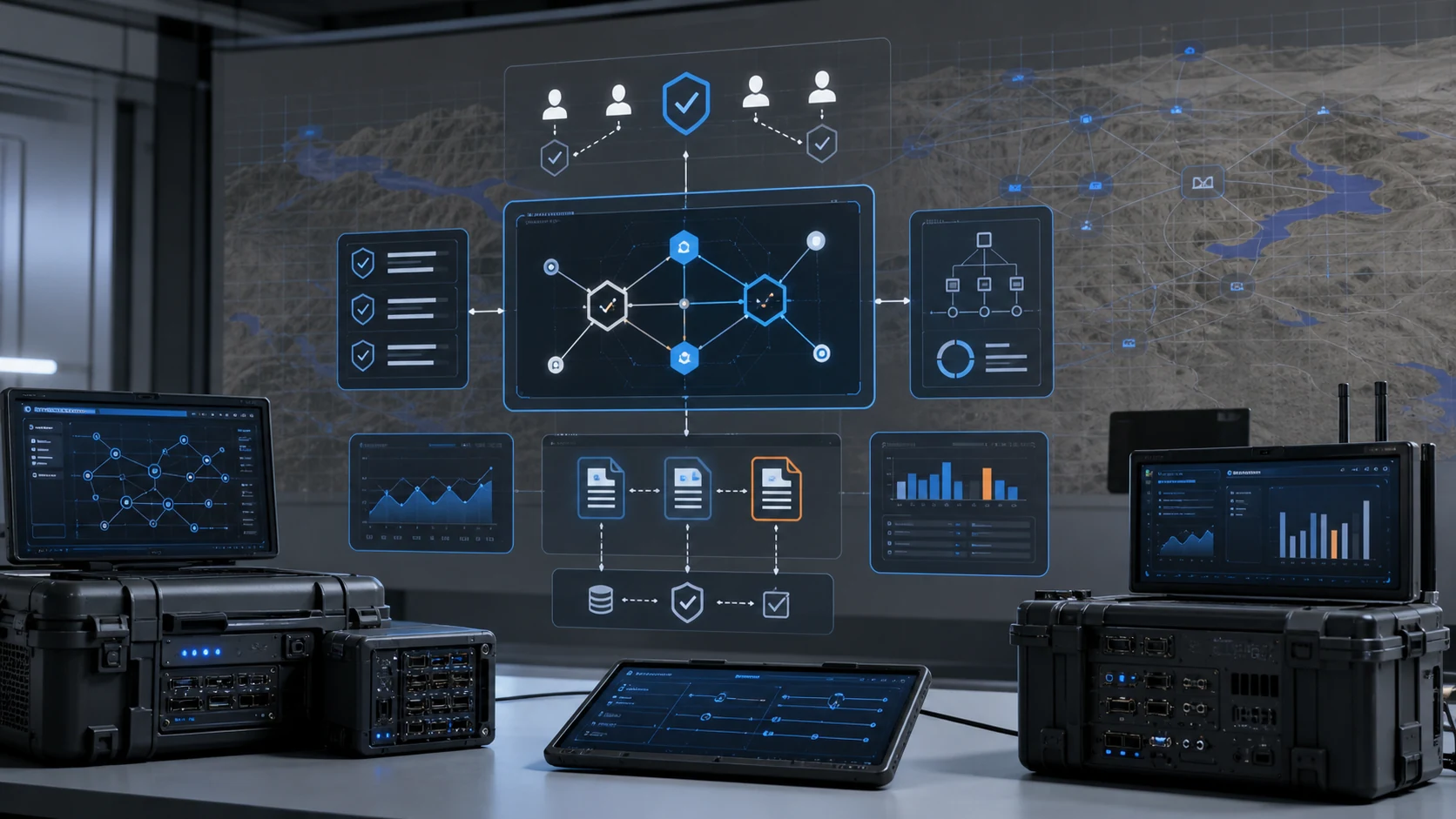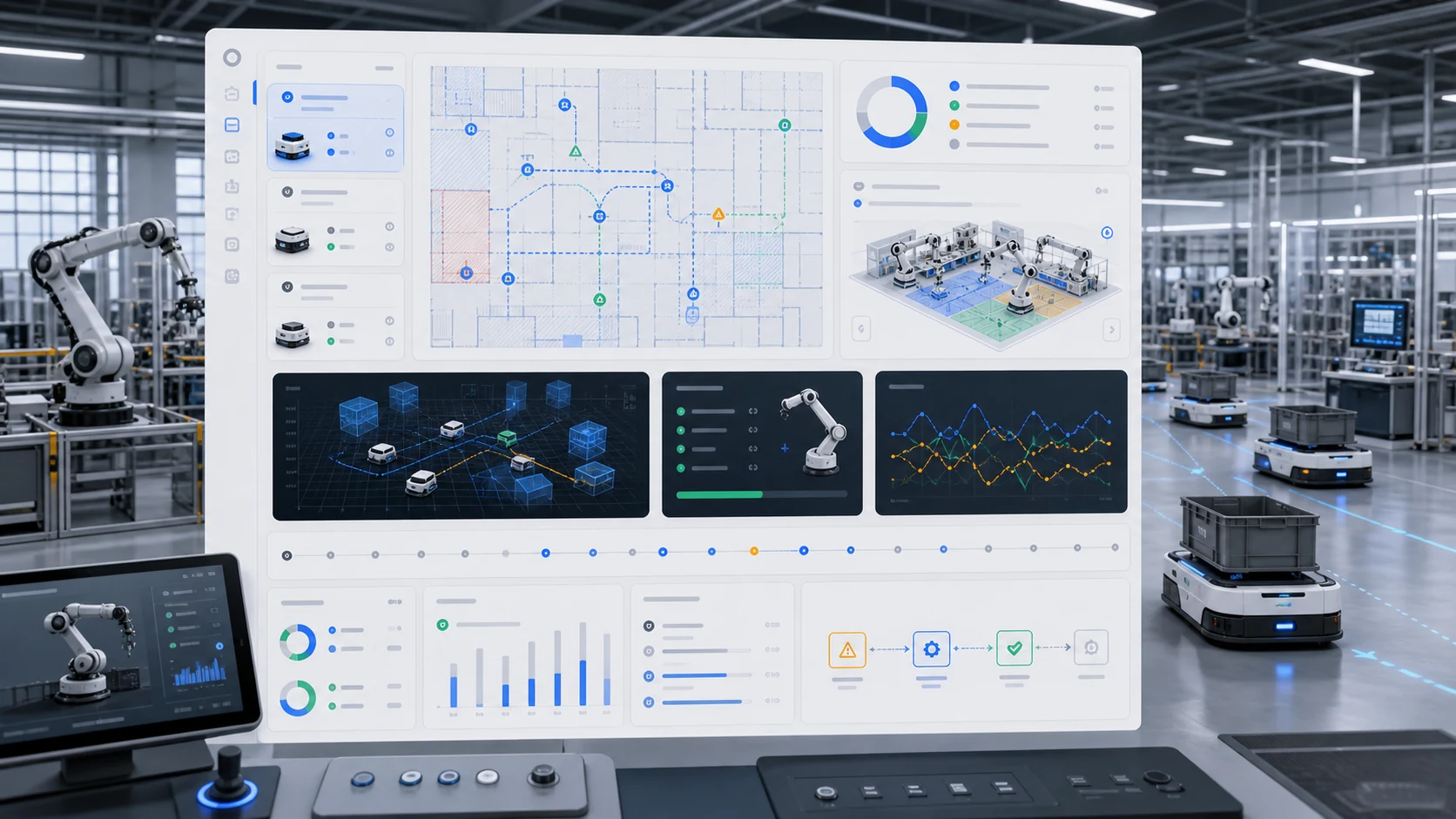
The strongest 2026 opportunity is not a more dramatic drone demo. It is an operating layer that turns BVLOS planning, airspace constraints, edge runtime state, telemetry, human authority, and post-flight evidence into one reviewable workflow.
Gap map
BVLOS autonomy gap map
The operating gap sits between flight-stack capability and regulator, operator, and customer trust.
Mission setup
- Airspace context
- Risk class
- Weather and constraints
- Operator authority
Runtime
- Detect-and-avoid state
- Edge model health
- Telemetry quality
- Fallback policy
Evidence
- Remote ID trace
- Flight log
- Exception review
- Safety case export
June 2026 signal
Drone autonomy is becoming an operations and assurance market.
The 2026 drone signal is regulation meeting product reality. FAA UAS guidance, BVLOS rulemaking, and EASA's civil-drone and U-space surface all point toward a future where scaling drone operations depends on demonstrable safety, identity, airspace coordination, and evidence.
This matters for commercial drones, IHA programmes, and SIHA-adjacent autonomy research, but the product story should stay high-assurance rather than tactical. The useful layer is not autonomous action for its own sake. It is controlled operation: planning, authority, edge runtime constraints, telemetry, exceptions, and review.
Gap scan
The missing product is a BVLOS evidence workflow.
Most drone software surfaces can show mission plans, vehicle position, or flight logs. Fewer connect the whole chain: why a mission was allowed, which airspace and safety assumptions were active, what the onboard runtime was allowed to do, what changed during flight, and which evidence package should be retained after the operation.
That evidence workflow becomes more valuable as fleets move beyond single-operator line-of-sight work into repeatable inspection, logistics, infrastructure, agriculture, public safety, and research programmes.
- Treat flight approval, route planning, weather limits, payload rules, and exception paths as workflow state.
- Bind each aircraft to device identity, signed software, model version, Remote ID status, and telemetry quality.
- Show detect-and-avoid and contingency behavior as reviewable evidence, not only as live UI.
- Keep human authority explicit for safety-impacting changes and post-flight exception closure.
Neura Parse fit
NowFlow, NeuralOS, and QANTIS map cleanly to drone operations.
NowFlow is the right orchestration surface for mission request, approval, flight readiness, exception routing, customer notification, and evidence export. NeuralOS is the right edge layer for signed runtime, local inference, telemetry, OTA rollback, and device-level policy. QANTIS is relevant when uncertainty, route choice, or sensor evidence affects a decision.
This turns drone autonomy into an operational system rather than a standalone flight-stack claim. The flight controller still matters, but the product value is the bridge from flight capability to trusted operations.
- Use NowFlow for mission intake, route review, approval gates, maintenance tasks, and incident closeout.
- Use NeuralOS for edge model packaging, secure boot, telemetry health, and rollback-aware OTA updates.
- Use QANTIS for uncertainty-aware route, sensor, and risk evidence where a human reviewer needs a clear confidence frame.
- Keep PX4, MAVLink, Remote ID, and UTM/U-space references as integrations, not as a closed proprietary stack claim.
Design pattern
A good UAV UI should expose the operating contract.
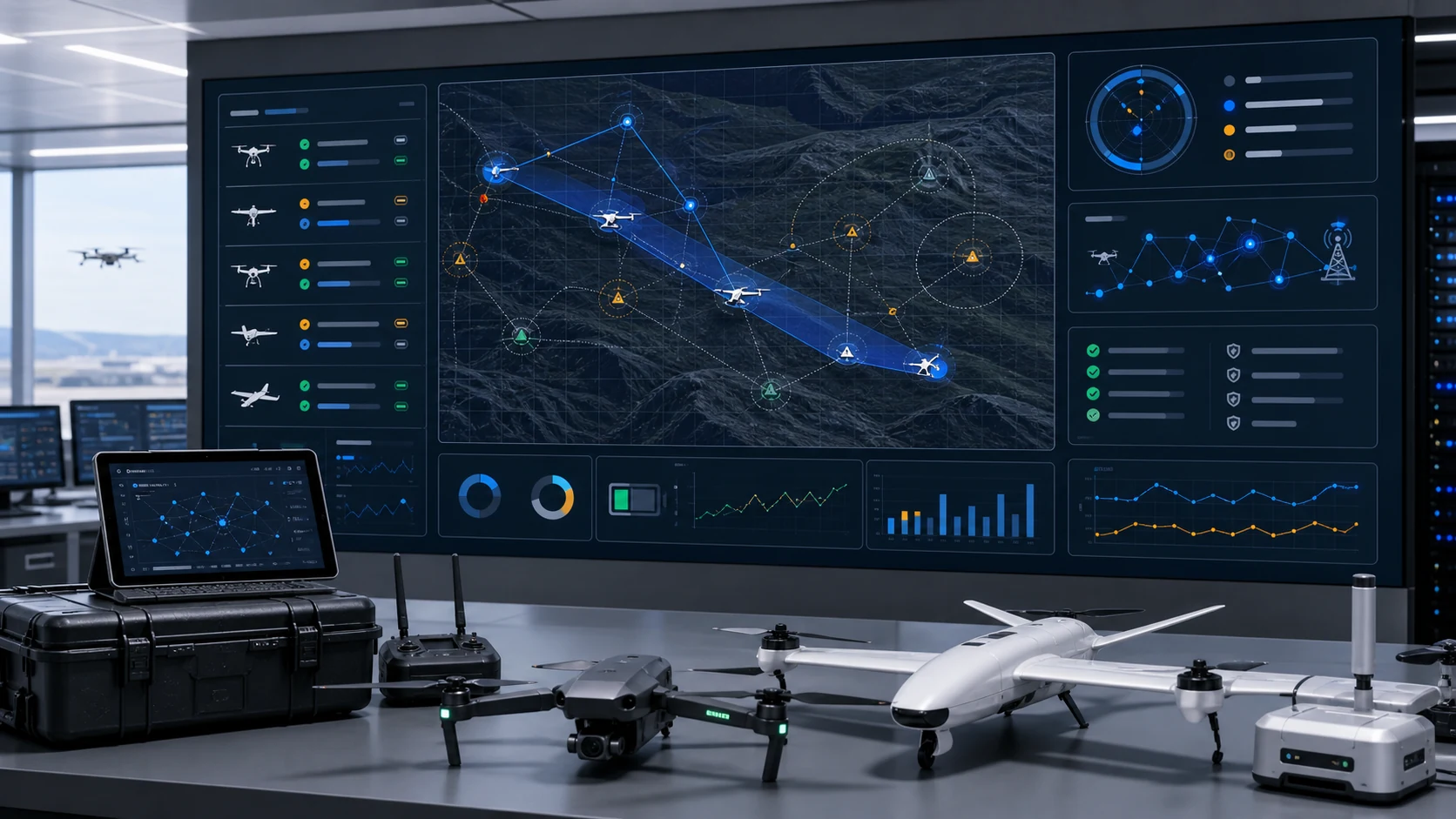
The interface should avoid cinematic drone art as the main product signal. Buyers need to see fleet readiness, route constraints, policy gates, device health, model status, comms quality, weather impacts, and evidence export in one scannable surface.
For Neura Parse pages, the right visual direction is an operations console: map, fleet list, safety status, approval timeline, telemetry graph, and post-flight evidence panels. That matches the user expectation for aerospace and critical infrastructure programmes.
Trend thesis
The durable SEO lane is BVLOS drone operations software.
Search demand around drones, UAVs, IHA, and SIHA is broad and often noisy. The more defensible Neura Parse lane is BVLOS drone operations software: workflow, edge AI, safety evidence, Remote ID, U-space/UTM coordination, and fleet telemetry.
That language connects product, regulation, and research without making unsupported autonomy or operational claims.
Practical takeaways
The 2026 drone gap is assurance and workflow, not only flight autonomy.
BVLOS requires evidence around authority, airspace, runtime state, and exceptions.
NowFlow can own mission workflow and post-flight review.
NeuralOS can own signed edge runtime, telemetry health, and rollback.
QANTIS should support uncertainty-aware review rather than autonomous authority claims.
Sources reviewed
Source 01
FAA Unmanned Aircraft Systems
U.S. operating, safety, registration, Remote ID, and advanced-operation reference surface for civil UAS programmes.
Source 02
FAA BVLOS UAS proposed rule record, 2026
Federal Register record for normalizing beyond-visual-line-of-sight UAS operations and related safety framework comments.
Source 03
EASA civil drones and U-space
European civil drone regulatory surface covering categories, safety rules, and U-space operations.
Source 04
NVIDIA Jetson Thor platform
Source 05
DARPA RACER robotic autonomy programme
Robotic Autonomy in Complex Environments with Resiliency programme for off-road autonomy, perception, and resilient control.