Abstract
The useful layer is not a battlefield agent demo. It is assurance for multi-agent workflows: who can act, what they can touch, how behavior is monitored, and how the system fails safely when communications or context degrade.
Gap map
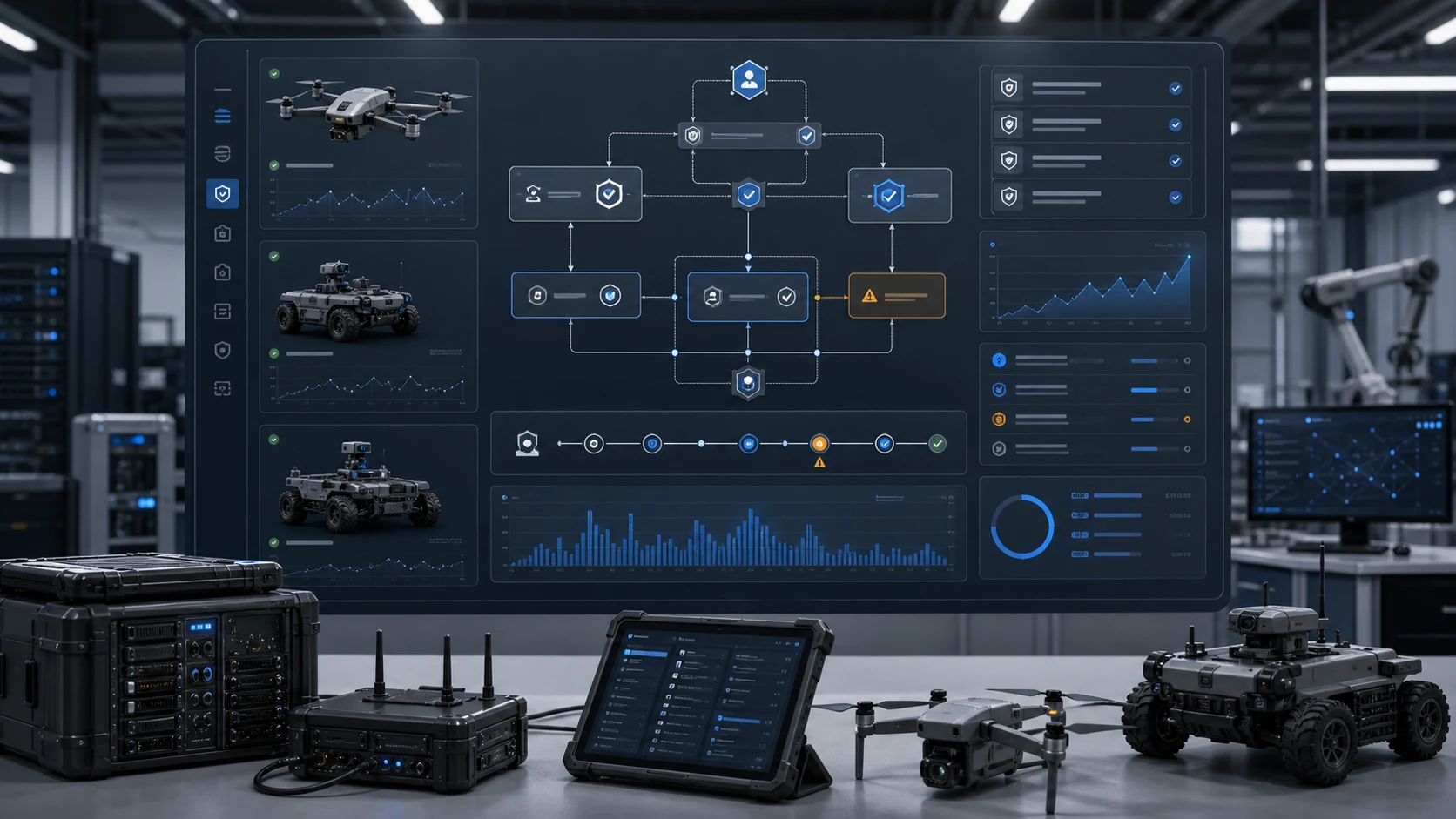
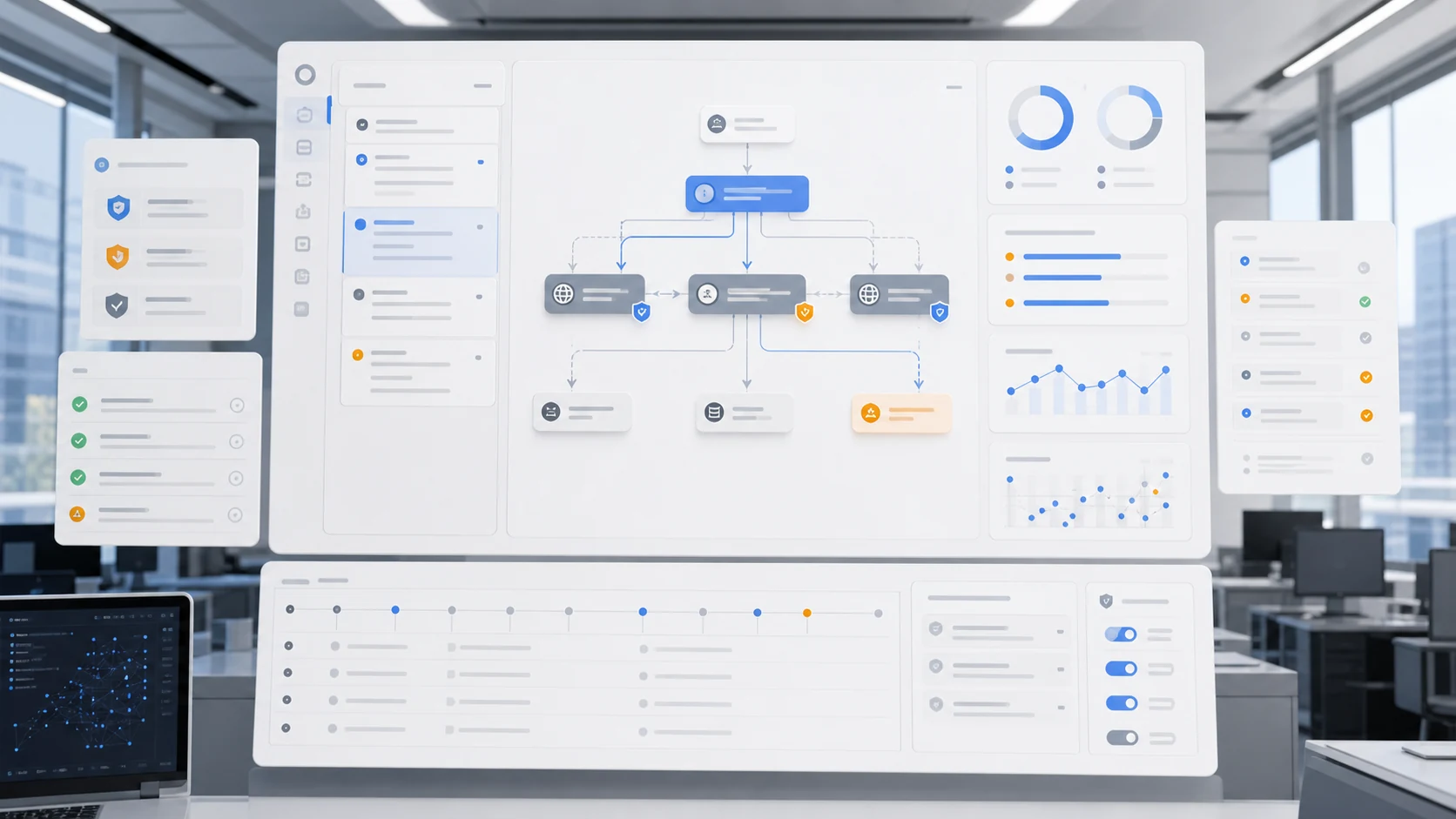
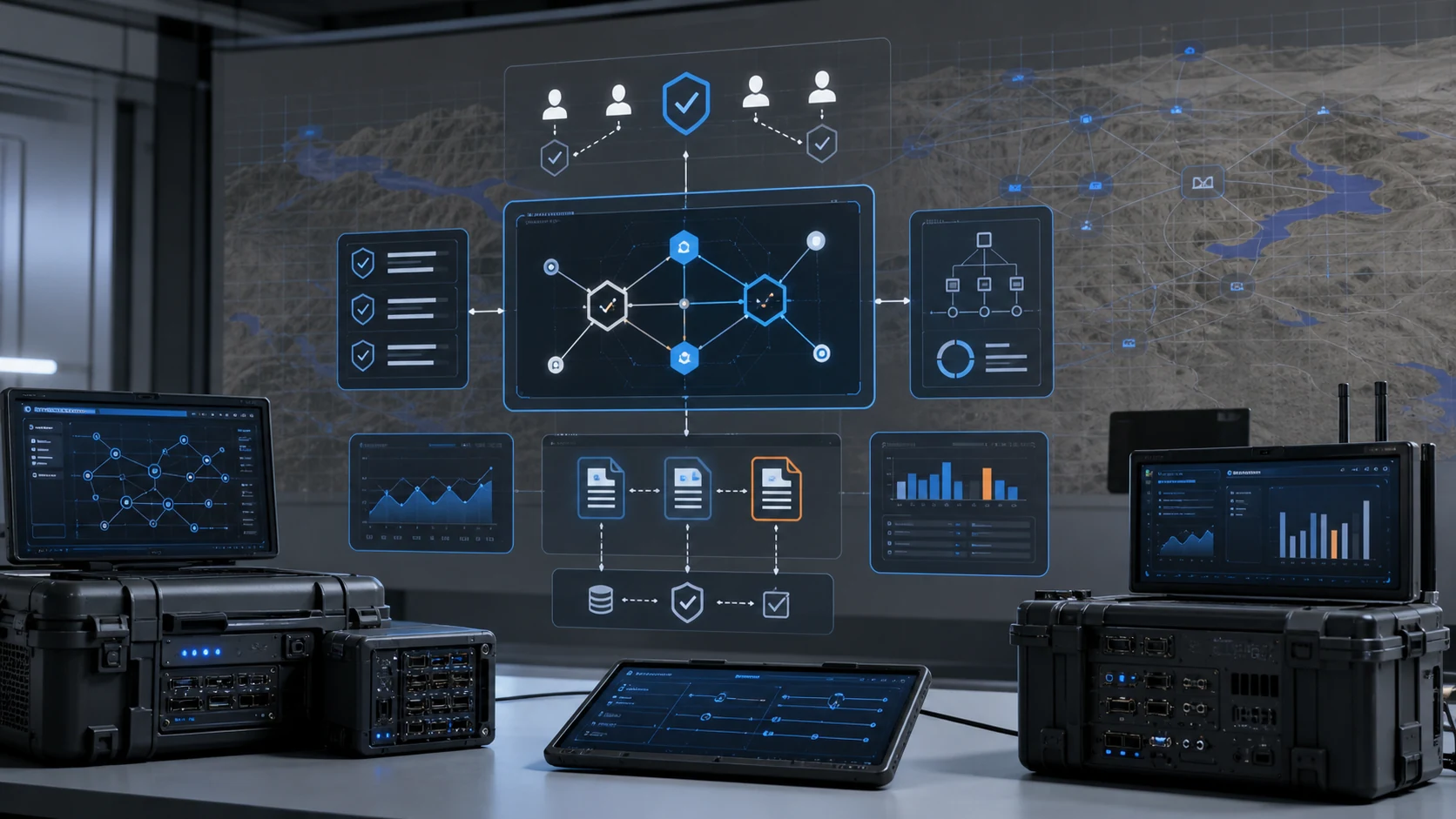
Defense agent assurance map
Scaling autonomy depends on constraining agent behavior before the runtime reaches the contested edge.
Agent collective
- Local planning
- Shared context
- Tool boundaries
- Emergent behavior risk
Assurance layer
- Authority chain
- Policy envelope
- Telemetry
- Containment and rollback
Edge runtime
- Signed builds
- Offline mode
- Device identity
- Degraded operations
Defense AI is moving toward controlled collectives.
DARPA DICE focuses on decentralized AI through controlled emergence, which is exactly the kind of problem that makes conventional single-agent governance insufficient. CLARA points toward high-assurance compositional learning and reasoning. DoD responsible-AI resources and NATO-aligned policy language keep the governance bar high.
Google DeepMind's multi-agent safety and AI control research reinforces the broader technical concern: when autonomous systems interact, population-level behavior and infrastructure security matter as much as individual model quality.
TD · Technical depth7 supporting chapters and the working checklist.Read deeper
Build a sandboxed multi-agent runbook first.
A practical first engagement should avoid operational claims. Start with a sandboxed multi-agent runbook for logistics, maintenance, cyber triage, or simulation support. The benchmark is not mission success. It is trace quality, policy enforcement, containment, and human review efficiency.
The minimum evidence package should include scenario definition, agent roles, permissions, tool calls, policy decisions, telemetry events, human interventions, failure injections, and rollback behavior.
Assurance is the defensible product layer.
Defense AI will keep attracting autonomy narratives, but the durable product layer is assurance. Systems that can be bounded, inspected, updated, and stopped will be easier to trust than systems that only promise more autonomy.
The resulting architecture pattern is high-assurance AI agents for contested-edge workflows, with workflow governance, edge runtime, and decision evidence treated as one system.
Failure modes to design against before the first field trial.
Multi-agent failure rarely looks like a single wrong answer. It looks like authority drift, where actions that should have stayed advisory begin to execute. It looks like shared-context contamination, where one agent's bad state propagates through the collective. And it looks like emergent coordination that no single-agent trace explains, which is the risk class DARPA DICE frames as controlled emergence and DeepMind's research frames as population-level oversight.
The contested edge adds its own failure classes. Intermittent communication leaves agents running on stale policy. Partial data produces locally confident plans that are globally wrong. Adversarial pressure targets the shared context and the tool boundaries, not just the model.
The design response is not more monitoring after the fact. It is a policy envelope that travels with the signed deployable artifact and executes locally, plus failure injection treated as a scheduled exercise rather than an incident. The evidence package already lists failure injections and rollback behavior; run them before an adversary does.
- Authority drift: advisory outputs that begin to execute without an approval event.
- Shared-context contamination propagating one agent's bad state through the collective.
- Emergent coordination that no single-agent trace explains.
- Stale policy under intermittent communication.
- Telemetry gaps that hide degradation until after an action executes.
- Rollback paths that exist on paper but were never exercised.
What to instrument first when telemetry is a budget.
At the contested edge, telemetry is a budget, not a default. Bandwidth, storage, and review capacity are all constrained, so the instrumentation order matters more than the instrumentation volume. The order should follow the authority chain, because authority events are what a review board asks about first.
Start with authority and approval events: which actions executed, under whose authority, and which executed locally under delegated policy. Add tool calls that cross permission boundaries, then policy allow and deny decisions tied to the version lineage of the signed artifact that made them. Only then invest in collective interaction summaries that surface population-level patterns.
Provenance is what turns logs into evidence. Device identity and signed builds let a reviewer trust that a telemetry event came from a known runtime executing a known policy, which aligns with the NIST agent standards priorities of identity, authorization, monitoring, and logging. Human interventions and stop events deserve a dedicated channel, because they measure review efficiency, the metric that decides whether the system can scale.
- Authority and approval events, including actions executed locally under delegated policy.
- Tool calls that cross permission boundaries.
- Policy allow and deny decisions tied to artifact version lineage.
- Collective interaction summaries for population-level review.
- Human interventions, stop conditions, and recovery events.
How to evaluate vendors that claim agent assurance.
Ask for the artifact, not the demo. A credible vendor can produce a signed deployable bundle that carries policy, model metadata, tool permissions, and rollback behavior, and can show the version lineage behind it. If assurance exists only as a dashboard over a cloud service, it will not survive the contested edge.
Ask what happens when the cloud disappears. Local guardrails, watchdogs, offline mode, and degraded operations should be demonstrated under injected failures, not described in slides. Stop conditions and recovery paths are architecture, and architecture is testable.
Ask for the evidence package format before asking for performance numbers. Program owners, security reviewers, and operators should be able to audit the same record, covering scenario definition, agent roles, permissions, tool calls, policy decisions, telemetry, interventions, failure injections, and rollback. Then map every claim to a public baseline: DoD responsible-AI lifecycle and governance materials, and the NIST agent priorities of identity, authorization, monitoring, and logging.
Operational checklist
Program checklist: standing up an assured agent collective
Derived from the article's takeaways and sections. Work through it before committing to any field pilot.
- 01
Classify every agent action as advisory, locally executable, or gated on human authority before any pilot begins.
- 02
Bundle policy, model metadata, tool permissions, and rollback behavior into signed deployable artifacts with clear version lineage.
- 03
Instrument collective behavior, not only single-agent traces.
- 04
Design degraded-mode behavior, including stop conditions and recovery paths, before the first field exercise.
- 05
Scope the first engagement as a sandboxed multi-agent runbook for logistics, maintenance, cyber triage, or simulation support.
- 06
Benchmark trace quality, policy enforcement, containment, and human review efficiency instead of mission success.
- 07
Assemble the minimum evidence package: scenario definition, agent roles, permissions, tool calls, policy decisions, telemetry events, human interventions, failure injections, and rollback behavior.
- 08
Keep decision support separate from command authority; risk scoring must never imply automated authorization.
- 09
Map governance evidence to public baselines such as the DoD Responsible AI Toolkit and the NIST agent priorities of identity, authorization, monitoring, and logging.
Practical takeaways
01
Defense AI agent architectures should lead with assurance, not autonomy hype.
02
Multi-agent systems need collective behavior monitoring and containment.
03
NowFlow owns approvals, workflow state, and evidence routes.
04
NeuraOS owns signed edge runtime, device identity, local policy, and rollback.
05
QANTIS should support uncertainty-aware review, not automated authority claims.
RA · Reference annexDefinitions, recurring questions, editorial method, and primary sources.Inspect
The analysis above carries the main reading flow. This reference layer keeps terminology, recurring questions, editorial method, and primary sources available without interrupting the argument.
Terminology
Terms behind Defense AI agents: architecture and assurance for the contested edge..
- Agent collective
- A group of AI agents that plan and act together, sharing context and tools. Interaction between agents can produce behavior that no individual agent would show on its own.
- Controlled emergence
- The design goal behind DARPA DICE: letting decentralized agents coordinate locally while keeping the collective's overall behavior inside defined bounds.
- Authority chain
- The defined path by which an action gains permission to execute. It separates advisory recommendations from actions with real-world effect and records who or what approved each one.
- Policy envelope
- The full set of constraints an agent must operate inside, including permissions, tool boundaries, and stop conditions. It is packaged with the runtime so it applies even when connectivity is lost.
- Degraded mode
- Predefined system behavior for when communications, context, or human authority are partially unavailable. It includes stop conditions and recovery paths designed before deployment, not improvised during an incident.
- Containment
- The ability to limit, pause, or roll back agent actions when behavior leaves the policy envelope. In multi-agent systems it must work at the collective level, not only per agent.
- Signed artifact
- A deployable package whose contents and origin are cryptographically verifiable. Signing makes edge releases reproducible and gives every policy decision a traceable version lineage.
- Contested edge
- Deployment environments with intermittent communications, partial data, and adversarial pressure, where cloud supervision cannot be assumed. Runtime constraints must be enforced locally on the device.
Field questions
Program questions behind Defense AI agents: architecture and assurance for the contested edge..
Q01Why is assurance, not autonomy, the bottleneck for defense AI agents in 2026?
The June 2026 signals converge on constraint, not capability. DARPA DICE targets decentralized AI through controlled emergence, CLARA targets high-assurance compositional learning and reasoning, and DoD responsible-AI resources keep the governance bar high. Systems that can be bounded, inspected, updated, and stopped will be easier to trust than systems that only promise more autonomy, which makes assurance the durable product layer.
Q02What makes multi-agent systems harder to govern than single AI agents?
When autonomous systems interact, population-level behavior and infrastructure security matter as much as individual model quality, which is the core concern in Google DeepMind's multi-agent safety research. Agent collectives share context and tools, so emergent behavior can appear that no single-agent trace explains. Governance therefore has to monitor collective behavior, not only individual traces, and containment has to work at the collective level.
Q03How should an agent collective behave when communications or human authority degrade?
Define the behavior before pilots, not during them. Classify every action as advisory, locally executable, or gated on human authority, and specify what happens when that authority is delayed or telemetry is incomplete. Degraded-mode design should include stop conditions, recovery paths, and local guardrails and watchdogs that operate when cloud supervision is unavailable.
Q04What should a first defense AI agent engagement look like if we cannot make operational claims?
Start with a sandboxed multi-agent runbook for logistics, maintenance, cyber triage, or simulation support. The benchmark is not mission success; it is trace quality, policy enforcement, containment, and human review efficiency. The minimum evidence package covers scenario definition, agent roles, permissions, tool calls, policy decisions, telemetry events, human interventions, failure injections, and rollback behavior.
Q05Where do NowFlow, NeuraOS, and QANTIS fit in a defense agent assurance architecture?
NowFlow, an agentic workflow platform, defines the mission or operations workflow: approvals, tasks, evidence, exceptions, and escalation. NeuraOS, a governed edge operating platform, enforces local runtime constraints: signed builds, device identity, policy bundles, telemetry, model execution, and rollback. QANTIS supports uncertainty-aware review through risk scoring, evidence review, and decision support, and should not be used to imply automated command authority.
Q06Which public baselines should a defense AI assurance program map to?
DARPA DICE and CLARA define the research direction for controlled collectives and high-assurance compositional reasoning. The DoD CDAO Responsible AI Toolkit provides lifecycle, governance, and assurance materials, and the NIST AI Agent Standards Initiative sets interoperability and security priorities including identity, authorization, monitoring, and logging. Mapping program evidence to these baselines keeps claims auditable rather than aspirational.
Editorial record
How Defense AI agents: architecture and assurance for the contested edge. was checked.
- Editorial owner
- Neura Parse Research
- Last verified
- July 12, 2026
- Method
- Synthesis of the dated primary and official records listed below, checked against the operating question in this note.
- Scope limit
- Planning analysis—not certification, customer performance evidence, procurement advice, or a claim of production readiness.
SRSources reviewed
6 records