Abstract
The practical robotics layer is the operating surface between AI models and real machines: digital twins, safety zones, OTA, model evaluation, exception workflows, maintenance handoff, and runtime evidence across fleets.
Gap map
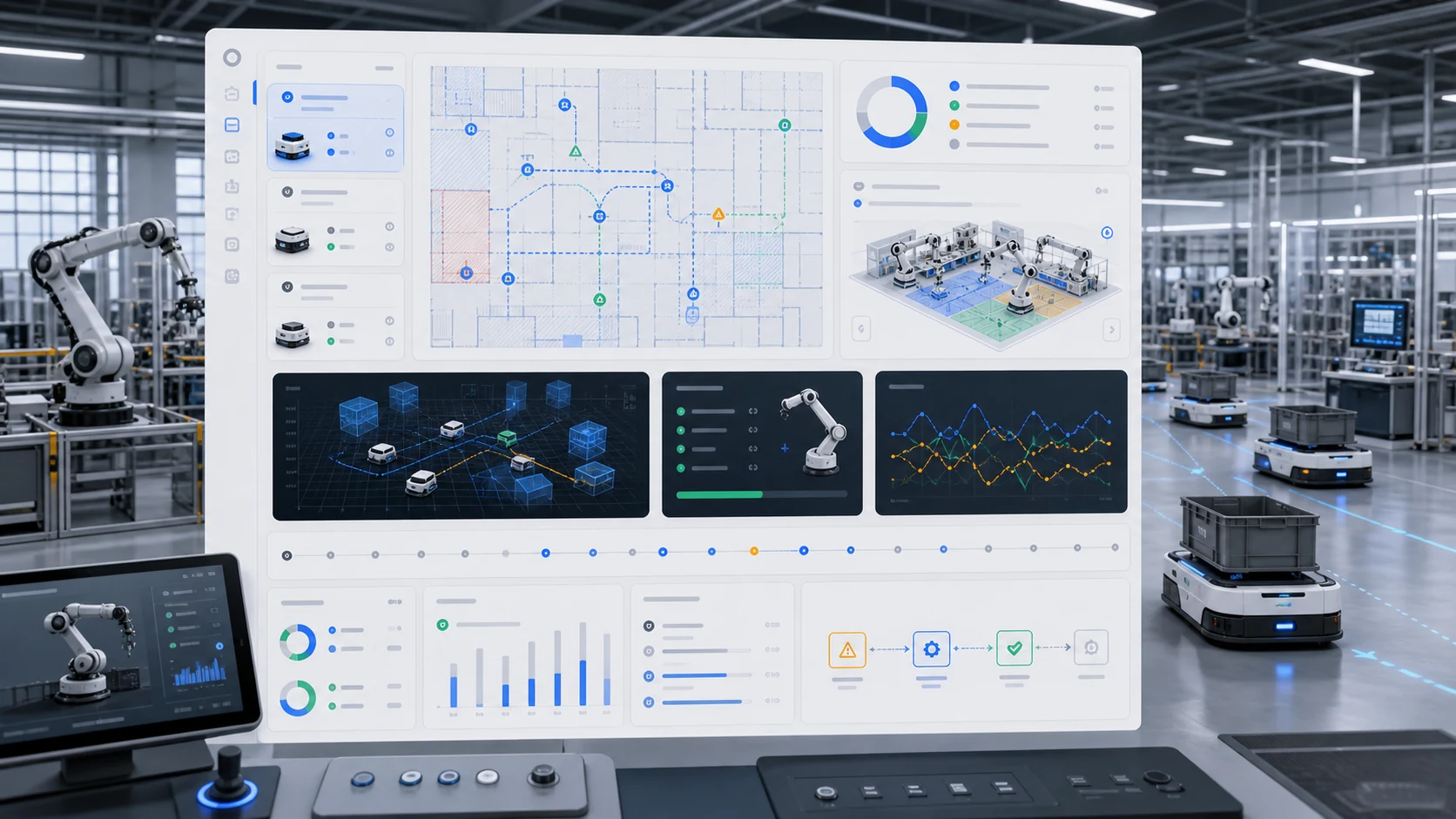
Robotics fleet operations map
Physical AI becomes valuable when models, machines, workflows, and evidence move through one controlled operating loop.
Design
- Digital twin
- Task library
- Safety envelope
- Simulation baseline
Deploy
- Signed model
- Edge package
- OTA window
- Rollback condition
Operate
- Fleet telemetry
- Exception queue
- Maintenance handoff
- Performance review
Physical AI is shifting from model demos to operating systems for machines.
NVIDIA's 2026 physical-AI and Jetson Thor signals show the market direction: robotics teams want foundation-model capability, simulation, edge acceleration, and deployment paths closer to real machines. IFR World Robotics provides the adoption backdrop for industrial and service robots as operational assets.
The operational gap is not another generic robot model. It is the fleet layer that makes robots manageable: tasks, policies, digital twins, model releases, safety states, telemetry, exceptions, and maintenance workflows.
TD · Technical depth7 supporting chapters and the working checklist.Read deeper
The hard part is generalization under plant-floor constraints.
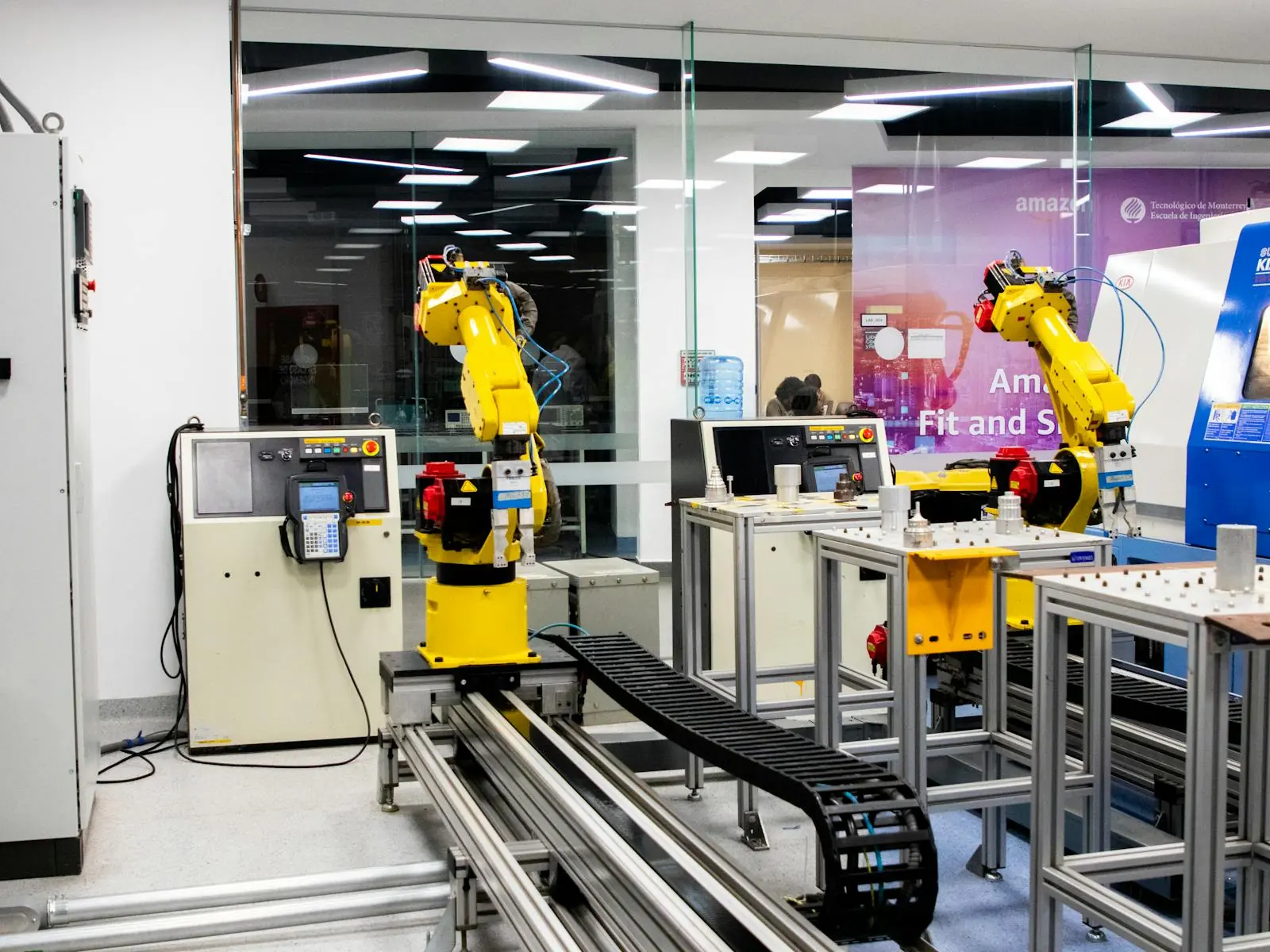
Factories, warehouses, labs, hospitals, and field sites do not behave like benchmark videos. Lighting changes, floor markings move, humans enter zones, network conditions fluctuate, and hardware ages. A robotics product needs a way to test and update models without turning operations into uncontrolled experiments.
That means every model update should pass through simulation, edge profiling, safety-zone validation, staged rollout, and exception monitoring before it becomes a fleet default.
- Connect simulation and digital twin evidence to actual deployment decisions.
- Treat safety zones, speed limits, payload rules, and human-proximity constraints as runtime policy.
- Run edge model evaluation on target hardware, not only in cloud notebooks.
- Measure exceptions, interventions, near-misses, and maintenance events as product data.
Manage robots as release-bearing fleet assets.
NowFlow can handle the workflow layer: task assignment, exception routing, work orders, approval gates, shift handoff, supplier coordination, and reporting. NeuraOS can handle the edge layer: signed runtime, ROS 2/DDS integration, OPC UA bridges, local inference, OTA rollback, and telemetry health.
Together they make robotics operations legible to engineering, operations, safety, and management teams. The UI should show tasks and exceptions, not only robot positions.
- Represent every robot as a release-bearing asset with model version, runtime version, hardware profile, and policy envelope.
- Integrate ROS 2, DDS Security, OPC UA, MQTT, and MES/WMS systems through clear adapters.
- Use NowFlow for human handoff when a robot is blocked, uncertain, damaged, or out of policy.
- Use QANTIS where route, scheduling, or multi-agent coordination needs uncertainty-aware decision evidence.
Robotics operations need more than a position map.
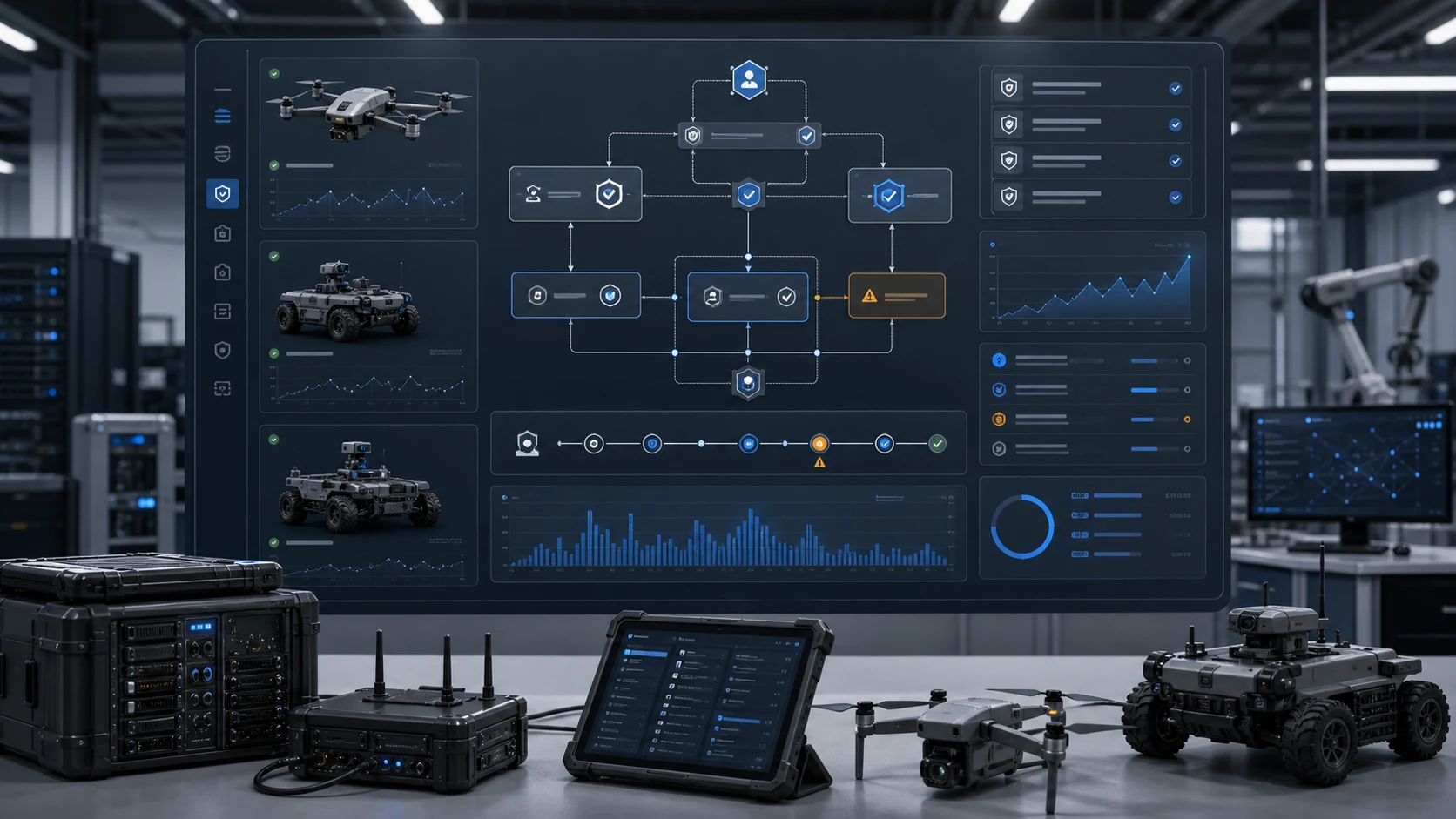
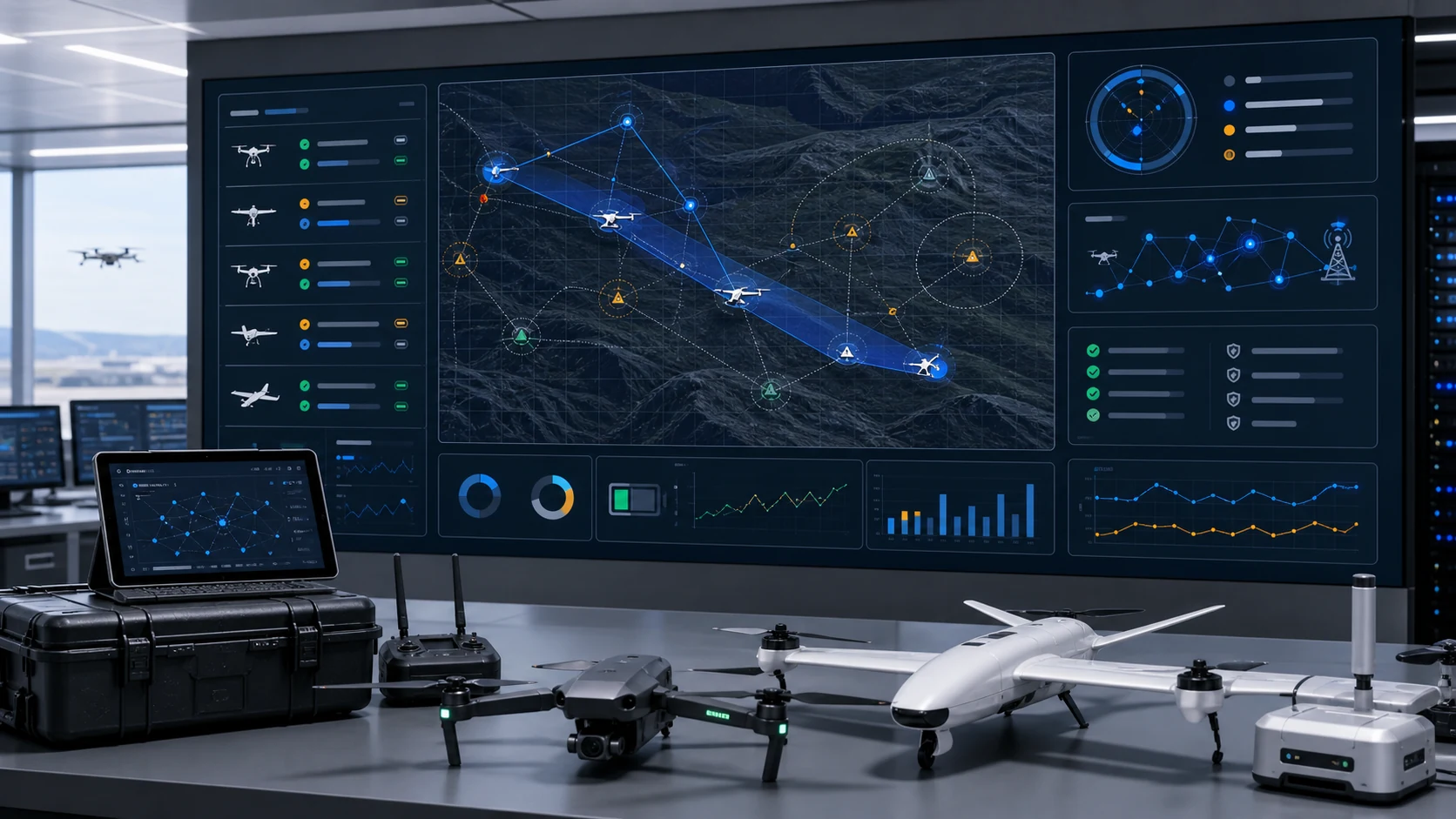
An effective operating console combines a plant map, mobile-robot routes, cell-level digital twins, safety-zone overlays, model health, OTA state, and exception timelines. It shows operators how fleet state, policy, releases, and intervention paths connect.
The same flow works for AMR, AGV, cobot, inspection, lab automation, and industrial edge AI scenarios.
Physical AI becomes a fleet-operations problem at scale.
The difficult engineering problem is operational: robotics fleet state, industrial edge AI, digital-twin workflows, signed model deployment, exception handling, maintenance, and system ownership.
That framing connects research momentum to production work without overclaiming humanoid general intelligence or universal autonomy.
Failure modes to design against before scaling the fleet.
The first failure mode is unvalidated model promotion. A model that performs well in one cell or one shift becomes the fleet default without simulation, edge profiling, or safety-zone validation, and the failure surface multiplies by the number of robots. The fix is structural: there should be no path to fleet default that bypasses the staged release loop.
The second is twin divergence. A digital twin that stops tracking the physical plant, through moved floor markings, changed rack layouts, or new human traffic patterns, produces simulation evidence that validates the wrong environment. Twin updates need owners and a review cadence, the same as model updates.
The third is silent exception debt. Robots that are blocked, uncertain, damaged, or out of policy generate events, but if those events land in logs instead of routed workflows, interventions go unmeasured and near-misses go unexamined. Exception data is product data. If it is not queued, assigned, and closed, the fleet is operating without feedback.
- OTA without a rollback condition is a one-way door; define the rollback trigger before the window opens.
- Safety constraints stored in documents rather than runtime policy will drift from what robots actually enforce.
- Model evaluation only in cloud notebooks misses edge latency, thermal behavior, and hardware aging on target devices.
- A console that shows robot positions but not tasks and exceptions hides the operational state that matters.
Instrument the exception path before the happy path.
Fleet telemetry programs usually start with utilization and throughput because those numbers are easy to show. The operating loop in this article points the other way: measure exceptions, interventions, near-misses, and maintenance events first. These are the signals that tell you whether a model update helped or hurt, and they are the evidence a safety review will actually ask for.
Practically, that means every intervention carries a category, a timestamp, a model version, and a runtime version. When exception rates shift after an OTA window, the correlation should be one query, not a forensic project. This is why every robot must exist as a release-bearing asset: telemetry without release context cannot answer why behavior changed.
Maintenance handoff belongs in the same pipeline. A robot pulled from service is a workflow object with a state, an owner, and a return-to-service gate, not a gap in the schedule. Routing that handoff through the workflow layer keeps engineering, operations, and safety looking at the same record.
How to evaluate a fleet operations stack.
The evaluation question is not which vendor has the best model. It is whether the stack closes the loop from design to deploy to operate. A credible stack represents every robot as a release-bearing asset, connects twin and simulation evidence to deployment decisions, and enforces safety constraints at runtime rather than in documentation.
Integration coverage is the second axis. Plant floors run on ROS 2, DDS Security, OPC UA, MQTT, and MES/WMS systems, and a fleet layer that cannot bridge them through clear adapters becomes another silo. Ask for the adapter list before the roadmap slide.
The third axis is the human side. When a robot is blocked, uncertain, damaged, or out of policy, the stack must route the case to a person with context, not only raise an alarm. Approval gates, shift handoff, and reporting are what make the fleet legible to management, and they are the difference between operations software and a visualization.
- Can a model update reach fleet default only through simulation, edge profiling, safety validation, staged rollout, and monitoring?
- Are OTA windows and rollback conditions first-class objects rather than scripts?
- Is model evaluation run on target edge hardware, not only in the cloud?
- Are exceptions, interventions, near-misses, and maintenance events queryable as product data?
Operational checklist
Program checklist: standing up robotics fleet operations
Derived from the article's takeaways: what a program team should put in place before physical AI models touch production machines.
- 01
Represent every robot as a release-bearing asset with model version, runtime version, hardware profile, and policy envelope.
- 02
Connect digital twin and simulation evidence to actual deployment decisions, not only design reviews.
- 03
Encode safety zones, speed limits, payload rules, and human-proximity constraints as runtime policy, not documentation.
- 04
Run model evaluation on target edge hardware, not only in cloud notebooks.
- 05
Define OTA windows and rollback conditions before the first signed model package ships.
- 06
Gate every fleet default behind simulation, edge profiling, safety-zone validation, staged rollout, and exception monitoring.
- 07
Route blocked, uncertain, damaged, or out-of-policy robots into human handoff workflows with owners and closure states.
- 08
Instrument exceptions, interventions, near-misses, and maintenance events as product data.
- 09
Map integration adapters for ROS 2, DDS Security, OPC UA, MQTT, and MES/WMS systems before the pilot starts.
- 10
Review fleet performance on a fixed cadence with engineering, operations, safety, and management in the same record.
Practical takeaways
01
Robotics value in 2026 depends on fleet operations, not isolated demos.
02
Digital twins, simulation baselines, safety zones, and OTA must be workflow objects.
03
NeuraOS can own edge robotics runtime, protocol bridges, model packaging, and rollback.
04
NowFlow can own task assignment, exception handling, maintenance, and reporting.
05
Describe physical AI through fleet operations, edge runtime, and digital-twin workflows.
RA · Reference annexDefinitions, recurring questions, editorial method, and primary sources.Inspect
The analysis above carries the main reading flow. This reference layer keeps terminology, recurring questions, editorial method, and primary sources available without interrupting the argument.
Terminology
Terms behind Physical AI at fleet scale: the robotics operations stack..
- Physical AI
- AI models that perceive and act on the physical world through robots and machines, in contrast to models that only process digital content.
- Digital twin
- A software model of a plant, cell, or robot kept in sync with the physical asset, used to plan, simulate, and validate changes before they reach real machines.
- OTA (over-the-air update)
- Remote delivery of software or model updates to deployed robots, typically inside a defined window with a rollback condition if the update misbehaves.
- AMR / AGV
- Autonomous mobile robots navigate dynamically around obstacles; automated guided vehicles follow fixed routes or floor markings. Both are common in warehouses and factories.
- Safety envelope
- The set of runtime constraints, such as safety zones, speed limits, payload rules, and human-proximity rules, that a robot must not violate regardless of what a model outputs.
- ROS 2 / DDS
- The dominant open robot middleware and its underlying publish-subscribe data layer; DDS Security adds authentication and encryption to robot data traffic.
- OPC UA
- An industrial interoperability standard used to connect machines, controllers, and enterprise software on the plant floor.
- MES / WMS
- Manufacturing execution systems and warehouse management systems, the enterprise software that assigns and tracks the work robots execute.
Field questions
Program questions behind Physical AI at fleet scale: the robotics operations stack..
Q01What is the difference between a robotics pilot and robotics fleet operations?
A pilot proves that a model can drive a robot through a task under favorable conditions. Fleet operations is the layer that makes robots manageable at scale: tasks, policies, digital twins, model releases, safety states, telemetry, exceptions, and maintenance workflows. The argument of this article is that in 2026 the buyer problem sits in that second layer, not in the model demo.
Q02How should model updates reach a deployed robot fleet without disrupting operations?
Every model update should pass through simulation, edge profiling on target hardware, safety-zone validation, staged rollout, and exception monitoring before it becomes a fleet default. Updates ship as signed packages in defined OTA windows with explicit rollback conditions. This keeps model iteration from turning plant-floor operations into uncontrolled experiments.
Q03Where do NowFlow and NeuraOS fit in a robotics fleet architecture?
NowFlow, an agentic workflow platform, owns the workflow layer: task assignment, exception routing, work orders, approval gates, shift handoff, supplier coordination, and reporting. NeuraOS, a governed edge operating platform for robotics and defence systems, owns the edge layer: signed runtime, ROS 2/DDS integration, OPC UA bridges, local inference, OTA rollback, and telemetry health. Together they make fleet state legible to engineering, operations, safety, and management teams.
Q04Why is generalization under plant-floor constraints the hard problem?
Factories, warehouses, labs, hospitals, and field sites do not behave like benchmark videos. Lighting changes, floor markings move, humans enter zones, network conditions fluctuate, and hardware ages. Resilient-autonomy research such as the DARPA RACER program targets exactly this class of problem: perception and control that hold up in complex, changing environments rather than curated demos.
Q05Does this approach depend on humanoid robots or general-purpose autonomy?
No. The same operating loop of digital twin, signed release, OTA window, runtime safety policy, and exception handling applies to AMR, AGV, cobot, inspection, lab automation, and industrial edge AI deployments. The positioning deliberately avoids claims about humanoid general intelligence or universal autonomy.
Q06When does QANTIS enter a robotics fleet program?
QANTIS is Neura Parse's quantum decision research line for inference and decisions under uncertainty. Its latest public preprint narrows the tested quantum role to rare-evidence estimation inside a classical POMDP loop: the service returns an ordinary posterior, while planning, policy selection, and action execution remain classical. The public repository is the MIT-licensed Community Edition; aggregate hardware results are reported in the cited preprints, while raw campaign artefacts are not bundled with the repository.
Editorial record
How Physical AI at fleet scale: the robotics operations stack. was checked.
- Editorial owner
- Neura Parse Research
- Last verified
- July 12, 2026
- Method
- Synthesis of the dated primary and official records listed below, checked against the operating question in this note.
- Scope limit
- Planning analysis—not certification, customer performance evidence, procurement advice, or a claim of production readiness.
SRSources reviewed
5 records