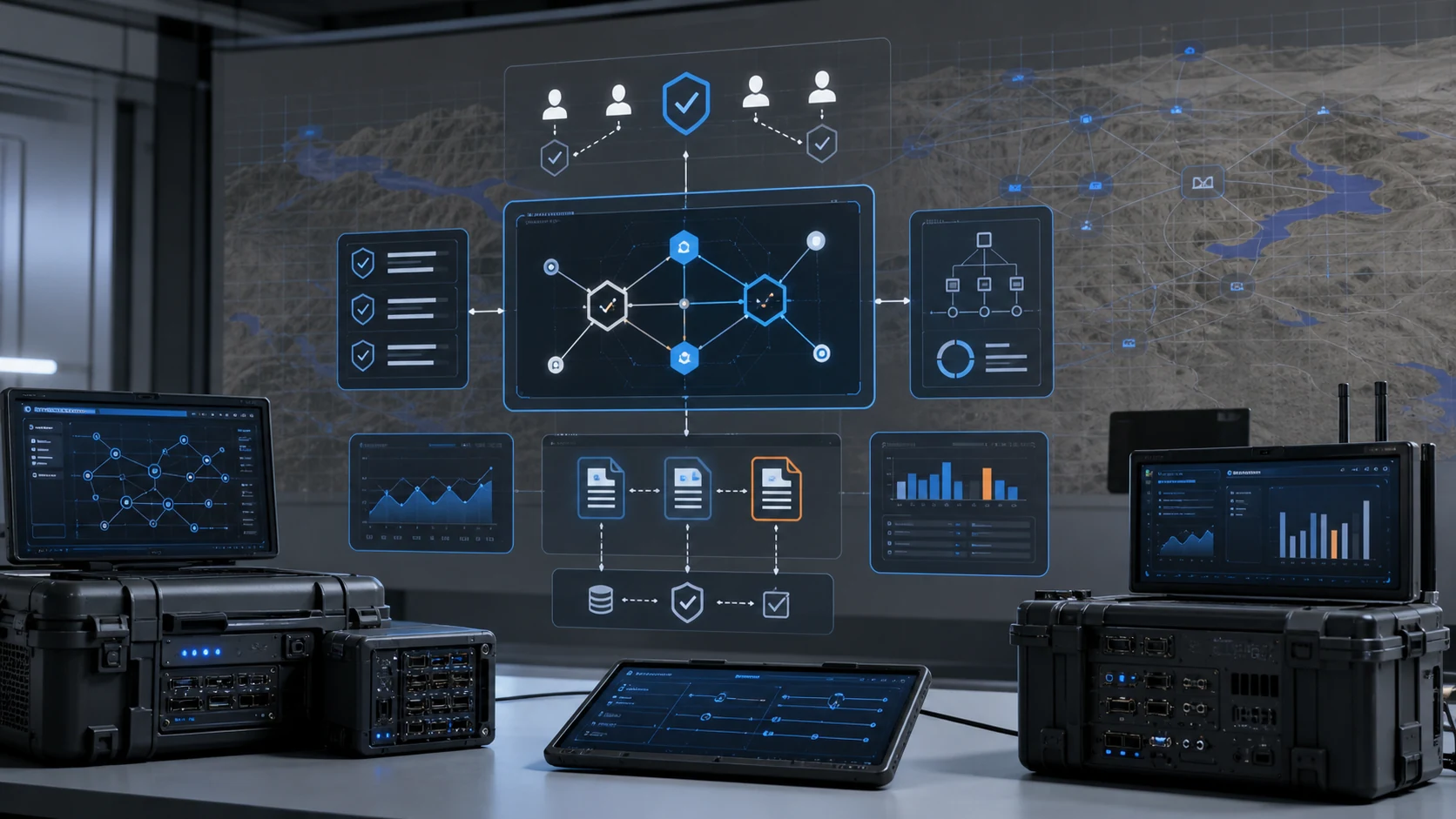
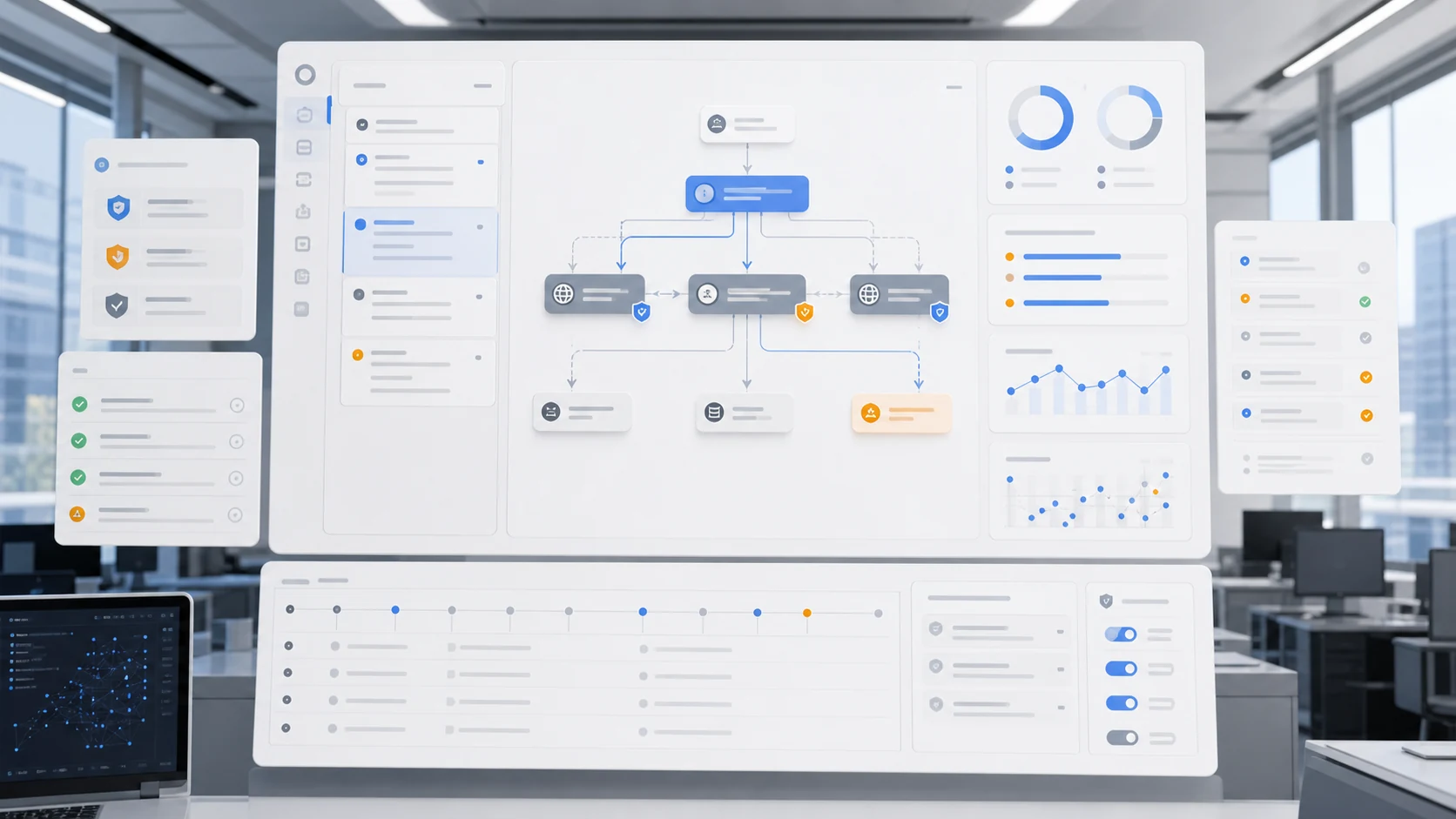
The investable gap is not a larger prompt window. It is a governed agent control plane that can discover tools, prove authorization, run evaluations before action, keep a human authority path, and leave evidence after every tool call.
Gap map
Agent gap map
The practical gap is the layer between model capability and authorized business action.
Current push
- Hosted agents
- Tool execution
- Resource discovery
- Autonomous planning
Open gap
- Identity per action
- Evaluation before execution
- Containment
- Audit replay
Neura Parse angle
- NowFlow control graph
- Policy gates
- QANTIS risk scoring
- Evidence archive
June 2026 signal
The agent market is converging on infrastructure.
The 2026 signal is not that agents can call tools. That is already becoming table stakes. NIST's AI Agent Standards Initiative frames identity, authorization, monitoring, logging, interoperability, and secure operation as first-order requirements. Google's Agentic Resource Discovery specification pushes the same market toward machine-readable discovery of resources and capabilities.
OpenAI and AWS are also moving the product surface away from simple chat and toward agent runtimes, tool execution, policy, and hosted environments. Google DeepMind's AI control work adds the safety lens: autonomous systems need monitoring, mitigation, and containment when their actions become harder to inspect manually.
The gap is therefore not another agent demo. The gap is a control plane where tool use is authorized, evaluated, logged, replayable, and reversible.
Research gap
We still lack a standard evidence contract for agent actions.
Most agent products can show a transcript. Fewer can prove why a tool was available, which identity authorized the call, which policy matched the action, which evaluation gate passed, what external state changed, and how the operation can be replayed during an incident review.
That evidence contract should be product-native. It should not depend on engineers manually reconstructing traces across model logs, API logs, browser sessions, SaaS events, and chat history.
- Each action needs an actor, objective, resource, permission, policy, input, output, and state-change record.
- High-risk actions need pre-execution evaluation, human authority, rollback conditions, and escalation routing.
- Tool discovery should separate discoverability from permission; an agent may know a resource exists without being allowed to mutate it.
- Evaluation should be tied to the workflow and domain, not only to a generic benchmark score.
Defensible MVP
Start with agentic operations, not general autonomy.
The clean first product wedge is agentic operations for bounded business workflows: support triage, research intake, compliance evidence collection, DevOps runbook assistance, or supplier follow-up. These are valuable but still controllable.
A credible MVP should avoid claiming open-ended autonomy. It should prove that a workflow can discover resources, request authority, run an evaluation gate, execute a controlled tool action, and preserve an audit trail that another human can understand.
Trend thesis
The next competition is trust per action.
Large models will keep improving, but enterprise adoption will be limited by trust, operations, and liability. A buyer does not only ask whether an agent can do a task. They ask whether the system can show who authorized it, what changed, and how a mistake is contained.
That is why agent control planes, workflow-native evaluations, and audit-ready tool traces are a durable 2026 content and product theme for Neura Parse.
Practical takeaways
The 2026 agent gap is control and evidence, not chat UX.
Resource discovery must be paired with identity, authorization, and policy.
Evaluation should run inside the workflow before risky action, not only offline.
NowFlow maps naturally to approvals, retries, tool state, and audit records.
QANTIS becomes relevant when agent output influences a decision under uncertainty.
Sources reviewed
Source 01
NIST AI Agent Standards Initiative, February 2026
AI agent interoperability and security priorities, including identity, authorization, monitoring, and logging.
Source 02
Google Agentic Resource Discovery specification, June 2026
Open specification for helping agents discover, use, and verify resources across websites and APIs.
Source 03
OpenAI agents platform
Source 04
AWS AgentCore updates, April 2026
Source 05
Google DeepMind AI Control Roadmap, 2026
Research roadmap for monitoring and mitigating risks from autonomous AI systems.