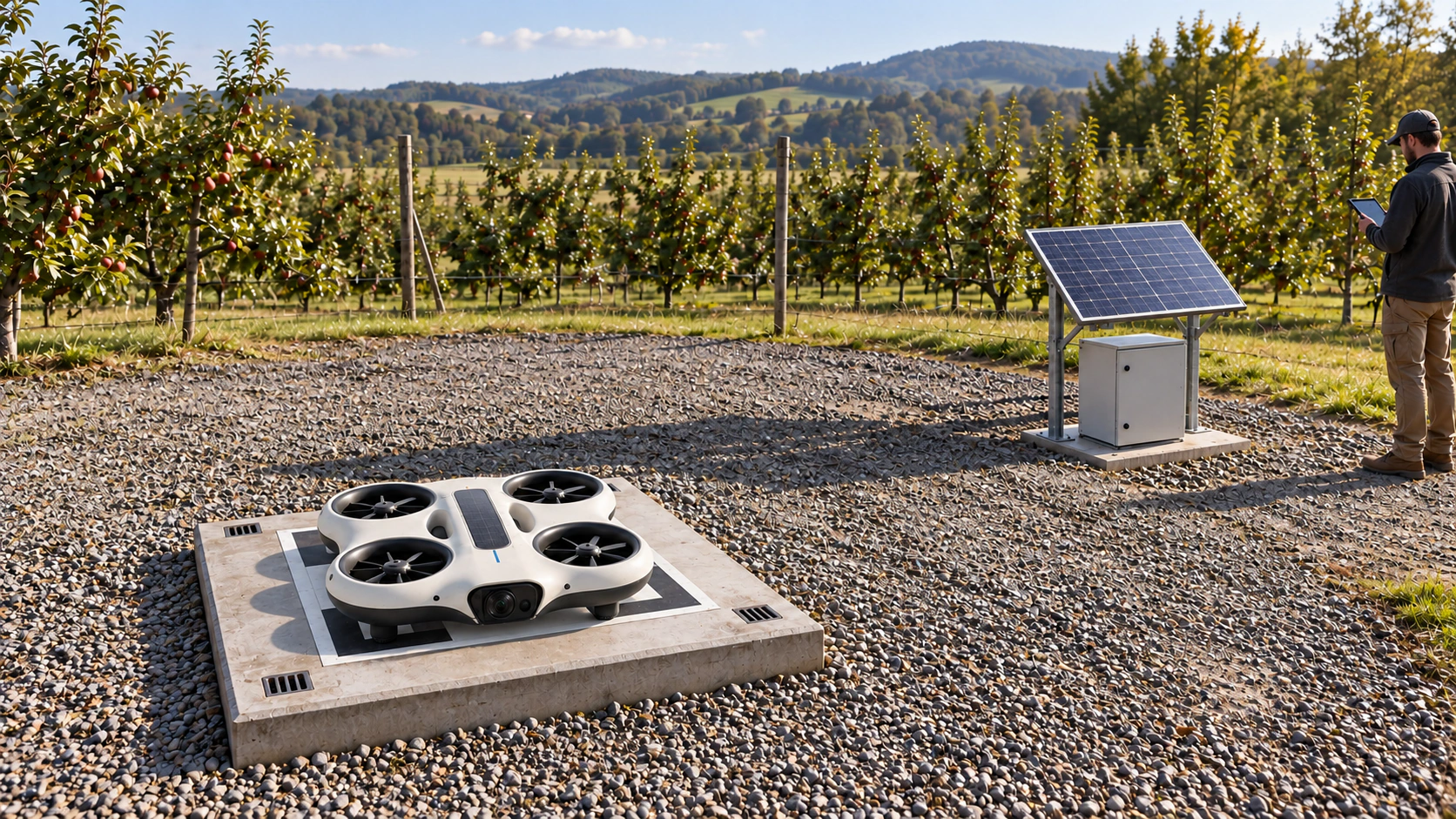
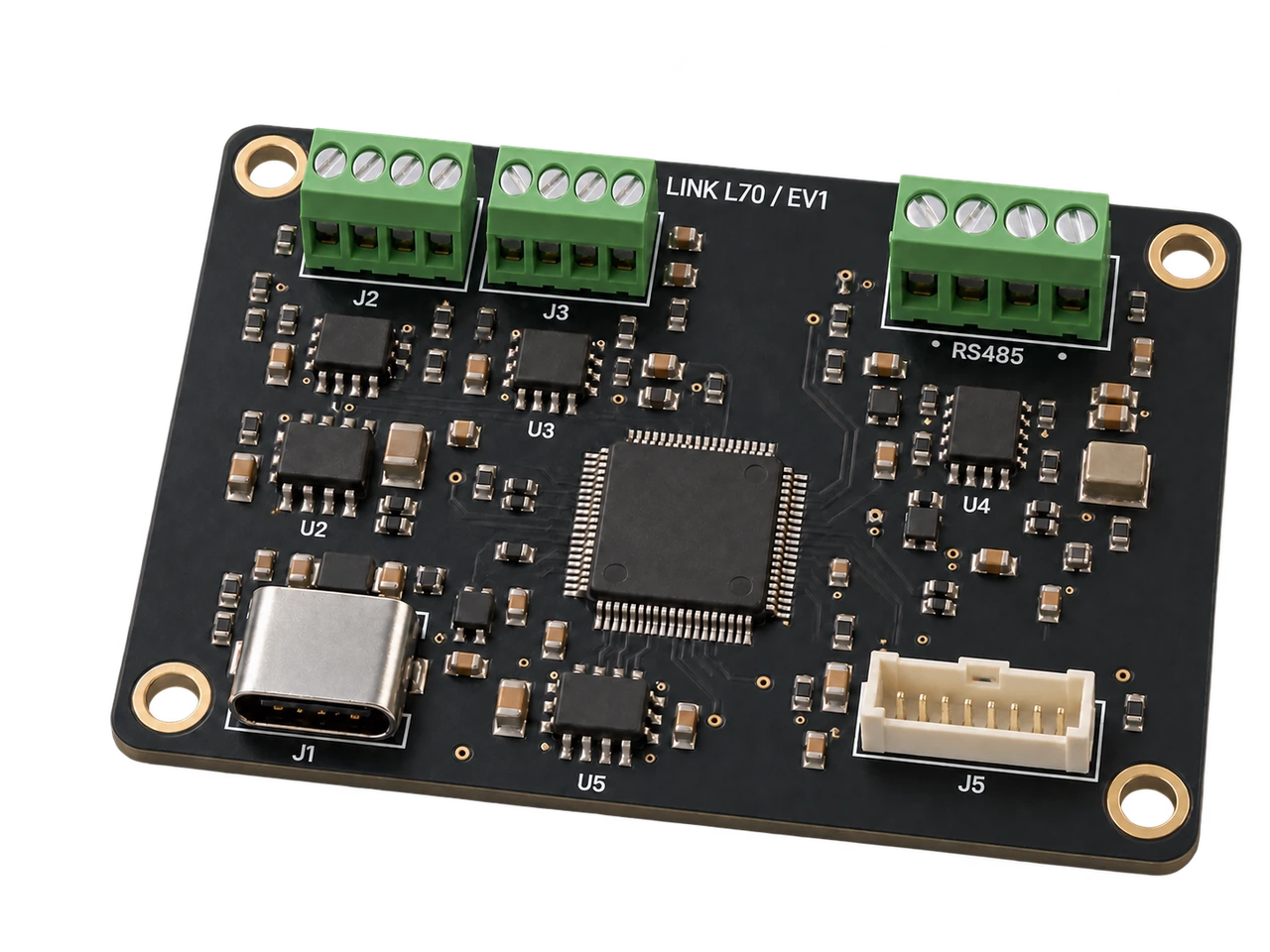
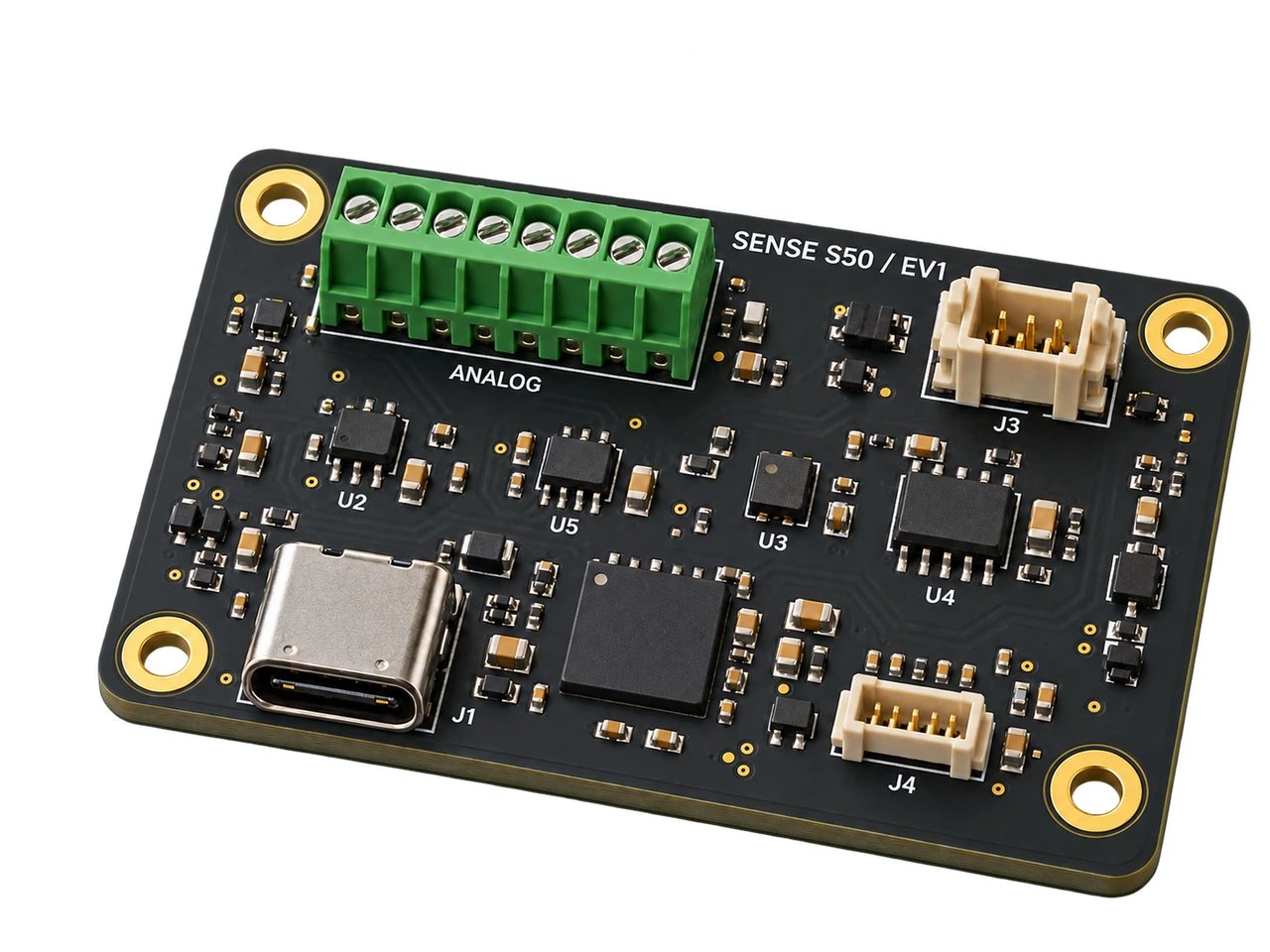
Four hardware profiles connect mission compute, local vision, physical buses and precision sensing. Choose the role, check the space and qualify the complete integration.
EV1 provides defined dimensions, interface allocations and bench procedures. The images visualise the specified architecture; manufactured-board evidence, electrical release and completed NODERIQ integration remain to be established.
One platform, distinct hardware roles
Choose what the machine needs.
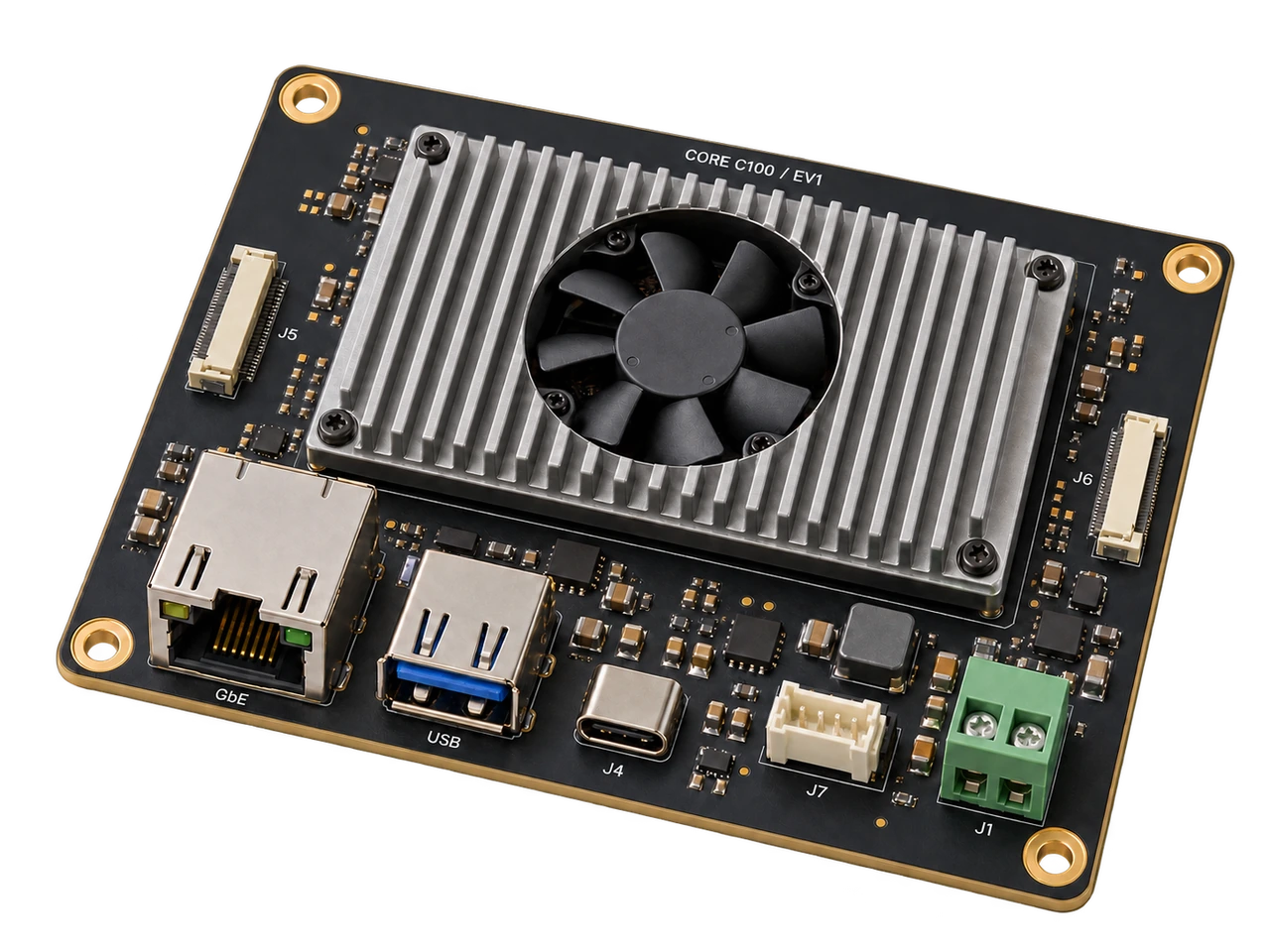
NQ-C100
100 × 80 mm
Mission compute
NODERIQ Core C100
A compact compute-carrier profile for mobile robots and observation platforms that need local perception, storage and a clear handoff to a separate machine controller.
12 V nominal input45 W board allocation40 mm assembly height
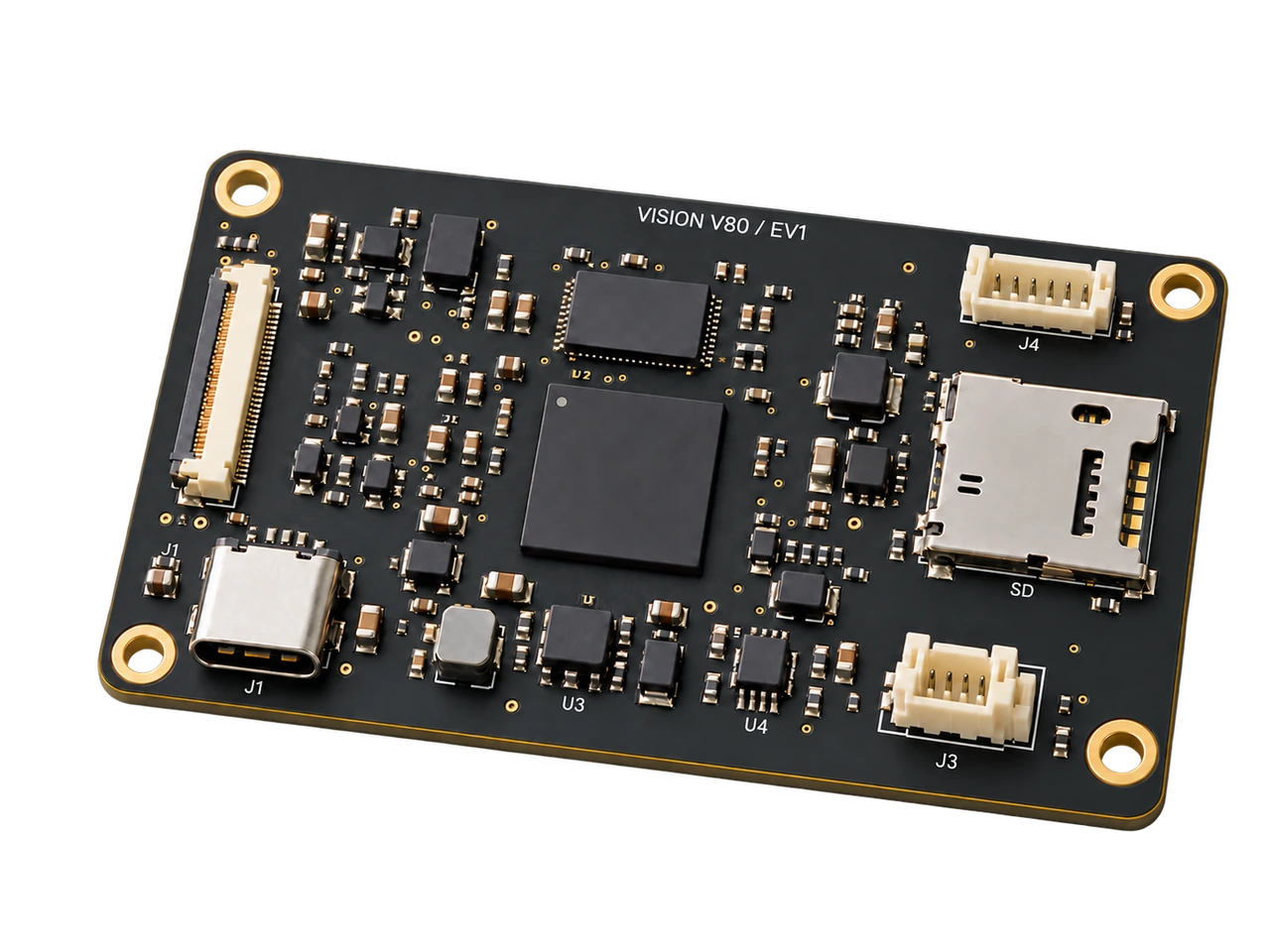
A compact I/O bridge profile for observing CAN and serial devices, aligning service records and connecting existing controllers to mission-level software.
5 V nominal input4 W board allocation16 mm assembly height
A small acquisition profile combining four simultaneous analog channels with inertial observation for compact instruments and distributed robotic sensing.
5 V nominal input1 W board allocation12 mm assembly height
PCB outline, assembled height and installation reserve describe different things. The reserve leaves initial room for connectors, cable bends and service; the actual enclosure and harness still need a fit check.
These are EV1 design allocations and screening criteria, not measured operating ratings. Component peak performance and certifications do not transfer to a custom board.
Custom integration
Start with the signals and the enclosure.
Share the machine envelope, supply, sensor types, bus interfaces, environment and the controller that retains physical authority. We can use those requirements to scope a carrier, sensing front end, harness and qualification plan.
AERA and MIRA remain separate observation-device programmes. A card profile does not establish compatibility with either airframe or acceptance for unattended operation.