PMPublic media
1 records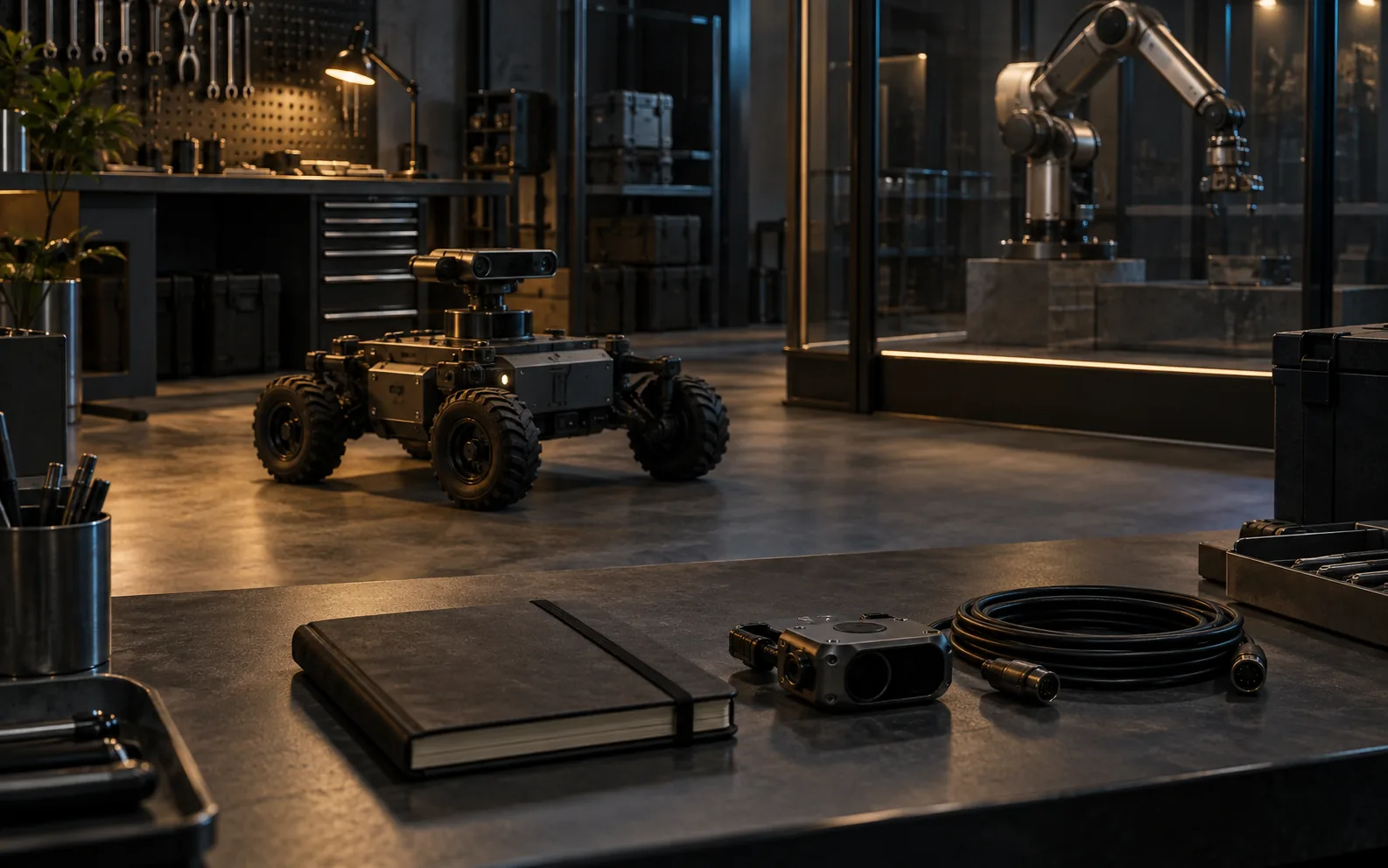
A task handoff with an uncertain outcome
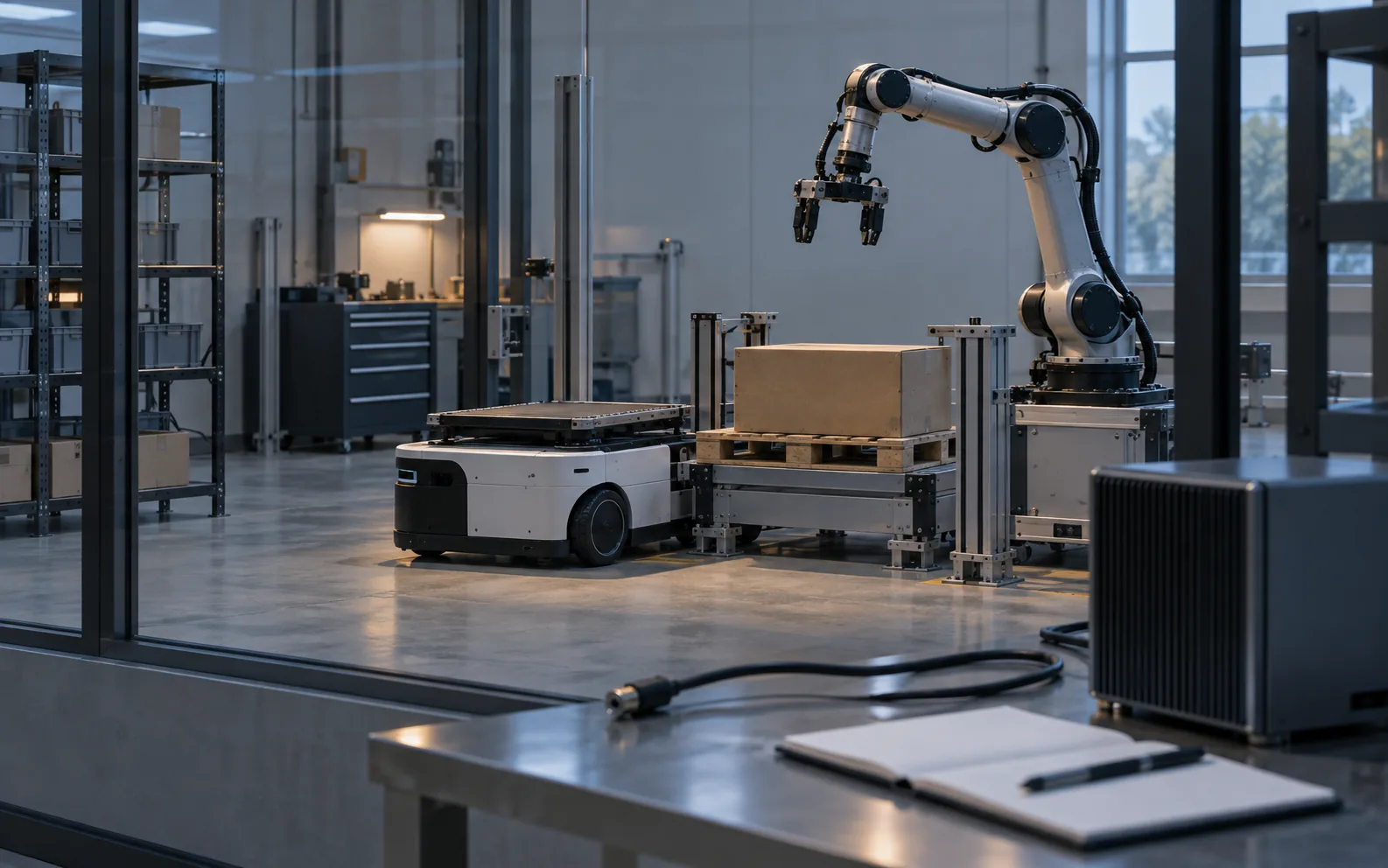
Conceptual scene for the proposed evaluation path. It is not a partner laboratory, operational site or tested integration.
The robot moved the item. Did the next system accept it?
Imagine a mobile robot delivering a part to a workcell. The workcell acknowledges the request, but the connection fails before its completion message returns. A coordinator cannot safely infer whether the part was accepted, left in place or never transferred. Retrying may duplicate the action; declaring success may lose it. The research unit is therefore one task with a traceable request, separate acknowledgements and an explicit uncertain state.
This is a candidate evaluation scenario, not a report of an installed robot system. Related public profiles include inspection-to-action and remote field continuity. The same question follows each one: what did each system know at the interruption, and what evidence is enough for a human to decide what happens next?
One question, three increasingly demanding settings
Recent correspondence with research, robotics and connectivity teams has moved the proposed work beyond a single abstract demo. Draft contributions cover experiment design, virtual or controlled network degradation, private-network telemetry and robotics validation. These are complementary scopes in a proposal being assembled; participation, budgets and funding eligibility are still being resolved.
The sequence starts with a software-only replay. A laboratory stage would then introduce delay, packet loss, disconnection and reconnection while comparing the task record with network observations and the robot-side outcome. An operational warehouse has been raised as a possible later setting. That would require site consent, an agreed trial window, robot and controller access, safety review and minimal disruption before it could become a test.
- Software: replay the same work order and deliberately ambiguous completion without a physical robot.
- Laboratory: change network conditions and compare command, acknowledgement, telemetry and outcome records.
- Possible site: assess one bounded handoff only if access, safety and operational permissions are granted.
The useful output is a recovery decision a person can defend
For each run, the intended record is the original task, the last confirmed state on each side, the network event, any physical completion evidence and the reason for a human choice to resume, retry, stop or investigate. Device-local controllers keep motion and emergency authority. Neura Parse's proposed role is task continuity and reviewable evidence around them.
The working group is defining roles and the smallest useful experiment. No consortium award, confirmed partner list, funded work package, authorized warehouse trial or qualified robot integration is being announced. The next milestone is an agreed test plan with acceptance criteria and stop conditions, not a claim that the system already operates at industrial scale.
BA · Bulletin annexDefinitions, recurring questions, source notes, and publication tags.Inspect
SNSource notes
3 recordsTags