Abstract
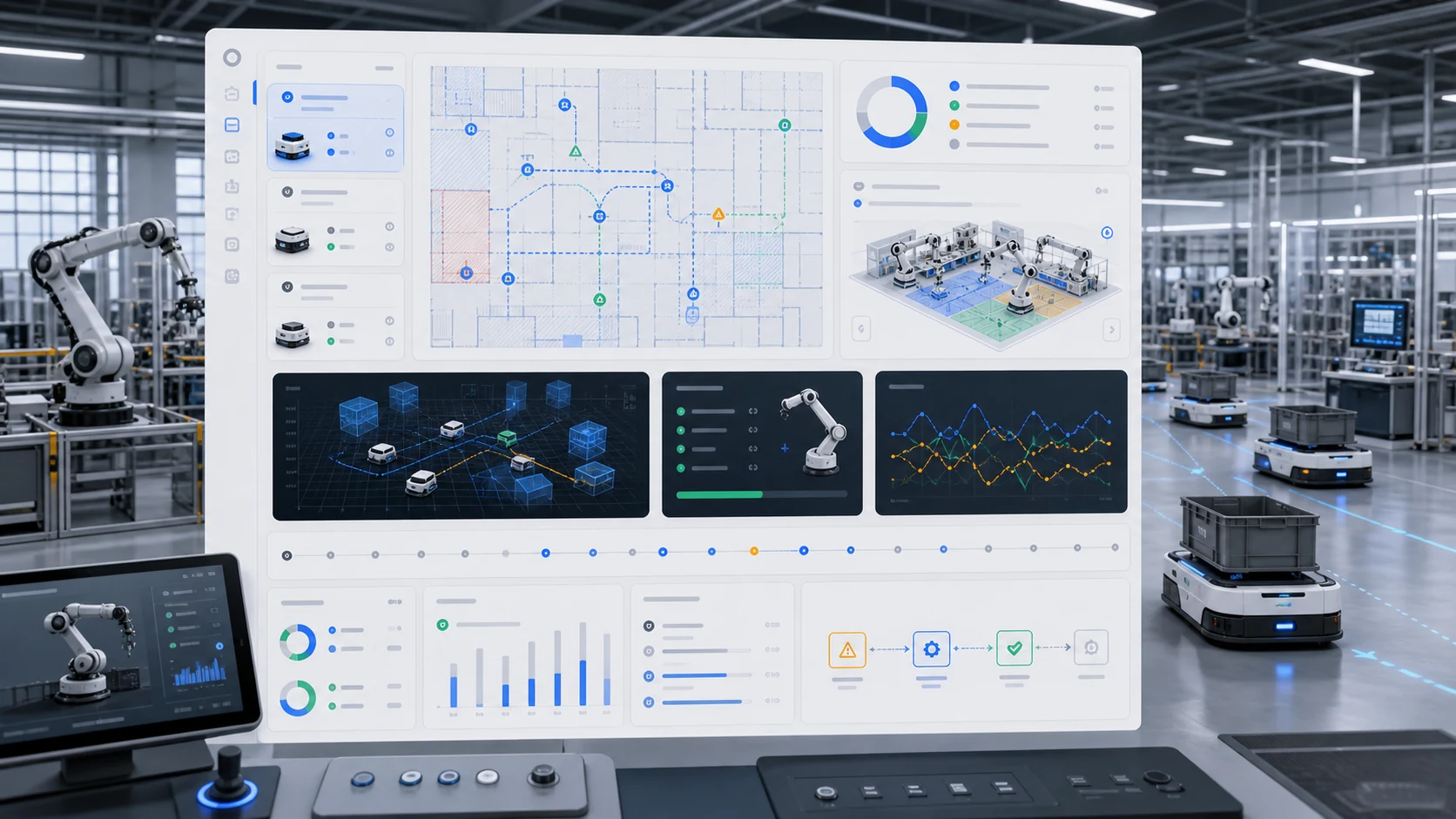
The August physical AI signal is a connected loop: field data shapes simulation, world models expand scenarios, policies are tested in closed loop, releases move to edge hardware, and fleet outcomes return as evidence. A model announcement is one input to that loop, not proof that a robot is safe or production-ready.
Gap map
The physical AI evidence loop
Every stage should produce an addressable artifact and a gate before a release reaches a wider operating envelope.
Observe
- Field data and interventions
- Sensor quality
- Scenario gaps
Generate
- World-model scenarios
- Synthetic variation
- Known counterfactuals
Evaluate
- Closed-loop simulation
- Safety and recovery tests
- Baseline comparison
Release
- Signed edge package
- Policy envelope
- Canary and rollback
Operate
- Fleet telemetry
- Exception handoff
- Outcome and next evidence gap
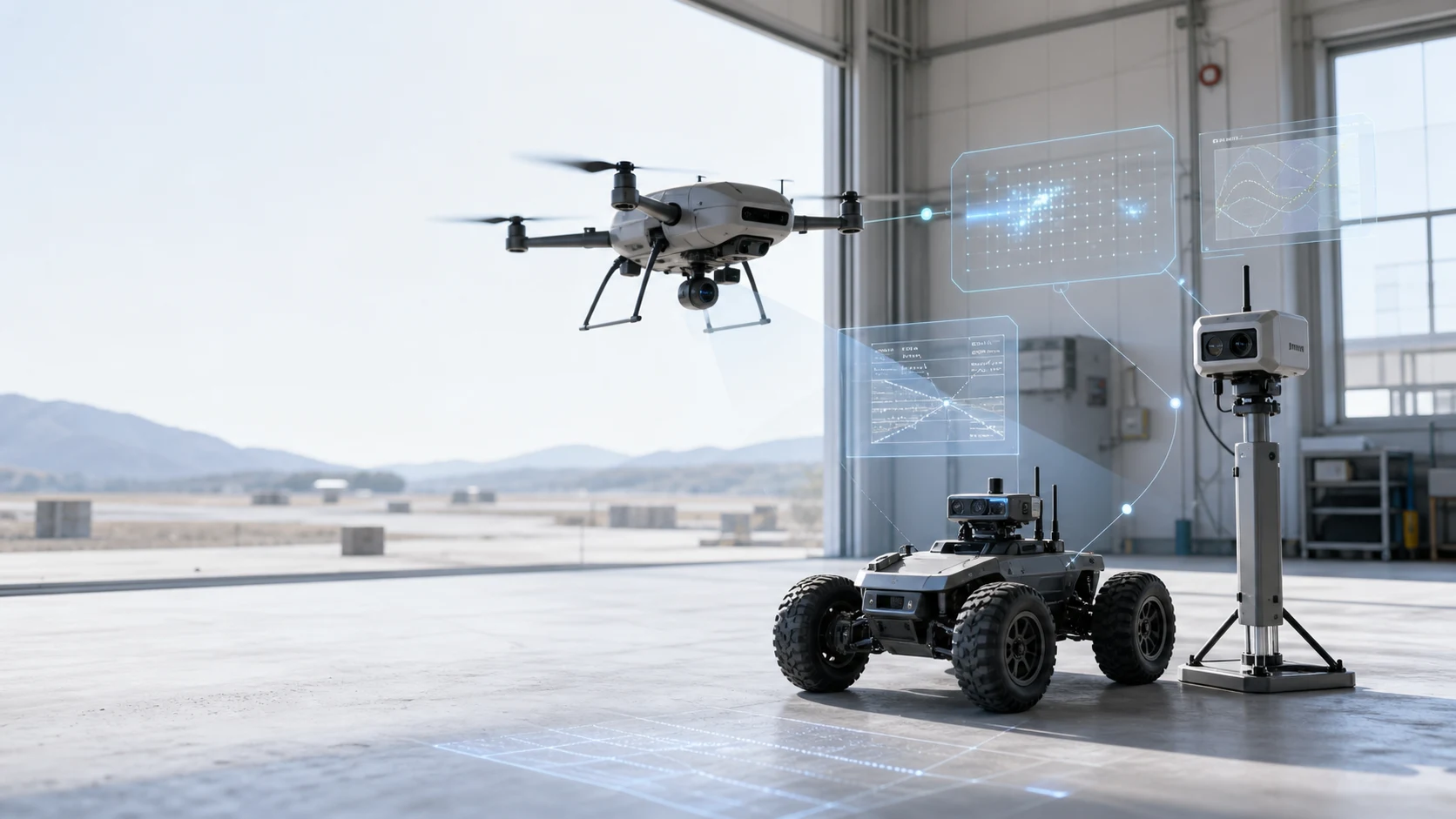
The physical AI conversation is moving from model capability toward a full robotics development and operations loop.
NVIDIA's Actuate 2026 program links Cosmos 3 to physical reasoning, environment augmentation, synthetic data, neural simulation, policy evaluation, and real-time deployment on Jetson Thor. The same program emphasizes fleet infrastructure, breaking systems in test, production reliability, and world-model-driven closed-loop evaluation. NVIDIA's July announcement adds Cosmos 3 Edge, a 4-billion-parameter model intended for on-device vision reasoning and robot-policy work.
These are vendor statements about NVIDIA technologies and ecosystem direction, not independent proof of safety, performance, or suitability for a particular robot. The important systems signal is broader: teams increasingly need one evidence chain from field observation through generated scenarios and simulation to edge release and operational outcomes.
TD · Technical depth5 supporting chapters and the working checklist.Read deeper
World models are valuable when they close a named coverage gap, not when they merely produce plausible video.
A physical AI program should begin with an evidence gap: a rare lighting condition, occlusion pattern, surface interaction, human behavior, sensor failure, recovery state, or route conflict that field data does not cover adequately. A world model can help generate variations, predict possible dynamics, or provide a neural simulation surface, but each output needs provenance and a link to the gap it was created to address.
Plausibility is not correctness. Generated scenarios should be labeled as synthetic, compared with held-out field data where possible, and reviewed for missing physics, cultural or environmental bias, unsafe shortcuts, and duplicated patterns. The evaluation report should separate performance on recorded reality, conventional simulation, generated scenarios, and live operation.
- Name the field or safety gap before generating data.
- Track model, prompt or conditioning, seed, environment, and scenario version.
- Keep synthetic, simulated, replayed, and live evidence visibly separate.
- Use subject-matter review to reject plausible but operationally invalid scenarios.
On-device reasoning changes latency and resilience assumptions, but it does not remove fleet operations.
Cosmos 3 Edge is presented as a path for local vision reasoning and robot action generation on NVIDIA edge hardware. Local processing can reduce network dependence and keep time-sensitive data near the machine, yet an edge model still needs a compatible hardware profile, thermal and power envelope, signed release, configuration identity, health telemetry, degraded mode, and safe rollback.
NeuraOS is relevant as Neura Parse's governed edge operating platform for robotics and defence systems. Its public role is the runtime and fleet-control layer around edge workloads. This article does not announce Cosmos 3 support, a certified safety architecture, benchmark results, or a deployed customer fleet. Any such statement needs target-hardware tests and a separate public record.
- Benchmark latency, memory, power, thermals, and recovery on the target device.
- Bind model, runtime, hardware, sensor, and policy versions into one release identity.
- Use canary deployment, health gates, signed OTA, and a tested rollback image.
- Define local degraded behavior for network, sensor, compute, and model-health failures.
Layered safety controls should stay independently testable from the learning system.
NVIDIA describes Halos for Robotics as a layered safety architecture spanning compute, software, external sensing, and inspection support. Regardless of vendor stack, the durable engineering principle is separation: safety-related monitoring, limits, stop paths, human controls, and inspection evidence should not depend on the same learned component they supervise.
Map hazards to controls and test each control under nominal and degraded conditions. Preserve near-misses, operator interventions, policy violations, and false stops as product evidence. Certification readiness is a program of requirements, traceability, testing, independent review, and controlled change; adopting a named technology does not confer certification automatically.
NowFlow and NeuraOS fit the release-and-operations problem around models, while NODERIQ remains a classical-first applied programme.
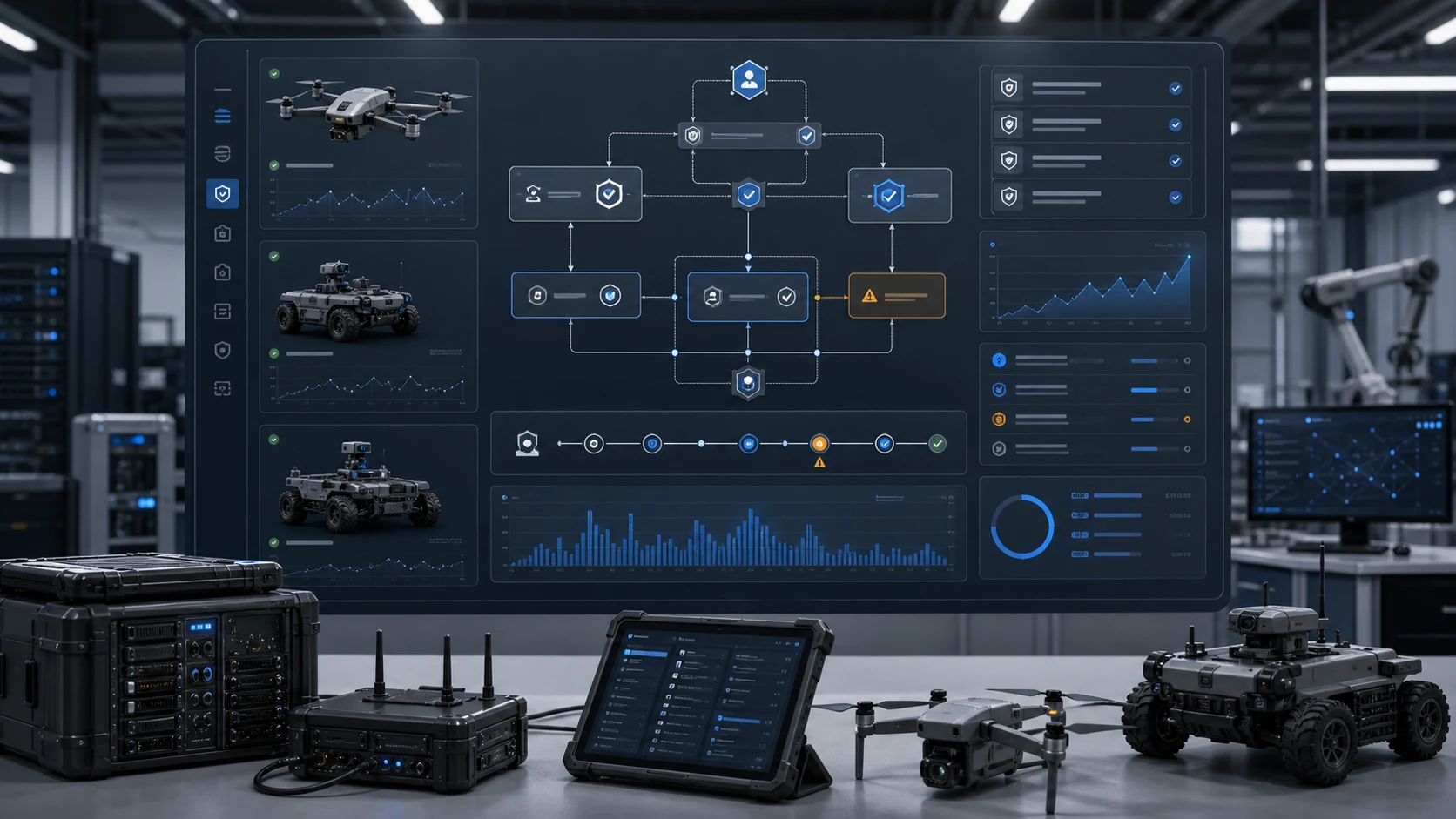
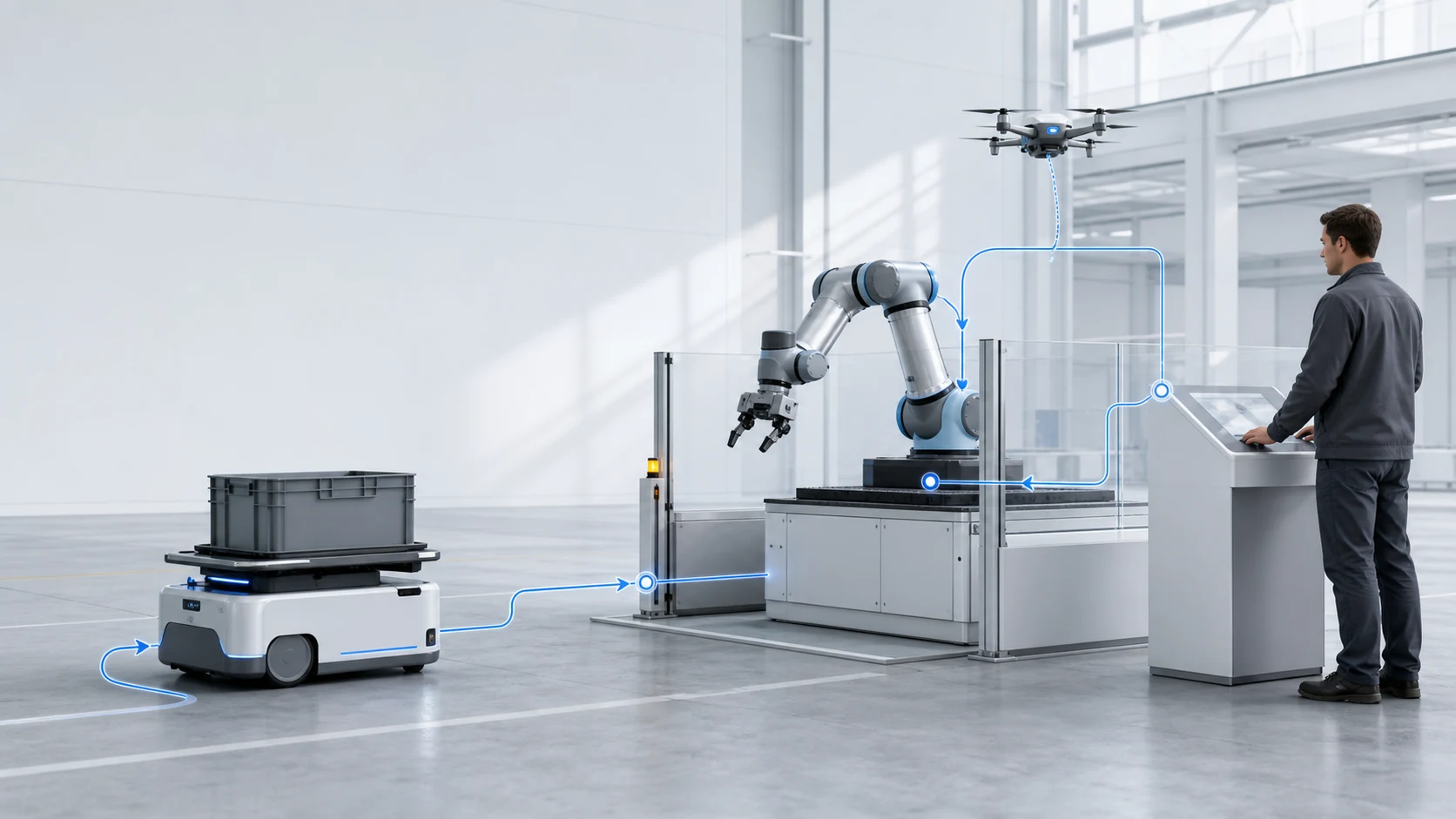
NowFlow can coordinate scenario intake, evaluation tasks, exception review, deployment approvals, maintenance work, and evidence packs. NeuraOS can carry runtime identity, local policy, telemetry, update, and rollback at the edge. NODERIQ's public applied direction adds shared situational context, communication-aware coordination, human authority, and resilience evaluation while remaining useful through classical AI and edge computing first.
Quantum is optional and advisory in NODERIQ, restricted to selected latency-tolerant, non-safety-critical planning or belief-estimation work with a classical baseline and fallback. World models do not change that boundary. A production physical AI program should earn expansion through measured field evidence, not attach experimental compute to the safety path for narrative value.
Practical takeaways
01
Use world models to close named scenario and evidence gaps, not as field-validation substitutes.
02
Separate synthetic, simulated, replayed, hardware-in-loop, trial, and live evidence in every report.
03
Evaluate policies in closed loop with independent references, recovery tests, and declared release gates.
04
Treat edge models as release-bearing fleet assets with target-hardware evidence and rollback.
05
Keep safety controls independently testable and consequential authority explicit.
RA · Reference annexDefinitions, recurring questions, editorial method, and primary sources.Inspect
The analysis above carries the main reading flow. This reference layer keeps terminology, recurring questions, editorial method, and primary sources available without interrupting the argument.
Field questions
Program questions behind Physical AI in August 2026: world models only matter when the deployment loop can prove what changed..
Q01What is a world model in physical AI?
It is a model used to represent, generate, or predict aspects of a physical environment and possible actions. In robotics it can support scenario generation, synthetic data, neural simulation, reasoning, or policy evaluation, but its outputs still require independent validation.
Q02Can synthetic data replace field testing?
No. Synthetic data can expand coverage and expose rare conditions, but it inherits model assumptions and may omit important physics or behavior. Keep it separate from recorded, hardware-in-loop, site-trial, and live evidence.
Q03What must be tested before an edge model reaches a robot fleet?
Test latency, memory, power, thermals, sensor compatibility, degraded behavior, health monitoring, signed update, canary deployment, rollback, safety controls, and recovery on the target hardware and operating envelope.
Q04Does this article announce NVIDIA integration in NeuraOS or NODERIQ?
No. It analyzes public technology signals and explains an evaluation model. It does not announce model support, benchmark results, certification, partnership, operational deployment, or a customer system.
Editorial record
How Physical AI in August 2026: world models only matter when the deployment loop can prove what changed. was checked.
- Editorial owner
- Neura Parse Research
- Last verified
- August 20, 2026
- Method
- Synthesis of the dated primary and official records listed below, checked against the operating question in this note.
- Scope limit
- Planning analysis—not certification, customer performance evidence, procurement advice, or a claim of production readiness.
SRSources reviewed
3 records