Abstract
A convincing mission view needs more than a moving marker. It needs a task, a recognizable platform, an understandable environment and a record of what changed. NODERIQ’s current simulation workspace brings those views closer together, from our published device designs to a city or airport rehearsal.
Start with the mission, then change your view
Suppose a team needs to inspect an area and coordinate a follow-up task. A district view helps you understand the surroundings. Following a platform brings its current task into focus. Inspecting a device model raises a different question: which design and assumed capabilities are represented?
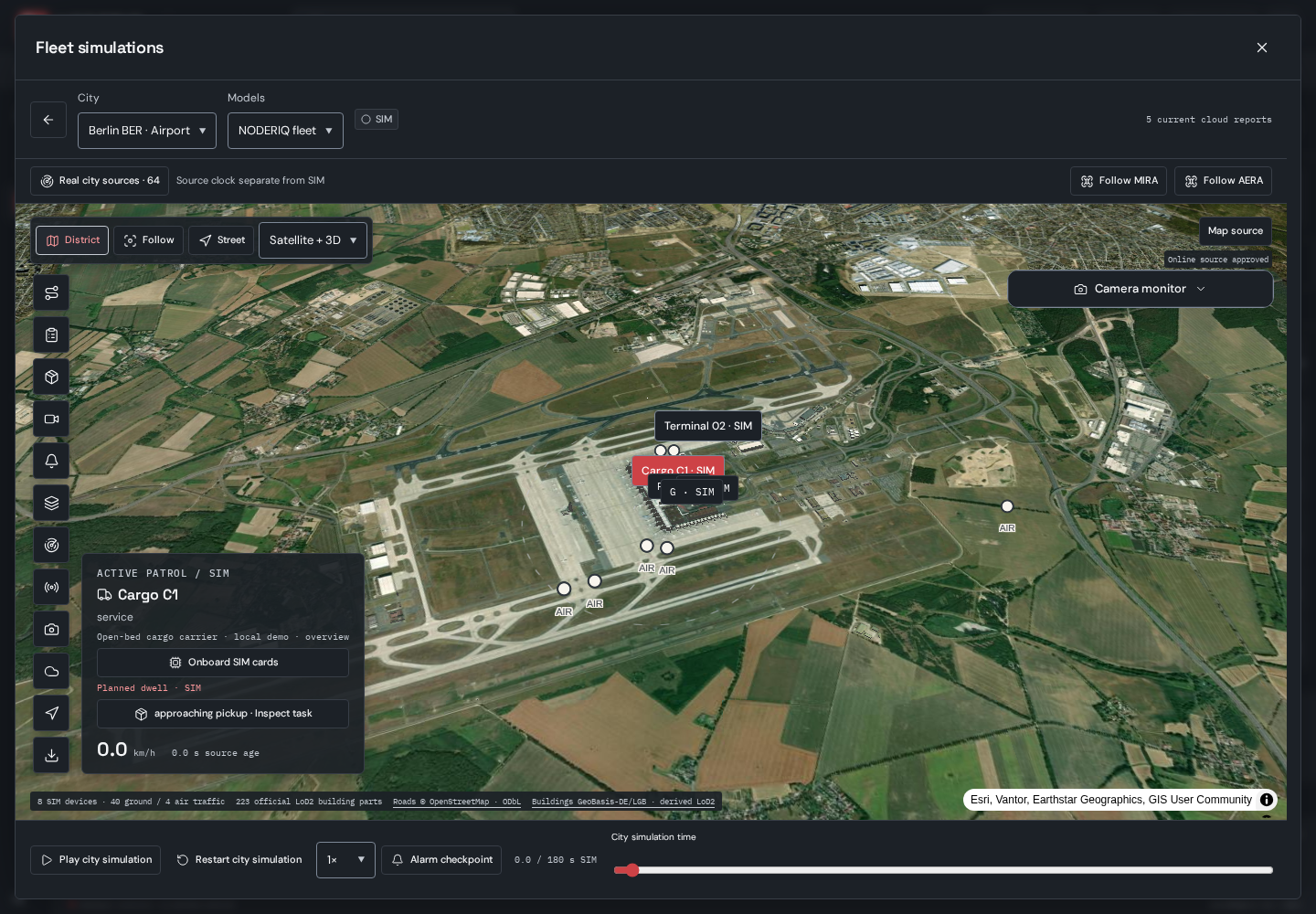
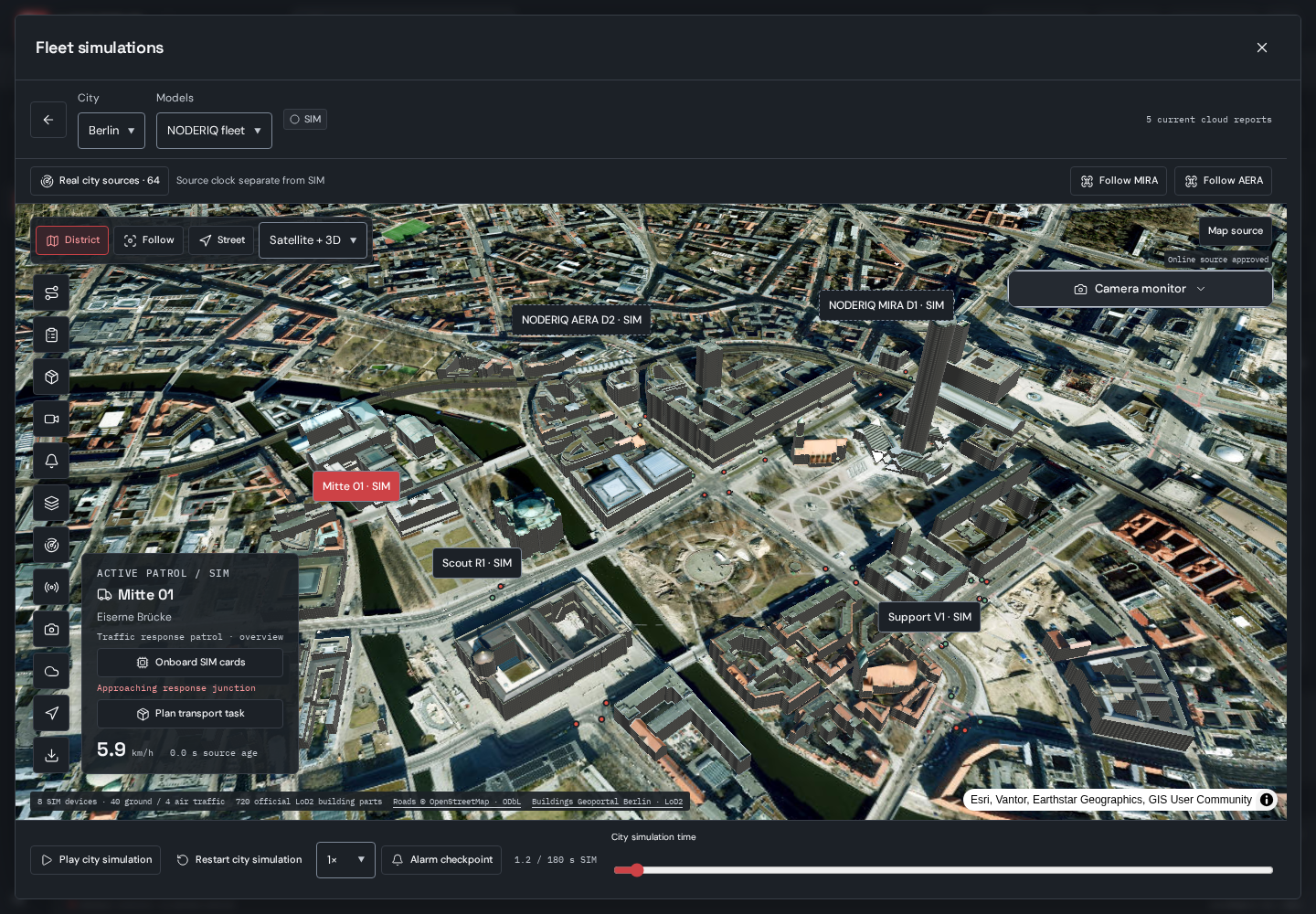
These views are useful when they keep the same mission context. In NODERIQ, the Fleet simulation connects selected SIM platforms, task phases and playback with source-backed geography. The product page now shows actual captures of that workspace, alongside the separate browser demo available on this website.
Real places provide context; simulated activity tells the story
The current launcher includes Istanbul, Berlin and Oslo districts, plus Berlin BER and Oslo airport scenarios. Roads, building footprints and other source layers provide spatial context. Authored traffic, patrols, air-platform movement and transport tasks remain explicitly simulated.
That distinction matters. A detailed airport map does not mean an airport is a customer, that a depicted aircraft is participating, or that a drone may fly there. It gives the team a recognizable setting in which to inspect a bounded software scenario.
The published transport view also shows a pickup and loading phase in Oslo. A selected cargo vehicle, its task and the replay clock remain in the same scene. It is a rehearsal of coordination, rather than a receipt that a physical delivery took place.
Our device designs belong in the conversation
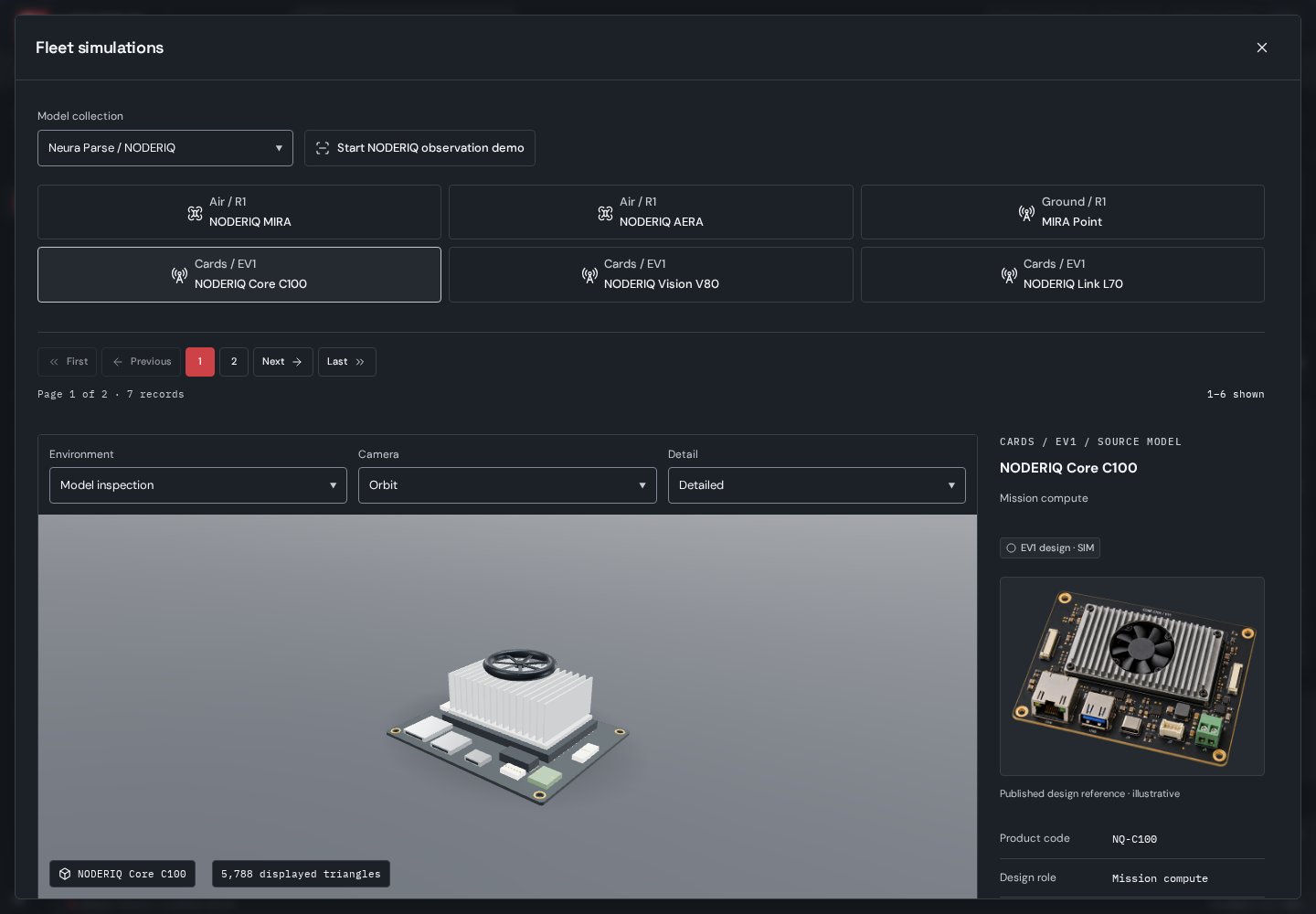
Device Studio includes AERA, MIRA and MIRA Point, with three-dimensional models derived from the public design records. The published reference image remains available beside the model. You can inspect a design, change the view and examine what the representation includes.
MIRA’s bounded observation-and-return sequence makes that connection concrete. Its model follows an authored route and returns to the point study; the sequence ends at an energy-review checkpoint. AERA supplies a separate survey context. Those are SIM roles and design studies, not measured flight, docking or charging results.
The city workspace can display our MIRA and AERA designs as its named SIM air platforms. This keeps our device identity visible while the mission model retains its own clock, source context and movement rules. Changing a visual model does not qualify the represented hardware.
Give the four card roles their own space
Core C100 represents mission compute; Vision V80 addresses camera-local intelligence; Link L70 concerns robot and sensor I/O; Sense S50 covers precision and inertial sensing. Their public EV1 records distinguish the board allocation, assembly space and evaluation work.
The studio adds design-scale model inspection, including a Core C100 view beside its published hardware illustration. The Fleet workspace can also show assumed onboard card roles. That is useful for discussing what a proposed configuration would need, while keeping the assumption open to engineering review.
These are not electrical circuit simulations. A rendered PCB does not establish functioning electronics, a compatible pin map, qualified thermal behaviour or an accepted installation inside an airframe. Each of those needs separate analysis and measurements.
Mission intelligence is the connection between the views
NODERIQ’s mission-intelligence role is to connect observations, tasks, device roles and decisions in a context that people can inspect. NowFlow supplies the governed workflow layer and NeuraOS the edge foundation. Simulation gives a team a concrete way to explore that relationship before defining a physical integration.
Start a review with a few direct questions. Which platform is selected? Is the information simulated, source imagery or a received observation? What task phase is being shown? What still needs human approval or a target-specific test? A useful workspace makes those differences easier to keep in view.
Use the rehearsal to define the next test
Open the product application, sign in and choose Fleet → Ready simulations for the city workspace. Device Studio is also available through the Simulation and replay route. The public product page offers reviewed captures and a separate, bounded browser demo when you want an introduction.
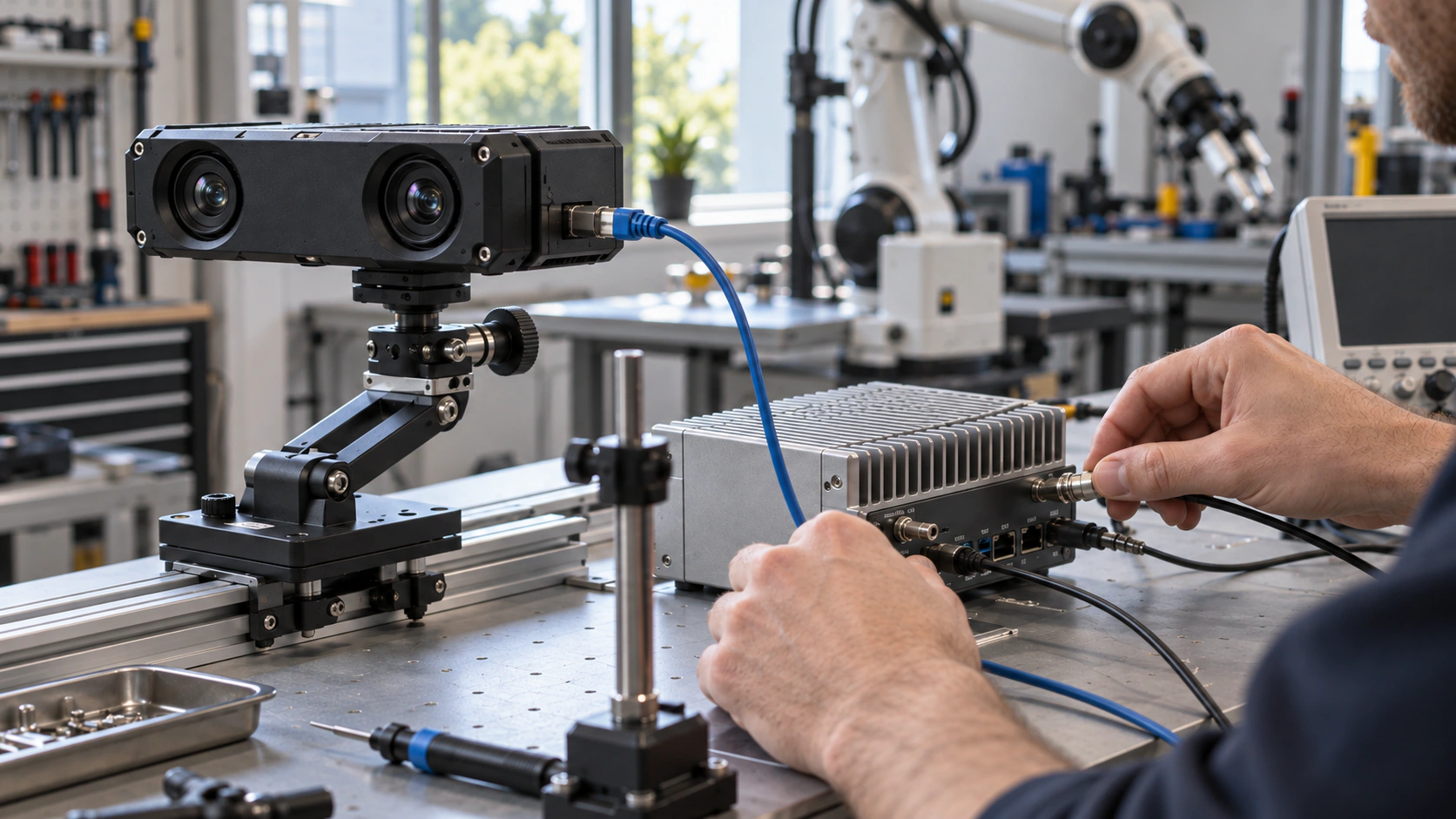
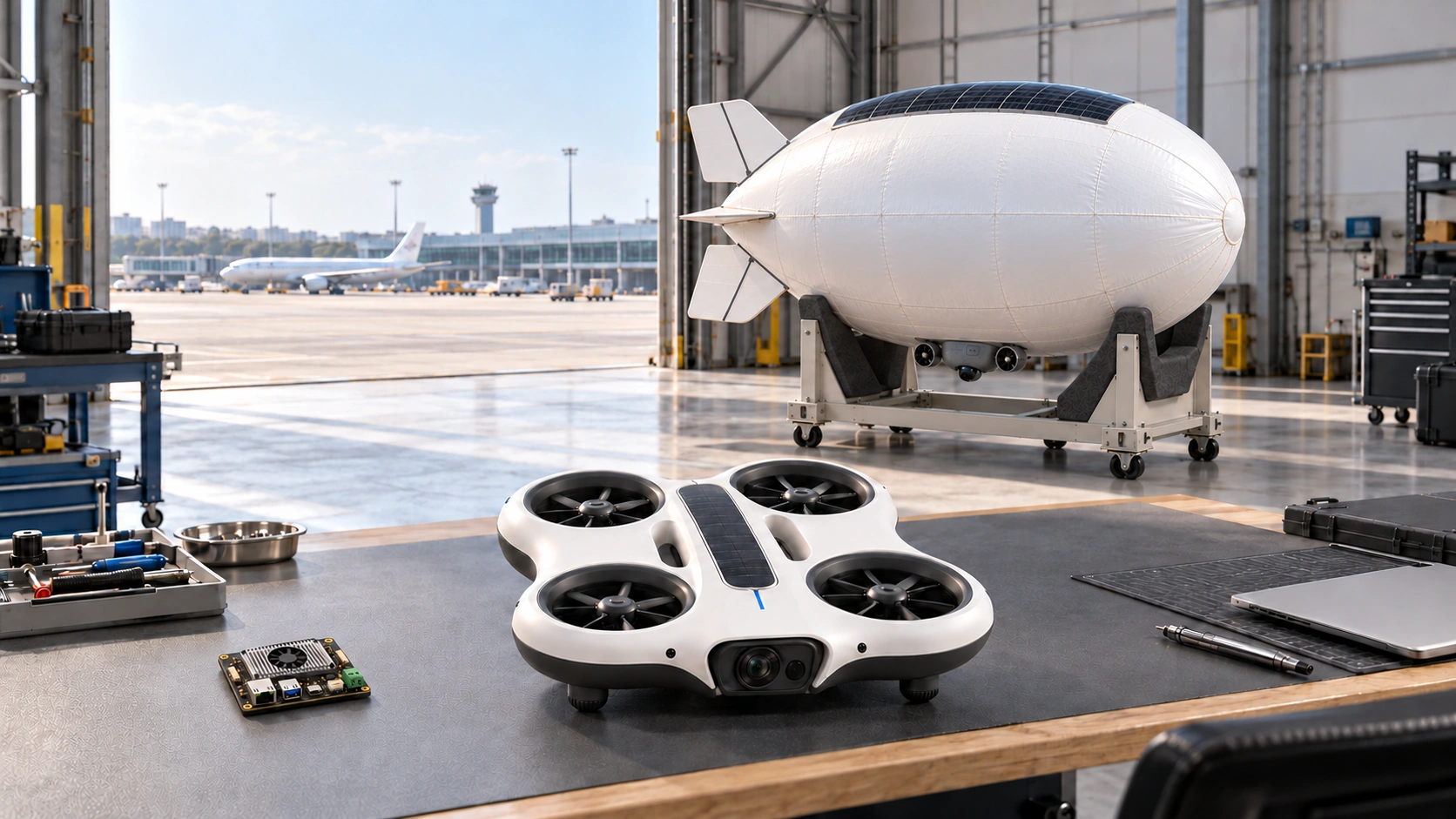
The wide illustration accompanying this article is an AI-generated design study. Published R1 device and EV1 board dimensions guide their relative sizes in a full-size workshop, with MIRA resting on a bench, AERA supported in a ground cradle and an imagined airport in the distance. It is not a screenshot, a dimensionally certified render, a physics validation or evidence of airport operations.
A good next step is one clearly scoped test: a device model to inspect, a task to rehearse or a hardware assumption to measure. The simulation can help frame that test. Acceptance of physical electronics, flight, docking, charging and operational safety remains its own engineering work.
Practical takeaways
RA · Reference annexDefinitions, recurring questions, editorial method, and primary sources.Inspect
The analysis above carries the main reading flow. This reference layer keeps terminology, recurring questions, editorial method, and primary sources available without interrupting the argument.
Editorial record
How From a board design to a shared mission: inside NODERIQ simulation was checked.
- Editorial owner
- Neura Parse Research
- Last verified
- October 29, 2026
- Method
- Synthesis of the dated primary and official records listed below, checked against the operating question in this note.
- Scope limit
- Planning analysis—not certification, customer performance evidence, procurement advice, or a claim of production readiness.
SRSources reviewed
5 records