Abstract
The strongest part of IBM Quantum's August update is not one new visualization. It is the growing continuity between source, scheduled circuit, execution spans, device context, result, retrieval code, and capacity state. That continuity is the basis of a reviewable quantum workflow.
Gap map
From quantum job to reviewable workload record
Provider telemetry becomes decision evidence only when it remains connected to intent, source, baseline, and review.
Frame
- Question and hypothesis
- Classical baseline
- Acceptance rule
Author
- Circuit and OpenQASM source
- Control flow
- Pinned dependencies
Execute
- Job ID and instance
- Timing and spans
- Calibration context
Review
- Raw and transformed results
- Usage and failure context
- Interpretation and decision
IBM's update exposes more of the path between a circuit and its observed result.
The August 2026 IBM Quantum Compute Service changelog adds a bit-by-bit view for Sampler outcomes, scheduled circuit timing, chunk- and span-level diagnostics, calibration history links, Executor result rendering, improved histograms, retrieval snippets, and workload filters. Composer adds OpenQASM 3 control structures and annotations, while instance pages make rolling usage recovery dates explicit. Read together, these are not isolated interface features. They are evidence surfaces around a workload lifecycle.
That matters because a quantum job is rarely self-explanatory. Counts without circuit version, compilation context, timing, device state, shots, transformations, and interpretation are difficult to compare and easy to overstate. A platform can make those dependencies visible at execution time; a workflow system must preserve the relevant pieces after the interface, backend, or team changes.

TD · Technical depth5 supporting chapters and the working checklist.Read deeper
Multiple result views help diagnose structure, but they do not replace a declared analysis method.
A bit-by-bit outcome view can make high-cardinality Sampler results easier to inspect than a full-state histogram. Histogram range selection can help focus attention on particular outcomes. Executor result rendering makes another workload type visible in the same platform. These views improve comprehension, but a reviewer still needs to know why a view was selected, what post-processing was applied, and whether the decision rule was fixed before the result was seen.
Store raw output alongside any derived chart or table. Record the transformation code or parameters, the expected distribution or classical comparison, and the tolerance used to decide whether two runs agree. Visual convenience should reduce review time without becoming an undocumented analytical step.
- Keep raw results addressable by job identity.
- Record every transformation between raw output and a displayed conclusion.
- Declare comparison metrics and tolerances before using a visualization to judge success.
- Treat alternate result views as lenses over one record, not separate truths.
Timing, spans, and calibration context explain why nominally similar runs can behave differently.
Scheduled circuit timing exposes gates, channels, and durations. Chunk and span diagnostics expose how submitted work was divided and executed. Calibration history connects a job to device context at submission or execution. These details help distinguish an algorithmic change from a scheduling, compilation, runtime, or hardware-context change.
The evidence record should capture references to the provider's authoritative objects rather than flattening everything into an undated note. It should also state what was unavailable. Calibration context can improve interpretation without proving that every observed difference was caused by calibration, and provider metadata does not replace independent controls or repeated experiments.
comparable_run = source_identity × route_context × execution_context × result_integrity × declared_analysisOpenQASM 3 support increases expressiveness and raises the bar for source capture.
Composer's OpenQASM 3 support includes gate modifiers, loops, conditional logic, and box annotations. Dynamic circuits that previously failed to render can now appear in job details. These capabilities make hybrid control flow more legible, but they also make a circuit harder to reconstruct from a static diagram alone. Source text, language version, generated artifacts, parameters, and compiler inputs become part of the minimum record.
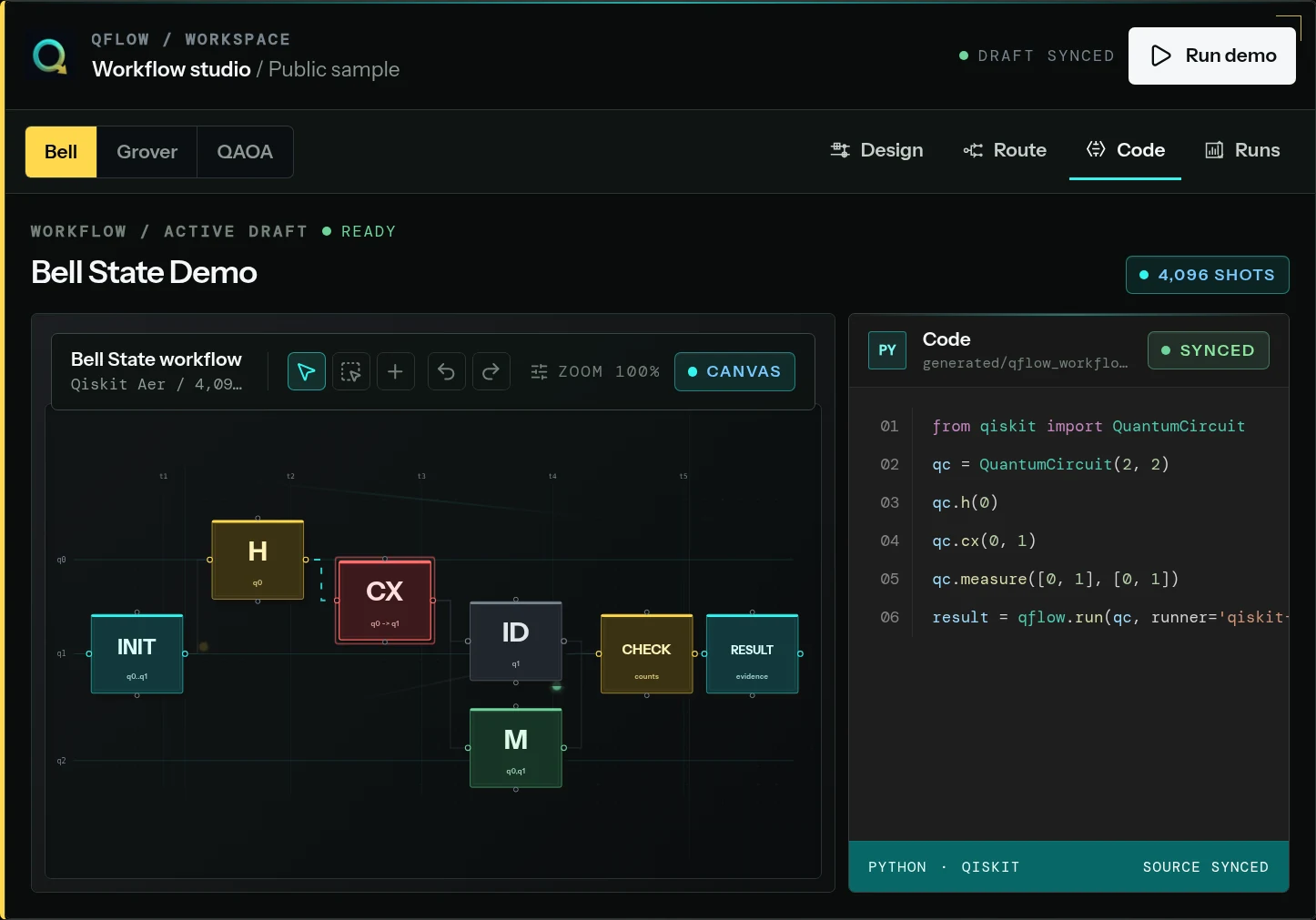
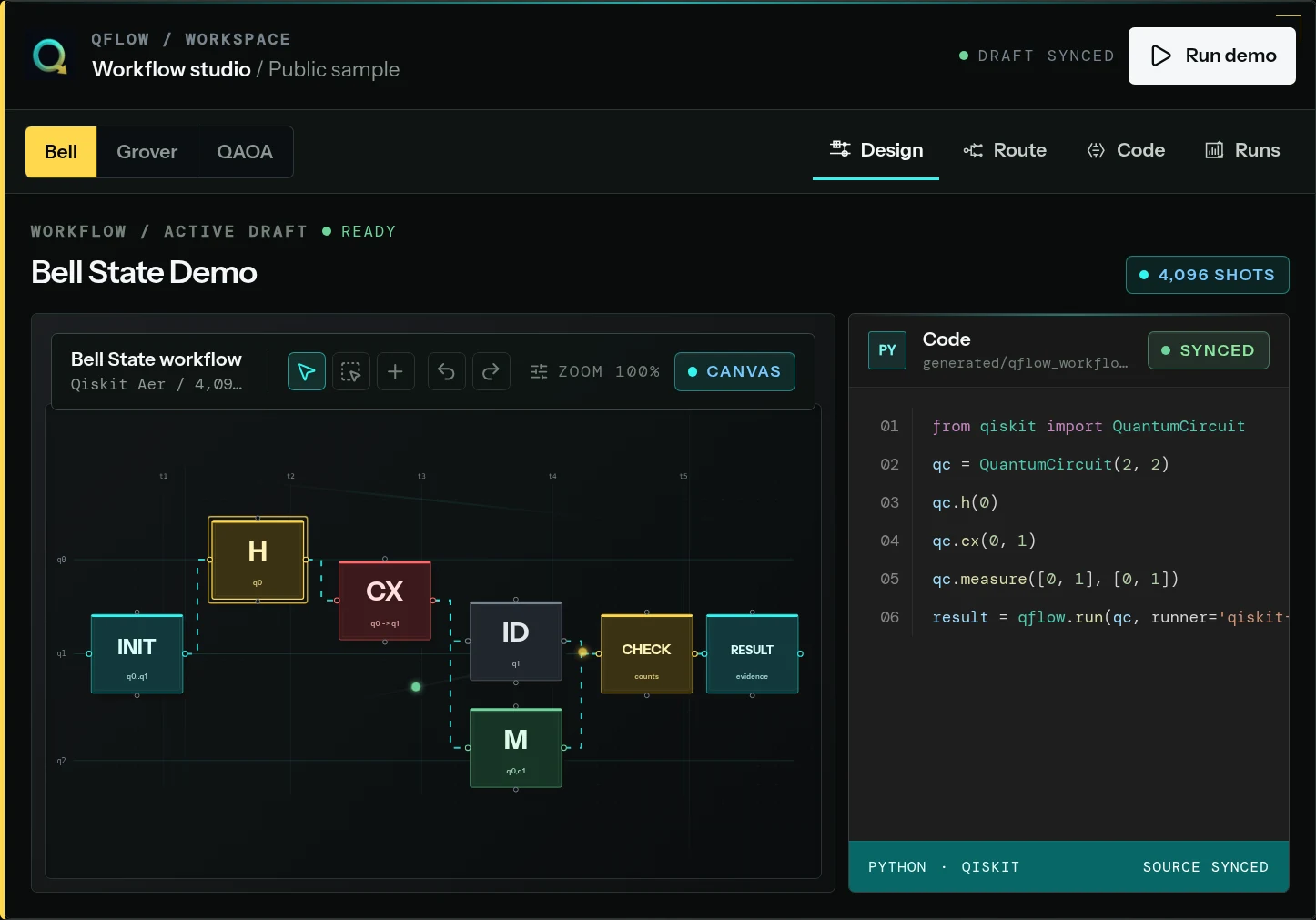
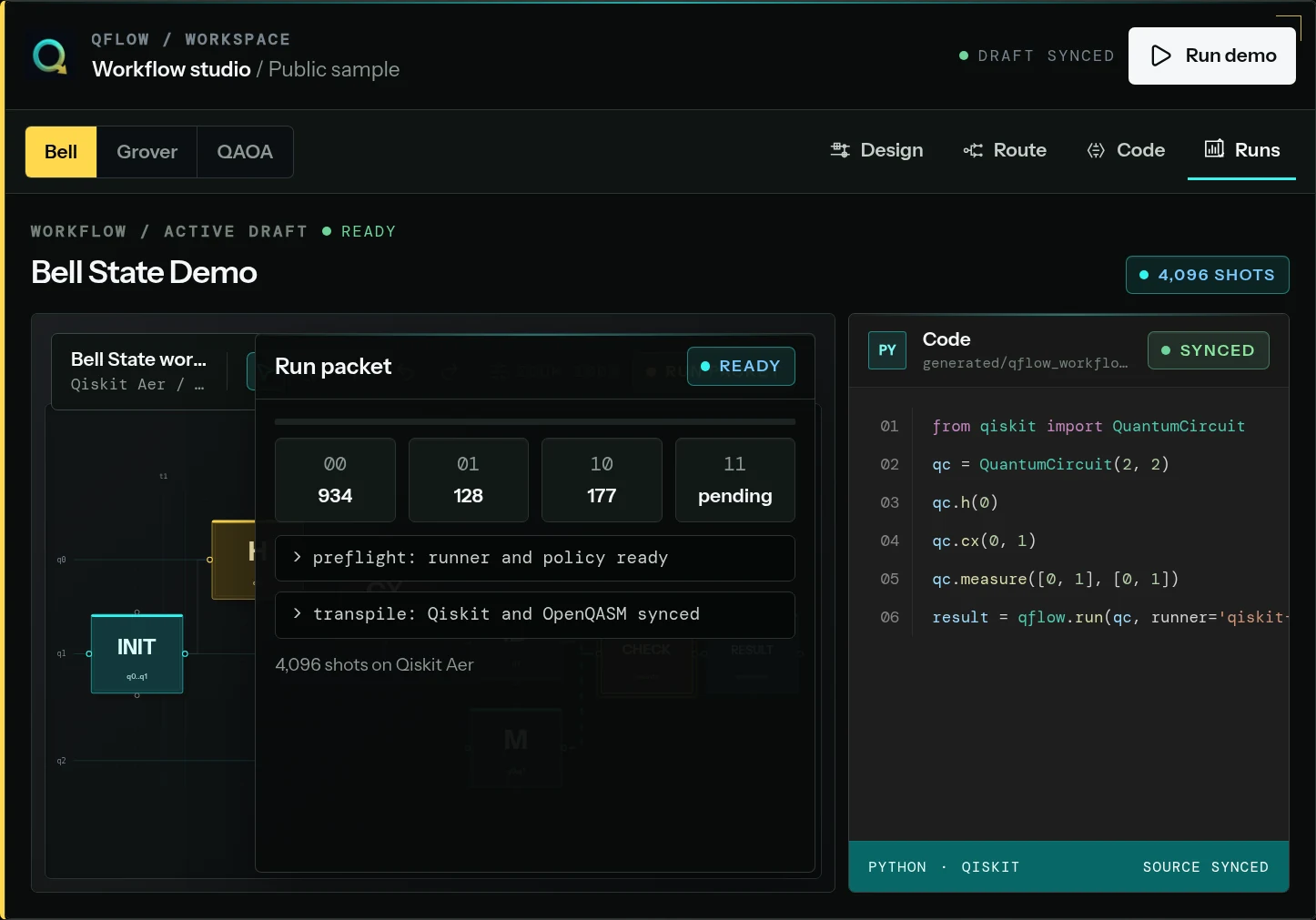
For AI-assisted or visual authoring, preserve the editable workflow and generated source together. A human reviewer should be able to see which parts were authored, generated, transformed, or executed. QFlow's public product direction is relevant here because it emphasizes editable workflows, Qiskit and OpenQASM surfaces, provider context, and evidence records; this article does not claim that every new IBM interface feature is already imported automatically.
- Pin the OpenQASM language level and all material tool versions.
- Store source before and after compilation or provider-specific transformation where available.
- Keep visual blocks, generated code, and executed source linked by stable identity.
- Record dynamic control flow and classical feedback as part of experiment logic.
Usage windows, job retrieval, and cancellation belong in experiment planning—not only account administration.
IBM's update makes the date of restored access visible when an instance reaches a rolling usage limit. Official job guidance also emphasizes saving job identifiers, checking status, retrieving results later, and cancelling work when needed. Those are operational controls with scientific and financial consequences: capacity can change sample plans, queue exposure, deadlines, and the ability to repeat a run.
A workflow should preflight access and budget, assign an owner to long-running work, define cancellation conditions, and archive job IDs before a session closes. If a run is deferred, cancelled, or cannot be repeated under comparable conditions, that state should remain in the evidence record rather than disappearing from a final success-only narrative.
The opportunity is provider-aware evidence without confusing ecosystem participation with endorsement or validated integration.
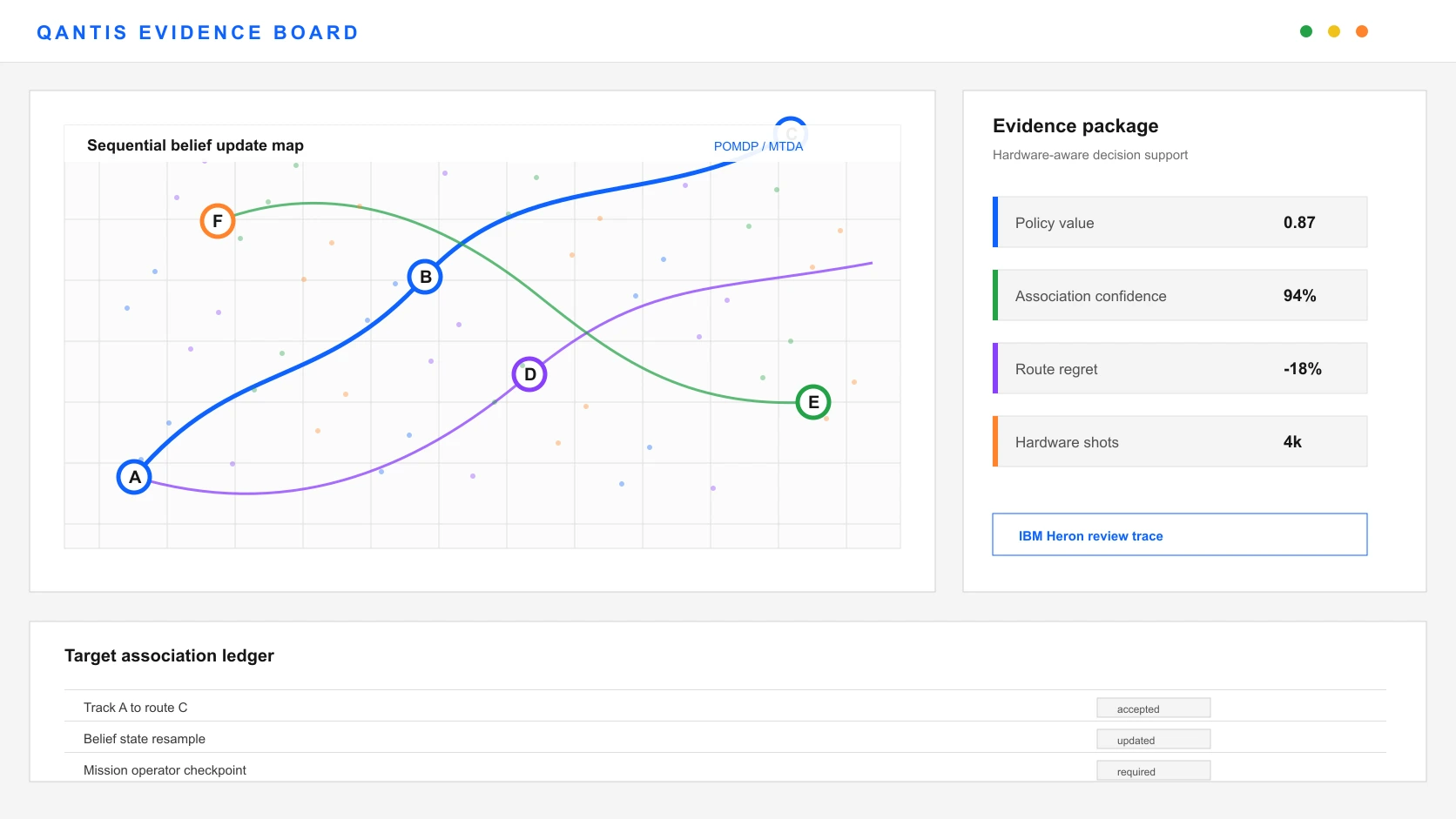
QFlow Studio can frame the surrounding workflow: question, source, baseline, route, job identity, provider context, output, interpretation, and review packet. IBM Quantum can remain the authoritative source for its job, device, and service details. A clean integration boundary references and preserves relevant provider evidence while keeping secrets, billing administration, and unsupported claims out of the exported record.
Neura Parse's IBM Partner Plus membership does not imply IBM endorsement, certified integration, validated hardware access, or privileged network access. Likewise, studying and linking the public IBM Quantum ecosystem does not prove feature parity. The defensible position is narrower and more useful: current provider observability shows what a serious multi-provider evidence model should be able to represent and review.
Practical takeaways
01
Treat IBM's August result, timing, span, and calibration views as connected workload evidence surfaces.
02
Preserve raw output and declared transformations instead of relying on screenshots or one visual interpretation.
03
Capture OpenQASM source, control flow, compiler context, and executed identity together.
04
Put capacity, retrieval, cancellation, failures, and deferred runs inside experiment planning and evidence.
05
Keep QFlow's provider-aware direction bounded from endorsement, automatic import, or certified-integration claims.
RA · Reference annexDefinitions, recurring questions, editorial method, and primary sources.Inspect
The analysis above carries the main reading flow. This reference layer keeps terminology, recurring questions, editorial method, and primary sources available without interrupting the argument.
Field questions
Program questions behind IBM Quantum's August 2026 update moves the useful interface from job submission toward workload evidence..
Q01What changed in IBM Quantum in August 2026?
The official changelog lists new Sampler result views, scheduled circuit timing, chunk and span diagnostics, calibration history links, Executor visualization, improved histograms, retrieval snippets, workload filters, OpenQASM 3 support in Composer, and clearer usage-limit recovery dates.
Q02Do these views make a quantum experiment reproducible by themselves?
No. They improve inspection of provider-side execution context. Reproducibility also needs the research question, exact source, environment, baseline, non-secret configuration, raw output, transformations, limitations, and interpretation.
Q03Why is OpenQASM 3 relevant to evidence capture?
Loops, conditional logic, gate modifiers, annotations, and dynamic behavior carry experiment meaning that a static circuit image may not preserve. The source language version and executed artifact therefore belong in the record.
Q04Does this article announce a certified IBM integration?
No. It analyzes public IBM Quantum documentation and describes a provider-aware evidence model. IBM Partner Plus membership is not IBM endorsement, validation, certification, or guaranteed platform access.
Editorial record
How IBM Quantum's August 2026 update moves the useful interface from job submission toward workload evidence. was checked.
- Editorial owner
- Neura Parse Research
- Last verified
- August 20, 2026
- Method
- Synthesis of the dated primary and official records listed below, checked against the operating question in this note.
- Scope limit
- Planning analysis—not certification, customer performance evidence, procurement advice, or a claim of production readiness.
SRSources reviewed
2 records