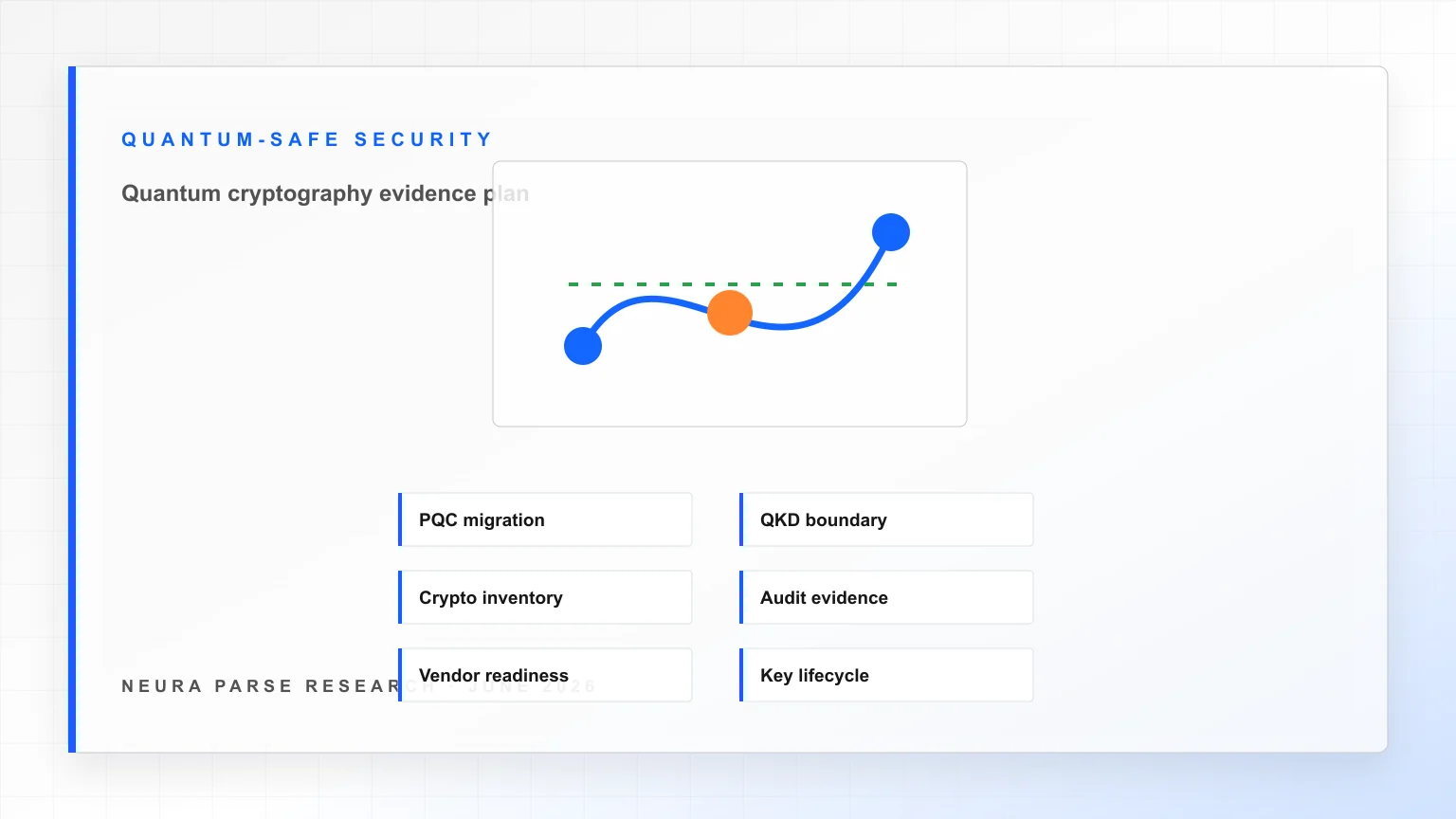
Abstract
A robot receives a signed inspection task, loses its connection and continues within its local limits. When it reconnects, the signature still verifies. But was the task cancelled? Did its permission expire? Was it already completed? The quantum age sharpens a question we should already be asking: proving where an instruction came from is only the beginning of deciding whether to act on it.
Two projects, one larger question about trust
Germany offers two useful examples of how digital identity is being reconsidered. Quant-ID researched end-to-end identity and access management using post-quantum cryptography and a quantum random number generator. Its partners included Quant-X Security & Coding, Fraunhofer IPMS, MTG and the University of Regensburg. Fraunhofer’s February 2023 announcement described a three-year project that began in September 2022.
A separate initiative brought the problem onto identity-card chips. On 10 November 2025, Bundesdruckerei and Giesecke+Devrient announced a functional demonstrator developed with the BSI and implemented on Infineon chips. It combined conventional and post-quantum cryptography. The announcement described a phased migration: first protecting identity data with a quantum-resistant signature, then moving toward a fuller transition.
These are distinct research and development efforts. A demonstrator establishes feasibility under its test conditions; it does not establish a completed nationwide rollout. Their significance is nevertheless practical: identity migration has to work inside protocols, software and constrained hardware, rather than stopping at the choice of an algorithm.
The lifetime of trust is longer than a login
An identity decision may take a fraction of a second, while the infrastructure behind it remains in service for years. Certificates, device credentials, signed software and archived records outlive the session in which they were created. Replacing them can involve suppliers, embedded hardware and systems that cannot all change on the same day.
A sufficiently capable quantum computer would threaten the mathematical assumptions behind widely used RSA and elliptic-curve public-key systems. The migration problem does not depend on predicting an exact date for that capability. It depends on understanding how long protection is needed and how long replacement will take. NIST’s current guidance calls for identifying vulnerable uses and beginning the transition.
Confidentiality and authenticity also have different timelines. Encrypted information collected today may need to remain private long into the future. Signatures raise questions about future impersonation and the evidence needed to assess an older record. Neither risk means every historical transaction suddenly becomes invalid; it means organisations need a deliberate policy for what must remain verifiable, and on what basis.
An agent needs an identity and a limit
Digital identity is often discussed through human accounts, electronic signatures and personal data. In a distributed system, the participants also include services, devices and AI agents acting on someone else’s behalf. A robot may request a handoff from another robot; an agent may retrieve a record or propose an action across an organisational boundary.
That gives us several different questions. Authentication asks which credential a participant controls and whether we trust its binding to an identity. Authorisation asks whether that identity may perform this particular action. Delegation asks who granted that permission, for whose benefit, within which limits. Accountability asks what evidence connects the request, the decision and the outcome.
A valid signature helps authenticate the signed data under a key. The system still needs a trustworthy link between that key and an actor, an applicable policy and a fresh decision about authority. A genuine device can be misconfigured; a legitimate agent can exceed its remit; a correctly signed instruction can arrive too late.
When the connection returns, permission may have changed
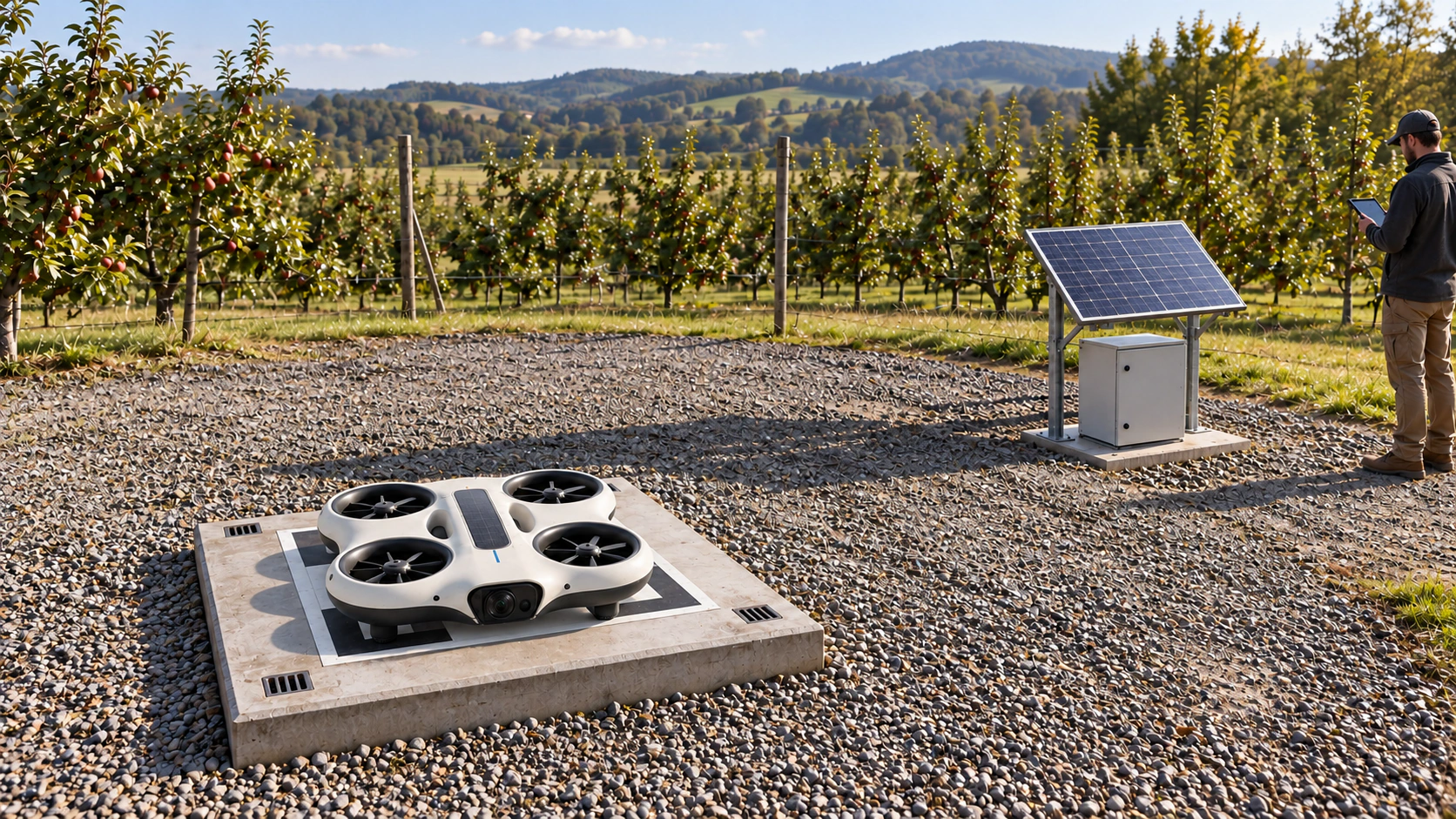
Consider a hypothetical inspection robot authorised to observe one area and return. During a network interruption, it follows an approved local policy. Meanwhile, an operator cancels the task, or the issuing credential is revoked. The robot cannot learn that update immediately. No signature algorithm can deliver information across a connection that is absent.
An engineering response begins before the outage. Define a limited offline authority window, the allowed actions, the evidence the device must retain and the conditions that require a pause or a safe fallback. Where expiry matters, the design also needs a defensible time source or another bounded freshness mechanism. A timestamp written by an untrusted device does not create trusted time.
After reconnection, checking a signature is one part of recovery. The system should reconcile the task version, cancellation and revocation information, the device’s retained history and any uncertain outcomes. An acknowledgement that was lost must not turn a completed physical action into a command that is blindly repeated. Where the evidence remains incomplete, retain the uncertainty and escalate for human judgement.
This is our architectural interpretation of the wider identity problem, not a reported result from Quant-ID or the German identity-card demonstrator. It also explains why robot safety cannot depend solely on a remote identity service: independently assured device-local protections must remain authoritative.
Stronger primitives have different jobs
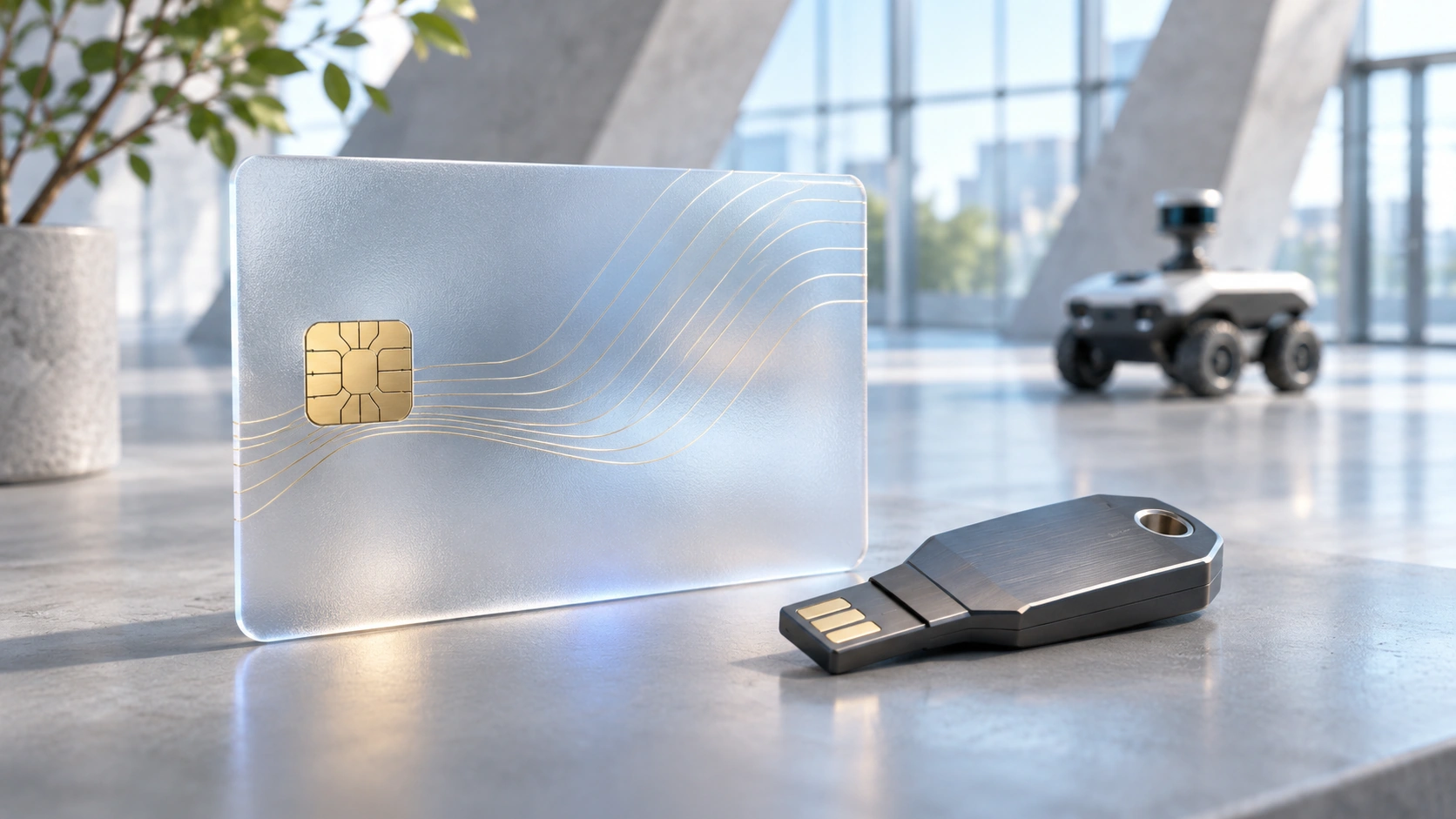
NIST’s first three final PQC standards, published in August 2024, separate key establishment from signatures. ML-KEM, defined in FIPS 203, lets parties establish a shared secret for use with symmetric cryptography. It is not, by itself, proof of an identity. ML-DSA in FIPS 204 and SLH-DSA in FIPS 205 provide digital signature mechanisms.
These algorithms run on classical computers. Adopting post-quantum cryptography does not require buying a quantum processor. Quantum random number generation, one of Quant-ID’s research elements, concerns the source of randomness; it is not a general requirement for implementing PQC. Quantum key distribution is another distinct subject and should not be used as a synonym for post-quantum cryptography.
The implementation still has to protect keys, reject malformed inputs and resist relevant physical and software attacks. Protocol integration, certificate formats, secure hardware support and interoperability matter. A hybrid design that combines traditional and PQC mechanisms needs an explicit composition and acceptance policy, including downgrade handling; adding two algorithm names does not establish the security of the whole system.
Design the credential’s whole life
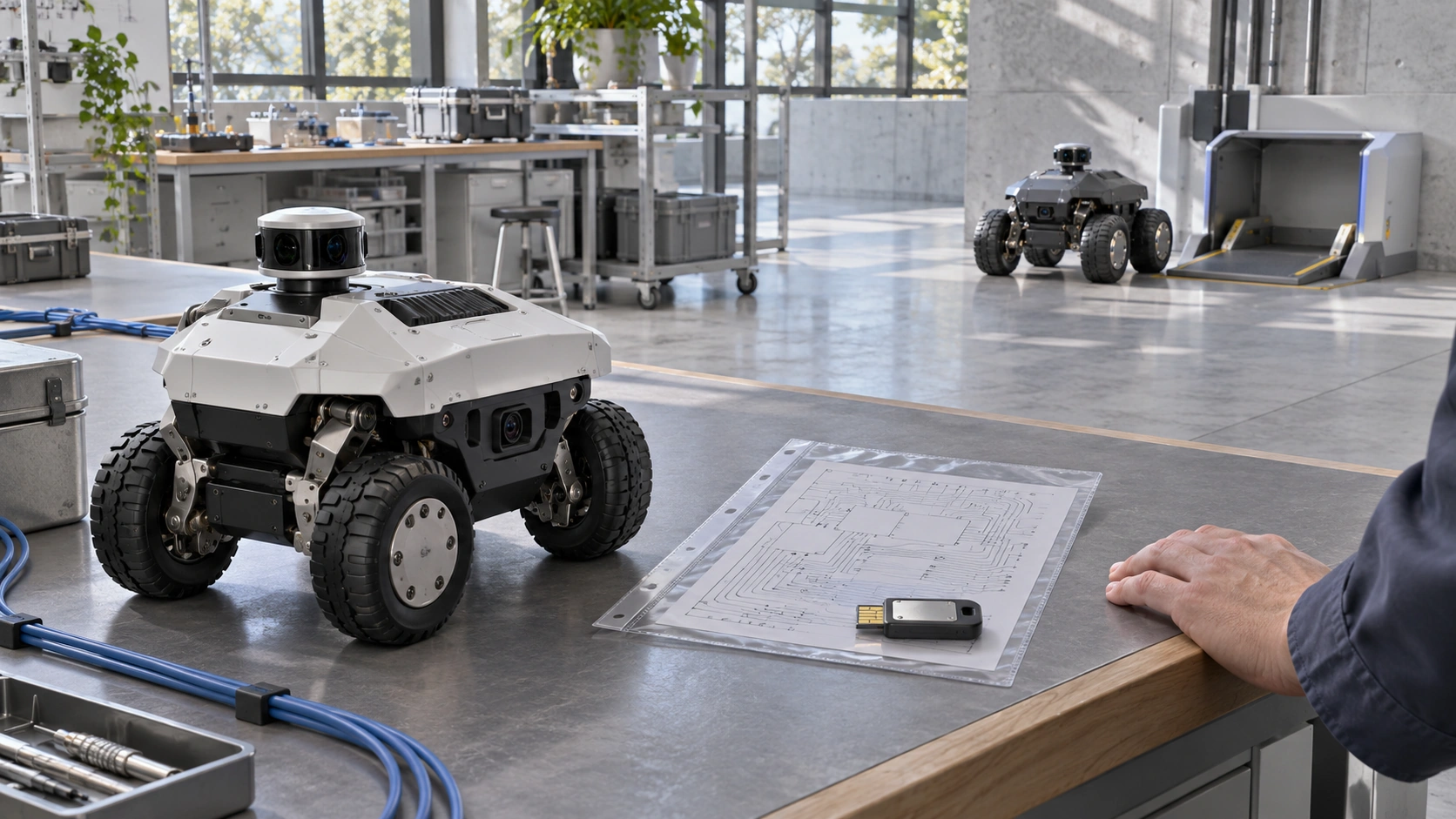
For an AI agent, it should be possible to distinguish the software’s identity, its current workload and the person or organisation whose authority it carries. For a robot, the device credential should not silently inherit permission for every mission. Changes to software, operators or task scope need to remain visible in the authorisation model.
Key management connects these decisions over time. Who issues a credential? Where is its private key protected? How is it rotated or recovered? What happens when a device is retired, an operator leaves or a supplier stops supporting an algorithm? These are design questions that a migration programme should answer with named owners and testable procedures.
Long-lived evidence needs similar care. Preserve the signed content and the context required to evaluate it: applicable policy, credential chain and relevant validation information. Where appropriate, use independently trustworthy time and a governed archival renewal process. A hash chain can help expose changes relative to a trusted checkpoint, but cannot make a false observation true or prove its own history independently.
Begin with one dependency you can trace
A useful first exercise is to trace one consequential action from the human owner to the agent, service and device that may carry it out. Record the keys, certificates, protocols, libraries, suppliers and update mechanisms on that path. Include secure boot and software updates where they form part of the device’s trust chain.
Then ask what must stay confidential or verifiable, how long each component will remain in service and who can replace it. Test candidate changes in a bounded environment. Measure message size, verification time, memory, power where relevant and recovery under interrupted connectivity on the intended target. A result on a developer laptop is not a performance result for an identity chip or robot controller.
Crypto agility should make future changes manageable without silently weakening policy. Keep supported algorithms and protocol versions explicit, exercise rollback and downgrade rejection, and define the evidence required before expanding a pilot. The first useful deliverable is a reliable inventory and an owned test plan, not a blanket “quantum-safe” label.
Start today with one quantum experiment
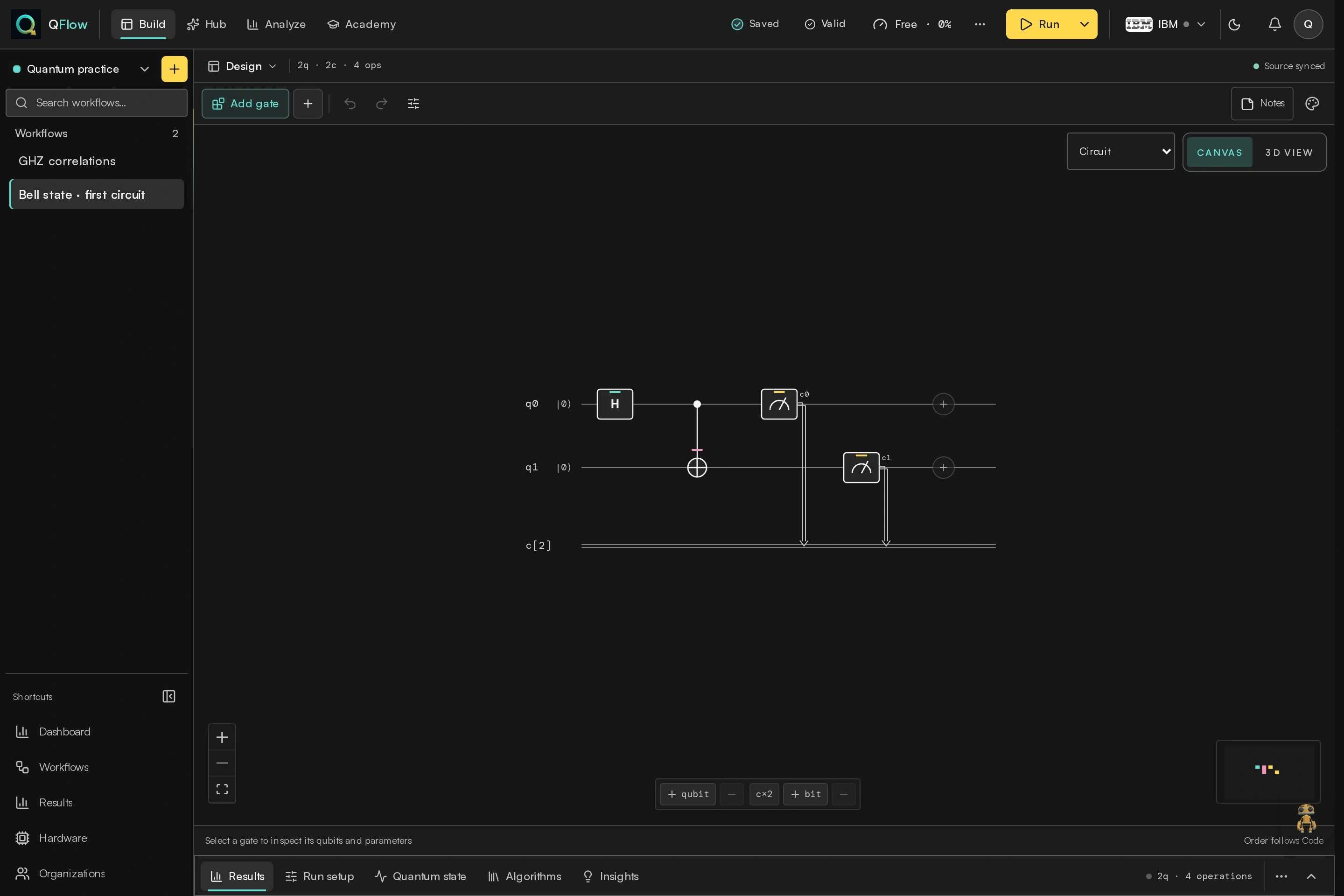
Understanding why quantum computing changes the security conversation is a useful step for engineers, product teams and decision-makers. QFlow Studio offers an approachable way to begin: open its public Bell-circuit example, inspect the H and CX gates and compare the ideal readouts after one small change. The example runs locally; it does not require a quantum-hardware connection.
Make a prediction before changing the circuit. Look at the resulting distribution, then connect the visual operations to the code. For a structured next step, follow the learning guide or review generated Qiskit, Cirq and OpenQASM output in QFlow’s documentation. Studio access and optional provider execution follow account settings, credentials and the current provider-status matrix.
This is a learning path, not a PQC security test. A Bell circuit does not demonstrate an attack on RSA, validate an identity system or establish quantum advantage. It gives a team a concrete way to discuss quantum operations and evidence while a separate engineering track assesses its cryptographic dependencies.
Keep the conversation connected to real systems
The same questions appear in the robotics community. CRANE’s Safe and Secure Robotics SIG programme listed Network Degradation and Mission Continuity by Neura Parse founder Bayram Yüksel Eker for 13 November 2026. Its announced scope concerned uncertain mission state and recovery. That date has passed; our announcement remains available as context for the research question.
At the time of writing, the organiser also lists Trust me, I’m a Robot by Professor Steven Furnell for 20 November 2026, 13:00–14:00 UK time. It is a related discussion about robotics and cybersecurity, rather than a PQC workshop. Use CRANE’s official programme for the current schedule and joining information.
For Neura Parse, this connects the NODERIQ mission-intelligence product with a separate NODERIQ-RCN research direction on resilient coordination. It does not announce a PQC identity integration, a partnership with the German projects or completed physical field validation. Those would require their own implementation and evidence.
Build trust before you need to depend on it
The German research is a reminder that preparing for the quantum age involves the whole identity system. The underlying mathematics matters, and so do the people, policies, devices and recovery procedures that give a credential its meaning.
As more decisions pass between people, agents and autonomous machines, we will need to explain more than what a system is capable of. We will need to show where its authority came from, when that authority ended and how its actions can be examined afterwards. Starting now means making those relationships explicit, one bounded workflow at a time.
Practical takeaways
01
Treat identity, scoped authority, key lifecycle and recoverable evidence as one architecture.
02
Define offline limits and reconciliation before trusting an action after reconnection.
03
Use standardised PQC primitives in a tested protocol; keep prototype evidence distinct from deployment.
04
Develop quantum literacy with QFlow while running a separate, owned cryptographic migration programme.
RA · Reference annexDefinitions, recurring questions, editorial method, and primary sources.Inspect
The analysis above carries the main reading flow. This reference layer keeps terminology, recurring questions, editorial method, and primary sources available without interrupting the argument.
Field questions
Program questions behind How will we verify identity in the quantum age?.
Q01Does post-quantum cryptography require a quantum computer?
No. PQC algorithms run on classical computers and are designed to resist attacks by sufficiently capable quantum computers. Quantum random number generation and quantum key distribution are distinct technologies.
Q02Can a valid signature prove a robot is still authorised to act?
It is only one input. The system also needs a trusted identity binding, a current policy decision, appropriate freshness and revocation handling, and reconciliation of completed or uncertain actions after an outage.
Q03Is QFlow Studio a post-quantum identity product?
QFlow is a visual quantum workflow and learning product. Its public circuit is a starting point for quantum literacy, not an identity service, a PQC certificate authority or a security certification test.
Editorial record
How How will we verify identity in the quantum age? was checked.
- Editorial owner
- Neura Parse Research
- Last verified
- November 16, 2026
- Method
- Synthesis of the dated primary and official records listed below, checked against the operating question in this note.
- Scope limit
- Planning analysis—not certification, customer performance evidence, procurement advice, or a claim of production readiness.
SRSources reviewed
10 records