Abstract
Companies want AI systems that act, but they also want to know who authorized the action, which data was used, which policy applied, and how containment works.
Governance is the product requirement.
AWS AgentCore policy controls and gateway execution, OpenAI's agents tooling, and enterprise privacy expectations point toward the same operating model. Companies want systems that act, but they need to know who authorized the action, which data was used, which policy applied, and how a bad output can be contained.
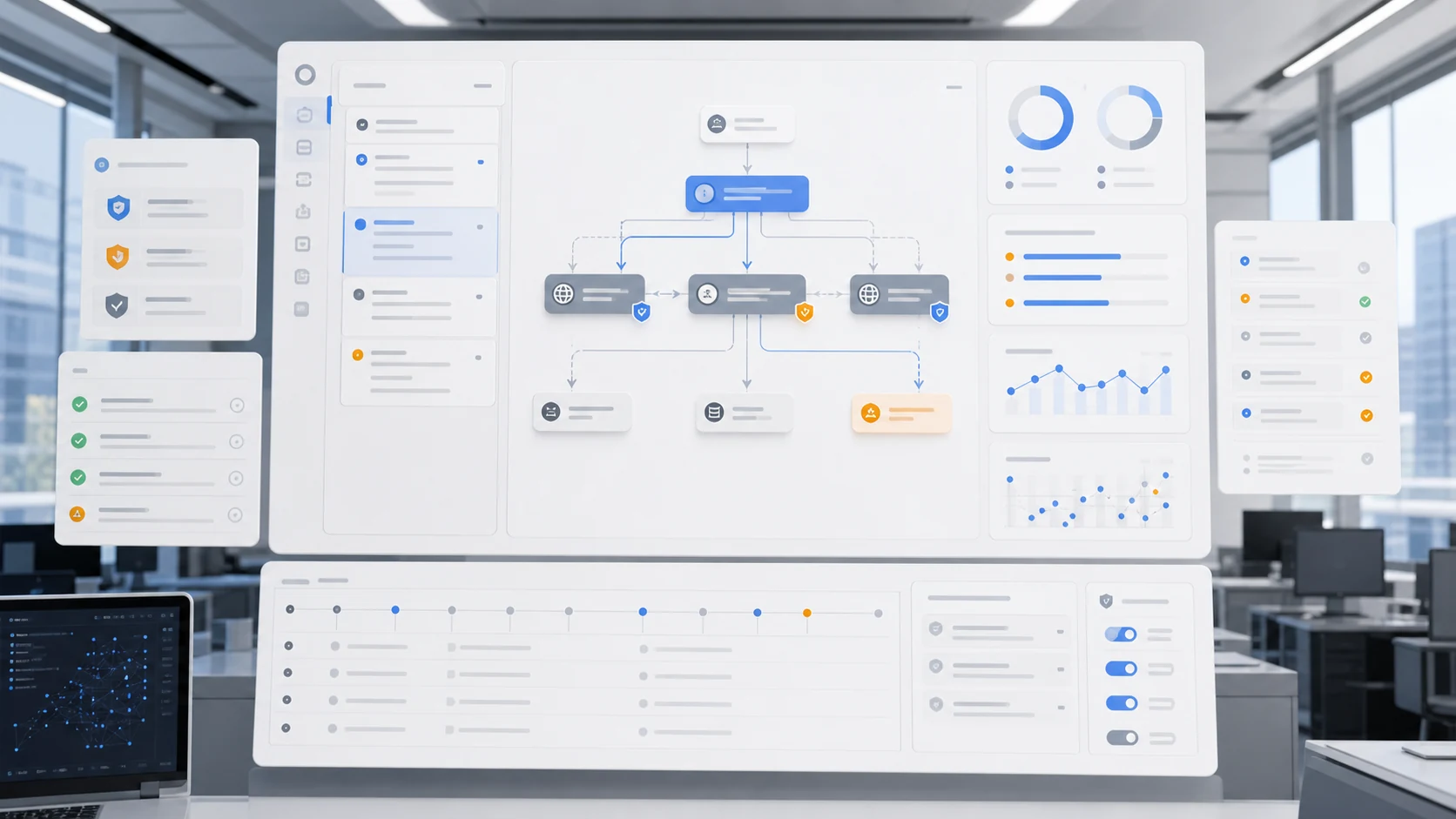
During strategy work, teams should map high-risk workflows, approval boundaries, sensitive data paths, and operator responsibilities. During implementation, those rules become product affordances: approval queues, execution logs, source panels, policy labels, incident views, and release gates.
TD · Technical depth5 supporting chapters and the working checklist.Read deeper
Different reviewers need different evidence surfaces.
Executives need risk posture. Operators need current state. Engineers need traces. Legal and security teams need evidence. The same system should support all of them without turning into a spreadsheet.
A common event and evidence model is what keeps those views consistent. The executive summary can aggregate policy exceptions and unresolved risk, while the operator view exposes the live queue and the engineering view opens the underlying trace. Each surface answers a different question, but all of them point back to the same action identity, source set, policy state, reviewer, and release.
Governance fails in predictable ways.
The most common failure is not missing policy. It is policy that exists on paper and nowhere in the product. A documented approval boundary that no queue enforces is a finding waiting for an audit. The gap between the written rule and the enforced rule widens with every release.
The second failure is evidence collapse. Teams route every question, executive risk posture, operator state, engineer traces, and legal evidence into one export, and the export serves nobody. The rule stands: the same system should support all four audiences without turning into a spreadsheet.
The third failure is the orphaned action. An agent acts, the output is wrong, and no record states who authorized it, which data fed it, or which policy applied. Containment then becomes forensic reconstruction instead of a control path.
- Paper policy: rules documented but never enforced as product affordances.
- Evidence collapse: one export expected to serve executives, operators, engineers, and legal at once.
- Orphaned actions: outputs with no owner, source trail, or policy state.
- Bolt-on audit: logging added after deployment that cannot reconstruct authorization.
- Approval fatigue: queues that gate everything equally and get rubber-stamped.
Evaluate platforms on evidence paths, not demos.
A demo shows the happy path. A governance review asks the four questions against a specific failed action: who authorized it, which data was used, which policy applied, and how the bad output was contained. If the vendor cannot answer from the product's own records, the governance layer is a roadmap item, not a feature.
Check for affordances, not statements. Approval queues, execution logs, source panels, policy labels, incident views, and release gates either exist in the interface or they do not. The AWS AgentCore policy release and OpenAI's Responses API updates show the platform layer moving these controls into the product itself, which raises the baseline for every vendor building above it.
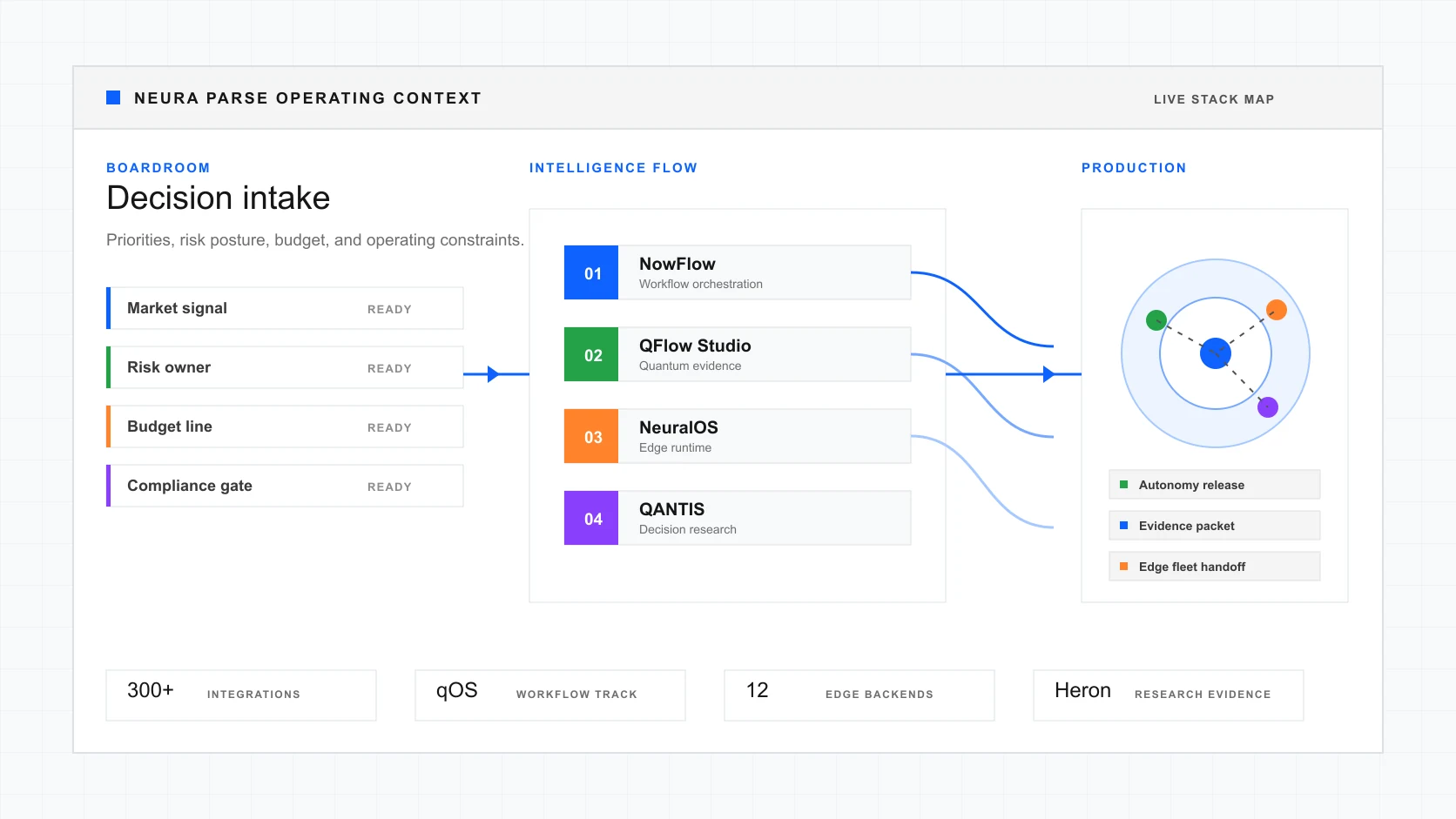
Ask which audience each surface serves. A platform that only produces engineer traces forces the program to build executive reporting and legal evidence export as custom work. Neura Parse holds NowFlow to the same standard: an agentic workflow platform with human-in-the-loop approval routing through in-app flows, email, Slack, or Discord, so the approval boundary is a native affordance rather than an integration project.
- Who authorized this action, and can the product show it?
- Which data fed this output, and is the source trail attached to the record?
- Which policy applied at execution time, and where is it labeled?
- How is a bad output contained, and who owns the review path?
Governance affordances become the procurement baseline.
The sources point one direction. AWS moved AgentCore policy controls to general availability and put tool execution behind a gateway. OpenAI extended the Responses API toward controlled computer environments. When the platform layer ships policy and execution controls as defaults, the differentiator moves up the stack to how well a product turns those controls into evidence.
For program leads this changes the buying question. Model quality becomes an assumption; the evaluation becomes the audit trail, the approval boundary, and the per-audience evidence surfaces. Programs that mapped policy before building will pass those evaluations with artifacts they already produce.
The practical move for the next planning cycle is to treat governance affordances as acceptance criteria. Write approval queues, execution logs, source panels, policy labels, incident views, and release gates into requirements. A system that cannot show who authorized an action, which data was used, and which policy applied will not clear enterprise review, whatever its benchmark scores say.
Operational checklist
Program checklist: making governance native
Derived from the article's takeaways and sections. Work the list in order; the first three items shape everything after them.
- 01
Map high-risk workflows, approval boundaries, sensitive data paths, and operator responsibilities before building the agent.
- 02
Assign every AI-initiated action an owner, a source trail, a policy state, and a review path.
- 03
Convert each written policy rule into a product affordance: an approval queue, execution log, source panel, policy label, incident view, or release gate.
- 04
Instrument identity and authorization at execution time; do not reconstruct them from configuration after an incident.
- 05
Define the containment path for a bad output: who stops it, how it is rolled back, and where the incident is recorded.
- 06
Build separate evidence surfaces: risk posture for executives, current state for operators, traces for engineers, exportable evidence for legal and security.
- 07
Gate releases on governance readiness, not only on model quality.
- 08
Test vendors against a failed action: require the product's own records to show who authorized it, which data fed it, and which policy applied.
- 09
Track governance UI as an adoption metric, not as compliance overhead.
Practical takeaways
01
Map policy before building the agent, not after deployment.
02
Give each action an owner, source trail, policy state, and review path.
03
Separate executive reporting from operator traces and engineer debugging.
04
Treat governance UI as a trust feature that improves adoption.
RA · Reference annexDefinitions, recurring questions, editorial method, and primary sources.Inspect
The analysis above carries the main reading flow. This reference layer keeps terminology, recurring questions, editorial method, and primary sources available without interrupting the argument.
Terminology
Terms behind Enterprise AI operations: governance, observability, and accountable ownership..
- Observability
- The ability to determine what a system did and why from the records it produces, such as logs, traces, and event histories, without instrumenting it after the fact.
- Audit trail
- A chronological record that ties each action to its actor, the data it used, the policy that applied, and its outcome, in a form reviewers can inspect later.
- Policy controls
- Rules enforced at execution time that constrain what an AI system may do, which data it may touch, and which actions require approval.
- Approval boundary
- A defined point in a workflow where execution pauses until an authorized human reviews and approves the action.
- Human-in-the-loop
- A design pattern in which a human must review, approve, or take over specified actions before an automated system proceeds.
- Containment
- The ability to stop, limit, or roll back a bad output through a defined control path rather than ad hoc intervention.
- Release gate
- A checkpoint that blocks a deployment until defined criteria, such as governance readiness, are met.
- Evidence surface
- A view of system records tailored to one audience: risk posture for executives, current state for operators, traces for engineers, or exportable evidence for legal and security teams.
Field questions
Program questions behind Enterprise AI operations: governance, observability, and accountable ownership..
Q01Should governance policy be defined before or after an enterprise AI agent is built?
Before. During strategy work, teams should map high-risk workflows, approval boundaries, sensitive data paths, and operator responsibilities. During implementation those rules become product affordances such as approval queues, execution logs, source panels, policy labels, incident views, and release gates. Retrofitting them after deployment means the audit trail cannot reconstruct actions that already happened.
Q02What record should every AI-initiated action carry in an enterprise system?
Four things: an owner, a source trail, a policy state, and a review path. Together they answer who authorized the action, which data was used, which policy applied, and how a bad output can be contained. Without them, containment becomes forensic reconstruction instead of a control path.
Q03Why do executives, operators, engineers, and legal teams need different views of the same AI system?
Each audience reviews different evidence. Executives need risk posture, operators need current state, engineers need traces, and legal and security teams need evidence they can export. One system should serve all four without turning into a spreadsheet; a single undifferentiated export serves nobody.
Q04Does adding governance UI slow down enterprise AI adoption?
The evidence points the other way. Policy is the adoption gate: companies want systems that act, but they will not deploy them without knowing who authorized the action, which data was used, which policy applied, and how a bad output is contained. Governance UI is a trust feature that clears that gate, so it improves adoption rather than blocking it.
Q05What evidence is there that platform vendors are making AI governance native rather than bolted on?
Three signals from early 2026 point the same direction: AWS AgentCore policy controls reaching general availability, AWS AgentCore Gateway moving tool execution server-side, and OpenAI extending the Responses API toward computer environments. All three put policy and execution controls into the platform layer itself instead of leaving them to integrators. That raises the governance baseline for every product built above them.
Q06How does Neura Parse apply this operating model in its own stack?
NowFlow, the agentic workflow platform, ships human-in-the-loop approval routing through in-app flows, email, Slack, or Discord, with AI, Human, and Hybrid agent profiles, so approval boundaries are native affordances rather than integration projects. Neura Parse also offers safety and governance advisory work that maps policy, approval boundaries, and evidence paths before implementation begins.
Editorial record
How Enterprise AI operations: governance, observability, and accountable ownership. was checked.
- Editorial owner
- Neura Parse Research
- Last verified
- July 12, 2026
- Method
- Synthesis of the dated primary and official records listed below, checked against the operating question in this note.
- Scope limit
- Planning analysis—not certification, customer performance evidence, procurement advice, or a claim of production readiness.
SRSources reviewed
3 records