
Abstract
Telecom teams should not treat QKD, PQC, RAN automation, and edge runtime as separate slide decks. The practical work is a network evidence model covering assets, protocols, vendors, rollout windows, and operator authority.
Gap map
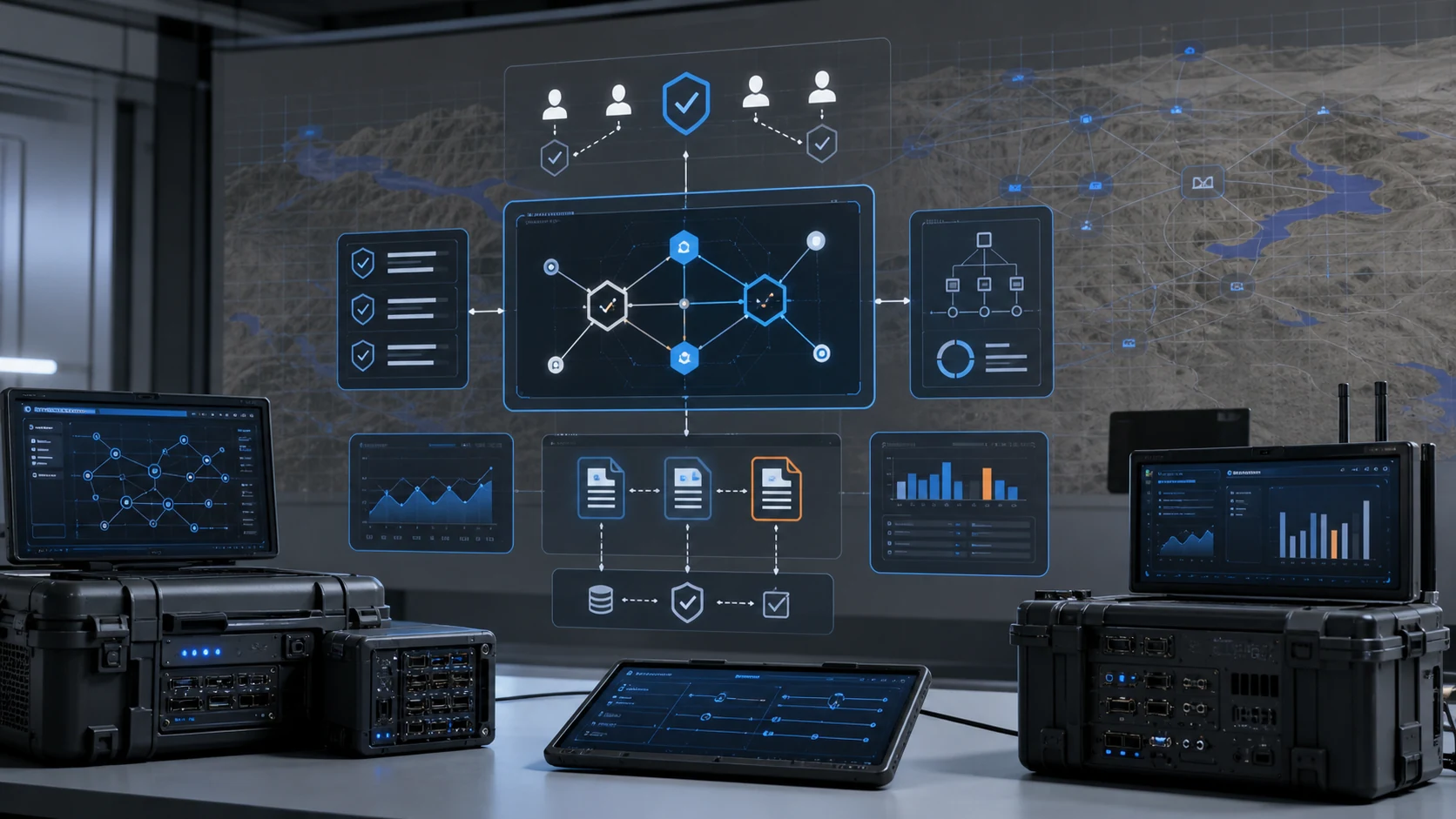
Quantum telecom evidence map
The plan connects cryptographic migration, quantum communication assessment, AI-native operations, and edge rollout.
Security
- Crypto inventory
- PQC pilots
- Certificate paths
- Vendor evidence
Network
- Core and transport
- RAN/O-RAN
- Edge sites
- Telemetry and rollback
Quantum links
- QKD fit
- EuroQCI context
- Physical control
- Cost and geography
Telecom quantum readiness is not one technology.
The EU PQC roadmap and EuroQCI keep two related but distinct tracks visible: software cryptography migration and quantum communication infrastructure. GSMA guidance makes the telecom migration concrete across products, devices, protocols, and long-lived systems.
At the same time, 3GPP Release 20 and O-RAN Release 5 show the network becoming more AI-native and workflow-heavy. That matters because quantum-safe changes will land inside operational networks that already need approval, rollout, observability, and rollback discipline.
TD · Technical depth5 supporting chapters and the working checklist.Read deeper
Put PQC and QKD into the same review surface, not the same bucket.
PQC is the general migration path for telecom software, firmware, protocols, certificates, and partner interfaces. QKD is a specialized infrastructure option where link control, geography, hardware, and compliance value can justify the cost.
A responsible telecom service should evaluate both without overclaiming either. The work is to map assets, rank risk, assess vendor readiness, run pilots, and preserve enough evidence for security, network, procurement, and regulatory reviewers.
- Use NowFlow for owner assignment, vendor requests, approvals, pilot state, and exception handling.
- Use an edge runtime such as NeuraOS where sites or devices need signed updates, local policy, and telemetry health.
- Use QFlow only when quantum communication or quantum workflow evidence is part of the customer problem.
- Keep QKD language constrained to infrastructure assessment, not internet-scale replacement claims.
Start with high-risk links and hard-to-update systems.
Telecom estates include core systems, RAN infrastructure, transport equipment, SIM/eSIM paths, customer-premise devices, OSS/BSS platforms, cloud services, and partner APIs. A good first engagement picks the systems where data lifetime, vendor dependency, and replacement cost create future liability.
The first artifact should be a network quantum-readiness register: asset, protocol, crypto use, owner, vendor status, QKD relevance, pilot path, rollback, and evidence state.
One deadline, weak rollback, and retroactive evidence derail rollout.
The most common failure is collapsing the transition into one project with one deadline. PQC migration, QKD assessment, and AI-native network change run on different clocks, different budgets, and different reviewers. A single combined milestone tends to stall the broad crypto work while inflating the quantum link story. Keep the tracks distinct in planning and join them only at the review surface.
The second failure is migration without rollback. Quantum-safe changes land inside operational networks that already need approval, rollout, observability, and rollback discipline. A certificate or protocol change that cannot be reversed under load is not a migration step; it is a pending incident. Every register entry should record a rollback path before its pilot starts.
The third failure is evidence produced after the fact. A register reconstructed for an audit will not match pilot state, vendor status, or exception history, and reviewers notice. Evidence state is a field in the register from the first entry, not a document written at the end.
- One deadline covering both the PQC and QKD tracks.
- Certificate or protocol changes without a tested rollback path.
- Vendor claims recorded without supporting evidence or a request date.
- QKD framed as an internet-scale replacement rather than a link-level option.
- Registers reconstructed for audits instead of maintained during pilots.
Vendor evidence is a state, not a milestone.
Telecom estates carry deep vendor dependency across RAN equipment, transport gear, SIM and eSIM paths, OSS/BSS platforms, cloud services, and partner APIs. Each dependency is a migration item the operator does not fully control. That makes vendor readiness a first-class column in the register, not an appendix.
The workable pattern is structured requests rather than one-time questionnaires. Ask each vendor for cryptographic status per product and protocol, a migration position, and pilot support terms, using the telecom-focused GSMA PQC publications as shared vocabulary. Record the response, the date, and the gap against the corresponding register entry.
Vendor status changes with firmware releases and roadmap slips, so treat it like telemetry: it decays unless refreshed. This is workflow load, and it is where NowFlow fits, carrying owner assignment, vendor requests, approvals, and exception handling so the register does not become an unowned spreadsheet.
Instrument the evidence surface before the first change.
Observability order matters as much as migration order. Before the first pilot touches a certificate path, the program should be able to see what crypto each asset uses, which protocol versions are live, and whether rollback is ready per site. The evidence map already names the lanes: crypto inventory, certificate paths, telemetry and rollback.
Edge sites are the hard case. Devices that need signed updates, local policy, and telemetry health reporting cannot be migrated blind, and they are often the hardest systems to update after the fact. This is where NeuraOS messaging fits in the operating model.
Pilot state itself is data. Approval, rollout window, observed behavior, and exception outcomes belong in the same review surface that security, network, procurement, and regulatory reviewers use. If instrumentation lands after the pilots, the evidence model has already failed its first test.
- Crypto use per asset and protocol, recorded before any change.
- Certificate paths and their owners across core, transport, and edge.
- Rollback readiness per site, tested rather than assumed.
- Pilot state: approval, rollout window, observed behavior, exceptions.
- Vendor evidence freshness tracked alongside network telemetry.
Operational checklist
Program checklist: quantum telecom readiness
Derived from the article's takeaways and operating model. The register is the anchor; every other item attaches to it.
- 01
Build a network quantum-readiness register with one record per asset: protocol, crypto use, owner, vendor status, QKD relevance, pilot path, rollback, and evidence state.
- 02
Inventory cryptography across core systems, RAN, transport, SIM and eSIM paths, customer-premise devices, OSS/BSS, cloud services, and partner APIs.
- 03
Rank assets by data lifetime, vendor dependency, and replacement cost, then start pilots on high-risk links and hard-to-update systems.
- 04
Keep PQC and QKD on the same review surface with separate decision criteria: PQC as the broad migration path, QKD as a link-level infrastructure assessment.
- 05
Request vendor readiness evidence for every externally dependent asset and record the response, the date, and the gap in the register.
- 06
Align migration windows with 3GPP Release 20 and O-RAN Release 5 work so crypto changes ride existing approval, observability, and rollback discipline.
- 07
Assign an owner, an approval path, and an exception path to every migration item; NowFlow can carry this workflow state.
- 08
Test rollback per site before any certificate or protocol change ships, and record readiness in the register.
- 09
Constrain QKD claims to infrastructure assessment and preserve evidence for security, network, procurement, and regulatory reviewers as pilots run.
Practical takeaways
01
Quantum telecom requires both PQC migration and constrained QKD assessment.
02
PQC is broad software migration; QKD is specialized infrastructure analysis.
03
Network teams need evidence surfaces that include vendors, rollout, and rollback.
04
NowFlow and NeuraOS make the topic operational rather than purely advisory.
RA · Reference annexDefinitions, recurring questions, editorial method, and primary sources.Inspect
The analysis above carries the main reading flow. This reference layer keeps terminology, recurring questions, editorial method, and primary sources available without interrupting the argument.
Terminology
Terms behind Quantum-ready telecom: one plan for PQC, QKD, and network rollout..
- PQC (post-quantum cryptography)
- Cryptographic algorithms that run on classical computers but are designed to resist attack by future quantum computers. In telecom, PQC is the broad migration path covering software, firmware, protocols, certificates, and partner interfaces.
- QKD (quantum key distribution)
- A hardware-based technique that uses quantum physics on dedicated links to distribute encryption keys. In this plan it is a specialized infrastructure option justified by link control, geography, hardware, and compliance value, not a general replacement for PQC.
- EuroQCI
- The European Commission programme for terrestrial and space-based quantum communication infrastructure. It keeps quantum communication visible as a track distinct from software cryptography migration.
- 3GPP Release 20
- The mobile standards release that keeps 5G-Advanced work moving while starting formal 6G studies, with architecture milestones in June 2026. It signals a more AI-native, workflow-heavy network.
- O-RAN Release 5
- The O-RAN Alliance specification release completed in June 2026. It covers AI/ML workflow services, RIC coordination, O-Cloud lifecycle management, TLS 1.3, Zero Trust, and AI/ML security controls.
- OSS/BSS
- Operations support systems and business support systems, the platforms an operator uses to run the network and its commercial processes. They are long-lived and integration-heavy, which makes them priority entries in a quantum-readiness register.
- Network quantum-readiness register
- The first artifact of a readiness engagement: one record per asset covering protocol, crypto use, owner, vendor status, QKD relevance, pilot path, rollback, and evidence state.
- RAN (radio access network)
- The part of a mobile network that connects devices over radio. 3GPP and O-RAN releases are making RAN operations increasingly AI-driven, which changes how crypto migrations must be rolled out and observed.
Field questions
Program questions behind Quantum-ready telecom: one plan for PQC, QKD, and network rollout..
Q01Should our program start with PQC migration or a QKD deployment?
Start with PQC. It is the general migration path for telecom software, firmware, protocols, certificates, and partner interfaces, and GSMA guidance makes that work concrete across products, devices, and long-lived systems. Treat QKD as a specialized infrastructure option to assess where link control, geography, hardware, and compliance value can justify the cost. Both belong on the same review surface, but they are not the same decision.
Q02Which telecom systems should a quantum-readiness engagement cover first?
Pick systems where data lifetime, vendor dependency, and replacement cost create future liability, which usually means high-risk links and hard-to-update systems. The estate to score includes core systems, RAN infrastructure, transport equipment, SIM and eSIM paths, customer-premise devices, OSS/BSS platforms, cloud services, and partner APIs. The first engagement does not need to touch all of them; it needs to rank them.
Q03What should a network quantum-readiness register actually contain?
One record per asset with nine fields: asset, protocol, crypto use, owner, vendor status, QKD relevance, pilot path, rollback, and evidence state. It is the first artifact a readiness engagement should produce, and it becomes the shared surface for security, network, procurement, and regulatory reviewers. It should be maintained during pilots, not reconstructed for audits.
Q04Why do 3GPP Release 20 and O-RAN Release 5 matter for a cryptography migration?
They define the network the migration lands in. Release 20 keeps 5G-Advanced moving while starting formal 6G study work, and O-RAN Release 5 adds AI/ML workflow services, RIC coordination, O-Cloud lifecycle management, TLS 1.3, Zero Trust, and AI/ML security controls. Quantum-safe changes will ship inside networks that already require approval, rollout, observability, and rollback discipline, so migration plans should align with those release windows rather than run beside them.
Q05Where does EuroQCI fit in an operator's quantum plan?
EuroQCI is the European Commission programme for terrestrial and space-based quantum communication infrastructure. For an operator it is context for QKD fit assessment: it signals sustained public investment in quantum links without changing the fact that PQC remains the broad software migration path. Keep QKD language constrained to infrastructure assessment, not internet-scale replacement claims.
Q06How do NowFlow and NeuraOS support this work in practice?
NowFlow is an agentic workflow platform; in this plan it carries owner assignment, vendor requests, approvals, pilot state, and exception handling so the register stays current. NeuraOS is a governed edge operating platform; its messaging fits where edge sites or devices need signed updates, local policy, and telemetry health. QFlow Studio enters only when quantum communication or quantum workflow evidence is part of the customer problem.
Editorial record
How Quantum-ready telecom: one plan for PQC, QKD, and network rollout. was checked.
- Editorial owner
- Neura Parse Research
- Last verified
- July 12, 2026
- Method
- Synthesis of the dated primary and official records listed below, checked against the operating question in this note.
- Scope limit
- Planning analysis—not certification, customer performance evidence, procurement advice, or a claim of production readiness.
SRSources reviewed
5 records