Abstract
The useful layer is not a larger prompt window. It is a governed control plane that can discover tools, prove authorization, run evaluations before action, keep a human authority path, and leave evidence after every tool call.
Gap map
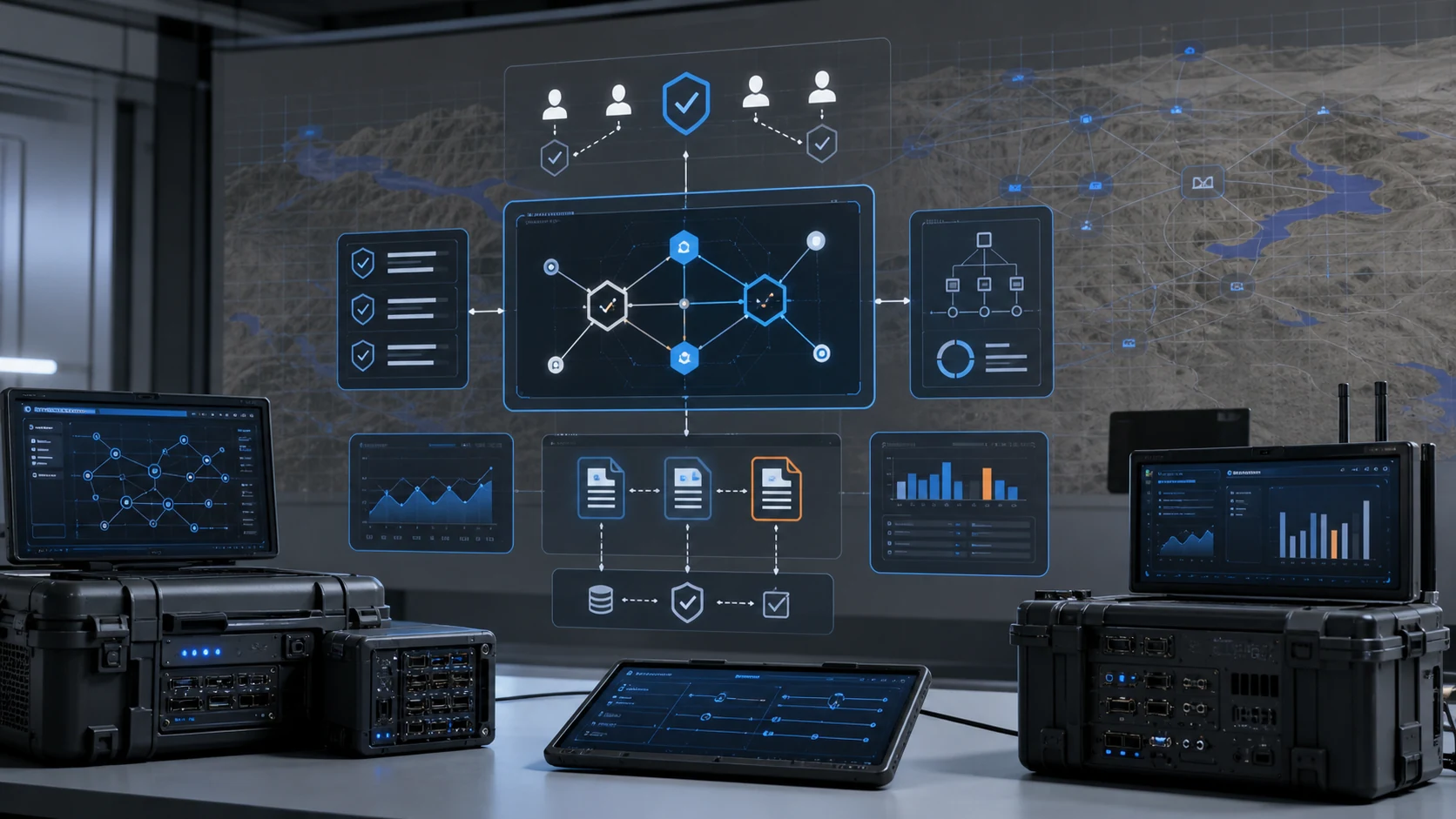
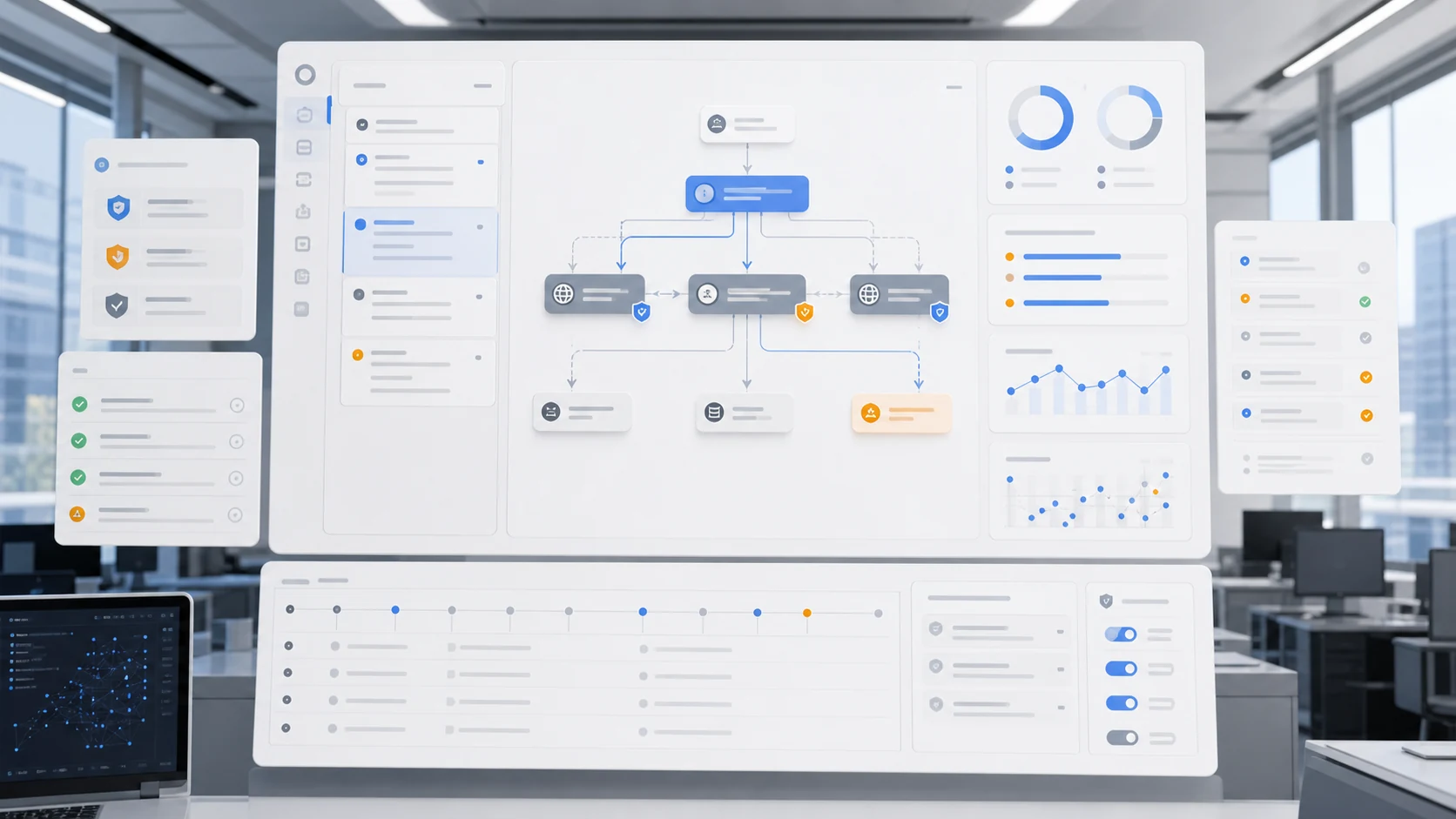
Agent control map
The practical control layer sits between model capability and authorized business action.
Current push
- Hosted agents
- Tool execution
- Resource discovery
- Autonomous planning
Required controls
- Identity per action
- Evaluation before execution
- Containment
- Audit replay
Control implementation
- NowFlow control graph
- Policy gates
- QANTIS risk scoring
- Evidence archive
The agent market is converging on infrastructure.
The 2026 signal is not that agents can call tools. That is already becoming table stakes. NIST's AI Agent Standards Initiative frames identity, authorization, monitoring, logging, interoperability, and secure operation as first-order requirements. Google's Agentic Resource Discovery specification pushes the same market toward machine-readable discovery of resources and capabilities.
OpenAI and AWS are also moving the product surface away from simple chat and toward agent runtimes, tool execution, policy, and hosted environments. Google DeepMind's AI control work adds the safety lens: autonomous systems need monitoring, mitigation, and containment when their actions become harder to inspect manually.
The durable product layer is therefore not another agent demo. It is a control plane where tool use is authorized, evaluated, logged, replayable, and reversible.
TD · Technical depth7 supporting chapters and the working checklist.Read deeper
We still lack a standard evidence contract for agent actions.
Most agent products can show a transcript. Fewer can prove why a tool was available, which identity authorized the call, which policy matched the action, which evaluation gate passed, what external state changed, and how the operation can be replayed during an incident review.
That evidence contract should be product-native. It should not depend on engineers manually reconstructing traces across model logs, API logs, browser sessions, SaaS events, and chat history.
- Each action needs an actor, objective, resource, permission, policy, input, output, and state-change record.
- High-risk actions need pre-execution evaluation, human authority, rollback conditions, and escalation routing.
- Tool discovery should separate discoverability from permission; an agent may know a resource exists without being allowed to mutate it.
- Evaluation should be tied to the workflow and domain, not only to a generic benchmark score.
Start with agentic operations, not open-ended autonomy.
A practical first deployment pattern is agentic operations for bounded business workflows: support triage, research intake, compliance evidence collection, DevOps runbook assistance, or supplier follow-up. These workflows can create value while keeping authority and failure handling explicit.
A credible MVP should avoid claiming open-ended autonomy. It should prove that a workflow can discover resources, request authority, run an evaluation gate, execute a controlled tool action, and preserve an audit trail that another human can understand.
The next competition is trust per action.
Large models will keep improving, but enterprise adoption will be limited by trust, operations, and liability. A buyer does not only ask whether an agent can do a task. They ask whether the system can show who authorized it, what changed, and how a mistake is contained.
Agent control planes, workflow-native evaluations, and reviewable tool traces are therefore a durable engineering priority for 2026.
Discovery leakage, scattered evidence, and irreversible actions.
The first failure mode is conflating discovery with permission. Once resources become machine-readable, an agent can enumerate far more capability than it should ever exercise. If the discovery layer doubles as the authorization layer, a planning error becomes an unauthorized mutation. Discovery must stay descriptive; permission must stay a separate, checkable decision.
The second is evidence scattered across systems. When the record of an action lives partly in model logs, partly in API logs, partly in browser sessions and SaaS events, incident review degrades into manual reconstruction. That is acceptable for a demo and unacceptable for a production system that changes external state. The evidence contract has to be product-native, written at the moment of action.
The third is evaluation that only runs offline. A benchmark score describes a model; it does not describe a specific action against a specific system on a specific day. Objective drift in a long-running workflow will not appear on a leaderboard. It appears in the gap between the stated objective and the state changes the agent actually made.
The fourth is irreversibility. An action without rollback conditions and a containment plan converts every agent mistake into an operations incident. DeepMind's AI control work frames this directly: as agent actions become harder to inspect manually, monitoring, mitigation, and containment must be designed in, not appended.
- Discovery treated as permission, so enumeration silently becomes authorization.
- Evidence scattered across model, API, and SaaS logs with no per-action record.
- Evaluation confined to offline benchmarks while objective drift accrues in production.
- High-risk actions with no rollback conditions, containment plan, or escalation route.
- Identity bound to a session instead of to each individual action.
Instrument the tool registry and per-action record before capability.
Instrumentation should precede capability. Before an agent gets a new tool, the program should be able to answer the six incident-review questions for the tools it already has: why the tool was available, which identity authorized the call, which policy matched, which evaluation gate passed, what external state changed, and how the operation replays. If those answers require engineering time, the control plane is not yet real.
Start with the tool registry. Every callable resource gets an owner, a data sensitivity class, rate limits, an approval class, and a rollback path. The registry turns the claim that the agent can call tools into a statement of which tools, under which conditions, with which recovery plan. It is also the natural anchor for the identity and policy checks that NIST's initiative treats as first-order requirements.
Then write the per-action record: actor, objective, resource, permission, policy, input, output, state change. Only after those records exist reliably should the program add pre-execution evaluation gates for the high-risk subset. This ordering matters because evaluation gates depend on the registry's risk classes, and replay depends on the records. Building autonomy first and audit later inverts the dependency graph.
How to evaluate agent platform vendors.
The transcript test separates demos from infrastructure. Most agent products can show what the model said. Ask instead for the evidence behind one specific tool call: the identity that authorized it, the policy that matched, the evaluation gate that passed, and the record of what changed externally. A vendor that can only answer with a chat log has a demo, not a control plane.
Ask how discovery and permission are separated. As machine-readable resource discovery spreads, the dangerous default is that anything discoverable is callable. The platform should let an agent see that a resource exists while blocking mutation until identity, permission, and policy checks pass.
Ask where humans sit in the loop. Which action classes are automatic, which require review, which are blocked, and which must be simulated before touching production. This is the authority question, and it is a workflow property, not a model property. In the Neura Parse stack this is why NowFlow, an agentic workflow platform with human-in-the-loop approval routing, is treated as the surface that owns the authority loop, with QANTIS available for risk scoring when agent output changes a decision under uncertainty.
- Demand a replayable per-action evidence record, not a transcript.
- Verify that discoverability and permission are enforced as separate checks.
- Confirm pre-execution evaluation gates exist for high-risk action classes.
- Map the human authority path: automatic, review, blocked, simulate.
- Check alignment with NIST's identity, authorization, monitoring, and logging priorities.
Operational checklist
Program checklist: standing up an agent control plane
Derived from the June 2026 gap scan. Work the items in order; the registry and evidence records precede evaluation gates and any expansion of autonomy.
- 01
Inventory every tool and resource an agent can reach; record ownership, data sensitivity, rate limits, approval class, and rollback path in a registry.
- 02
Separate discoverability from permission so an agent can know a resource exists without being allowed to mutate it.
- 03
Bind an identity to every action and attach policy to every edge in the workflow graph, not only to the model prompt.
- 04
Define the per-action evidence record: actor, objective, resource, permission, policy, input, output, and state change.
- 05
Gate high-risk tool calls behind pre-execution evaluation suites covering permission, hallucination, data leak, and objective drift.
- 06
Route high-risk actions through a human authority path with rollback conditions and escalation routing.
- 07
Scope the first deployment to bounded workflows such as support triage, compliance evidence collection, or DevOps runbook assistance.
- 08
Rehearse incident replay: confirm another human can reconstruct any operation from the retained evidence alone.
- 09
Track NIST's AI Agent Standards Initiative and Google's Agentic Resource Discovery specification, and align the registry and identity model with them.
Practical takeaways
01
The 2026 agent-infrastructure priority is control and evidence, not chat UX.
02
Resource discovery must be paired with identity, authorization, and policy.
03
Evaluation should run inside the workflow before risky action, not only offline.
04
NowFlow maps naturally to approvals, retries, tool state, and audit records.
05
QANTIS becomes relevant when agent output influences a decision under uncertainty.
RA · Reference annexDefinitions, recurring questions, editorial method, and primary sources.Inspect
The analysis above carries the main reading flow. This reference layer keeps terminology, recurring questions, editorial method, and primary sources available without interrupting the argument.
Terminology
Terms behind Agentic infrastructure: control planes, permissions, evaluation, and audit..
- Agent control plane
- The governance layer between model capability and authorized business action. It handles tool discovery, identity, policy, evaluation gates, audit records, and containment for every agent action.
- Agentic Resource Discovery (ARD)
- A Google specification for making resources and capabilities machine-readable so agents can discover, use, and verify them across websites and APIs. Discovery describes what exists; it does not grant permission to act.
- Evidence contract
- The guaranteed per-action record a system produces: actor, objective, resource, permission, policy, input, output, and state change. It lets a human reconstruct and review any agent operation after the fact.
- Evaluation gate
- A small test suite that runs inside the workflow before a risky tool call executes, checking items such as permission, hallucination, data leak, and objective drift. It differs from an offline benchmark, which scores the model rather than the specific action.
- Containment
- The ability to limit, halt, or reverse an autonomous system's actions when they go wrong, including rollback conditions and escalation routes. DeepMind's AI control work treats it as a core requirement as agent actions become harder to inspect manually.
- Objective drift
- The gradual divergence between what an agent was asked to achieve and what its actions are actually doing, especially in long-running workflows. It is one of the checks an evaluation gate should run before high-risk actions.
- Tool registry
- A catalog of every resource an agent can call, recording ownership, data sensitivity, rate limits, approval class, and rollback path for each entry. It is the anchor for identity, policy, and risk-class decisions in the workflow.
- Human-in-the-loop
- A control pattern in which defined action classes require human review or approval before execution, keeping a human authority path inside otherwise automated workflows.
Field questions
Program questions behind Agentic infrastructure: control planes, permissions, evaluation, and audit..
Q01What is an AI agent control plane, and why does it matter more than model capability in 2026?
A control plane is the layer between model capability and authorized business action. It decides which tools an agent can discover, which identity authorizes each call, which policy applies, which evaluation gate must pass, and what evidence is retained. Signals from NIST, Google, OpenAI, AWS, and DeepMind in 2026 converge on this layer as the operating requirement for production agents, ahead of raw model improvement.
Q02How is resource discovery different from authorization for AI agents?
Discovery tells an agent that a resource or capability exists in machine-readable form, which is the problem Google's Agentic Resource Discovery specification addresses. Authorization determines whether a specific identity may act on that resource under a matching policy. The two must stay separate: an agent may know a system exists without being allowed to mutate it, and pairing discovery with identity, permission, and policy is what makes the layer safe.
Q03What evidence should a production agent produce for every tool call?
Each action needs a record of actor, objective, resource, permission, policy match, input, output, and external state change. High-risk actions additionally need the pre-execution evaluation result, the human authority decision, rollback conditions, and escalation routing. The test is replay: another human should be able to reconstruct the operation during an incident review without stitching together model logs, API logs, browser sessions, and chat history.
Q04Where should agent evaluation run, inside the workflow or offline?
Both, but the 2026 gap is in-workflow evaluation. A generic benchmark score describes a model; it does not prove that a specific action is safe in a specific domain. High-risk tool calls need small evaluation suites that run before execution, checking permission, hallucination, data leak, and objective drift, tied to the workflow rather than to an offline leaderboard.
Q05How do NowFlow and QANTIS map to agent governance?
NowFlow is an agentic workflow platform and application layer, and agent work is workflow work: triggers, state, approvals, tools, retries, SLAs, incident routes, and evidence retention. The workflow decides authority, meaning which actions are automatic, which require review, which are blocked, and which must be simulated before touching production systems. QANTIS contributes a quantum decision research pattern for bounded evidence estimation under uncertainty; it is not presented here as a deployed risk-scoring engine.
Q06What is a defensible first deployment scope for enterprise AI agents?
Bounded agentic operations, not open-ended autonomy. Support triage, research intake, compliance evidence collection, DevOps runbook assistance, and supplier follow-up are valuable but still controllable. A credible first system proves the full loop: discover resources, request authority, pass an evaluation gate, execute a controlled tool action, and preserve an audit trail another human can understand.
Editorial record
How Agentic infrastructure: control planes, permissions, evaluation, and audit. was checked.
- Editorial owner
- Neura Parse Research
- Last verified
- July 12, 2026
- Method
- Synthesis of the dated primary and official records listed below, checked against the operating question in this note.
- Scope limit
- Planning analysis—not certification, customer performance evidence, procurement advice, or a claim of production readiness.
SRSources reviewed
5 records