
Abstract
August 2026 makes the agent stack easier to reason about. Agent Plugins packages skills and MCP servers, ARD helps clients find and verify resources, and stateless MCP defines a more cloud-native invocation path. Production teams still own authorization, policy, evaluation, release, and audit evidence across every layer.
Gap map
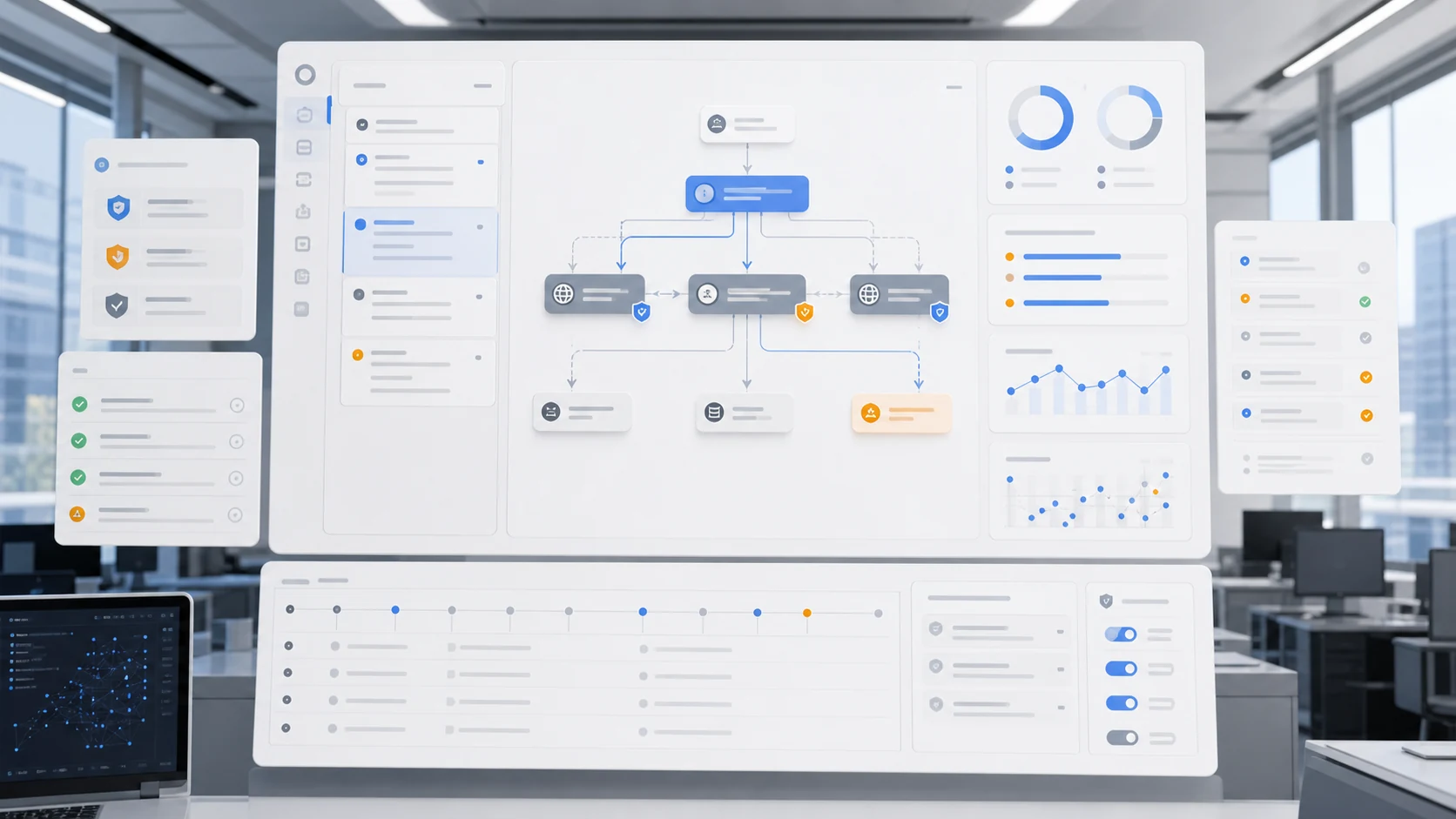
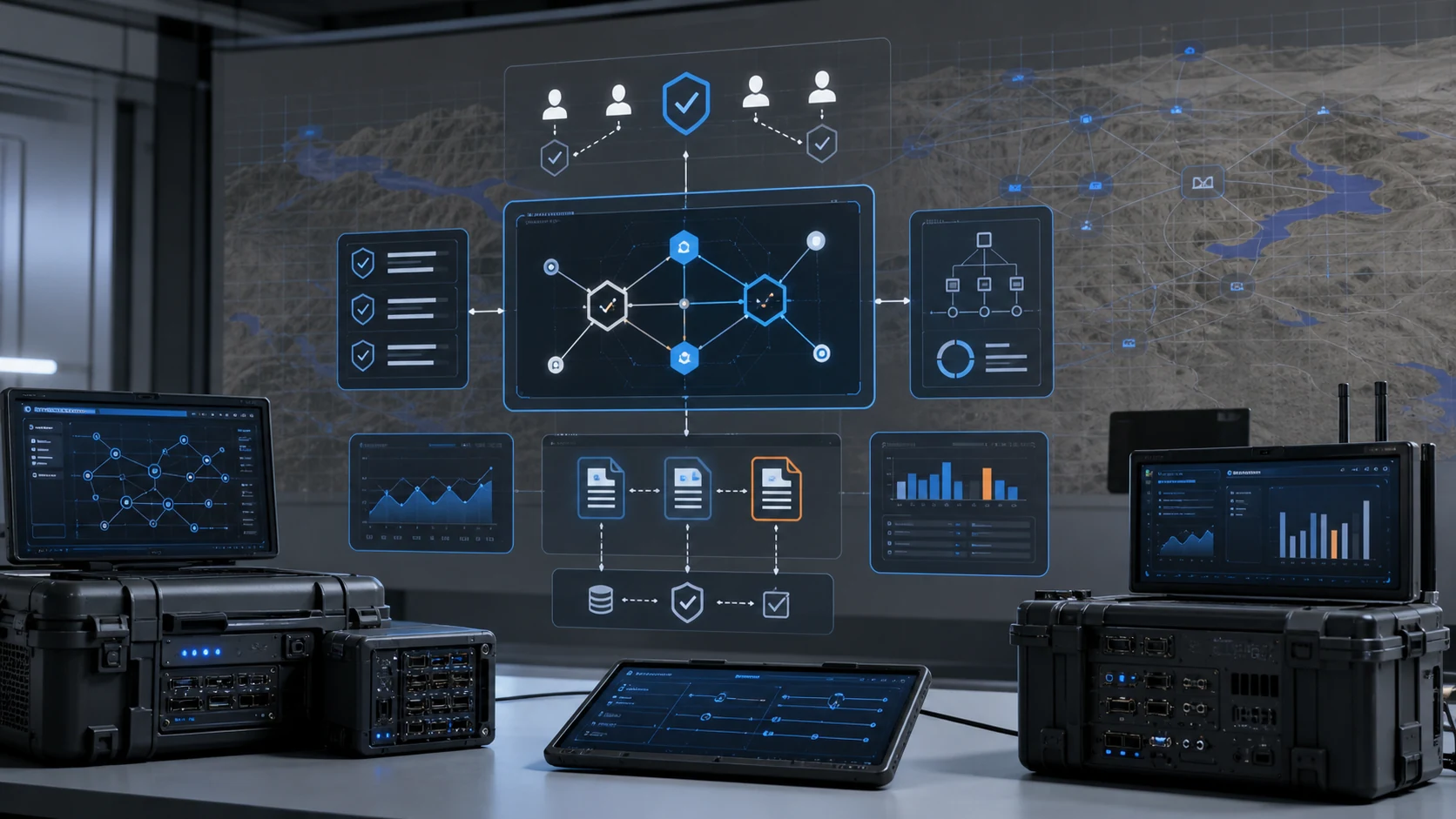
One capability, four operating layers
Portability does not collapse these responsibilities. Each layer needs its own owner, evidence, and release decision.
Describe and package
- Plugin manifest and predictable directory
- Skills, scripts, references, and MCP configuration
- Version and publisher provenance
Publish and discover
- Domain-hosted catalog
- Federated registry lookup
- Publisher and trust metadata
Authorize and invoke
- Resource-scoped token
- Stateless MCP request
- Task state for long-running work
Govern and review
- Policy and human authority
- Evaluation before consequential action
- Trace, outcome, rollback, and release evidence
The ecosystem is standardizing the seams around an agent, not defining one universal agent runtime.
Agent Plugins 1.0.0 addresses packaging. Its intentionally small contract gives skills, scripts, references, and MCP configuration predictable places inside one directory while leaving room for client-specific behavior. Agentic Resource Discovery addresses a different problem: publishing capabilities under a domain, indexing them through registries, and carrying trust metadata to a client. MCP addresses invocation and context exchange. Treating the three as interchangeable hides the architecture a production team must operate.
The separation is healthy because portability, discovery, and execution have different failure modes. A package can be valid but untrusted. A resource can be discoverable but unauthorized for a particular user. A tool can be authorized but unsafe for a consequential action. A runtime response can be technically successful while producing an operationally unacceptable outcome. Each boundary needs a decision and evidence of its own.

TD · Technical depth5 supporting chapters and the working checklist.Read deeper
Agent Plugins reduces wrapper drift, but versioning and publisher provenance still decide whether a package can enter an estate.
The Agent Plugins announcement frames the plugin as a directory with a small manifest and fixed locations for skills and MCP configuration. That makes a useful unit portable across compatible clients without forcing the skill or server itself into a vendor-specific wrapper. It also creates a clear object for software-supply-chain controls: a package can have a publisher, version, digest, review status, dependency record, and allowed client set.
Portability increases the importance of release discipline. A package that works in more clients can also spread a vulnerable server configuration, over-broad instruction, stale reference, or unsafe default more quickly. Enterprise adoption therefore needs signed or otherwise verifiable provenance where supported, pinned versions, staged promotion, revocation, and a record of which client executed which release.
- Inventory the package, its publisher, version, files, MCP endpoints, and external dependencies.
- Separate portable content from client-specific configuration and permissions.
- Test package updates against the same task, policy, and data boundaries before promotion.
- Keep a revocation and rollback path for compromised or behavior-changing releases.
ARD turns capability discovery into a web problem; the consuming organization still chooses its trust policy.
ARD uses domain-hosted catalogs and federated registries so an agent can find a capability without every client maintaining a private hard-coded list. The specification also allows verifiable trust metadata to travel with a result before the client connects directly through the resource's native protocol. This is materially different from ranking tools by a natural-language description alone.
A registry result should enter a policy gate, not a tool call. The consumer needs to verify publisher identity, requested capability, allowed data class, jurisdiction, required assurance, current version, and whether a direct connection is permitted. Registry relevance can help shortlist a resource; it cannot approve expenditure, sensitive-data access, or a real-world action on behalf of the user.
usable_resource = relevance × publisher_trust × authorization × policy_fit × current_evaluationStateless MCP moves state out of transport sessions and makes application ownership more explicit.
The 2026-07-28 MCP update removes the protocol handshake and logical session identifier from the core request model. A request can be handled independently by available workers, while long-running work uses explicit task primitives and application-managed state. This is a better fit for autoscaling and failover, but it does not eliminate state. It moves identity, task progress, idempotency, retries, and recovery into services that teams must design and observe deliberately.
The update also sharpens security and lifecycle boundaries through issuer verification, resource indicators, richer JSON Schema support, and a formal deprecation process. Those controls are valuable because agent tool calls are delegated authority. A token intended for one MCP server should not silently become authority at another, and a client should not learn that a protocol feature disappeared only when production work fails.
- Make each consequential call idempotent or explicitly non-repeatable.
- Persist task identity, policy state, approval state, and outcome outside the transport connection.
- Scope tokens to the intended resource and validate authorization responses.
- Monitor protocol versions and deprecations as release risks, not documentation chores.
NowFlow's relevant role is governance around portable capabilities—not a claim that every emerging specification is already integrated.
For Neura Parse, the useful product connection is architectural. NowFlow is positioned as an agentic workflow and application layer with approvals, state, retries, tools, notifications, and reviewable work. That is the control surface around any capability package or protocol adapter: who requested the action, what policy applied, whether evaluation passed, who approved release, what the tool changed, and how the outcome was reviewed.
This article does not announce Agent Plugins, ARD, or MCP 2026-07-28 support in NowFlow. Those are separate product decisions that require implementation and verification. The near-term action is to design adapters and registries behind stable internal contracts so new specifications can be evaluated without rebuilding the authority model for every client or tool.
Pilot the stack with one bounded workflow and measure trust per action before expanding the catalog.
A credible pilot starts with one workflow whose user, tools, data boundary, approval policy, and rollback are already understood. Package one capability, publish or register it in a controlled environment, invoke it through a pinned protocol version, and replay the complete path from discovery to outcome. The goal is not the number of tools an agent can find. It is whether the organization can prove why a particular capability was selected and what authority it exercised.
Measure discovery precision, verification failures, authorization denials, evaluation outcomes, human interventions, task recovery, duplicated side effects, latency, cost, and rollback success. Those measures turn interoperability from a compatibility story into an operating decision. Only then should the catalog, client set, data access, or autonomy envelope expand.
Practical takeaways
01
Treat Agent Plugins, ARD, and MCP as packaging, discovery, and runtime layers with separate owners.
02
Put publisher provenance, version pinning, staged release, revocation, and rollback around portable packages.
03
Route discovered resources through identity, authorization, policy, and evaluation before invocation.
04
Model task state, retries, idempotency, and evidence explicitly when adopting stateless MCP.
05
Measure trust per action and outcome quality before expanding a production agent catalog.
RA · Reference annexDefinitions, recurring questions, editorial method, and primary sources.Inspect
The analysis above carries the main reading flow. This reference layer keeps terminology, recurring questions, editorial method, and primary sources available without interrupting the argument.
Field questions
Program questions behind Agent Plugins, stateless MCP, and ARD: the agent interoperability stack is separating into layers..
Q01What is the difference between Agent Plugins and MCP?
Agent Plugins defines a portable directory and manifest for packaging skills, scripts, references, and MCP configuration. MCP defines a protocol for connecting an AI client to tools and contextual resources. Packaging and runtime invocation are related but separate responsibilities.
Q02What does Agentic Resource Discovery add?
ARD adds a discovery layer: organizations can publish catalogs under their domains, registries can index them, and clients can receive publisher and trust metadata before connecting to a resource through its native protocol. It does not replace authorization or application policy.
Q03Does stateless MCP mean an agent workflow has no state?
No. It means the protocol core no longer depends on a logical transport session. Applications still need durable task identity, progress, approvals, idempotency, retries, recovery, and evidence, especially for long-running or consequential work.
Q04Does this article announce these integrations in NowFlow?
No. It explains the architecture and evaluation path. Any product integration, release state, compatibility statement, or security claim requires a separate verified product record.
Editorial record
How Agent Plugins, stateless MCP, and ARD: the agent interoperability stack is separating into layers. was checked.
- Editorial owner
- Neura Parse Research
- Last verified
- August 20, 2026
- Method
- Synthesis of the dated primary and official records listed below, checked against the operating question in this note.
- Scope limit
- Planning analysis—not certification, customer performance evidence, procurement advice, or a claim of production readiness.
SRSources reviewed
4 records