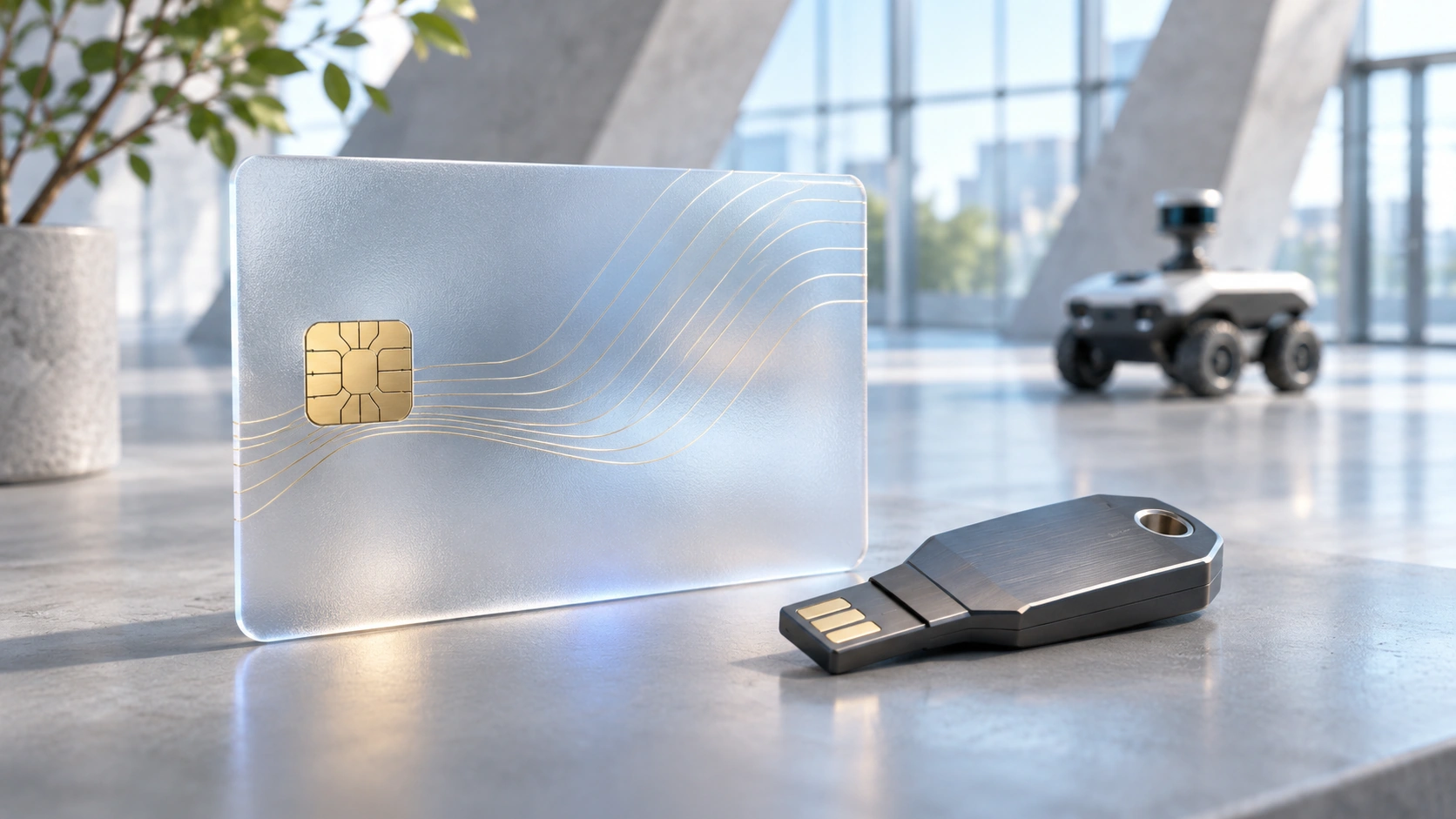
A stronger algorithm is part of a larger trust decision
How will we verify identity in the quantum age? Our new article starts with Germany’s Quant-ID research and the separate quantum-resistant identity-card demonstrator, then asks what their engineering questions mean for AI agents, robots and distributed systems.
The feature distinguishes published research and prototype evidence from our architectural analysis. It examines scoped delegation, key management, offline permissions and the evidence needed to reconcile a task after connectivity returns. It does not announce a deployed identity product or a partnership with the German projects.
Take one idea into QFlow Studio
For readers building their quantum literacy, the article offers a small first experiment: inspect QFlow’s public Bell circuit, make one change and compare the ideal readouts. The example runs locally without a quantum-hardware connection.
Learning quantum concepts and validating a PQC implementation are separate activities. The feature keeps that distinction clear and links a second path for teams ready to map cryptographic dependencies and plan a bounded migration.
Follow the robotics-security conversation
CRANE’s Safe and Secure Robotics SIG currently lists Trust me, I’m a Robot by Professor Steven Furnell for 20 November 2026, 13:00–14:00 UK time. The seminar addresses trust and cybersecurity in robotics; it is related context rather than a PQC workshop. Check the organiser’s official programme for current joining details.
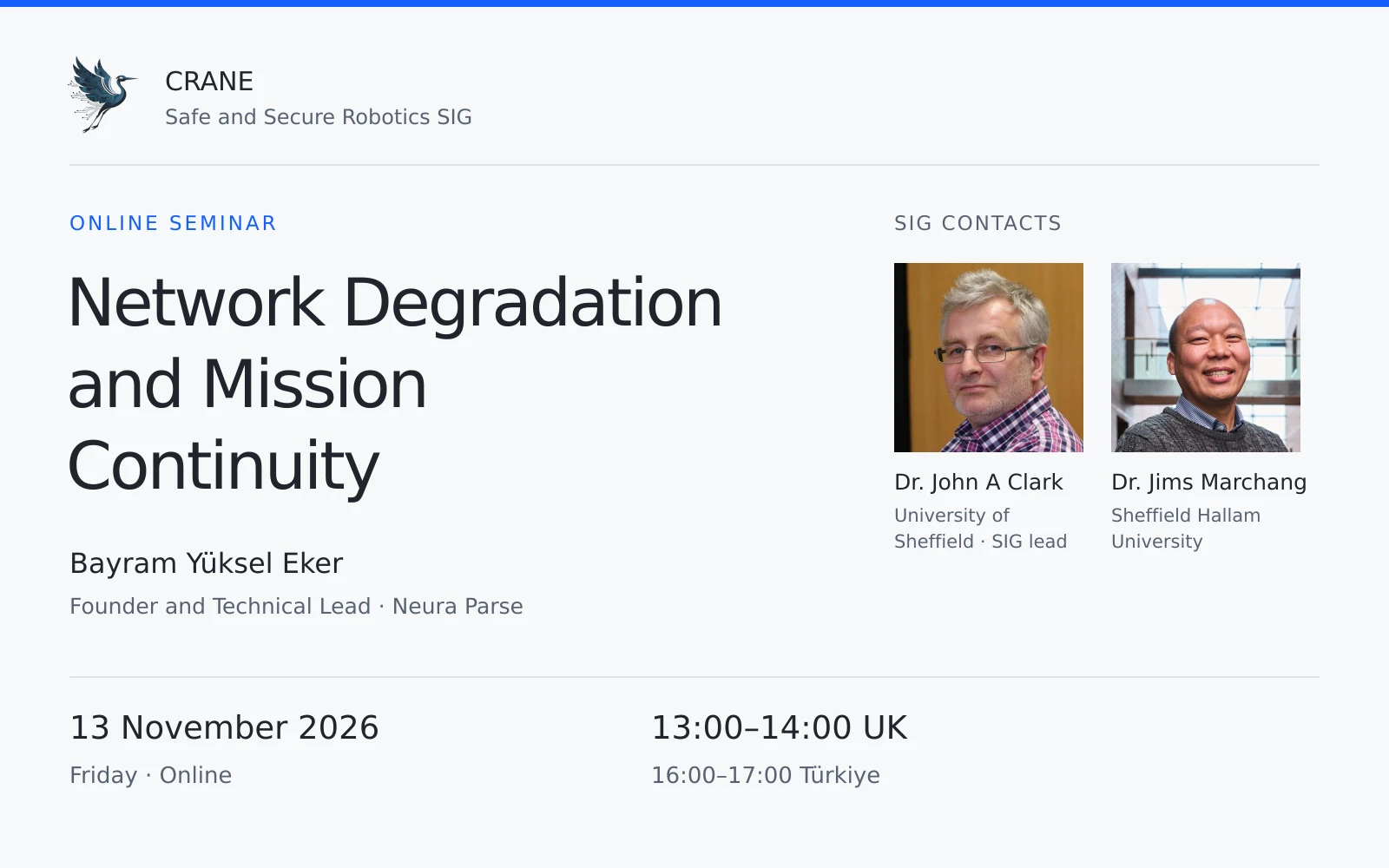
Our earlier announcement of the 13 November Network Degradation and Mission Continuity seminar remains available as research context. The new feature extends the underlying question: restoring communication does not, by itself, establish whether an earlier permission still applies.
BA · Bulletin annexDefinitions, recurring questions, source notes, and publication tags.Inspect
SNSource notes
2 recordsTags