Three August field notes turn fast-moving announcements into bounded operating decisions.
Neura Parse has published three source-backed field notes dated 18–20 August 2026. The first separates the emerging agent interoperability stack into packaging, discovery, runtime, and governance layers. The second reads IBM Quantum's August platform update as a workload-evidence signal. The third maps world models and on-device reasoning into a physical AI loop that still requires independent evaluation, edge release controls, safety evidence, and human authority.
The briefing does not announce new third-party integrations, partnerships, certifications, customer deployments, or benchmark results. It is an editorial research release built from public primary sources and connected to Neura Parse products only where the public product role is already established.
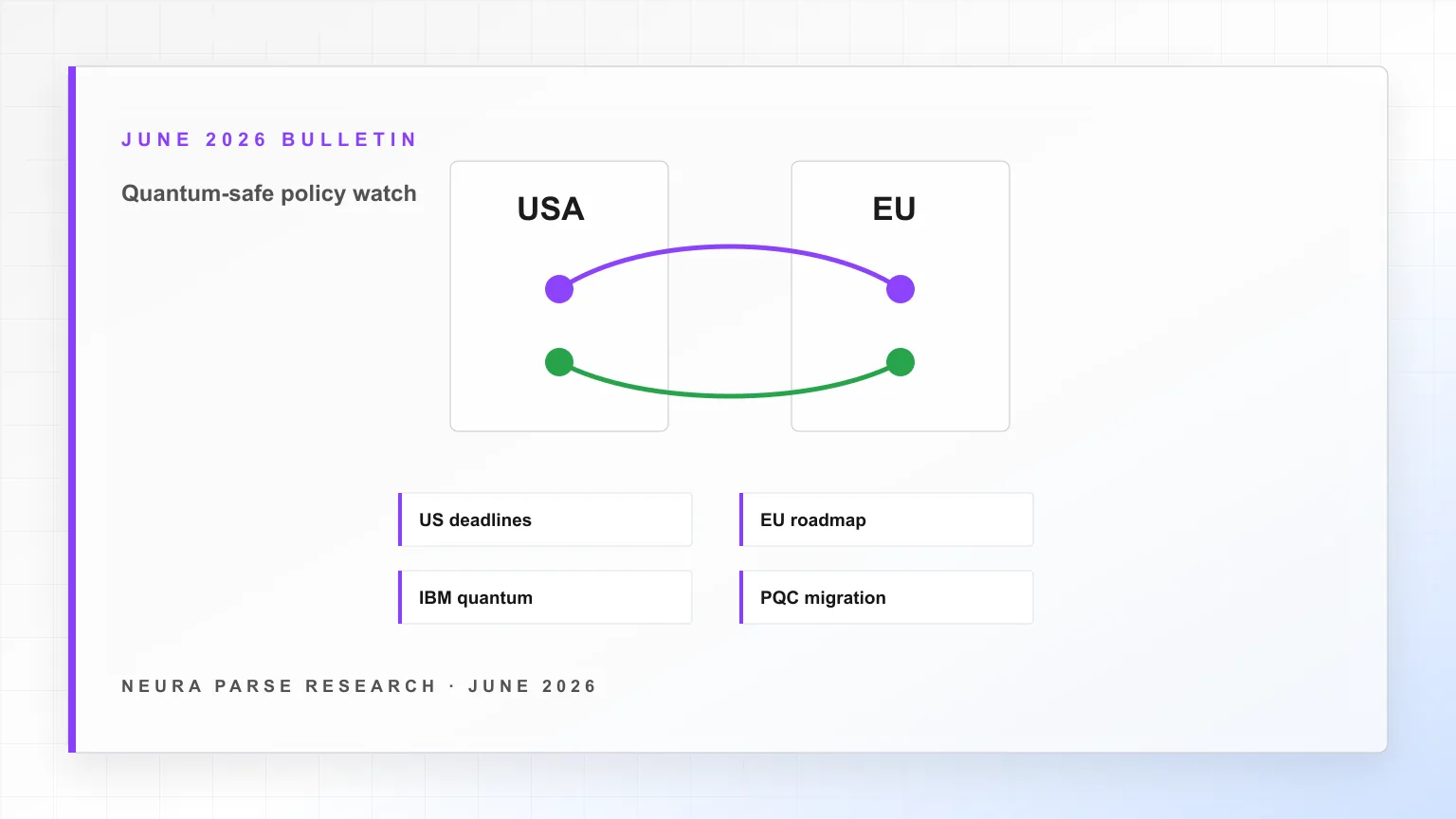
Portable packages, web-scale discovery, and stateless invocation are becoming separate components of one supply chain.
Agent Plugins 1.0.0 provides a predictable package for skills and MCP server configuration. Agentic Resource Discovery provides a way to publish, index, find, and verify resources. MCP 2026-07-28 shifts the protocol core to stateless requests and makes task state, resource-scoped authorization, schemas, and deprecation handling more explicit. These layers improve interoperability without granting permission automatically.
The Neura Parse interpretation is control-plane first: a production workflow still needs publisher provenance, pinned versions, user authorization, policy, evaluation, approval, idempotency, outcome review, and rollback. NowFlow is relevant as the workflow and authority surface around tools; this bulletin does not claim released compatibility with every cited specification.
- Package format answers how a capability travels.
- Discovery answers how a client finds and verifies a candidate resource.
- MCP answers how a client invokes a tool or accesses context.
- The application owner still answers whether that action is allowed and acceptable.
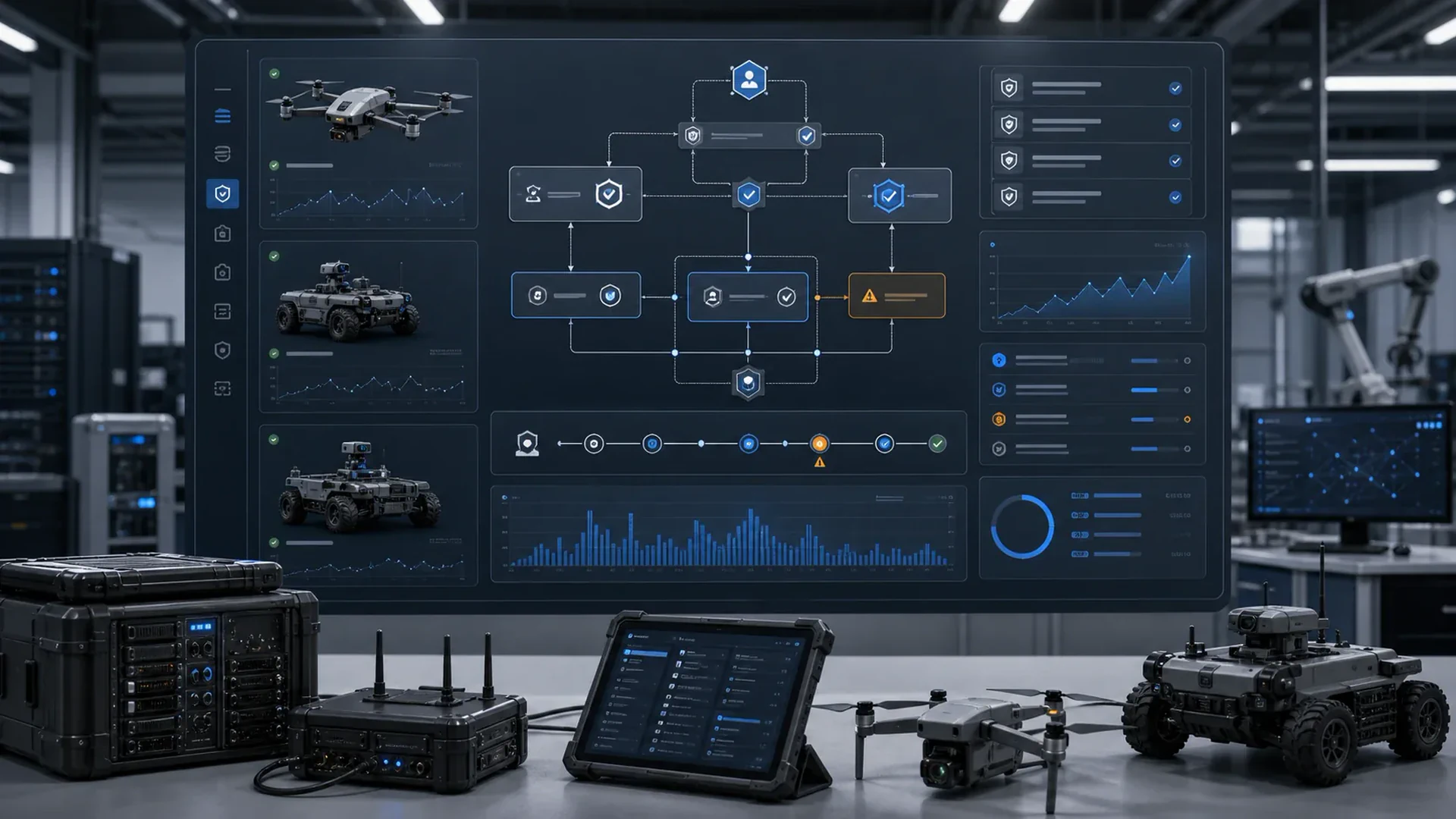
IBM Quantum exposes more execution context around a job, strengthening the case for provider-aware evidence records.
IBM's August changelog lists new bit-level outcome views, circuit timing, chunk and span diagnostics, calibration history links, Executor results, histogram improvements, retrieval snippets, workload filters, OpenQASM 3 Composer support, and clearer instance-usage windows. The direction is important because execution context, not only final counts, determines whether a quantum result can be inspected and compared responsibly.
QFlow's relevant role is to keep the surrounding question, source, baseline, route, provider context, output, transformation, limitation, and decision reviewable. The analysis stays within the public claim boundary: IBM Partner Plus membership is not endorsement, certified integration, validated access, or a guarantee that each new platform feature is already represented in QFlow.
BD · Full bulletin2 supporting sections and the operational checklist.Read deeper
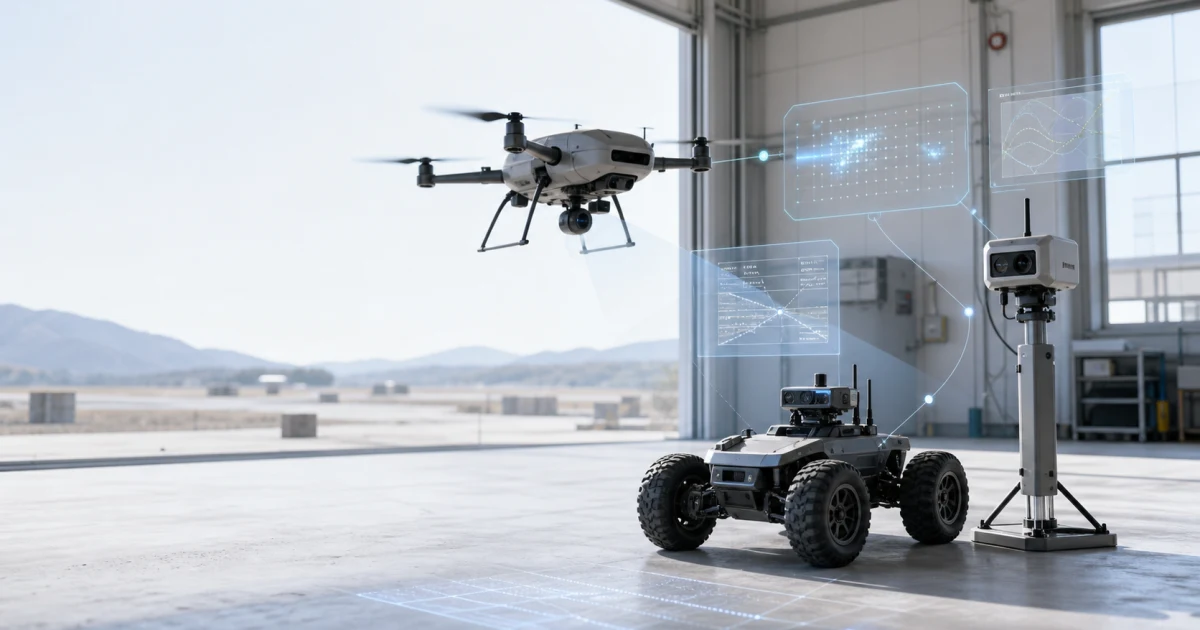
World models are entering the robotics toolchain, while production evidence remains a fleet and safety problem.
The Actuate 2026 program connects Cosmos 3 to physical reasoning, synthetic data, neural simulation, closed-loop policy evaluation, and Jetson Thor deployment. NVIDIA separately describes Cosmos 3 Edge as a 4-billion-parameter model for local vision reasoning and robot-policy work. Those statements show a development direction; they do not independently validate a robot, site, or safety case.
The Neura Parse field note therefore follows the complete loop: field evidence, generated scenarios, independent evaluation, signed edge release, fleet operation, exceptions, recovery, and human authority. NeuraOS and NowFlow fit the runtime and workflow layers already described publicly, while NODERIQ remains classical-first with optional quantum only for selected advisory, latency-tolerant, non-safety-critical work.
- Keep synthetic, simulated, replayed, trial, and live evidence separate.
- Test releases on target hardware for latency, memory, power, thermals, and recovery.
- Make safety controls independently testable from the learning model.
- Require a canary, rollback, and human authority path before fleet expansion.
BA · Bulletin annexDefinitions, recurring questions, source notes, and publication tags.Inspect
SNSource notes
9 recordsTags