Abstract
Fault-tolerant quantum roadmaps, U.S. industrial policy, and quantum-safe migration are moving in parallel. Enterprises need a disciplined record of experiments, provider context, resource estimates, and security migration decisions.
Gap map
Quantum readiness stack
Hardware roadmaps, national policy, and security migration need records that technical and executive teams can review.
Industry signal
- IBM investment
- Fault-tolerant roadmap
- Qiskit ecosystem
- Quantum-classical tooling
Policy signal
- U.S. quantum innovation EO
- Quantum-safe crypto EO
- Industrial capacity
- Commercialization pressure
Operational response
- QFlow experiment records
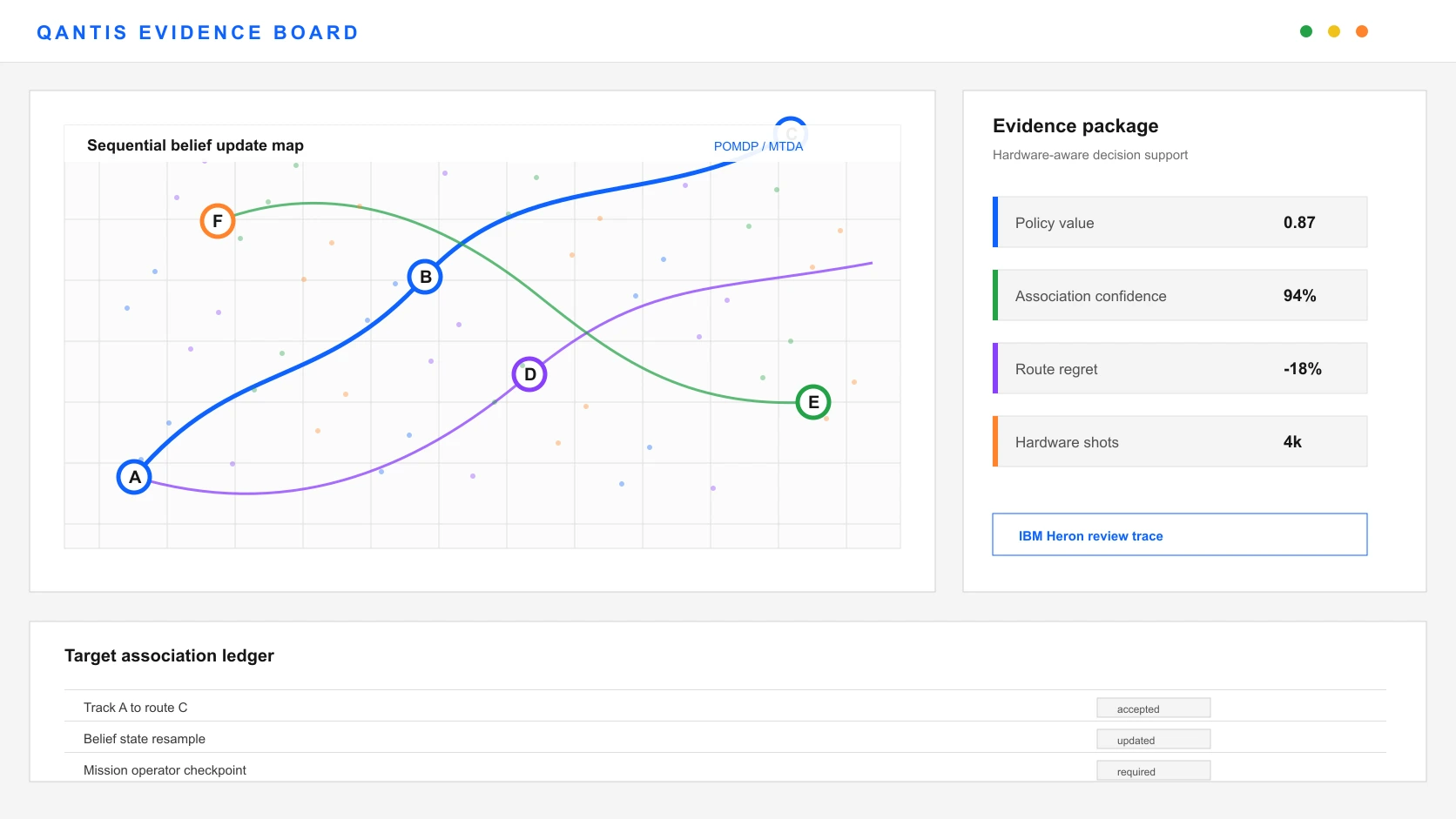
- Resource-estimate evidence
- PQC readiness workflow
- Executive decision pack
Quantum roadmaps are becoming operating assumptions.
IBM's June 2026 commitment of more than $10 billion to quantum computing reinforces a clear direction: fault-tolerant quantum is moving from research aspiration into a staged industrial roadmap. The roadmap language matters because it creates milestones that enterprise teams can plan around, even before fault-tolerant systems are broadly useful.
The White House quantum innovation order adds a public-sector signal around U.S. leadership, commercialization, supply chain, and industrial capacity. Combined with the separate quantum-safe cryptography order, the implication is that quantum is both a future computing platform and a present security migration problem.
TD · Technical depth6 supporting chapters and the working checklist.Read deeper
Experiment records should outlive provider roadmaps.
Enterprise buyers do not need another vague quantum strategy deck. They need a controlled surface for experiments, providers, algorithms, resource estimates, costs, constraints, assumptions, and decision outcomes.
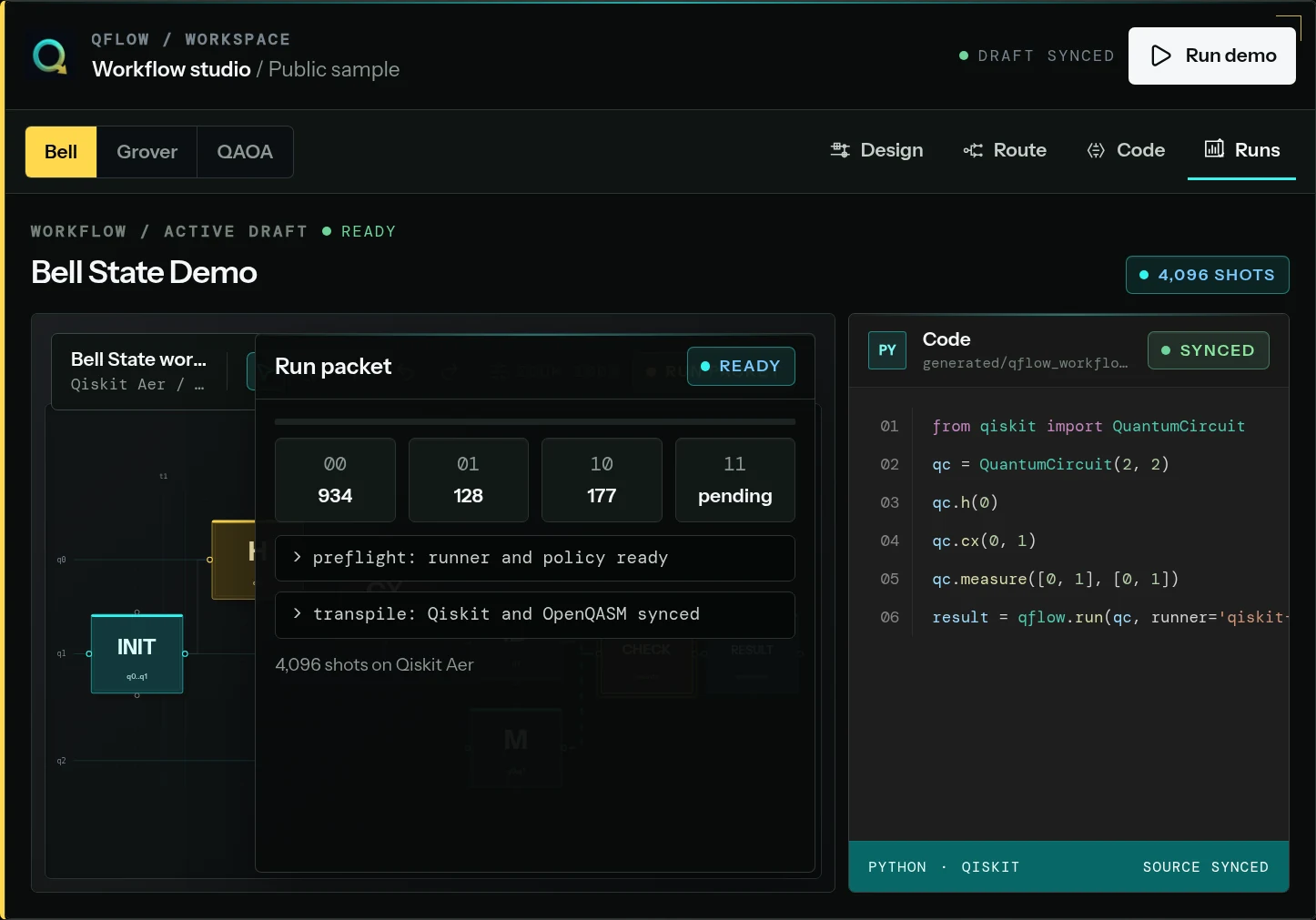
QFlow can occupy that layer: a studio where quantum workflows are represented as reviewable records rather than disconnected notebooks, vendor demos, and meeting notes.
- Attach provider, backend, circuit, runtime, cost, and result metadata to each workflow.
- Keep classical baselines and negative results visible so the team does not overclaim advantage.
- Connect quantum-safe migration records to the same evidence model used for experiments.
- Export an executive pack that separates proven capability, research hypothesis, and future dependency.
Pair quantum workflow advisory with quantum-safe operations.
Near-term work should not promise immediate quantum advantage. It should create a disciplined readiness program: which problems are worth tracking, which experiments are defensible, which providers matter, and which security systems must migrate now.
IBM and U.S. policy signals inform two connected workstreams. QFlow records the workflow side of quantum adoption, while quantum-safe engineering manages the cryptographic migration that security teams cannot postpone.
Do not turn partnership signals into endorsement claims.
IBM Quantum, Qiskit, and U.S. quantum policy provide public ecosystem context; they do not establish endorsement, selection, or formal partnership without a signed public record.
That boundary matters for enterprise trust. The ecosystem is moving, while responsible participation still requires reviewable workflows, evidence, baselines, and decision records.
Readiness programs fail in predictable ways.
Most quantum readiness efforts do not fail because the hardware is immature. They fail because the program never builds a record that survives staff turnover, vendor churn, and executive review. The June 2026 signals raise the cost of that failure: budgets now reference public roadmaps, and security deadlines now reference executive orders.
The first failure mode is overclaiming. An experiment that beats a weak classical baseline gets reported as advantage, and the claim unwinds under later scrutiny. The control is structural: keep classical baselines and negative results inside the same record as the experiment, so a reviewer sees the full comparison by default.
The second failure mode is fragmentation. Experiments spread across notebooks, provider dashboards, and meeting notes, and no one can reconstruct which assumptions produced which resource estimate. The third is boundary drift, where public ecosystem references slide toward implied endorsement of or by IBM or a government program. Each of these is a records problem before it is a technology problem.
- Overclaimed advantage: results reported without a defensible classical baseline.
- Fragmented evidence: experiments scattered across notebooks, dashboards, and meeting notes.
- Stale assumptions: resource estimates that are never revisited when roadmaps advance.
- Split tracks: quantum-safe migration managed apart from the experiment evidence model.
- Endorsement drift: ecosystem references that read as partnership claims.
Instrument the experiment record before scaling the program.
A readiness program should instrument the smallest set of fields that makes one experiment reviewable. That set is already defined in this article: provider, backend, circuit, runtime, cost, and result metadata attached to each workflow. The schema costs little at experiment one and becomes irreplaceable by experiment fifty.
Instrument the assumptions next. Every resource estimate rests on hardware, error, and scheduling assumptions that change as roadmaps advance. Recording them as explicit fields lets the team re-run an estimate when a milestone lands, instead of rebuilding the analysis from memory.
Instrument the security track last, but in the same system. The quantum-safe cryptography order makes migration a present obligation, and migration decisions need the same evidence discipline as experiments. QFlow Studio covers this layer: editable quantum workflows, preserved provider context, stored assumptions and baselines, tracked resource estimates, and reviewable evidence packaged for quantum experiments and quantum-safe readiness.
- Per-experiment metadata: provider, backend, circuit, runtime, cost, result.
- Assumption fields on every resource estimate, with review triggers tied to roadmap milestones.
- Classical baseline and negative-result entries with the same status as positive results.
- Quantum-safe migration records connected to the experiment evidence model.
Read the next milestones as planning inputs, not endorsements.
IBM's investment runs across a five-year window, which gives programs a usable planning horizon. The published hardware roadmap points toward near-term advantage work and large-scale fault-tolerant systems, with Starling as the stated 2029 target. Log each public milestone as an assumption with a review date, then update resource estimates when the milestone lands or slips.
The tooling signal matters as much as the hardware signal. IBM's 2026 roadmap material emphasizes profiling, verification, debugging, and quantum-classical workload tooling, the layer where enterprise experiments become reproducible. Teams that already keep structured records will absorb that tooling faster than teams working from scattered notebooks.
Policy will keep running on two clocks. The quantum innovation order pushes commercialization, supply chain, and industrial capacity on a long horizon, while the quantum-safe cryptography order keeps migration urgent now. A program that reports both tracks in one executive pack, with proven capability, research hypothesis, and future dependency clearly separated, stays credible through the whole window.
Operational checklist
Program checklist: quantum readiness after the June 2026 signals
Derived from the article's takeaways and sections. Each item maps to a record the program can produce and a reviewer can inspect.
- 01
Log IBM roadmap milestones, including the 2029 Starling target, as planning assumptions with named owners and review dates.
- 02
Split the program into two tracks: quantum innovation readiness under EO 14413 and quantum-safe cryptographic migration under EO 14412.
- 03
Attach provider, backend, circuit, runtime, cost, and result metadata to every quantum experiment from the first run.
- 04
Record classical baselines and negative results in the same system, with the same status, as positive results.
- 05
Treat resource estimates as versioned evidence objects and revisit them when a roadmap milestone lands or slips.
- 06
Connect quantum-safe migration records to the evidence model used for experiments, not a separate tracker.
- 07
Produce an executive pack that separates proven capability, research hypothesis, and future dependency.
- 08
Review all external-facing material for implied endorsement; cite IBM, Qiskit, and U.S. policy as public ecosystem context only.
- 09
Reassess tooling choices as profiling, verification, debugging, and quantum-classical workload tools mature through 2026.
Practical takeaways
01
IBM's June 2026 quantum investment strengthens the case for disciplined readiness records.
02
U.S. policy separates quantum innovation from quantum-safe cryptographic urgency; both matter.
03
QFlow should store experiments, assumptions, resources, and decisions as evidence objects.
04
Quantum services should avoid advantage hype and focus on defensible workflow adoption.
05
Public ecosystem references must avoid implied endorsement unless formalized.
RA · Reference annexDefinitions, recurring questions, editorial method, and primary sources.Inspect
The analysis above carries the main reading flow. This reference layer keeps terminology, recurring questions, editorial method, and primary sources available without interrupting the argument.
Terminology
Terms behind IBM's quantum roadmap and U.S. policy: what enterprise teams can verify now..
- Fault-tolerant quantum computing
- A quantum system that uses error correction to run long computations reliably despite hardware noise. IBM's roadmap treats it as a staged industrial target rather than a research aspiration.
- Quantum advantage
- The point where a quantum system solves a real problem better, faster, or cheaper than the best available classical method. A claim of advantage is only meaningful against a defensible classical baseline.
- Classical baseline
- The best classical solution to the same problem, recorded alongside a quantum experiment. Without it, an advantage claim cannot be evaluated or defended.
- Resource estimate
- A projection of what a quantum workload would need on current or future hardware, including runtime and cost. Estimates rest on assumptions that must be revisited as roadmaps advance.
- Quantum-safe cryptography (PQC)
- Encryption and signature schemes designed to resist attack by future quantum computers, also called post-quantum cryptography. Migration is a present security obligation, separate from waiting for useful quantum hardware.
- Qiskit
- IBM's open-source software framework for programming quantum computers. The article treats the Qiskit ecosystem as an industry signal of tooling maturity.
- Backend
- The specific quantum processor or simulator a circuit runs on. Recording the backend for each experiment preserves provider context for later review.
- Executive pack
- A leadership-facing summary that separates proven capability, research hypothesis, and future dependency. It lets executives make decisions on evidence rather than advantage hype.
Field questions
Program questions behind IBM's quantum roadmap and U.S. policy: what enterprise teams can verify now..
Q01What exactly did IBM commit to in June 2026, and why should a program office care?
IBM committed more than 10 billion dollars over five years across R&D, manufacturing, M&A, and ecosystem expansion, aimed at fault-tolerant quantum systems. The commitment matters because it turns roadmap milestones, including the 2029 Starling target, into dates that enterprise programs can plan around. The practical response is to log those milestones as planning assumptions with review dates, not to change procurement today.
Q02How do the two 2026 U.S. executive orders on quantum differ, and which one affects my program first?
EO 14413 addresses quantum technology leadership, commercialization, and industrial capacity, which is a long-horizon innovation signal. EO 14412 addresses advanced cryptographic attacks and accelerates migration to quantum-resistant cryptography, which is a present obligation for security teams. Most programs feel EO 14412 first, because cryptographic migration cannot wait for fault-tolerant hardware.
Q03Do we need to demonstrate quantum advantage before funding a readiness program?
No. The defensible near-term work is a disciplined readiness program: deciding which problems are worth tracking, which experiments are defensible, which providers matter, and which security systems must migrate now. Keeping classical baselines and negative results visible protects the program from overclaiming while the hardware matures.
Q04What does QFlow Studio actually store for a quantum readiness program?
QFlow Studio is a quantum workflow and evidence studio. It holds editable quantum workflows with provider context, assumptions, classical baselines, resource estimates, and cost and result metadata, and it packages that material as reviewable evidence for quantum experiments and quantum-safe readiness. The output includes an executive pack that separates proven capability, research hypothesis, and future dependency.
Q05Can we reference IBM Quantum or the U.S. executive orders in our own program materials?
Yes, as public ecosystem context. The boundary is endorsement: do not imply selection, endorsement, or formal partnership with IBM or a government program unless a signed public record exists. That discipline protects enterprise trust and keeps program material accurate under procurement review.
Q06What is the Anderon foundry announcement and what does it signal?
Anderon is the quantum foundry announced through a May 2026 Letter of Intent between IBM and the U.S. Department of Commerce, described as America's first purpose-built quantum foundry and supported by a proposed CHIPS award. For program planning it is an industrial capacity signal: manufacturing and supply chain for quantum systems are now inside national policy scope.
Editorial record
How IBM's quantum roadmap and U.S. policy: what enterprise teams can verify now. was checked.
- Editorial owner
- Neura Parse Research
- Last verified
- July 12, 2026
- Method
- Synthesis of the dated primary and official records listed below, checked against the operating question in this note.
- Scope limit
- Planning analysis—not certification, customer performance evidence, procurement advice, or a claim of production readiness.
SRSources reviewed
6 records