Abstract
The credible role for near-term quantum hardware is not an autonomous brain. It is a replaceable inference service inside a classical perception-to-action loop, invoked only when its calibration and depth gates pass.
Gap map
A bounded QANTIS role in the perception-to-action loop
The QPU is an optional evidence path with admission, validation, and fallback gates; it never receives direct actuator authority.
Perception and state
- Classical sensing and observation model
- Prior belief over hidden states
- Data-quality and freshness checks
Quantum admission
- Rare-evidence structure justifies the request
- Circuit depth and calibration remain inside envelope
- Shot, latency, and fallback budgets are available
Inference service
- Amplify and estimate accepted evidence
- Convert the estimate into an ordinary posterior
- Attach uncertainty and hardware provenance
Classical authority
- Validate posterior and threshold margin
- Select policy under safety constraints
- Approve, execute, monitor, or reject the action
Inference, planning, and control are different responsibilities.
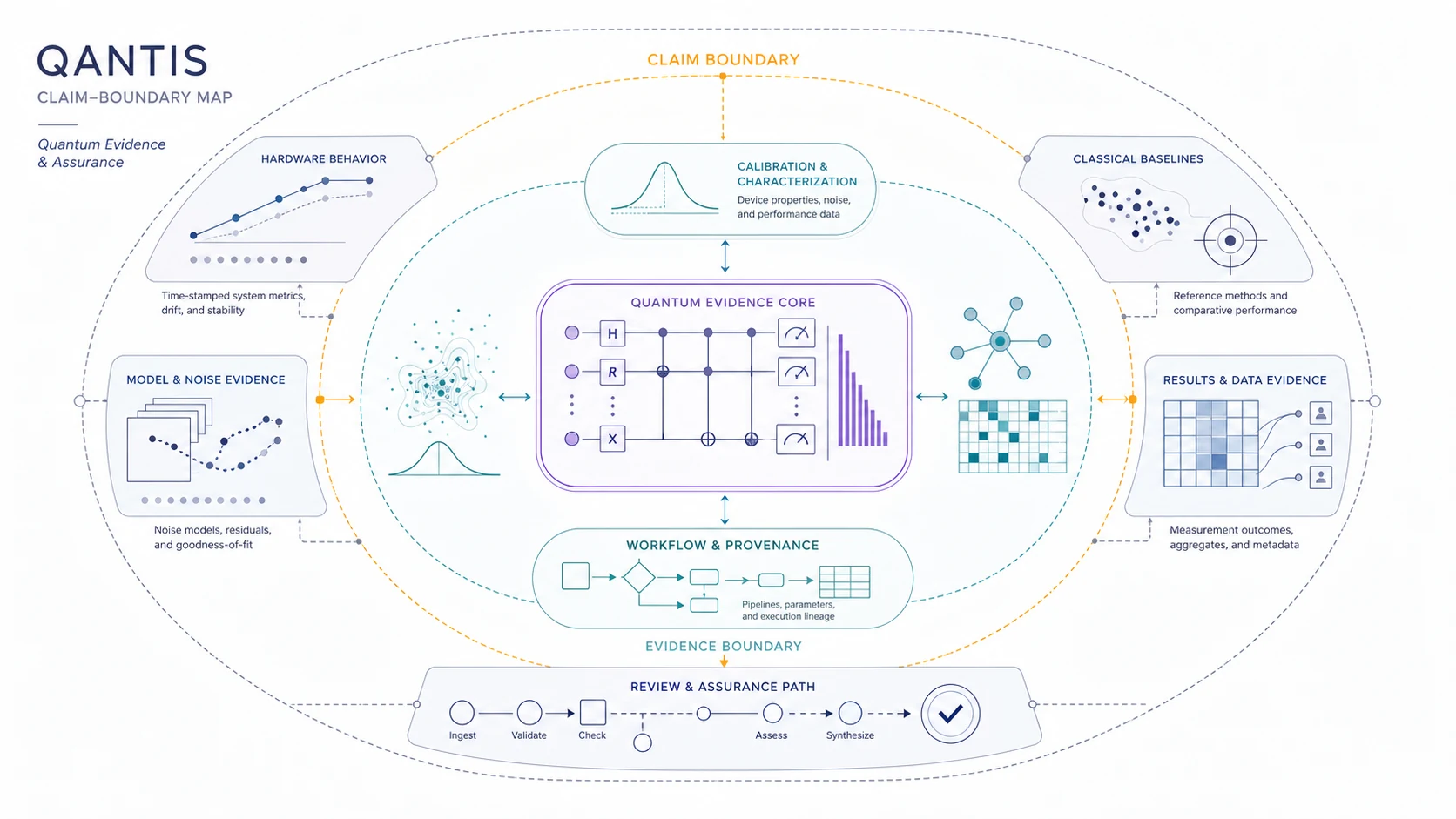
An autonomous system observes an environment, maintains a state estimate, predicts consequences, selects a policy, applies safety constraints, and executes an action. Calling that entire chain “quantum AI” hides the interfaces that determine whether a hardware experiment can be used safely. QANTIS is clearest when it occupies only one of them: evidence estimation inside a probabilistic state update.
The classical layer supplies a prior belief and observation model. The quantum service constructs an accepted-evidence event, applies calibrated amplitude amplification and estimation, and returns a scalar evidence estimate that becomes an ordinary normalized posterior. Classical software owns the belief record before and after the call.
The planner, policy selector, safety monitor, and actuator controller remain classical. This is not a temporary wording choice; it is a useful systems boundary. A replaceable quantum module can be bypassed when calibration expires, depth grows, or latency becomes unacceptable without granting a QPU direct authority over a physical action.
sensors -> classical prior -> optional QANTIS evidence update -> validated posterior -> classical policy -> safety gate -> action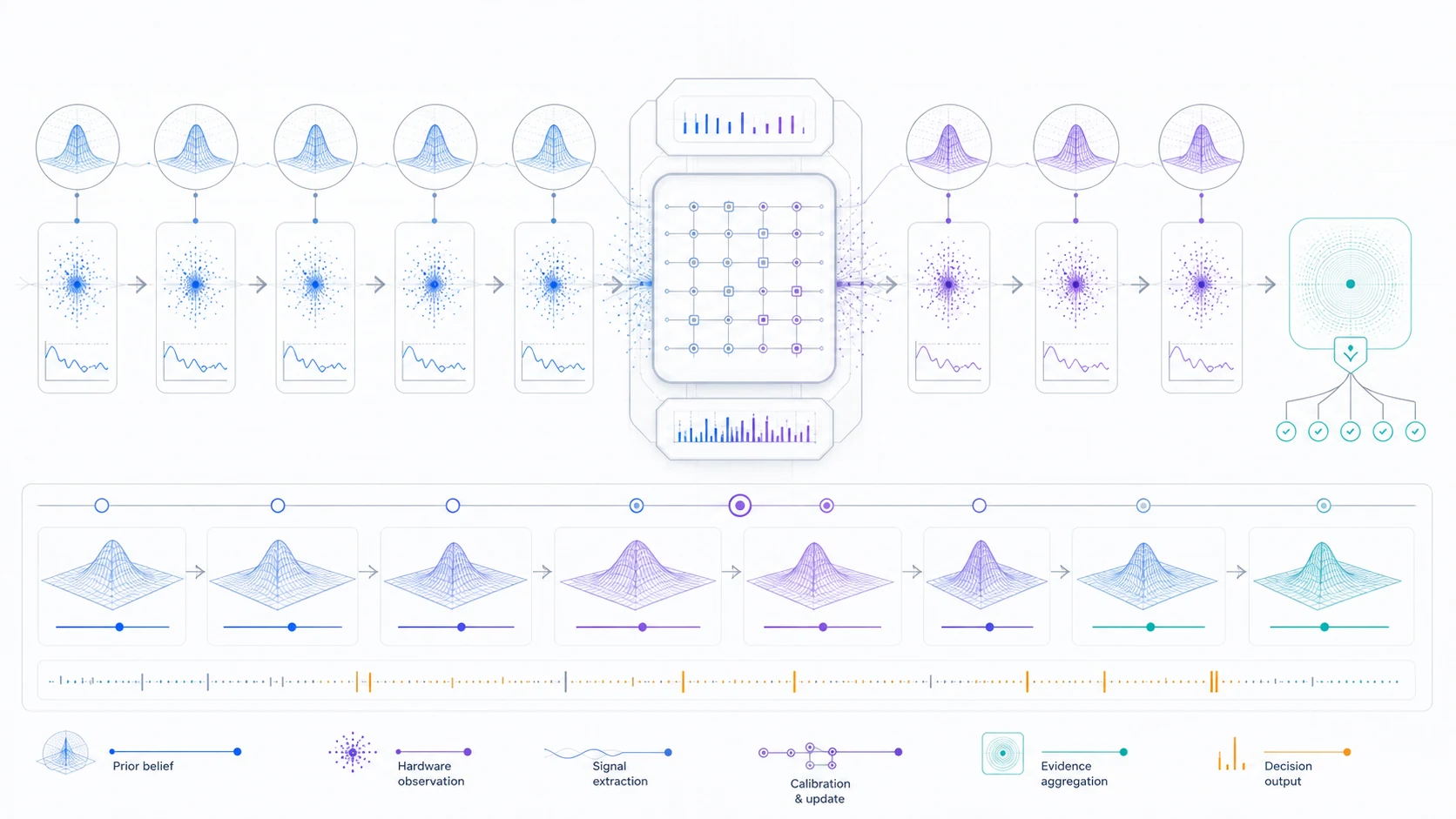
TD · Technical depth6 supporting chapters and the working checklist.Read deeper
Rare observations are a plausible quantum target because they waste samples.
Partially observable systems must normalize a posterior by the probability of the observation under the current prior. When that evidence is rare, rejection-style sampling produces many measurements that do not land in the accepted subspace. Amplitude amplification can move probability mass toward that event before measurement, potentially increasing the usable fraction of a fixed shot budget.
The first QANTIS paper demonstrates the mechanism in a shallow POMDP case: accepted probability rises from 0.179 to 0.907 and usable accepted shots rise from 1,463 to 7,429, a 5.1x yield. The posterior remains close to exact Bayes at Hellinger distance 0.0015. This is evidence for a sampling primitive, not faster end-to-end autonomy.
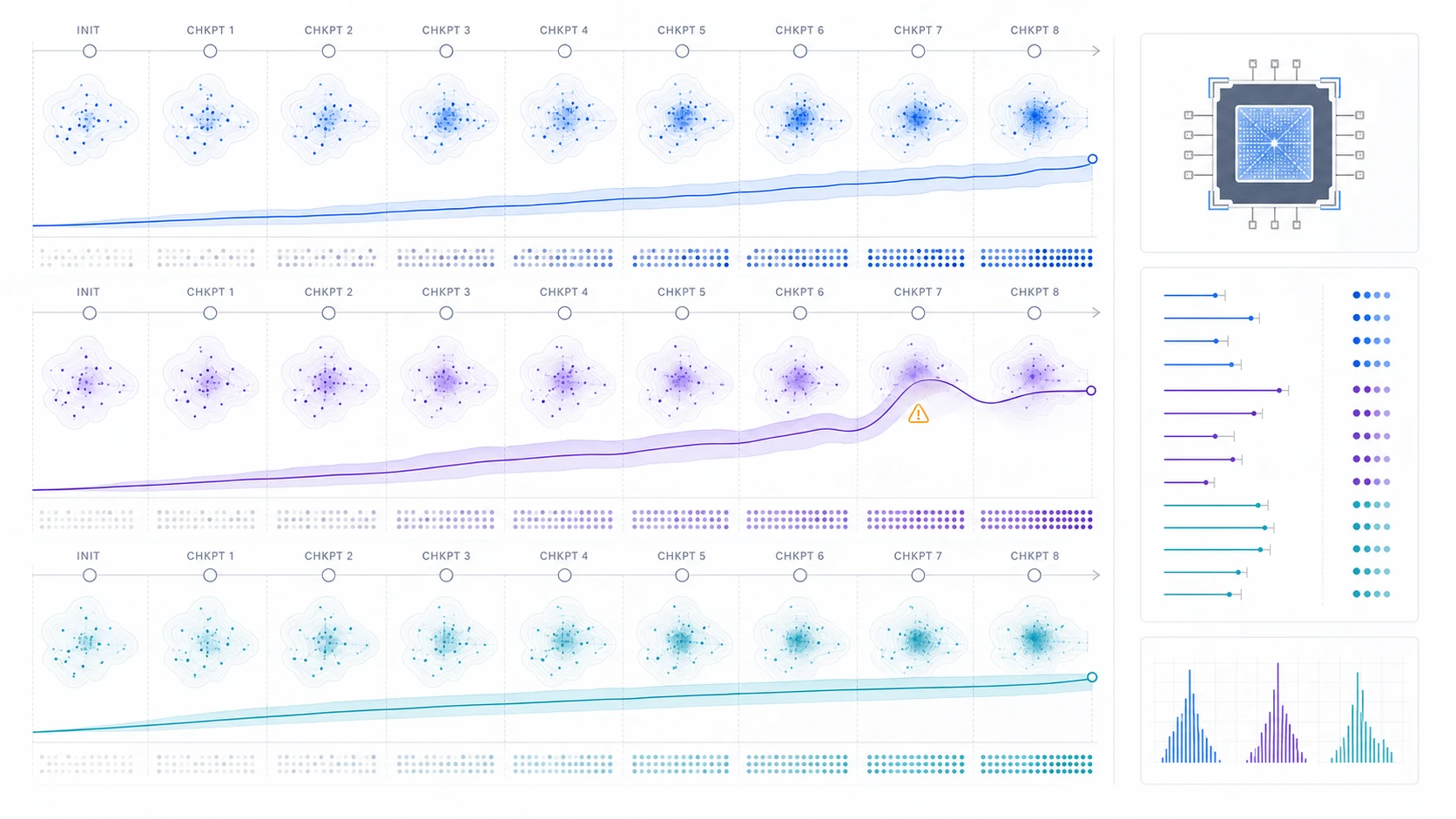
The second paper turns the primitive into a sequential service test. Fixed-point amplification is applied across repeated Tiger listen steps, and boundary-aware amplitude estimation handles regimes near zero and one. The system-level question becomes whether each returned posterior remains valid enough for the classical decision loop to continue.
The autonomous stack should decide whether the quantum path is eligible.
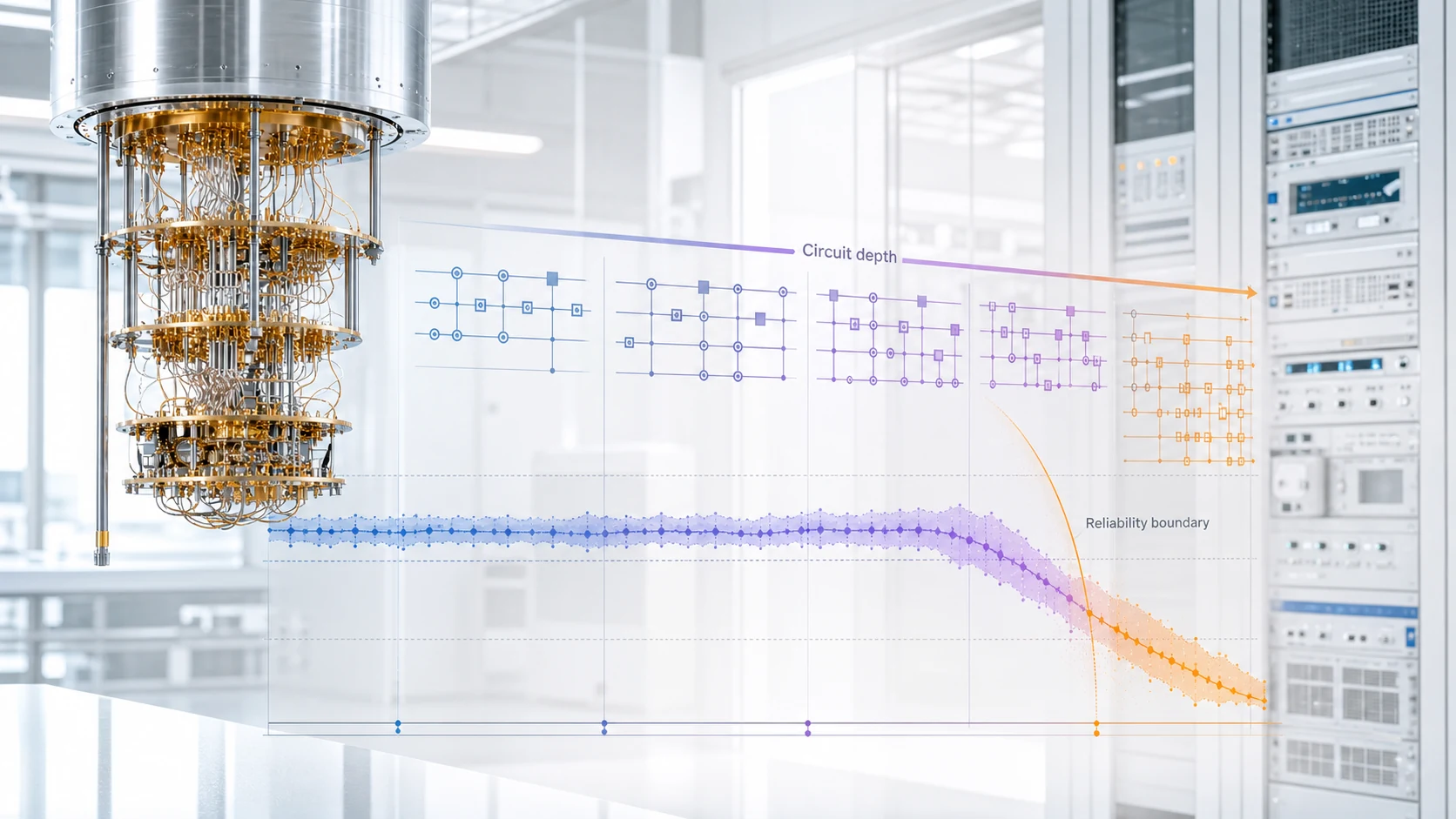
A QPU call should pass an admission policy before a circuit is submitted. The observation must have a rare-evidence structure that benefits from amplification; the compiled circuit must remain under a validated depth and two-qubit-gate envelope; the backend calibration must be current; the shot and latency budget must fit the mission; and an exact or approximate classical fallback must be ready.
QANTIS scaling controls show why admission cannot use state count alone. An optimized four-state sweep reports six of six cases below Hellinger distance 0.05, while a deeper synthesis route reaches that strict band in only three of six. Similar logical dimensions can compile into very different physical workloads.
Mitigation state belongs in the same gate. The hardware study reports cases where mitigation helps shallow circuits and harms deeper UCGate chains. The safe rule is evidence-driven selection per circuit family and calibration window, not a universal mitigation switch.
- Problem gate: rare evidence and a well-defined classical reference.
- Circuit gate: transpiled depth, two-qubit gates, layout, and estimator visibility inside the tested envelope.
- Operations gate: calibration freshness, shot budget, queue and execution latency, and data sensitivity.
- Safety gate: uncertainty threshold, classical fallback, abstention, and no direct actuator access.
Posterior distance matters through a task-specific decision margin.
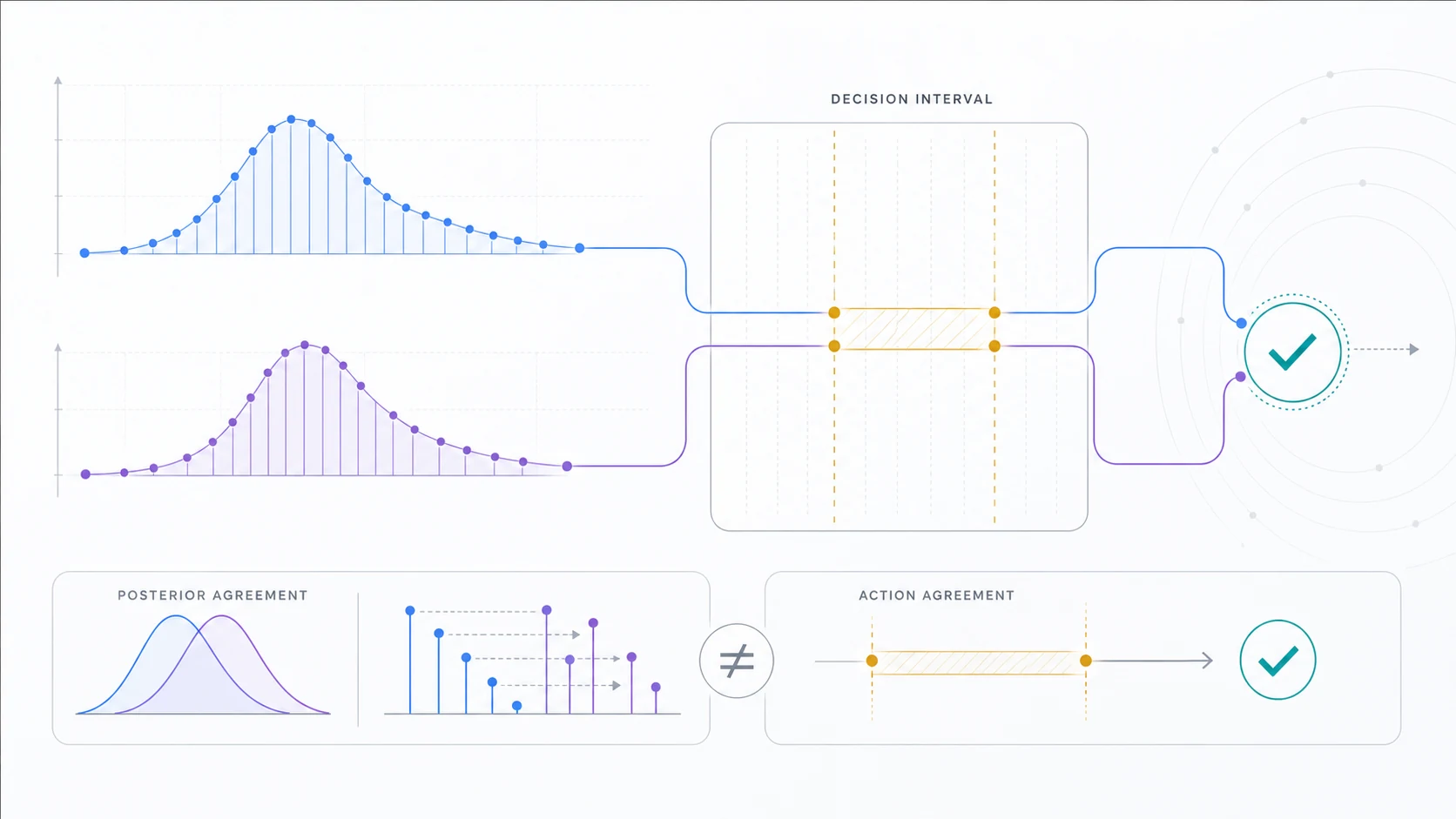
A distribution metric such as Hellinger distance describes how far the hardware posterior is from exact Bayes, but an autonomous system ultimately cares whether that difference changes a decision and at what cost. QANTIS applies one immediate Tiger reward rule and reports action agreement for 8 of 8 matched-run steps and for 20 of 20 and 32 of 32 supporting-control steps, with zero measured cumulative immediate value loss in those checks.
That result is encouraging because it connects inference to a planner-facing effect. It is also narrow. Both posteriors can choose the same action while being numerically different if they remain on the same side of the threshold. A small error near indifference, under a different reward matrix, or in a long-horizon policy can cause a different action or larger regret.
An autonomous integration should therefore attach posterior uncertainty, distance to the closest decision boundary, and a confidence or abstention state to every update. Evaluation should sweep reward structures and near-threshold cases rather than treating one action-agreement total as a universal safety certificate.
Use QANTIS as an advisory evidence service in bounded workflows.
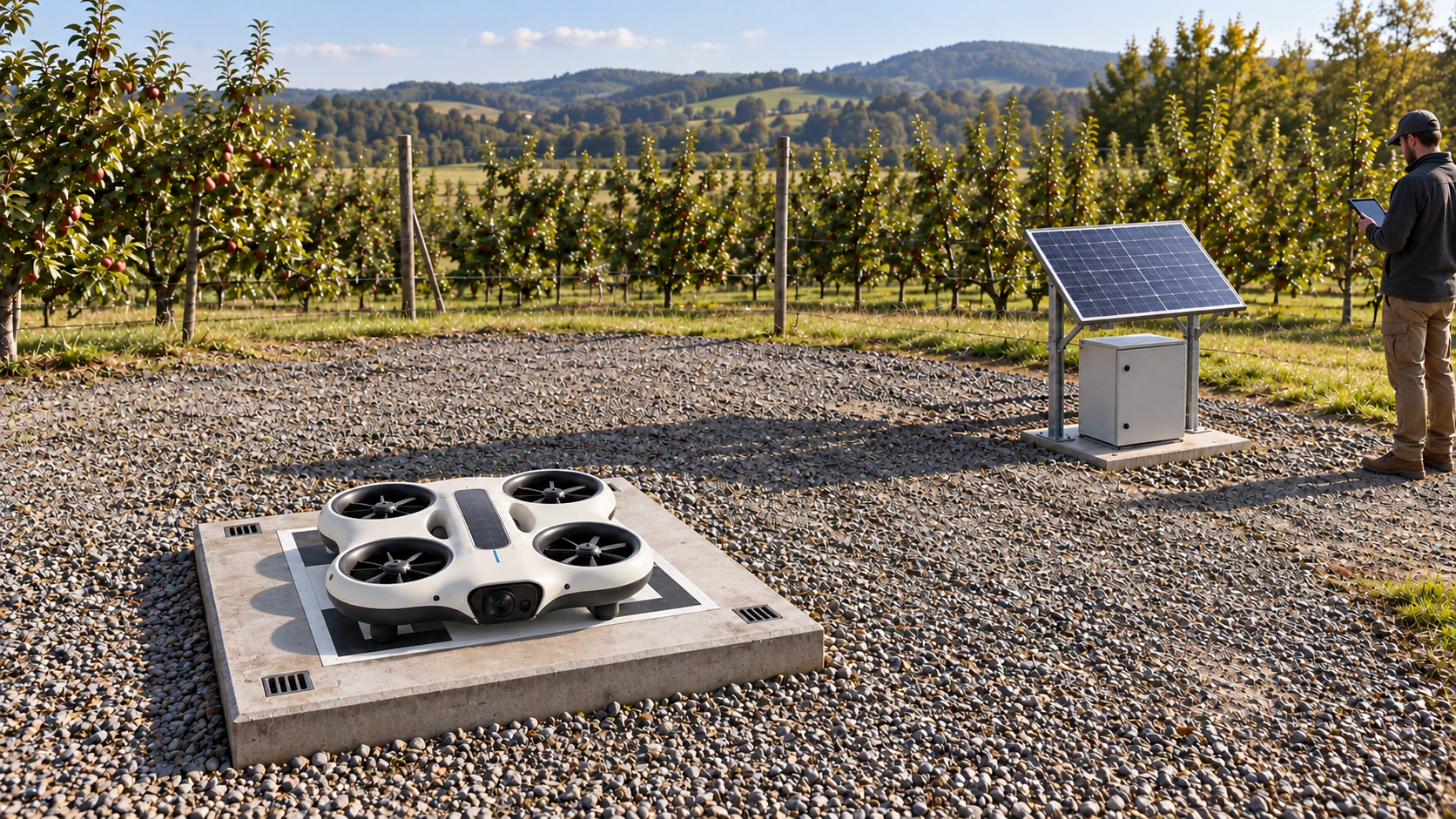
The architecture can be explored in public-safe research settings such as a simulated sensor-fusion update, a maintenance decision under uncertain diagnostics, a communications-network state estimate, or a logistics belief model. In each case, the quantum service estimates one declared evidence term while the domain model, policy, and operational authority remain outside it.
The returned object should contain more than a posterior vector. It should include the incoming prior identifier, observation-model version, backend and job provenance, shot budget, circuit hash, calibration time, estimator interval, distance or consistency checks where available, and the fallback result. QFlow-style evidence records can keep that chain inspectable without exposing sensitive model or mission details.
Shadow mode is the appropriate first deployment pattern. Run the quantum and classical update paths side by side, prevent the quantum result from changing actions, and measure posterior deviation, threshold margin, latency, cost, failure rate, and fallback frequency across calibration windows. Only a bounded, reversible advisory use should follow successful review.
Fallback is part of the algorithm, not an operational afterthought.
Quantum hardware introduces ordinary distributed-system failures and hardware-specific uncertainty: queues, expired calibrations, provider errors, compilation drift, poor physical-qubit mappings, low accepted counts, estimator boundary bias, and mitigation that increases error. An autonomy stack must expect each one and return a typed failure rather than an unqualified probability vector.
A safe fallback hierarchy can use an exact Bayes update for small models, a classical approximation for larger ones, request more sensor evidence, hold the prior with increased uncertainty, or abstain and escalate. The choice depends on task risk and latency. The planner should know which path produced the posterior and apply different trust rules accordingly.
No current QANTIS result establishes a reliable matched end-to-end runtime for the sequential belief-update service. The foundational MTDA section does report roughly 180 seconds against sub-millisecond classical baselines, but queue-inclusive and queue-exclusive timing fields for the sequential service remain incomplete. A mission-time claim would therefore be premature; the quantum route should be treated as research or advisory infrastructure where latency is explicitly budgeted and classical continuity is guaranteed.
Progress means harder decision tests, complete timing, and independent reproduction.
The next evidence layer should repeat fixed-budget comparisons across multiple devices and calibration windows, publish campaign-level raw artefacts, and test observation schedules designed to push amplitudes repeatedly toward zero and one. Larger belief spaces should enter only with depth gates and an ablation that separates encoding, routing, estimator, and mitigation effects.
Decision evaluation should expand from one immediate Tiger rule to threshold sweeps, asymmetric safety costs, longer-horizon regret, calibration curves, and abstention quality. A simulator or digital-twin loop can test these properties before any physical integration. The classical planner must remain the reference authority throughout.
Both QANTIS papers are arXiv v1 preprints as of July 20, 2026. Their current value is a clear hypothesis and a measured shallow-hardware envelope, not a finished autonomous product. The responsible quantum AI roadmap is therefore incremental: question to evidence request, evidence request to posterior, posterior to reviewable decision, and only then to a bounded operational pilot.
Practical takeaways
01
Place QANTIS at the evidence-estimation boundary, not at policy selection or actuator control.
02
Invoke the quantum path only when rare-event structure, depth, calibration, budget, and fallback gates pass.
03
Return an ordinary posterior with uncertainty and hardware provenance to classical software.
04
Evaluate posterior error through task-specific threshold margins, regret, and abstention quality.
05
Begin in shadow mode with quantum and classical paths running side by side.
06
Do not claim mission-time value until matched total-runtime and independent reproducibility evidence exists.
RA · Reference annexDefinitions, recurring questions, editorial method, and primary sources.Inspect
The analysis above carries the main reading flow. This reference layer keeps terminology, recurring questions, editorial method, and primary sources available without interrupting the argument.
Editorial record
How Where QANTIS quantum inference belongs in an autonomous system. was checked.
- Editorial owner
- Neura Parse Research
- Last verified
- July 20, 2026
- Method
- Synthesis of the dated primary and official records listed below, checked against the operating question in this note.
- Scope limit
- Planning analysis—not certification, customer performance evidence, procurement advice, or a claim of production readiness.
SRSources reviewed
5 records