Who owns the task and its outcome?
Name the requester, process owner, approving person and downstream system owner. Each should know which outcome or exception returns to them.
Solution / Controlled AI workflows
When a process crosses people, agents and tools, define who owns the task, which systems may be used and what needs review before anything changes outside the workflow.
Follow the approach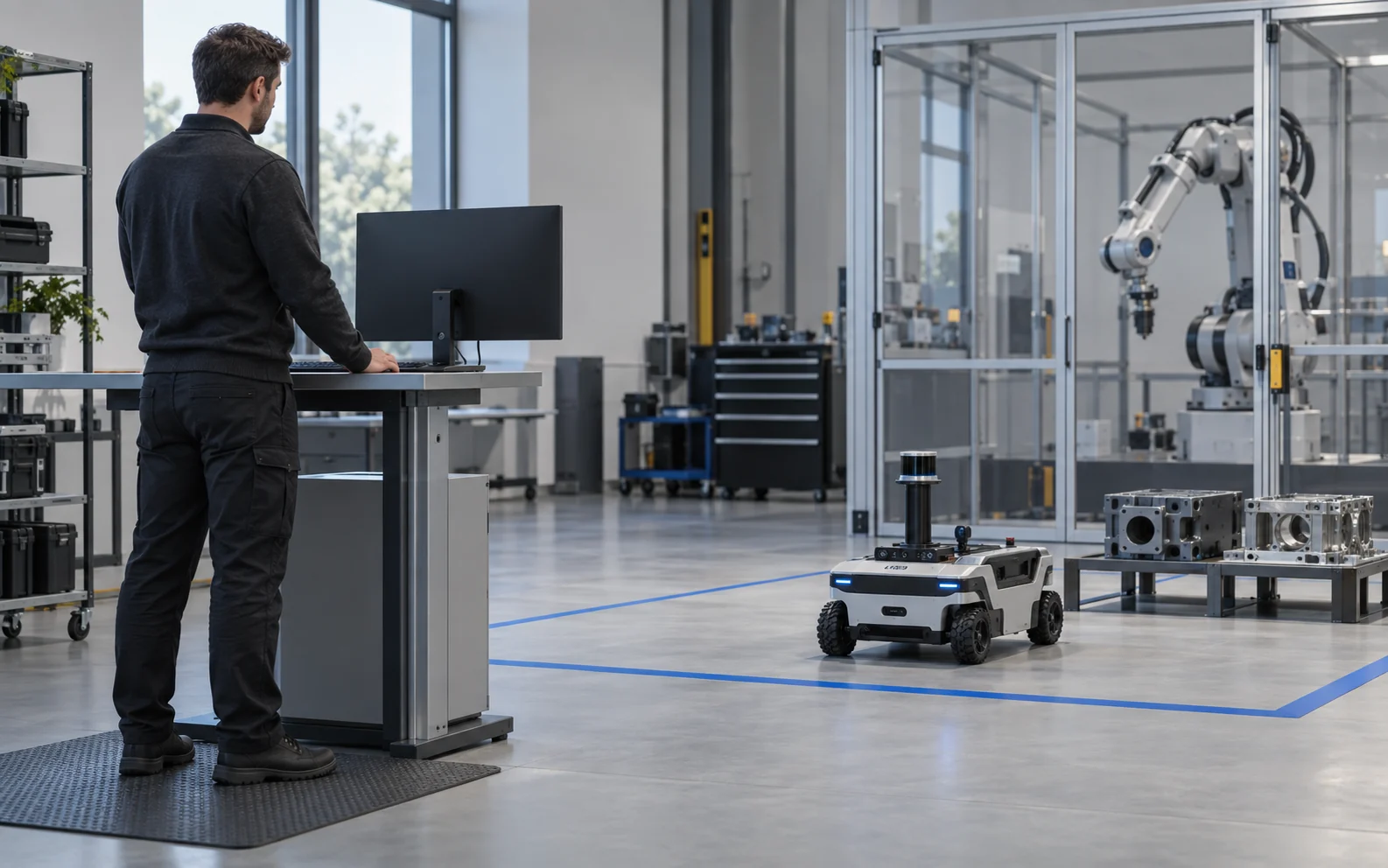
The question
A task can cross people, agents and tools. Scope, approval and failure handling need to be visible before a consequential handoff.
Name the requester, process owner, approving person and downstream system owner. Each should know which outcome or exception returns to them.
Set the systems and data an agent may use, the conditions for each handoff and the route taken when a tool or checkpoint fails.
Show the proposed target and effect before release. Record the decision separately from acceptance or completion by an external system.
Evaluation context
A visible route is useful when the operator can distinguish a prepared action from an authorised one and a received request from a completed result. The public simulation illustrates the route; interfaces and local machine safety still need their own acceptance.
A bounded evaluation
Name the task owner and the data, agents and tools allowed in the route.
Mark the human review point, approval rule and safe stop or exception path.
Inspect the graph, checkpoints, operator decision and action receipt or unresolved exception.
Relevant product
NowFlow provides visible graph control, scoped agents and tools, human approvals, checkpoints and reviewable workflow evidence. Robot or fleet handoffs require approved interfaces and separate device-local safety.
Explore the product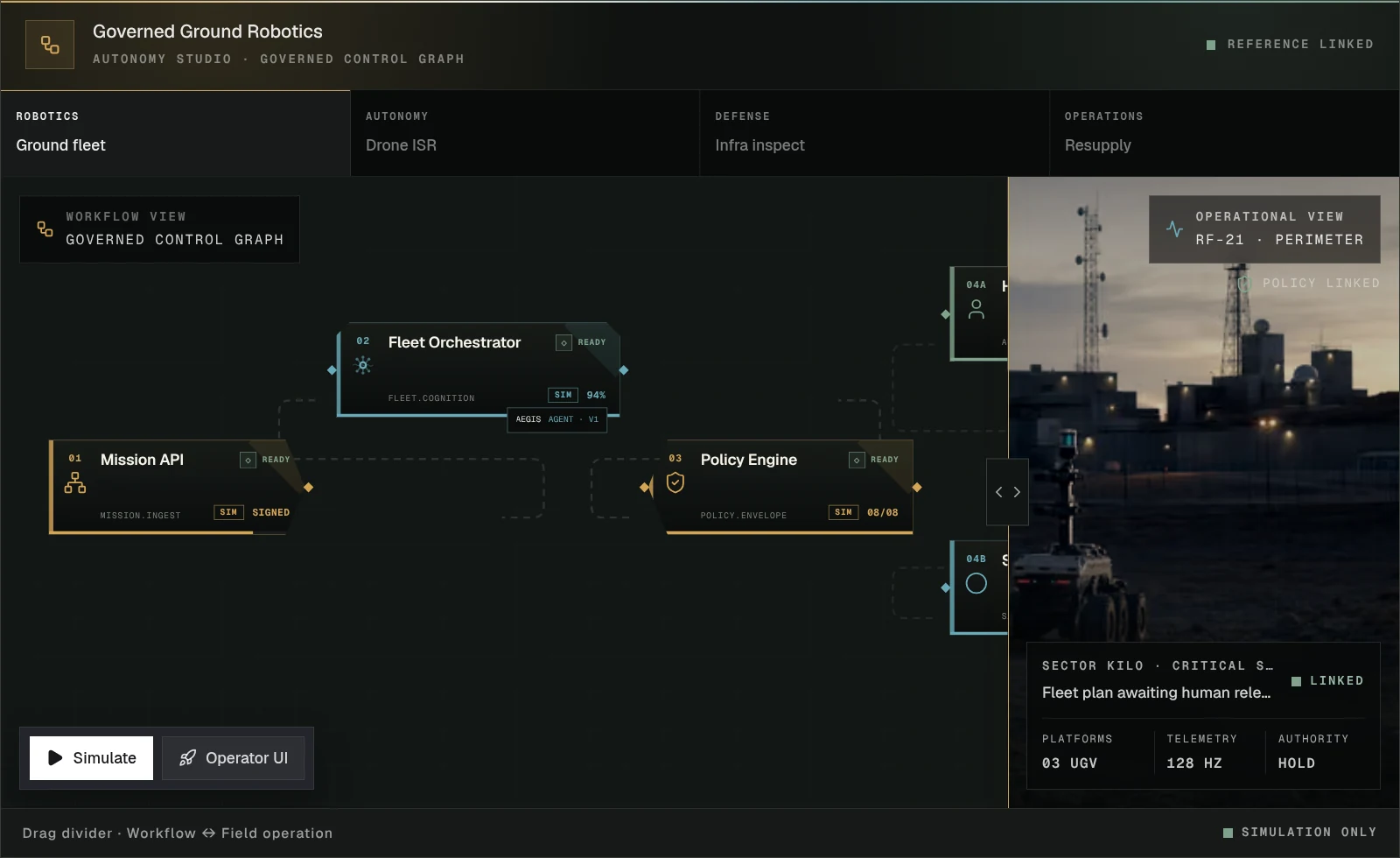
Useful output
A bounded workflow map showing responsibility, approval, exceptions and the evidence left at each step.
Current boundary
For machine-related work, the operator handoff and independent local safety boundary remain explicit. A public example is not a deployment guarantee.